 Birch Bay Siding
 Why Sandy Point Roofs Wear Differently Than Roofs Inland
Sandy Point sits right up against the water, and that changes what a roof has to deal with year after year. A shingle roof a few miles inland in Whatcom County ages differently than one facing open water and marine wind. Salt-laden air, wind-driven rain that gets pushed sideways under normal flashing details, and a moss season that can run eight months or longer all put extra demands on the roofing system. None of this means asphalt shingles are the wrong choice for the area — they're still one of the most practical, cost-effective roofing materials available. It means the installation details matter more here than they would somewhere drier and calmer.
Salt Air and Metal Fasteners
Air carrying salt off the water accelerates corrosion on exposed metal — nail heads, flashing edges, vent housings, and drip edge. Standard roofing materials that hold up fine forty miles inland can corrode noticeably faster in a waterfront setting. This is a fastener and flashing quality issue more than a shingle issue, and it's one of the first things we look at when we're evaluating a roof or planning a new install near the water.
Driving Rain and Wind-Driven Water
Open water means fewer windbreaks, and storms coming off the Strait can push rain sideways instead of straight down. That kind of wind-driven rain finds gaps that would never get tested on a calmer, more sheltered roof. Underlayment coverage, shingle nailing pattern, and how flashing is layered at valleys, walls, and penetrations all become more important when the roof has to shed water that isn't just falling — it's being blown into every seam.
The Long Moss Season
Northwest Washington's damp, shaded conditions already favor moss, and a property close to the water with tree cover nearby often stays wet longer between dry spells. Moss isn't just cosmetic. It holds moisture against the shingle surface, works into the granule layer, and can lift shingle edges over time, giving wind and water a place to start working underneath. A roof built and maintained with moss in mind holds up noticeably better over its service life than one that isn't.
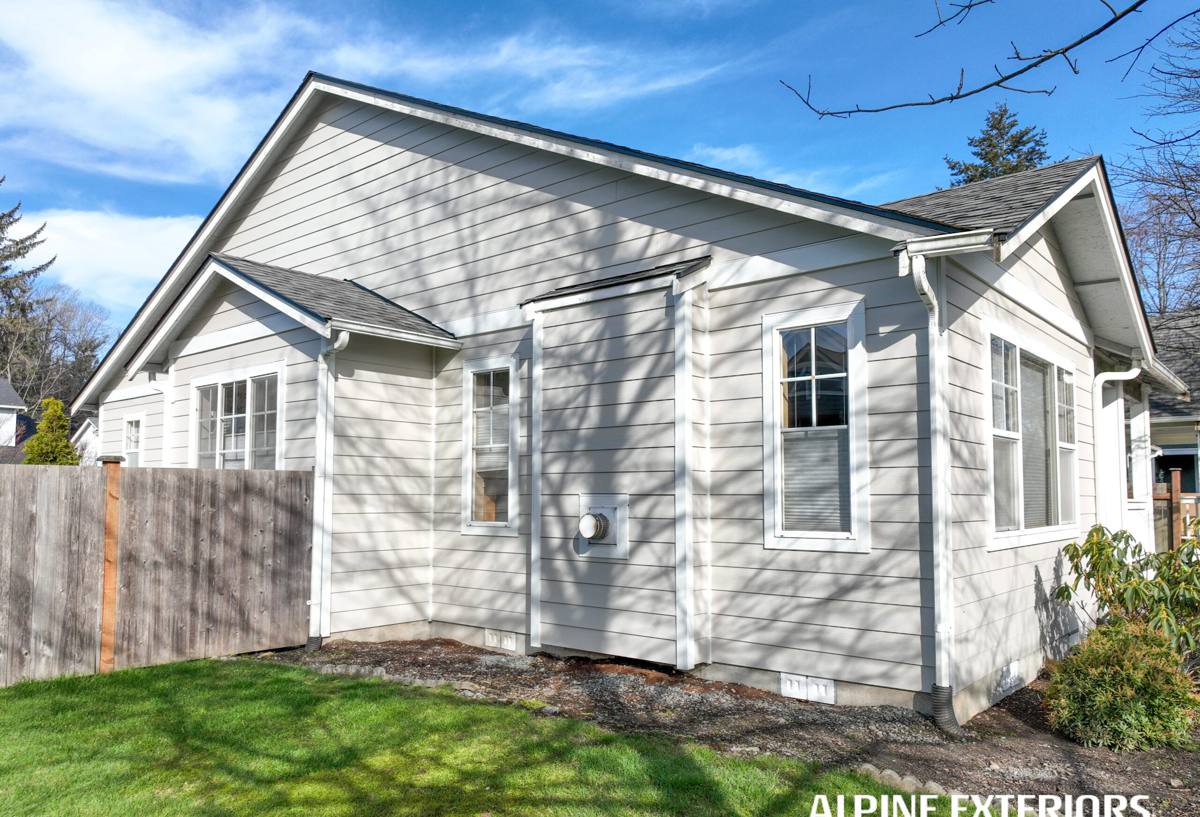
What a Correctly Installed Shingle Roof Looks Like in This Climate
An asphalt shingle roof is a system, not just a layer of shingles nailed to plywood. In a coastal, high-moisture environment like Sandy Point, the supporting layers do as much work as the shingles themselves.
Underlayment and Water Barrier Coverage
We treat underlayment as the roof's real waterproofing layer, with the shingles as the wear surface and first line of defense. In vulnerable areas — eaves, valleys, around chimneys and skylights — a self-adhering ice and water barrier gives a second line of protection where wind-driven rain and ice damming are most likely to cause problems.
Ventilation That Matches the Climate
Balanced intake and exhaust ventilation keeps attic moisture from building up under the roof deck. In a damp coastal climate, poor ventilation shows up as premature deck rot, shortened shingle life, and interior moisture problems that have nothing to do with an actual leak. We check ventilation as part of any roofing job, not as an upsell.
Flashing at Every Transition
Valleys, sidewalls, chimneys, skylights, and vent penetrations are where the large majority of roof leaks actually start — not in the open field of shingles. Correctly layered, corrosion-resistant flashing at every one of these transitions is non-negotiable on a home this close to salt air and wind-driven rain.
Signs a Sandy Point Roof Needs Attention
Because of the moss and moisture load here, problems can develop gradually and go unnoticed from ground level. A few things worth checking or asking about:
- Moss growth on the roof surface, especially on north-facing or shaded slopes
- Granules collecting in gutters or at downspout outlets
- Shingle edges that look curled, lifted, or cupped
- Dark streaking or staining across the shingle field
- Rusted nail heads, flashing, or vent housings visible from the ground or attic
- Soft spots or sagging noticed while walking the attic
- Daylight visible through the roof deck from inside the attic
- Water stains on interior ceilings, especially after a windy rainstorm
Any one of these on its own isn't necessarily an emergency, but they're worth having looked at before the next wet season rather than after.
Repair or Replace? What Actually Drives That Decision
Not every issue on a shingle roof means a full replacement, and not every roof is worth patching indefinitely. The honest answer depends on a handful of factors we walk through with the homeowner.
| Factor | Favors Repair | Favors Replacement |
|---|---|---|
| Roof age | Under 12-15 years | Approaching or past typical shingle lifespan |
| Extent of damage | Localized — one slope, one flashing area | Spread across multiple slopes or recurring leaks |
| Moss/moisture history | Recent, first-time growth | Long-term moss damage affecting granule loss |
| Deck condition | Solid, no soft spots | Soft, rotted, or delaminated sheathing found |
| Underlayment condition | Intact, still functional | Brittle, torn, or original to an old roof |
We'll always tell you when a repair is the more sensible move — a roof doesn't need to be replaced just because it has a problem. But we'll also tell you plainly when a repair is just delaying a bigger cost, especially if the deck or underlayment is already compromised.
How We Approach a Sandy Point Roofing Job
- On-site inspection of the roof surface, flashing, ventilation, and attic condition
- Straightforward assessment of what's actually needed — repair, partial, or full replacement
- A written estimate that spells out materials, scope, and timeline before any work starts
- Removal of old roofing material and inspection of the deck underneath
- Deck repair where needed, followed by underlayment and ice/water barrier installation
- Shingle installation with attention to nailing pattern, flashing, and ventilation details
- Final walkthrough and cleanup, including a magnetic sweep for stray fasteners
We don't skip the deck inspection step, even on jobs that look straightforward from the outside. What's underneath the old shingles matters more than the shingles themselves for how long the new roof will actually last.
Choosing Shingle Products for a Coastal Whatcom County Home
Standard three-tab shingles are the most economical option and still hold up reasonably well, but architectural (laminated) shingles have become the more common choice for coastal homes because of their thicker profile, stronger wind ratings, and longer manufacturer warranties. For a property exposed to open water and regular wind, the added wind resistance of an architectural shingle is usually worth the modest cost difference over the life of the roof.
Algae-resistant shingles — ones manufactured with copper-infused granules — are also worth discussing given how much moss and algae pressure this area sees. They don't eliminate moss risk entirely, since moss and blue-green algae are different organisms and respond differently to copper granules, but they do help slow discoloration and organic growth compared to standard granules. We'll walk through the honest trade-offs of each option — upfront cost, warranty length, wind rating, and appearance — rather than pushing whatever has the highest markup.
Why Hiring a Crew That Already Works This Area Matters
A roofing crew that regularly works Sandy Point and the rest of Birch Bay already knows what this stretch of coastline does to a roof over time. That's not a small thing. It means we're not guessing at flashing details for wind-driven rain, we're not surprised by how fast moss can take hold on a shaded north slope, and we're not specifying fasteners that will corrode faster than expected in salt air. Roofing crews that mostly work drier, more sheltered inland neighborhoods can do fine work in general, but they're not always tuned to the specific stresses a waterfront property in Whatcom County puts on a roof.
Local presence also matters after the job is done. If a windstorm lifts a shingle edge or a valley needs a second look after the first hard rain of the season, being an established local crew means a faster, more accountable response — not a call center and a scheduling queue.
Maintenance That Extends the Life of Your Roof
Asphalt shingle roofs in this climate benefit from periodic attention rather than being left alone until something fails. A yearly or twice-yearly check — especially heading into the wet season — of gutters, moss growth, and flashing areas catches small issues while they're still cheap and easy to fix. Keeping gutters and downspouts clear prevents water from backing up under the eaves, and addressing moss early, before it spreads and lifts shingle edges, is far less invasive than dealing with the damage it leaves behind if ignored for several seasons.
If you're weighing a repair, a full replacement, or just want an honest read on where your roof currently stands, we're happy to take a look. Reach out using the form below for a free, no-pressure estimate — we'll tell you what we actually see, not just what's easiest to sell.