 Birch Bay Siding
 Roofing in Marietta: A Different Kind of Job Than Inland Whatcom County
Marietta sits close enough to Birch Bay and the water that its roofs take a different beating than a roof twenty minutes inland in Bellingham or Ferndale. The combination of salt-laden air off the bay, wind-driven rain that comes in sideways instead of straight down, and long stretches of gray, damp weather every fall and winter creates conditions that wear roofing materials faster than most manufacturers' warranty literature assumes. If you're planning a roof replacement in Marietta, the material choice, the underlayment strategy, and the flashing details all need to reflect that reality, not a generic Pacific Northwest spec sheet.
We're a Birch Bay-based crew, and Marietta is part of our regular service area. That matters more than it might sound like it should. A roofing crew that drives through Marietta regularly already has a working sense of which streets sit in tighter tree cover and hold moisture longer, which lots catch the brunt of wind off the water, and which older homes in the area are more likely to have outdated venting or flashing details that need attention during a tear-off. That local familiarity shows up in fewer surprises once we're on the roof.
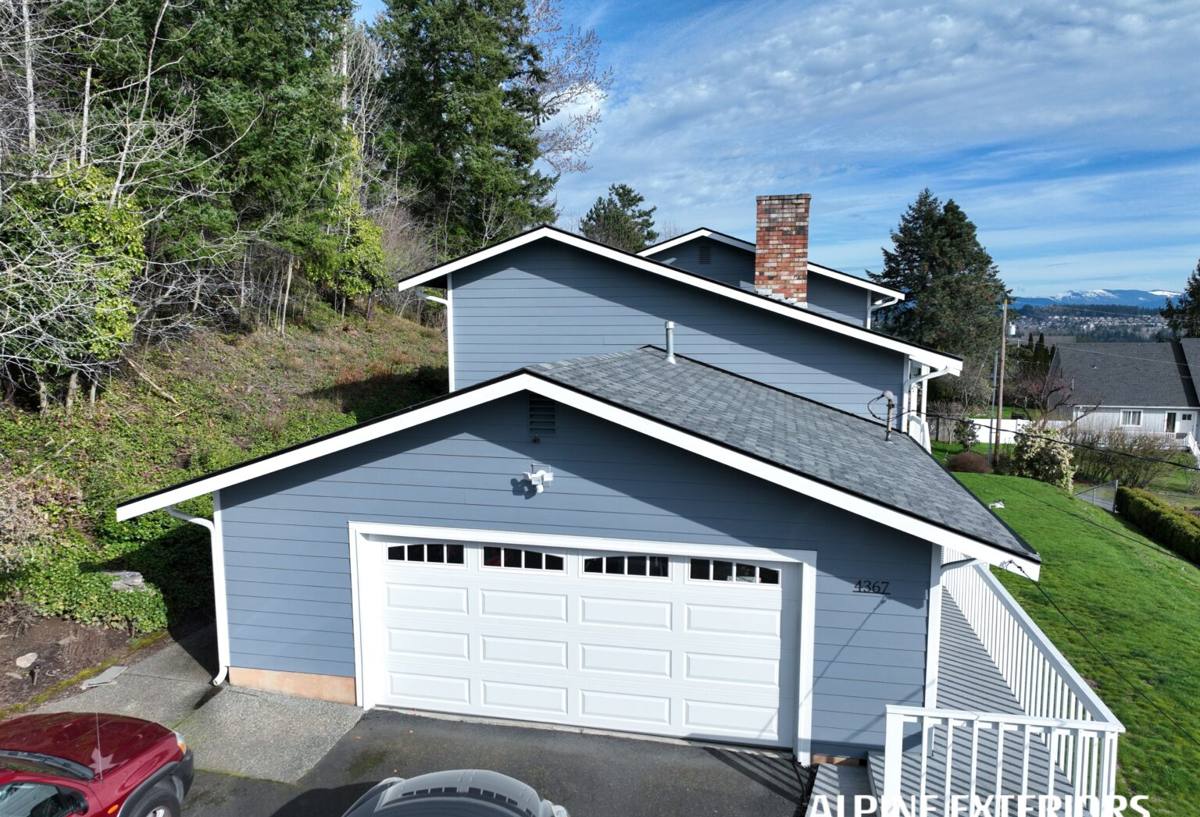
What Marietta's Climate Actually Does to a Roof
Salt Air
Homes close to Birch Bay and the Strait of Georgia deal with airborne salt that accelerates corrosion on exposed metal — nail heads, flashing, gutter fasteners, and any lower-grade hardware. Over years, this is one of the more overlooked causes of premature roof leaks in this area. It's not the shingles failing outright; it's the metal components around them corroding first.
Driving Rain
Wind off the water pushes rain up under shingle edges and into laps that would stay dry in a calmer climate. This is why underlayment quality and flashing detail matter more here than in a lot of the country — a roof that would perform fine in a low-wind region can still leak in Marietta if it wasn't installed with driving rain in mind.
Moss and Prolonged Dampness
Whatcom County's moss season runs long. Shaded roof sections, north-facing slopes, and anything under tree cover stay damp for extended stretches, which is exactly what moss and algae need to take hold. Moss isn't just cosmetic — it holds moisture against the roof surface, works into shingle laps, and can lift edges over time, shortening the life of an otherwise sound roof.
Signs a Marietta Roof Needs Replacement, Not Another Repair
- Granule loss heavy enough that you're finding grit in gutters and downspouts every season
- Shingles that are curling, cupping, or cracking, especially on south- and west-facing slopes
- Moss or algae staining that keeps returning within a year or two of cleaning
- Flashing around chimneys, skylights, or roof-to-wall transitions that's rusted, lifted, or was never properly step-flashed
- Daylight visible through the roof deck from the attic, or damp insulation after a storm
- A roof that's 20+ years old with multiple past patch repairs rather than one consistent system
- Sagging areas on the roofline, which can point to deck or structural moisture damage
If a roof is showing two or more of these, patch repairs usually stop being cost-effective and start becoming a way of delaying an inevitable full replacement while risking interior water damage in the meantime.
What a Correct Roof Replacement Involves Here
Full Tear-Off, Not Overlay
We don't recommend installing new shingles over an existing layer in this climate. An overlay traps moisture between layers, hides deck damage that needs to be addressed, and shortens the life of the new roofing. A full tear-off lets us actually inspect the deck, sheathing, and framing underneath — which, on an older Marietta home, is often where the real problems are hiding.
Deck Inspection and Repair
Once the old roofing is off, we check the sheathing for soft spots, delamination, or rot, particularly around valleys, eaves, and anywhere a past leak may have gone unnoticed. Any compromised decking gets replaced before new roofing goes down — skipping this step is one of the more common shortcuts that leads to early failure.
Underlayment Built for Wind-Driven Rain
Given how much of Marietta's roofing wear comes from driving rain rather than straight-down rain, we use synthetic underlayment and self-adhered ice-and-water membrane at vulnerable areas — eaves, valleys, and roof penetrations — rather than relying on standard felt alone.
Flashing Done Properly
Chimneys, skylights, sidewalls, and any roof-to-wall intersections get step flashing and counter-flashing installed correctly, not just caulked over. Given the corrosion risk from salt air, we also pay attention to the grade of metal and fasteners used in these details.
Ventilation Check
Proper intake and exhaust ventilation keeps the attic dry and helps prevent moisture buildup that feeds rot and, indirectly, ice-related issues in colder snaps. On older Marietta homes, ventilation is frequently undersized or blocked and is worth correcting during a replacement rather than leaving as-is.
Material Options for Marietta Homes
| Material | How It Handles This Climate | Maintenance Considerations |
|---|---|---|
| Architectural asphalt shingle | Good performance for the cost when paired with proper underlayment and flashing; widely used and easy to source matching repairs later | Needs periodic moss treatment on shaded slopes; granule loss over time |
| Algae-resistant (AR) shingle | Copper- or zinc-infused granules resist algae and moss growth better than standard shingles, useful on shaded or damp-prone sections | Still benefits from occasional cleaning in heavy moss areas; slightly higher upfront cost |
| Metal roofing | Sheds driving rain well and holds up over a long service life, but requires careful fastener and coating selection given salt-air corrosion risk | Higher upfront investment; installation quality matters more than with shingles |
| Synthetic/composite roofing | Resists moisture absorption and moss better than wood-based products; consistent appearance | Cost varies by product line; verify manufacturer performance data for coastal exposure |
We generally steer Marietta homeowners away from untreated wood shake roofing. It's not that it can't be installed correctly — it's that in a climate with this much sustained dampness and moss pressure, the ongoing maintenance burden and moisture behavior of wood shake make it a harder product to keep performing well over time compared to the alternatives above. That's a maintenance and moisture-management tradeoff, not a knock on the material itself.
Our Process for a Marietta Roof Replacement
- On-site inspection. We walk the roof and attic, check for deck issues, ventilation problems, and flashing condition, and take measurements.
- Written estimate. You get a clear scope of work and pricing before anything is scheduled — no vague allowances.
- Material selection. We walk through the options above based on your roof's exposure, budget, and the look you want.
- Scheduling around weather. Given how much rain this area gets, we plan tear-off and dry-in timing carefully so your home isn't left exposed longer than necessary.
- Tear-off, deck repair, and installation. Full removal of old roofing, deck inspection and repair as needed, then underlayment, flashing, and roofing installed to spec.
- Cleanup and final walkthrough. Site cleaned of debris and nails, and we walk the finished roof with you before calling the job done.
Why Hiring a Crew That Already Works Marietta Matters
A roofing crew based out of Birch Bay isn't guessing at what Marietta homes deal with — we're dealing with the same salt air, the same driving rain patterns, and the same moss season on jobs nearby throughout the year. That means fewer assumptions and more attention to the details that actually cause failures in this specific area: corrosion-resistant hardware where it matters, flashing built for wind-driven rain rather than straight-down rain, and material choices that account for how long a shaded roof section stays damp here.
It also means straightforward accountability. We're not a crew passing through the county on a single job — we're local, and a roof we install in Marietta is one we can come back and stand behind.
Cost Factors to Expect
Every roof is different, and we won't quote a number without seeing the actual roof, but a few factors consistently drive cost on Marietta homes:
- Roof size and pitch — steeper roofs take longer and require more safety setup
- Number of layers being torn off and condition of the deck underneath
- Complexity of the roofline — valleys, dormers, chimneys, and skylights all add flashing work
- Material selected — architectural shingle, algae-resistant shingle, metal, or composite
- Access — trees, tight lots, and driveway access affect labor and equipment logistics
We'll walk through all of this on-site so you understand exactly what you're paying for and why, rather than a lump-sum figure with no breakdown.
Get a Free Estimate for Your Marietta Roof
If your roof is showing wear from Birch Bay's salt air, driving rain, or a moss problem that keeps coming back, it's worth having a local crew take a look before small issues turn into deck damage or interior leaks. Fill out the form below for a free, no-pressure estimate — we'll walk the roof, tell you honestly what it needs, and give you clear options.