 Birch Bay Siding
 Building Decks for Custer's Coastal Conditions
Custer sits close enough to Birch Bay and the Strait of Georgia that homes here deal with a different set of pressures than a deck built twenty miles inland. Salt-laden air moves in off the water, driving rain comes in sideways more often than straight down, and the long gray stretch from fall through spring keeps wood and composite surfaces damp for weeks at a time. A deck that looks fine on installation day can start showing problems within a year or two if it wasn't built with those conditions in mind.
We build and repair decks throughout Whatcom County, and the decks we see fail early in this area almost never fail because of bad decking boards. They fail underneath — at the ledger connection, the joist hangers, the footings, or wherever water was allowed to sit instead of drain. Custer's mix of rural lots, tree cover, and proximity to the water means moss, algae, and trapped moisture are working against a deck year-round, not just in the rainy months.
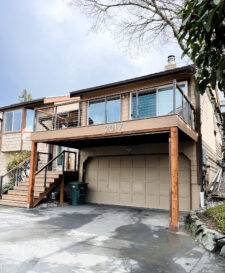
What Custer Homes Need From a Deck
Most of the deck requests we get around Custer fall into a few categories: a new deck off a kitchen or living room addition, a rebuild of an older deck that's gone soft or spongy, or an upgrade from a small original builder's deck to something sized for actual outdoor living. Whatever the starting point, the same local factors shape the build:
- Drainage away from the house and away from the deck's own structure, not just off the surface boards
- Fasteners and hardware rated for coastal exposure, not standard interior-grade hardware
- Decking material chosen for how it handles constant damp and moss growth, not just how it looks on day one
- Railing and post connections that won't loosen as wood moves through repeated wet-dry cycles
- Enough airflow underneath the deck to let it actually dry out between storms
None of this is exotic. It's standard good building practice applied with the understanding that a deck in Custer spends more of its life wet than a deck somewhere dry and inland would.
Decking Material: What Actually Holds Up Here
Homeowners usually come to us with a material already in mind — cedar because it's familiar, composite because they've heard it's low maintenance, or pressure-treated because it's the budget option. All three can work in Custer. The difference is what each one demands from you afterward, and we'll walk through that honestly rather than push whatever's easiest for us to install.
| Material | Moss & Algae Behavior | Salt Air Exposure | Maintenance | Typical Lifespan |
|---|---|---|---|---|
| Cedar | Needs regular cleaning and sealing to resist buildup | Handles it well but graying and checking accelerate | Sealing every 1-2 years, periodic cleaning | 15-20 years with upkeep |
| Pressure-Treated Pine | Prone to moss and mildew if not sealed and cleaned | Fine structurally, fasteners are the weak point | Sealing every 1-2 years | 15-25 years |
| Composite | Resists moss better but surface film still needs cleaning | Handles salt air well, minimal degradation | Occasional washing, no sealing | 25-30+ years |
Composite has become the default recommendation for a lot of Custer clients simply because it removes the sealing cycle that's easy to fall behind on when the weather doesn't cooperate for half the year. But cedar still has a place, especially on homes where the look matters more than minimizing upkeep, and pressure-treated framing underneath any of these three is standard regardless of what's on top.
Why We're Careful About Certain Composite Products
Not all composite decking behaves the same in a wet climate. Some early-generation and budget composite products absorbed moisture at the cut ends or had cap layers that didn't hold up to constant damp, leading to swelling or delamination over years of exposure. We stick to composite lines with a solid track record in wet Pacific Northwest conditions and proper end-cap treatment at every cut, because a deck rebuild is expensive enough that we'd rather steer you away from a product with a maintenance or moisture history that doesn't fit this climate.
Framing and Substructure: Where the Real Work Happens
The part of a deck nobody sees is the part that determines whether it lasts. In Custer's conditions, that means:
Ledger Attachment
Where a deck attaches to the house is the single most common source of serious failure and water damage. It needs proper flashing that sheds water away from the house framing, not just caulk, which fails over time and lets water track into the rim joist unnoticed.
Joist Hangers and Fasteners
Standard galvanized hardware corrodes faster in salt-influenced air. We use hardware and fasteners rated for coastal or high-moisture exposure so the connections don't weaken years before the visible decking shows any wear.
Footings and Post Bases
Footings need to sit below frost depth and be sized for our soil conditions, and post bases should hold the post above the deck surface so it's never sitting in standing water after a heavy rain.
Airflow Underneath
A deck built low to the ground with poor ventilation underneath stays damp far longer after a storm than one with adequate clearance. That trapped moisture is what feeds moss and rot in framing that's otherwise sound.
Railings, Stairs, and Hardware Choices
Railings take a lot of abuse in this climate because they're exposed on all sides and get less airflow at the post connections than open decking does. We pay particular attention to how railing posts are anchored — through-bolted rather than just screwed where possible — since loose railings are one of the most common callback issues on older Custer decks we've inspected. Stair stringers get the same treatment as the main framing: proper hardware, good drainage at the base, and no direct wood-to-concrete contact that traps moisture against the stringer.
Our Process, Start to Finish
- Site visit and estimate. We look at the existing structure or the build site, talk through what you actually want to use the deck for, and discuss material options honestly, including trade-offs.
- Design and permitting. We handle the permit application with Whatcom County where required, sized and detailed to meet current code for the span, height, and railing requirements of your specific deck.
- Demolition or site prep. On rebuilds, we remove the old structure and inspect the ledger and house framing behind it before building anything new.
- Framing. Footings, posts, beams, and joists go in with coastal-rated hardware and correct spacing for the decking material chosen.
- Decking, railings, and finish work. Surface boards, railings, stairs, and any lighting or built-ins are installed and finished.
- Final walkthrough. We go over the finished deck with you, including what maintenance it does and doesn't need going forward.
Permits in Whatcom County
Most new decks and significant rebuilds in unincorporated Whatcom County, including Custer, require a building permit, particularly once the deck is above a certain height or attached to the house. We handle that process as part of the job rather than leaving it for the homeowner to sort out, since permitted work also matters if you sell the home later and a buyer's inspector checks for it.
What to Ask Before Hiring a Deck Contractor
Whether you go with us or someone else, these are worth asking any contractor bidding a deck in this area:
- Do they pull permits, or leave that to you?
- What hardware and fastener grade do they use, and is it rated for coastal exposure?
- How do they flash and attach the ledger to the house?
- What's their plan for drainage and airflow underneath the deck?
- Can they explain the maintenance schedule for the specific material they're recommending?
- Do they carry liability insurance and workers' comp coverage?
A contractor who can answer these clearly and specifically, without vague reassurances, is usually one who's actually building for this climate rather than just building to get the job done.
Why Local Experience in Custer Matters
A deck built to a generic national standard isn't necessarily built for what Custer's weather does to it over ten winters. Crews that work regularly in Whatcom County's coastal microclimate know which hardware grades hold up, which decking products have a track record here versus which ones look good in a showroom, and how to detail a ledger and railing system that won't need attention again in three years. That's the difference between a deck you enjoy and a deck you're constantly maintaining.
If you're planning a new deck or looking at a rebuild in Custer or anywhere around Birch Bay, we're happy to come take a look and give you a straightforward, no-pressure estimate. There's no obligation — just an honest read on what your project needs and what it would cost to do right.