 Birch Bay Siding
 Roofing Built for Ferndale's Coastal Climate
Ferndale sits close enough to the water that its roofs live a different life than roofs fifty miles inland. Homes here deal with salt-laden air, wind-driven rain off the water, and a moss season that runs longer than most homeowners expect. A roof that would hold up fine in a dry, low-wind climate can start failing years early in this part of Whatcom County if it wasn't installed with these conditions in mind. Roof replacement in Ferndale isn't just about swapping old shingles for new ones — it's about building a roof system that's actually matched to what the local weather does to it, year after year.
This page covers what that means in practice: why local conditions age roofs faster, how to tell when repair stops making sense, what a correct replacement actually involves, and what to look for in a contractor who's going to be around to stand behind the work.
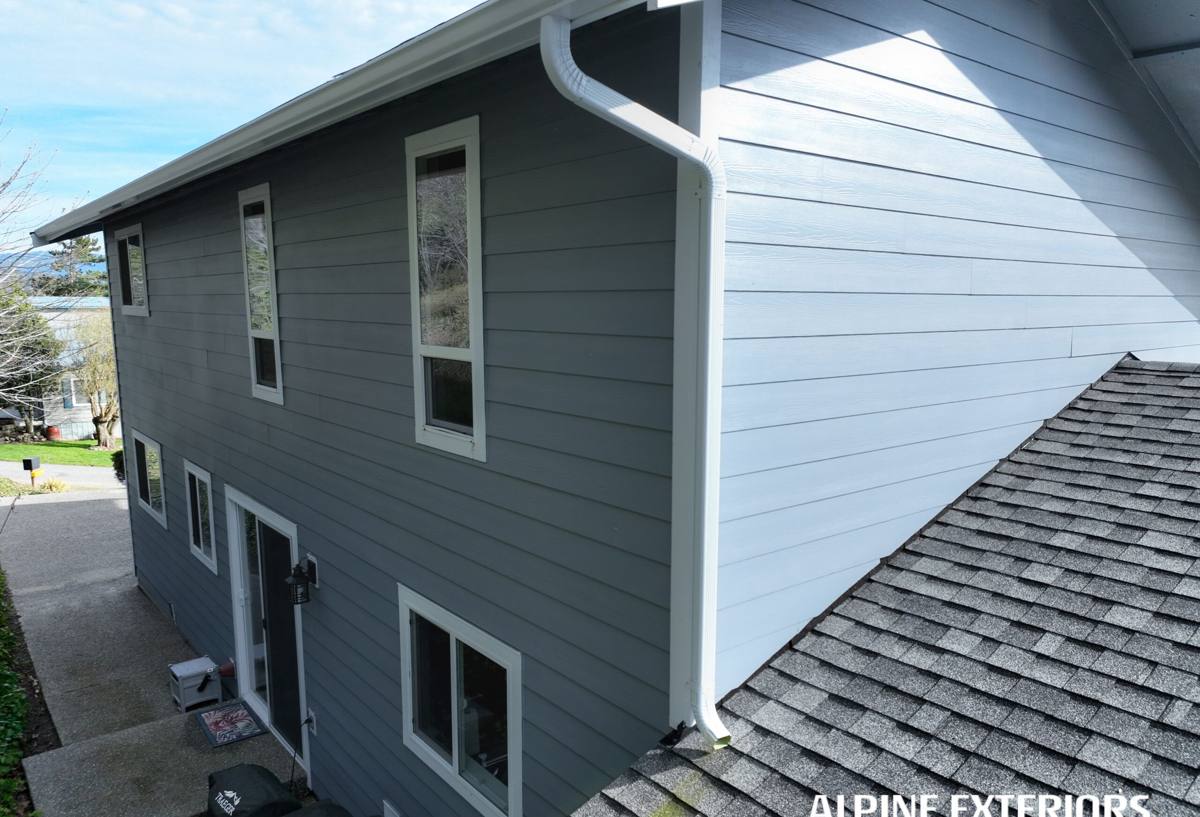
Why Coastal Whatcom County Wears Roofs Out Faster
Salt Air and Corrosion
Homes near the water take in salt-laden air on a regular basis, and that air is hard on anything metal. Nails, flashing, fasteners, vents, and any exposed metal trim are all candidates for accelerated corrosion if they're not rated for coastal exposure. A roof built with standard-grade fasteners might look fine for a few years, then start showing rust streaks and failing points exactly where flashing meets shingle — right where leaks start. This is one of the most common reasons we see roofs in this area fail earlier than their rated lifespan, and it's almost always a materials-and-detailing problem, not a workmanship problem alone.
Driving Rain and Wind
Rain that falls straight down is manageable for almost any roof. Rain that's being pushed sideways by wind off open water is a different problem — it finds gaps, working its way under shingle tabs, around vent boots, and into any flashing detail that wasn't sealed with that kind of exposure in mind. Over time, wind-driven rain is what turns a small installation shortcut into a slow leak that shows up as a stain on a ceiling months or years later, long after the original crew is gone.
A Long Moss Season
Whatcom County's damp, mild climate keeps roofs wet for long stretches of the year, and that's exactly what moss needs to take hold. Once moss establishes itself on a roof, it holds moisture directly against the shingle surface, works its way under tabs and shingle edges, and gradually lifts and degrades the roofing material from underneath. North-facing slopes and shaded sections are usually hit first and worst. Left unaddressed, moss doesn't just look bad — it shortens the functional life of the roof underneath it.
Signs a Ferndale Roof Needs Replacement, Not Just Repair
Not every roofing problem calls for a full replacement. But there's a point where patching becomes a losing game — you're spending money to delay a decision rather than solve the problem. Here's what tends to indicate the roof itself, not just a section of it, is at the end of its service life:
- Shingles that are curling, cupping, or losing their granules across large sections of the roof, not just one spot
- Moss growth that keeps coming back within a season or two of cleaning, especially on shaded or north-facing slopes
- Soft or spongy decking felt underfoot in the attic, or daylight visible through the roof boards
- Repeated leaks in different locations rather than one recurring spot
- Flashing around chimneys, vents, or valleys that's rusted, lifted, or was never properly stepped and sealed
- A roof that's at or past the age where its material's typical service life ends, especially if it's never been reroofed
- Rising energy bills tied to poor attic ventilation or insulation that a roof replacement is the natural time to correct
If you're only seeing one or two of these, a repair may still be the right call. If you're seeing several at once, it's usually more cost-effective in the long run to replace than to keep chasing individual failures.
What a Correct Roof Replacement Actually Involves
Tear-Off and Deck Inspection
A full tear-off to bare decking is the only way to actually see what's underneath — soft spots, old leak damage, or decking that's delaminating from years of moisture exposure. Any contractor who's willing to install a new roof over an old one, or who skips checking the deck, is setting the new roof up on a compromised foundation. Damaged decking gets replaced before anything new goes down, not covered over.
Underlayment and Water Protection
The underlayment is the roof's backup line of defense, and in a climate with this much sustained rain, it matters as much as the visible roofing material. We use synthetic or self-adhering underlayment in the areas that see the most water exposure — eaves, valleys, and around penetrations — because standard felt alone doesn't hold up as well to the kind of prolonged wet exposure this area sees.
Flashing Details
Flashing is where the great majority of roof leaks actually originate, not in the open field of shingles. Chimneys, skylights, sidewalls, and valleys all need flashing that's properly layered, lapped, and sealed for wind-driven rain, using corrosion-resistant metal given the salt air this area sees. This is detail work that's easy to rush and easy to get wrong, and it's usually invisible until it fails.
Ventilation
A roof replacement is the right time to correct poor attic ventilation. Balanced intake and exhaust venting keeps moisture from building up in the attic space, which matters in a climate this damp — trapped moisture rots decking from the inside and can void material warranties that require proper ventilation as a condition of coverage.
Choosing a Roofing Material for a Ferndale Home
There's no single "best" roofing material for every home — the right choice depends on budget, roof pitch, how much shade the property gets, and how much long-term maintenance you're willing to take on. Here's how the common options generally compare for this climate:
| Material | Typical Lifespan | How It Handles Moisture & Moss | Maintenance Load |
|---|---|---|---|
| Architectural asphalt shingle | 25-30 years | Good with proper ventilation and algae-resistant granules; still needs periodic moss cleaning on shaded slopes | Low to moderate |
| Standing-seam metal | 40-plus years | Sheds water and moss well due to smooth, steep-shedding surface; needs marine-grade fasteners and coatings near saltwater | Low |
| Composite/synthetic shingle | 30-50 years | Resists moisture absorption better than natural wood products | Low to moderate |
| Cedar shake | 20-30 years with upkeep | Attractive but absorbs and holds moisture, making it more prone to moss and rot in a wet marine climate without diligent upkeep | High |
We're upfront that cedar shake, while a good-looking traditional option, carries a higher maintenance burden in this specific climate — the moisture it holds is exactly the condition that accelerates moss growth and rot here. That's a trade-off worth knowing before you commit to it, not a knock on the material itself. For most Ferndale homes, a quality architectural shingle or a metal roof strikes the best balance of cost, appearance, and how little attention it needs once it's installed.
Our Roof Replacement Process
We keep the process straightforward and communicate at each step, so there are no surprises partway through the job:
- Inspection and estimate. We walk the roof, check the attic where accessible, and give you an honest assessment of whether repair or replacement makes sense — with a written estimate, not a guess.
- Material selection. We go over the tradeoffs between materials given your roof's pitch, shade exposure, and budget, so you're choosing with full information.
- Permitting. We handle the local permitting required for the job so it's done to code.
- Tear-off and deck prep. Full removal of the old roofing, deck inspection, and replacement of any damaged sheathing.
- Installation. Underlayment, flashing, ventilation components, and the roofing material installed to manufacturer specification and matched to coastal exposure conditions.
- Cleanup and walkthrough. Full site cleanup, including magnetic sweep for stray nails, and a walkthrough so you know exactly what was done.
- Warranty documentation. You get clear paperwork on both material and workmanship coverage before we consider the job finished.
What Affects the Cost of a Roof Replacement
Every roof is different, so we don't quote prices sight unseen — but these are the main factors that move the number up or down:
| Factor | Why It Matters |
|---|---|
| Roof size and complexity | More valleys, dormers, and penetrations mean more flashing work and labor time |
| Current roof condition | Decking replacement or old-roof removal (especially multiple existing layers) adds cost |
| Material choice | Asphalt, metal, and composite options carry different material and installation costs |
| Roof pitch and accessibility | Steep or hard-to-access roofs take longer and require more safety equipment |
| Ventilation upgrades | Adding or correcting intake/exhaust venting is often worth doing during a replacement |
We'll walk your specific roof and give you real numbers based on what we actually find, not a generic estimate pulled from a national average.
Why a Crew That Already Works in Ferndale Matters
A roofing crew that regularly works coastal Whatcom County already knows to spec corrosion-resistant fasteners, detail flashing for wind-driven rain, and plan ventilation for a climate that stays damp for months at a time. That's the kind of judgment that doesn't always show up on a written estimate but shows up ten years later in whether the roof is still performing the way it should. It also means being available locally for warranty follow-up, not a crew that did one job in the area and moved on.
If your roof is showing its age — or you just want an honest opinion on whether repair or replacement is the right call — we're happy to take a look. Reach out for a free, no-pressure estimate using the form below.