 Birch Bay Siding
 Roofing in California Creek Comes With Its Own Set of Problems
California Creek sits close enough to the water that homes there deal with a different set of roofing stresses than a house ten miles inland in Whatcom County. Salt-laden air off the bay works on exposed fasteners and flashing metal year-round. Wind-driven rain doesn't just fall on the roof, it gets pushed sideways under shingle tabs and around vents and chimneys. And the long, wet moss season here gives algae and moss months at a time to take hold on north-facing slopes and shaded valleys. None of that means a roof in California Creek is doomed to fail early. It means the roof has to be built and maintained with those specific conditions in mind, not installed the same way you'd install one in a dry inland climate.
When we replace a roof on a California Creek home, we're not just swapping old shingles for new ones. We're looking at how the house sits relative to prevailing wind and moisture, what the ventilation is actually doing, and where the last roof failed first — because that tells us where the next one needs to be stronger.
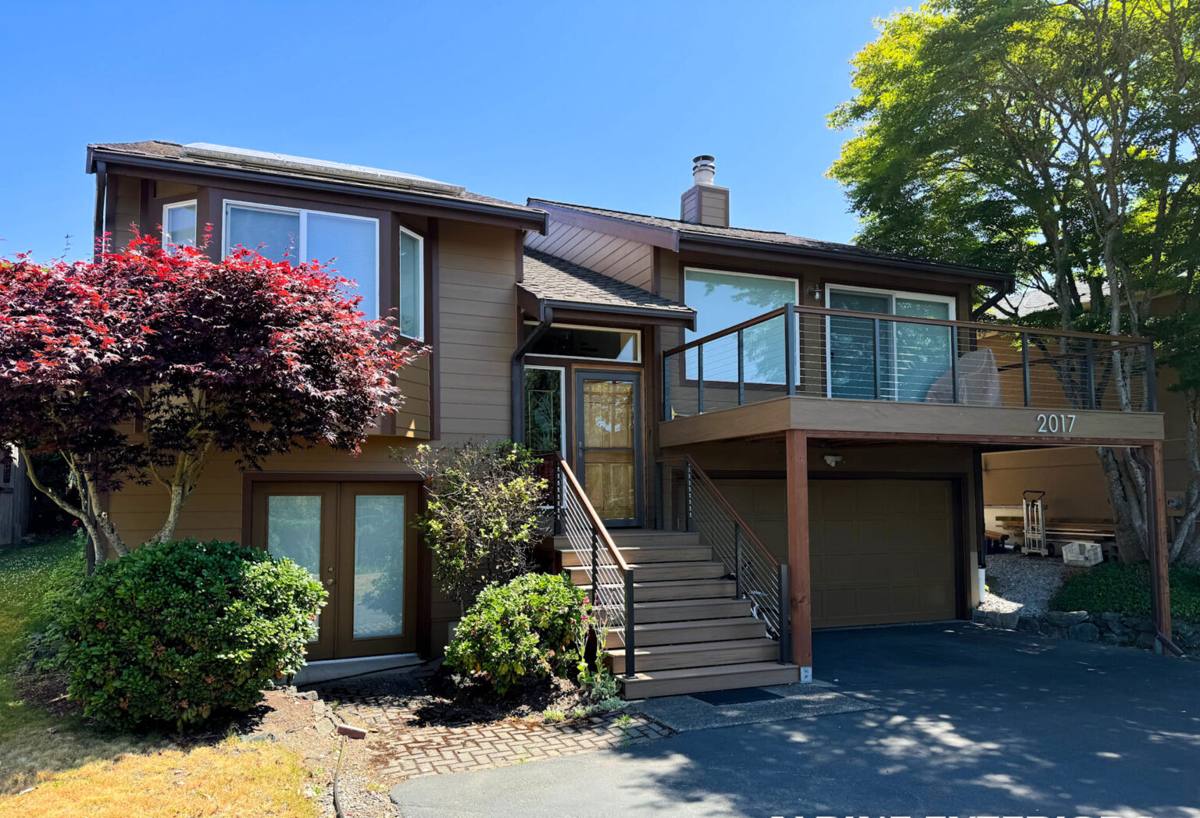
What a Correct Roof Replacement Actually Involves
A roof replacement is more than a tear-off and a reshingle. Skipping steps is how a roof looks fine for two or three years and then starts leaking at every penetration. Here's what a full, correct job covers:
Tear-Off and Deck Inspection
We remove the old roofing down to the sheathing so we can actually see what's underneath. In this climate, we regularly find soft or delaminated decking around old vent boots, chimneys, and eaves where moisture has been getting in slowly for years without an obvious interior leak. Any compromised sheathing gets replaced before anything new goes down — covering over bad decking just hides the problem for the next owner.
Underlayment Built for Wind-Driven Rain
Standard felt underlayment is not enough for a bay-adjacent property. We use self-adhering, waterproof underlayment at eaves, valleys, and any low-slope transitions, with synthetic underlayment across the rest of the field. This is the layer that actually keeps the house dry if wind ever drives rain up under a shingle tab, and it's the difference between a roof that shrugs off a bad storm and one that doesn't.
Flashing That Won't Corrode Prematurely
Every place the roof plane is interrupted — chimneys, skylights, sidewalls, plumbing vents — needs new flashing, not reused flashing. Salt air accelerates corrosion on cheaper or thinner metal, so we spec flashing material that holds up near the water rather than the minimum-grade option.
Ventilation That Actually Balances
Intake at the eaves has to match exhaust at the ridge or the attic doesn't vent the way it's designed to, and that trapped moisture is exactly what feeds moss and rot from underneath. A lot of older Birch Bay roofs have ridge vents installed with little or no matching soffit intake, which undercuts the whole system. We check and correct this as part of the replacement, not as an afterthought.
Material Installation to Manufacturer Spec
Nail placement, exposure, and starter course details all affect wind resistance and warranty coverage. Rushed installation is the single biggest reason shingles lift or blow off in a coastal storm — it's rarely a defective product, it's usually a shortcut in how it went on.
Roofing Material Options for California Creek Homes
Most homes here land on one of three practical choices. There's no single "best" material — it depends on your roof's slope, your budget, and how long you want to go between maintenance.
| Material | Typical Lifespan | How It Handles This Climate | Maintenance Notes |
|---|---|---|---|
| Architectural asphalt shingle | 25–30 years | Good performance with proper underlayment and ventilation; algae-resistant granules help slow moss/algae staining | Periodic moss removal on shaded slopes; most cost-effective upfront |
| Standing seam metal | 40–50+ years | Sheds rain and moss very effectively due to smooth, steep-shedding surface; strong wind uplift resistance | Lowest ongoing maintenance; higher upfront cost |
| Composite/synthetic shingle | 30–50 years | Resists moisture absorption better than wood; consistent performance in wet, salt-air conditions | Mid-range cost and maintenance; good option where wood-look is wanted without wood's moisture issues |
We generally steer clients away from cedar shake on properties this close to the water and this exposed to prolonged wet seasons. It's not that cedar can't be made to work — it's that it demands a maintenance schedule (regular treatment, careful ventilation, frequent moss control) that most homeowners underestimate, and the moisture-related repair costs down the line often outweigh the upfront savings versus a composite or metal option that needs far less attention.
Signs Your California Creek Roof Needs Replacing, Not Patching
- Granules collecting in gutters or at downspout outlets in noticeable amounts
- Shingles that are cupping, curling at the edges, or visibly cracked
- Moss established in the shingle mat itself, not just sitting on the surface
- Daylight visible through the roof deck from inside the attic
- Soft spots or sagging felt underfoot on the roof plane
- Repeated leaks around the same penetration despite prior patch repairs
- Roof is at or past 20–25 years old and has never been fully replaced
One or two of these on their own might mean a targeted repair is enough. Several at once, especially combined with roof age, usually means repair costs start approaching what a full replacement would run — and a patch doesn't reset the clock on underlayment or flashing that's failing underneath.
Our Process for a California Creek Roof Replacement
- On-site inspection: We walk the roof and the attic, not just look from the ground. Photos and notes on deck condition, ventilation, flashing, and any moisture damage.
- Written estimate: A clear scope of work and price, spelling out materials, underlayment, flashing, and ventilation changes — no vague line items.
- Permitting: We handle the Whatcom County permit paperwork so you don't have to chase it down yourself.
- Material delivery and site protection: Landscaping, siding, and windows get protected before tear-off starts.
- Tear-off and deck repair: Old roofing removed, deck inspected, any bad sheathing replaced.
- Underlayment, flashing, and ventilation installed: The parts of the job that determine whether the roof actually performs in this climate, not just looks new.
- Final roofing material installed to spec.
- Full site cleanup: Magnetic sweep for nails, debris hauled off, yard left clean.
- Walkthrough: We go over the finished roof with you before calling the job done.
Cost Factors Homeowners Should Understand
Every roof is priced individually, but the variables that move the number are consistent. Understanding them helps you compare estimates apples-to-apples rather than just looking at the bottom line.
| Factor | Why It Matters |
|---|---|
| Roof pitch and complexity | Steep or multi-plane roofs take longer and require more safety setup than a simple gable |
| Deck condition | Rotted or soft sheathing found during tear-off adds material and labor not visible in the original estimate |
| Material choice | Asphalt, composite, and metal carry different material and labor costs per square |
| Ventilation upgrades | Adding or correcting soffit and ridge venting is worth the modest added cost to protect the new roof |
| Number of penetrations | Chimneys, skylights, and multiple vent stacks each need individual flashing work |
| Access | Steep lots or limited driveway access near the water can affect staging and disposal costs |
Be wary of any estimate that's dramatically lower than the others without explanation — it usually means underlayment, flashing, or ventilation work is being left out, and those are exactly the details that matter most in this climate.
Why Hiring a Crew That Already Works in California Creek Matters
A roofer who mostly works drier, inland jobs may not think twice about ventilation balance or moss-resistant granules, because it simply hasn't cost them a callback yet. A crew that regularly works Birch Bay and the surrounding Whatcom County waterfront knows which details actually matter here: where wind-driven rain tends to find its way in, which roof orientations grow moss fastest, and how salt air changes what fastener and flashing materials are worth spending a little more on. That local pattern recognition is the difference between a roof that just meets code and one that's actually built for where it sits.
It also matters for permitting and follow-up. A contractor already familiar with Whatcom County's permitting process moves through it without delays, and a crew that's local can actually come back for a warranty check or a question six months or six years down the road — not just disappear once the invoice is paid.
Maintaining Your New Roof Through Moss Season
A properly installed roof still benefits from basic seasonal attention in this climate. Keep gutters clear so water isn't backing up under the shingle edge. Have moss or algae growth addressed early with a gentle, roof-safe treatment rather than pressure washing, which can strip granules and shorten shingle life. Trim back overhanging branches where you can — shade and debris are what let moss get a foothold in the first place. A quick visual check after major windstorms, looking for lifted shingles or dislodged flashing, catches small issues before they become deck-level leaks.
Get a Straightforward Estimate
If your California Creek home's roof is showing its age, or you just want an honest opinion on whether repair or replacement makes more sense, we're happy to take a look. The estimate is free, there's no pressure, and you'll get a clear explanation of what we find and what it would take to fix it — use the form below to get started.