 Birch Bay Siding
 Roofing on the Cherry Point Shoreline
Cherry Point sits close enough to the water that every roof in the area lives a harder life than one twenty miles inland. Salt-laden air moves in off the Strait of Georgia, driving rain comes in sideways more often than most homeowners expect, and the shaded, damp stretches of the year in Whatcom County give moss months to establish itself before anyone notices. None of that means a roof is doomed — it means a roof repair here has to account for conditions a general contractor working a dry inland neighborhood never has to think about.
We work on homes throughout Birch Bay and the surrounding Cherry Point area regularly, which matters more than it sounds like. A roof repair that ignores local exposure — wind direction, salt exposure, the way moisture sits under tree cover — tends to fail again within a season or two. A repair that accounts for it holds up.
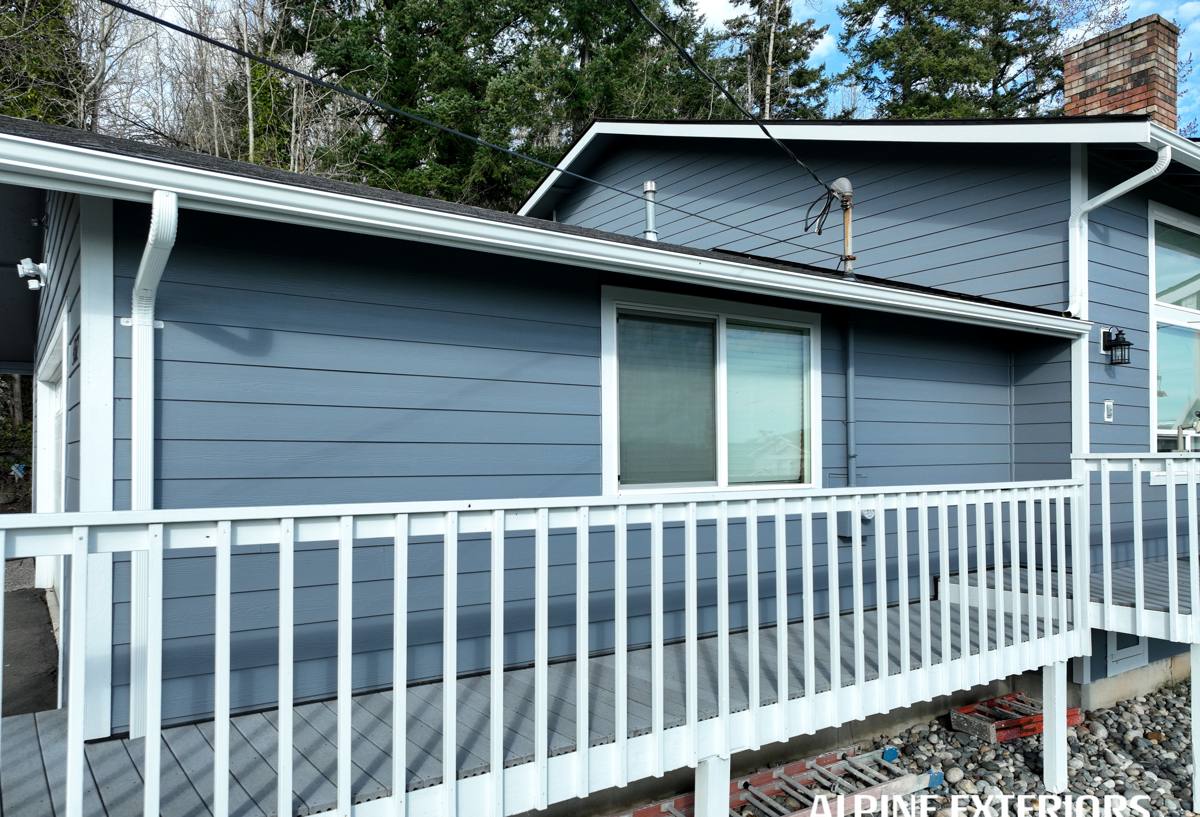
What Salt Air, Driving Rain, and Moss Actually Do to a Roof
Salt Air
Airborne salt doesn't just affect boats and siding. It accelerates corrosion on any exposed metal component of a roofing system — flashing, fasteners, vents, and gutter hardware. Galvanized fasteners that would last decades inland can start showing rust streaks and weakening well ahead of schedule near the shoreline. Once a fastener corrodes and loosens, the shingle or panel it's holding down becomes vulnerable to wind lift, and that's usually where a small problem turns into a leak.
Driving Rain
Birch Bay gets weather that comes in almost horizontally during winter storms off the water. Roofing systems are designed to shed water moving downward; wind-driven rain pushes water sideways and upward under laps, ridge caps, and flashing that would otherwise stay dry. This is why so many leaks in this area show up at transitions — where a roof meets a wall, a chimney, a skylight, or a dormer — rather than in the open field of the roof itself.
Moss and Sustained Moisture
Whatcom County's overcast, damp stretches give moss and algae a long runway to take hold, especially on north-facing slopes and areas shaded by trees. Moss doesn't just look bad — its root structure lifts shingle edges and holds moisture directly against the roofing material, which shortens the life of the layer underneath. Left unaddressed through a few wet seasons, moss growth is one of the more common reasons we find soft, water-damaged decking underneath what looked like a merely dirty roof from the ground.
Signs a Cherry Point Roof Needs Repair
Most roof problems in this area give warning signs before they become an active leak inside the home. Homeowners who catch these early save real money on the repair.
- Granule buildup in gutters or at downspout outlets, a sign asphalt shingles are wearing thin
- Curling, cracked, or missing shingles, particularly on slopes facing prevailing wind
- Moss or dark algae streaking, especially on shaded or north-facing sections
- Rust staining or visibly corroded fasteners around flashing, vents, or metal trim
- Soft or spongy spots when the roof is walked, which usually mean the decking underneath has absorbed water
- Daylight visible through the attic at roof boards, or damp insulation below the roof deck
- Water stains on interior ceilings, especially near chimneys, skylights, or where a roof line changes pitch
- Sagging in the roofline itself, which points to a structural issue and not a simple patch job
Any one of these on its own may be minor. Several appearing together usually means the roof has been dealing with moisture intrusion for a while and a proper inspection is worth doing before another wet season.
What a Correct Repair Actually Involves
A roof repair done right isn't just replacing the shingles someone can see are damaged. In an area with heavy salt exposure and driving rain, the underlying details matter as much as the visible surface.
Flashing First
Most leaks in coastal Whatcom County homes trace back to flashing — the metal or membrane material sealing joints at chimneys, walls, valleys, skylights, and vent pipes — rather than to the field of shingles or panels. A repair that replaces shingles but reuses old, corroded, or improperly lapped flashing is likely to leak again at the same spot. We treat flashing condition as a primary diagnostic point, not an afterthought.
Underlayment Condition
The underlayment beneath the visible roofing material is the last line of defense against wind-driven rain that gets past the shingles or panels. If it's been compromised by age or prior moisture intrusion, patching the surface layer without addressing what's underneath just delays the next repair call.
Deck Integrity
Before any new material goes down, the roof decking underneath needs to be sound. Soft, delaminated, or water-damaged plywood or boards won't hold fasteners properly no matter how good the shingles above are. This is the step that gets skipped by crews trying to do a fast, cheap patch — and it's the step most likely to cause a repeat failure.
Fastener and Hardware Selection
Given the corrosion risk from salt air, fastener quality is not a place to cut corners near Cherry Point. We use fasteners and metal components rated for coastal exposure rather than standard-grade hardware that may hold up fine twenty miles inland but corrodes prematurely closer to the water.
Our Roof Repair Process
- Inspection. We walk the roof and the attic when accessible, checking flashing, valleys, penetrations, decking condition, and ventilation — not just the area where the visible symptom appeared.
- Honest diagnosis. We explain what we found, what's causing it, and whether it's a targeted repair or a sign of broader wear that a homeowner should plan around.
- Written scope and estimate. Before any work begins, you know what's being repaired, what materials are being used, and roughly what it costs — no surprise add-ons mid-job.
- Repair. We address the root cause — flashing, decking, underlayment, or all three — rather than just covering the visible symptom.
- Cleanup and moss treatment where relevant. If moss or algae contributed to the problem, we address it as part of the job rather than leaving it to regrow immediately.
- Follow-up. We stand behind the work and are reachable if anything comes up after the repair.
Repair vs. Replacement: How We Help You Decide
Not every roof problem near Cherry Point needs a full replacement, and not every roof can be reasonably patched. The honest answer depends on age, extent of damage, and how much of the roofing system has already been compromised by moisture.
| Factor | Favors Repair | Favors Replacement |
|---|---|---|
| Roof age | Under roughly 15 years, or newer material | At or beyond the manufacturer's expected service life |
| Extent of damage | Localized — one slope, one flashing point, one penetration | Widespread wear, multiple leak points, or granule loss across most slopes |
| Decking condition | Sound, dry decking under the affected area | Soft or water-damaged decking in multiple areas |
| Moss/algae history | First occurrence, addressed early | Repeated heavy growth that's degraded material over multiple seasons |
| Interior damage | None, or minor staining caught early | Ongoing leaks affecting insulation, framing, or interior finishes |
We'll always tell you honestly which side of that table your roof falls on. A repair that's likely to fail again within a year isn't a good use of your money, and we'd rather say so upfront than sell a patch we don't believe in.
Roofing Materials We Work With in Coastal Conditions
Different roofing materials handle Whatcom County's coastal exposure differently, and the right repair approach depends partly on what's already on the roof.
| Material | Coastal Performance Notes |
|---|---|
| Asphalt composition shingle | Common and cost-effective; granule loss and edge curling accelerate with salt exposure and moss, so periodic inspection matters more here than inland |
| Metal roofing/panels | Durable against wind-driven rain when properly fastened and sealed, but requires corrosion-resistant hardware and coatings near the shoreline |
| Wood shake/shingle | Attractive but higher-maintenance in damp, moss-prone conditions; needs more frequent moss management to reach a normal service life |
| Flat/low-slope membrane | Common on additions and porches; seams and flashing at transitions are the highest-risk points for wind-driven rain intrusion |
Whatever material is already on your roof, we repair it using components suited to that material and to Cherry Point's exposure — not a one-size-fits-all patch kit.
Why Local Experience in Cherry Point Matters
A roofing crew that mostly works inland can still do competent work, but they're often diagnosing coastal-specific problems for the first time when they show up at a Cherry Point home. We've seen how quickly fasteners corrode this close to the water, which flashing details tend to fail first under wind-driven rain off the Strait, and which roof orientations in this area collect moss fastest. That local pattern recognition shortens the diagnosis and means the repair addresses the actual cause the first time.
It also means we're not guessing at appropriate material and hardware choices for the exposure — we're applying what consistently holds up on roofs like yours, in this specific stretch of Whatcom County.
Keeping a Repaired Roof in Good Shape
A quality repair lasts longest when it's paired with basic seasonal upkeep, particularly given how much moss and debris this area accumulates.
- Clear gutters and downspouts before the fall rains start, so water isn't backing up under roof edges
- Trim back tree limbs that shade roof sections and keep them damp longer than the rest of the roof
- Have moss growth treated before it spreads across an entire slope, not after
- Walk the roofline visually from the ground after major windstorms to check for obviously lifted or missing material
- Schedule a professional inspection every year or two, even with no visible symptoms, given how coastal exposure accelerates wear
Get a Straightforward Look at Your Roof
If you're noticing moss, staining, missing granules, or a leak that's started showing up inside your Cherry Point home, it's worth having it looked at before another wet Whatcom County season adds to the damage. We offer free, no-pressure estimates — we'll tell you plainly what we find and what it would take to fix it, whether that's a targeted repair or something bigger. Fill out the form below to get started.