 Birch Bay Siding
 Point Whitehorn's Siding Takes a Different Kind of Beating
Point Whitehorn sits close enough to the water that homes here deal with a mix of stresses most inland Whatcom County properties don't see in the same combination: salt-laden air off the Strait, wind-driven rain that gets pushed sideways into wall assemblies, and a moss and algae season that runs longer than most homeowners realize. None of these alone is unusual for Western Washington. Together, on a repeated cycle, they wear siding down faster than a simple age estimate would suggest.
That matters for repair work specifically. A crack or a soft spot on a Point Whitehorn home often isn't an isolated problem — it's usually a symptom of one of those three forces finding a weak point in the siding, the trim, or the flashing behind it. Repairing it well means understanding which force did the damage, not just patching the spot where it shows.
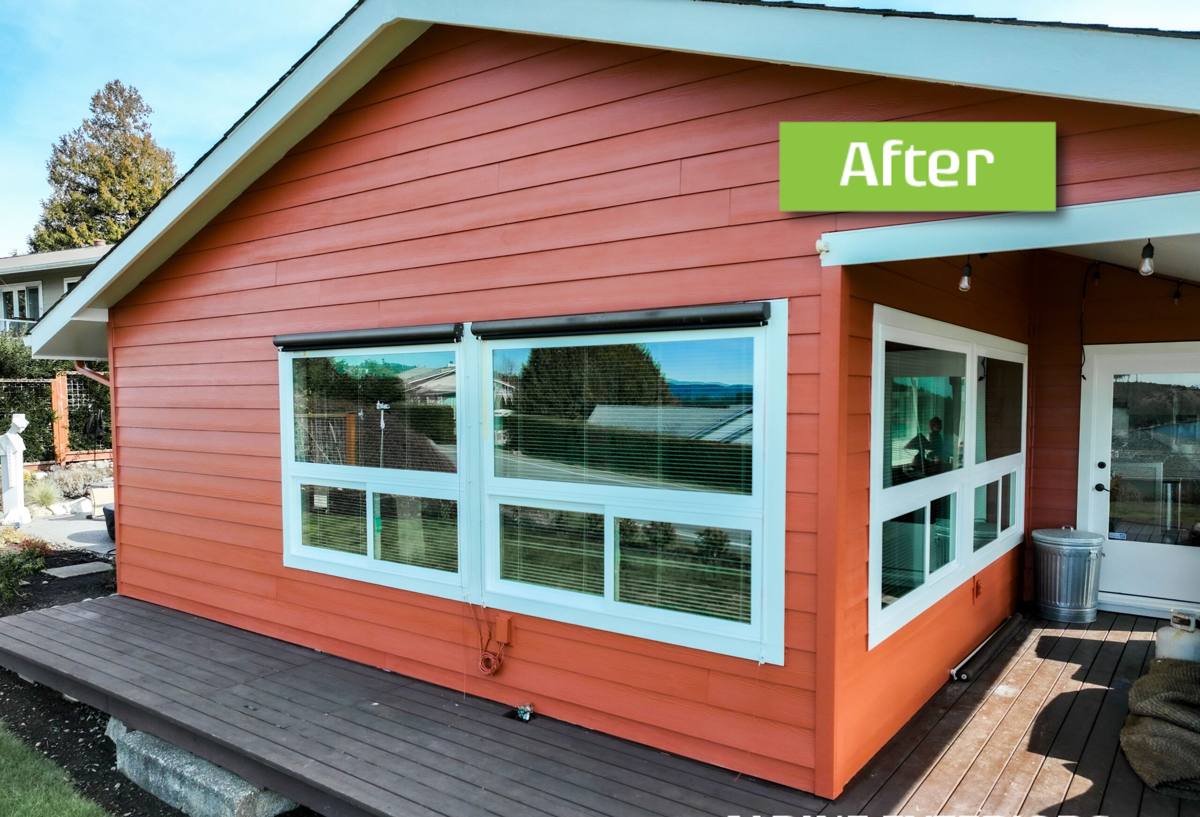
What Correct Siding Repair Actually Involves
Diagnosing the Real Cause First
The most common mistake in siding repair isn't a bad patch — it's patching the wrong thing. A stained or swollen board is a symptom. The cause could be a failed piece of flashing above it, a gap at a window or door trim letting wind-driven rain in, a clogged gutter dumping water down the wall, or moss holding moisture against the siding surface long enough for it to start breaking down the material underneath. If the repair only addresses the visible damage and not the water path that caused it, the same spot fails again within a season or two.
A proper repair call starts with tracing that path: where the water is entering, how it's traveling behind the cladding, and what's letting it in. That inspection takes longer than the patch itself, but skipping it is why so many "repairs" don't hold.
Matching Materials the Right Way
Repairing a section of siding means matching not just the color but the profile, the reveal, and the factory finish. Mismatched patches are one of the most obvious signs of a rushed repair — and on fiber cement specifically, a poor match at a seam can also create a spot where water collects instead of shedding. Correct repair work sources matching material, cuts and fastens it to the same spec as the original installation, and re-seals or re-flashes the area so it performs as well as the surrounding wall — not just looks close to it.
Common Repair Needs We See in Coastal Whatcom County Homes
Moisture Intrusion at Trim and Flashing
Wind-driven rain finds gaps that calm rain never reaches. Around windows, doors, and where siding meets trim boards, a small failure in caulking or flashing lets water behind the cladding. Over time this shows up as soft or discolored siding near those transitions, and in some cases as damage to the sheathing behind it if it's gone unnoticed for a while.
Moss and Algae Buildup
Whatcom County's damp season runs long, and shaded or north-facing walls in particular hold moisture for extended stretches. Moss doesn't just look bad — it holds water against the siding surface, which accelerates breakdown of paint and, on some materials, the substrate itself. Repair in these areas usually means addressing the growth, checking the condition of the material underneath, and correcting whatever is keeping that section damp longer than it should be (poor airflow, overhanging vegetation, or a drainage issue).
Fastener and Hardware Corrosion
Salt air accelerates corrosion on exposed fasteners, hangers, and trim hardware. Corroding fasteners can work loose, stain the siding around them, or fail to hold boards tight against the wall — which then opens a path for water. Repair work near the water should always use fasteners and hardware rated for coastal exposure, not standard-grade materials that will just corrode again.
Impact and Age-Related Damage
Cracked or chipped boards from storm debris, ladder contact, or simple age are more straightforward to repair, but even these benefit from a check of the surrounding area — a crack is an entry point for water until it's fixed, and the longer it sits, the more likely it's already let moisture into the wall assembly.
Repair vs. Replacement: How We Decide
Not every siding problem needs a full re-side, and not every problem is a quick patch. The honest answer depends on how far the damage has spread and what's driving it.
| Factor | Points Toward Repair | Points Toward Replacement |
|---|---|---|
| Extent of damage | Isolated to a few boards or one wall section | Spread across multiple walls or elevations |
| Underlying cause | Identifiable and fixable (flashing, caulking, gutter) | Systemic — original installation or material issue |
| Material condition | Surrounding siding still sound | Surrounding siding also aging out or degrading |
| Sheathing/wall condition | No moisture damage behind the siding | Rot or moisture damage found behind the cladding |
| Age of existing siding | Newer installation, isolated failure | Near or past expected service life |
We'll tell you plainly which category your home falls into. If a repair will genuinely hold, that's what we recommend — a full replacement isn't a better answer just because it's a bigger job.
Our Repair Process for Point Whitehorn Homes
- Inspection: We look at the damaged area and trace the likely water path — flashing, trim, gutters, grade, and vegetation nearby.
- Diagnosis and scope: We identify the cause, check adjacent siding for related damage, and confirm whether repair is sufficient or if the scope needs to expand.
- Material matching: We source matching fiber cement in the correct profile and factory finish so the repair blends in rather than standing out.
- Repair and correction: We replace the damaged section, correct the underlying cause (reflash, reseal, redirect water, address moss and drainage), and use corrosion-resistant fasteners appropriate for a coastal site.
- Final check: We confirm the repaired area sheds water correctly and matches the surrounding wall before calling the job done.
Why We Repair — and Replace — Only with James Hardie Fiber Cement
We don't install vinyl, LP SmartSide, primed spruce, cedar, or other fiber cement brands. That's a deliberate standard, not a sales pitch, and it applies to repair work the same as full installs: when we patch a section of siding, we want that patch to perform as well as everything around it for the long haul, and James Hardie is the product we trust to do that in this climate.
Fiber cement is non-combustible and holds up to moisture exposure in a way that matters directly in a place like Point Whitehorn — it doesn't absorb and swell the way some wood-based products can, and it doesn't have the seam and expansion behavior that makes vinyl a poor match for wind-driven coastal rain. Hardie's ColorPlus factory finish also means a well-matched repair keeps its color and doesn't need repainting on the same schedule as field-painted siding. And because Hardie backs its products with a strong transferable warranty when installed to spec, a proper repair keeps that coverage intact rather than creating a gray area with a mismatched material.
None of this means other products are without merit — vinyl is inexpensive, and cedar has real appeal. But for repair and replacement work we stand behind on a salt-air, high-moisture site, fiber cement installed correctly is what we've standardized on, and it's what we'll always recommend first.
What to Look for Before You Hire a Repair Contractor
- They inspect for the underlying cause, not just the visible damage
- They can match your existing siding's profile and finish, not just its color
- They use fasteners and hardware rated for coastal or high-corrosion exposure
- They check for moisture damage to the sheathing behind the siding, not just the surface
- They're straightforward about whether repair or replacement is the right call, without upselling
- They stand behind the repair with a clear warranty on both labor and material
A crew that already works Whatcom County's coastal neighborhoods has seen these failure patterns repeatedly and knows what to check before recommending a fix. That local pattern recognition is worth more than a generic repair quote — it's the difference between a patch that holds and one you'll be calling about again next winter.
Keeping Repaired Siding Sound Through the Wet Season
Moss and Drainage
Once a repair is done, keeping moisture from settling back in the same spot matters. That means keeping gutters clear so water isn't dumping down a wall, trimming back vegetation that shades a section long enough for moss to take hold, and rinsing off moss and algae buildup before it has a chance to hold water against the surface for an extended period.
Periodic Checks
A quick seasonal look at trim, flashing, and caulking — especially after a hard windstorm off the water — catches small gaps before they turn into repeat repair calls. This is especially worth doing on any wall that takes direct wind-driven rain.
If you're dealing with damaged, stained, or aging siding on a Point Whitehorn home, we're happy to take a look and give you a straight answer on what it needs. The estimate is free, there's no pressure, and you'll know exactly what we found and why before any work happens.