 Birch Bay Siding
 Roof Repair Built for Point Whitehorn's Weather
Point Whitehorn sits out on the exposed shoreline edge of Birch Bay, and that location changes what a roof has to survive. Homes here take wind straight off the water, salt-laden air that never really stops, and long stretches of the year where a north-facing slope barely sees direct sun. That combination is harder on a roof than most inland Whatcom County properties ever deal with, and it's why a repair that would hold up fine in a sheltered neighborhood can fail early out here if it's not done with the local conditions in mind.
We work on roofs throughout Birch Bay, and Point Whitehorn's mix of older cabin-style homes and newer builds gives us a good cross-section of what actually fails, where, and why. This page walks through what we see, what a correct repair involves, and how we run the job from first look to final cleanup.
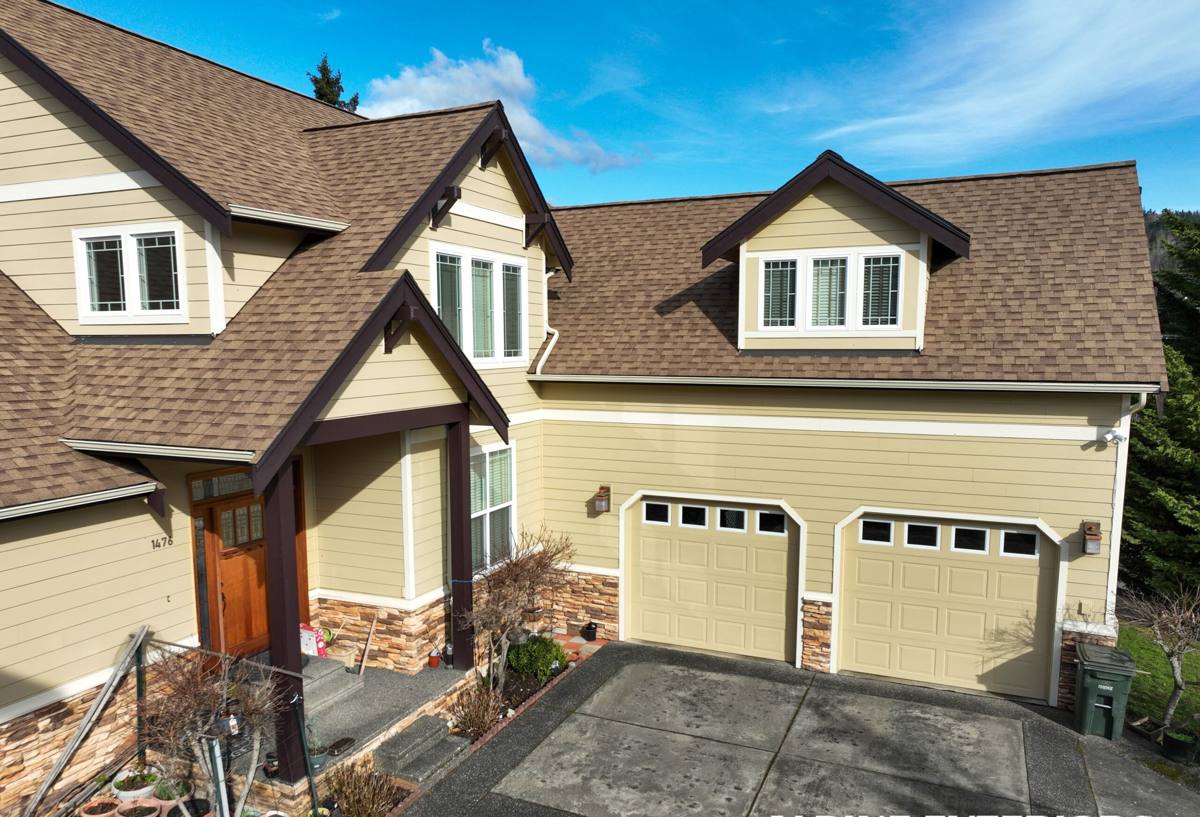
Why This Stretch of Coastline Is Hard on Roofs
Three things drive most of the repair calls we get from this area:
Salt Air
Airborne salt from the Strait accelerates corrosion on anything metal — nail heads, flashing, gutter hangers, screws holding down ridge caps. A fastener that would last decades in a drier inland climate can start rusting and losing grip years sooner here. Once fasteners back out or corrode through, shingles or panels lift, and that's an open door for water.
Driving, Wind-Driven Rain
Birch Bay's storms don't just fall straight down — wind pushes rain sideways and up under roof edges, around valleys, and behind flashing that would keep out a calmer rain just fine. Repairs that only address the visible gap and ignore how water actually travels in wind-driven conditions tend to leak again at the next storm.
A Long Moss Season
Shaded, north-facing roof sections and slopes that stay damp for days after a rain give moss a long growing window here — often most of the year. Moss holds moisture against the roofing material, lifts shingle edges as it grows, and works its way under laps and around fasteners. Left alone, it turns a cosmetic problem into a structural one.
Common Roof Problems We Find in Point Whitehorn
- Moss-lifted shingles along shaded roof planes, especially north- and west-facing slopes near tree cover
- Corroded or backed-out fasteners on older roofs, particularly near the coast-facing eaves
- Failed flashing at chimneys, skylights, and roof-to-wall intersections where wind-driven rain finds a way in
- Valley leaks where debris and moss slow drainage and hold water against the roofing material
- Granule loss and premature wear on the windward-facing slope from constant salt and wind exposure
- Soft or stained decking discovered under damaged shingles, usually from a slow leak that went unnoticed
- Clogged or undersized gutters that back water up under the first course of shingles during heavy rain
What a Correct Repair Actually Involves
A roof repair that's done right isn't just patching the spot you can see from the ground. It starts with figuring out how water is actually getting in, because the entry point and the visible damage are often several feet apart — water runs downhill under the roofing material before it shows up as a stain on the ceiling.
Tear-Back and Inspection
We pull back the damaged section far enough to see the decking underneath, not just the surface layer. If the decking is soft, delaminated, or stained, that gets addressed before anything new goes down — patching over compromised decking just hides the problem for a year or two.
Matching Materials, Correctly Installed
Where possible we match the existing shingle or roofing profile so the repair blends in rather than becoming a patchwork. But matching material means nothing if the installation details are wrong underneath it — proper overlap, correct nailing pattern and location, and underlayment that ties into the surrounding roof rather than just sitting on top of it.
Flashing Done for Wind-Driven Rain, Not Just Straight-Down Rain
This is where a lot of repairs in this area go wrong if they're done fast. Step flashing at wall intersections, counter-flashing at chimneys, and kickout flashing where a roof edge meets a wall all need to be sized and lapped to handle rain that's moving sideways in the wind, not just falling straight down. We rebuild these details rather than caulking over gaps, because sealant is a short-term fix and a properly lapped flashing system is a long-term one.
Fasteners Rated for a Salt-Air Environment
On coastal-exposed roofs like the ones in Point Whitehorn, we use corrosion-resistant fasteners — stainless steel or heavy hot-dip galvanized, depending on the material being fastened — instead of standard-grade nails and screws that corrode faster in salt air. It costs a little more up front and saves a callback in five years.
Ice-and-Water Barrier at Vulnerable Points
Eaves, valleys, and areas around penetrations get a self-adhering waterproof membrane underneath the roofing material. This is standard practice for coastal Pacific Northwest roofs, and it's cheap insurance against wind-driven rain finding the one spot where the shingles alone won't stop it.
Signs Your Roof Needs Repair Now, Not Later
Most roof damage in Point Whitehorn doesn't announce itself as a dramatic leak — it starts small and gets more expensive to fix the longer it's ignored. Watch for:
- Dark green or black streaks, or visible moss growth, especially on shaded slopes
- Shingle edges that look lifted, curled, or out of line with the surrounding roof
- Granules collecting in gutters or at downspout outlets
- Rust staining running down from flashing, vents, or nail heads
- Any ceiling stain, even a small one, after a windy rainstorm
- Daylight visible through the roof deck from inside an attic or crawlspace
- Gutters that overflow or hold standing water instead of draining freely
- Soft or spongy spots underfoot if you're ever up there for another reason (or that a contractor notices during another job)
Catching any of these early is almost always cheaper than waiting for a leak to show up on a ceiling below.
Repair or Replace? How We Make That Call
Not every roof problem in Point Whitehorn needs a full replacement, and we don't push one when a targeted repair will genuinely hold up. Here's roughly how we think about it:
| Situation | Repair usually makes sense | Replacement usually makes sense |
|---|---|---|
| Age of roof | Well within expected material lifespan | Near or past the material's typical service life |
| Extent of damage | Isolated to one section, valley, or flashing point | Widespread across multiple slopes |
| Decking condition | Solid, dry decking under the damaged area | Soft, rotted, or delaminated decking in several spots |
| Moss/algae history | First occurrence, treatable and preventable | Chronic, recurring damage across most seasons |
| Underlying cause | Single identifiable failure point (flashing, fasteners) | General wear across the whole roofing surface |
We'll tell you honestly which category your roof falls into, including when a repair is the right call even if a replacement would be the bigger job for us.
What Affects the Cost of a Roof Repair
| Factor | Why it matters |
|---|---|
| Accessibility | Steep pitch, second-story sections, or limited ladder access add time and safety setup |
| Roofing material | Composition shingle, cedar, and metal each require different repair techniques and materials |
| Extent of decking damage | Rot or soft decking found during tear-back adds material and labor beyond the visible patch |
| Number of penetrations involved | Chimneys, skylights, and vent stacks each need their own flashing detail |
| Moss/debris removal needed | Heavy moss buildup often needs careful removal before the repair area can even be assessed |
| Matching existing material | Discontinued or hard-to-match shingle profiles can affect material sourcing |
We give a written estimate before any work starts, and we'll flag it immediately if tear-back reveals something beyond the original scope — no surprise charges after the fact.
Our Process, Start to Finish
- Inspection — we get on the roof (weather permitting) and look at the actual problem area plus the surrounding sections, not just the spot you called about
- Written estimate — a clear scope of work and price range before anything is touched
- Tear-back and assessment — we open up the damaged area to check decking condition before finalizing the repair plan
- Repair — matching materials, correct flashing details, and corrosion-resistant fasteners appropriate to a coastal-exposed roof
- Cleanup — old material, debris, and any moss removed hauled away; nail sweep of the work area
- Walkthrough — we show you what was done and why, in plain language
Moss and Algae: Prevention, Not Just Cleanup
Scraping moss off a roof without addressing why it's growing there just buys a season or two before it's back. Where it makes sense, we install zinc or copper control strips near the ridge — rain washing over them carries trace metal down the roof slope and discourages regrowth on the sections below. We'll also point out contributing factors like overhanging branches or shaded areas that stay damp longer than the rest of the roof, since those are often easier and cheaper to address than the moss itself. Regular gentle cleaning (never pressure-washing, which can strip granules and shorten shingle life) keeps moss from re-establishing between visits.
Why Local Experience in Point Whitehorn Matters
A roof repair crew that mostly works inland doesn't see this kind of exposure often enough to build real judgment about it. We already know which roof orientations in this area hold moss longest, which flashing details tend to fail first in wind off the water, and what fastener and underlayment choices actually hold up here versus on paper. That means fewer surprises during tear-back, a more accurate estimate up front, and a repair that's built for the conditions your roof actually faces rather than a generic specification.
We're also familiar with the practical side of working in this part of Birch Bay — narrow driveways, tree-lined lots, and the general layout of shoreline properties — so setup and access don't turn into wasted time on the day of the job.
Keeping a Repaired Roof Healthy Between Visits
A good repair lasts longer with a little basic upkeep in between:
- Clear gutters and downspouts at least twice a year, more often under overhanging trees
- Trim back branches that shade the roof or drop debris onto it
- Have moss treated or removed before it spreads across an entire slope
- Walk the yard after major windstorms and look up for anything obviously out of place
- Address small leaks immediately rather than waiting for a convenient season
None of this requires getting on the roof yourself — most of it can be checked from the ground.
If you're seeing moss, staining, or you just want an honest read on a roof's condition before a small problem becomes a big one, we're glad to take a look. Fill out the form below for a free, no-pressure estimate.