 Birch Bay Siding
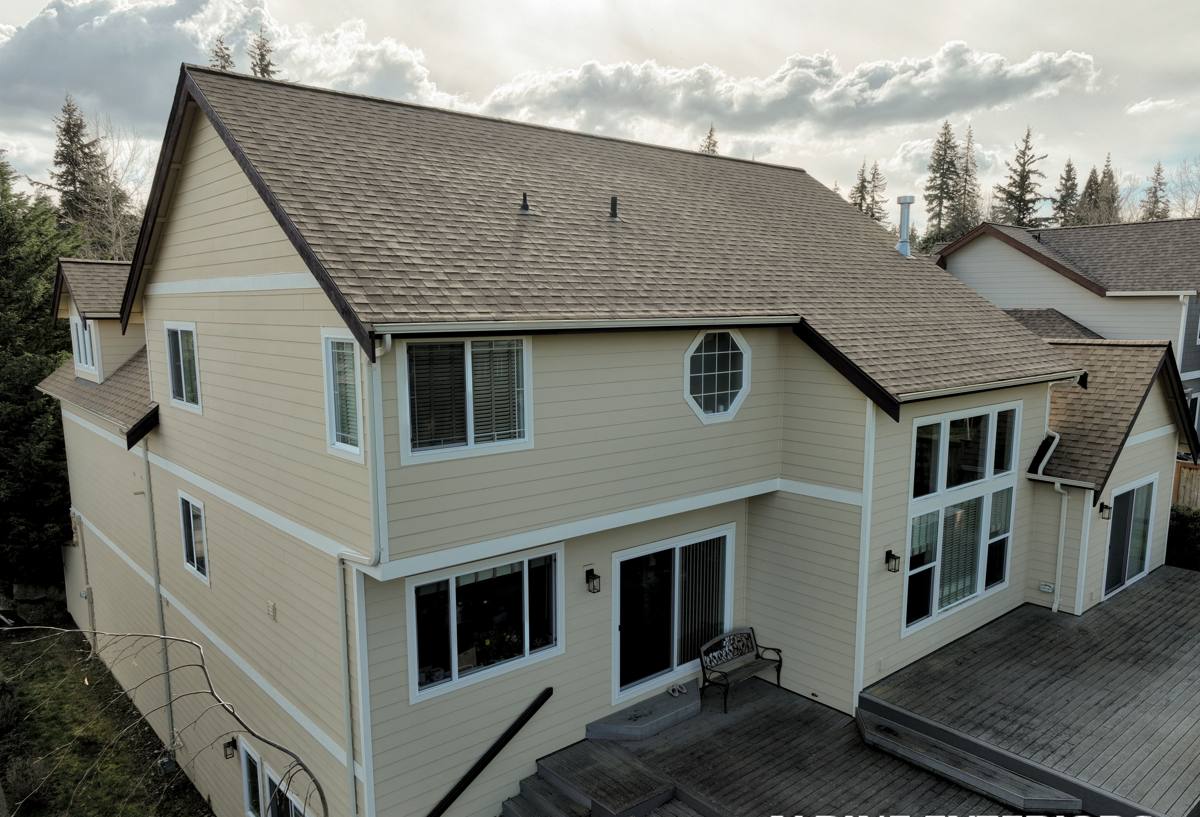
 Roofing a Home in Point Whitehorn
Point Whitehorn sits close enough to Puget Sound and the Strait of Georgia that its homes take on a different kind of weather load than roofs even a few miles inland. Salt-laden air off the water, wind-driven rain that comes in sideways during winter storms, and a shoulder season that stays damp and shaded long enough to grow a full moss carpet — all of that adds up over the life of a roof. A new roof installation here isn't just about swapping old shingles for new ones. It's about choosing materials and details that are matched to this specific stretch of Whatcom County coastline.
We install new roofs throughout Birch Bay and the surrounding communities, and Point Whitehorn comes with its own quirks: tree cover that varies block to block, exposure that can shift from sheltered to fully wind-exposed within a short walk, and older homes that were often roofed decades ago with materials and ventilation standards that don't hold up the way current products do. A correct new roof here accounts for all of that from the first inspection to the final nail.
What the Local Climate Actually Does to a Roof
Salt Air and Metal Components
Proximity to saltwater accelerates corrosion on any exposed metal — nails, flashing, vents, and fasteners. Standard galvanized fasteners can start showing rust streaks well before the shingles themselves are due for replacement. On a Point Whitehorn roof, we treat corrosion-resistant metal as a baseline requirement, not an upgrade.
Driving Rain and Wind-Driven Water
This part of the county gets rain that doesn't just fall straight down — wind pushes it sideways and up under laps, edges, and penetrations that would stay dry in a calmer climate. That means underlayment coverage, ice-and-water shield placement at vulnerable points, and properly lapped flashing matter more here than they would on an inland roof in a milder wind pattern.
Moss, Shade, and Moisture Retention
Wherever tree cover keeps a roof plane shaded for most of the day, moss gets a long growing season to establish itself. Moss holds moisture against the roofing material, works into laps and seams, and can lift shingle edges over time. A roof designed for this area needs both the right surface material and a plan for keeping moss from taking hold in the first place.
What a Correct New Roof Installation Involves
A new roof is only as good as what's underneath it. We treat every installation as a full system, not a single layer of material dropped on top of the old one.
- Full tear-off to bare decking — no roofing over old layers, so we can actually see and fix what's underneath
- Deck inspection and repair of any soft, delaminated, or water-damaged sheathing before anything new goes down
- Ice-and-water shield at eaves, valleys, and any low-slope transitions where wind-driven rain is most likely to find a way in
- Synthetic underlayment across the full roof for a consistent secondary moisture barrier
- Corrosion-resistant flashing and fasteners at every penetration — chimneys, vents, skylights, and roof-to-wall junctions
- Balanced intake and exhaust ventilation, sized to the actual attic space rather than a generic rule of thumb
- Roofing material installed to manufacturer spec, with attention to exposure and fastener placement for wind performance
Skipping any one of these steps doesn't usually cause an immediate problem — it causes a problem in year five or year ten, after the warranty conversation has already happened and the homeowner has moved on assuming the roof was done right.
Choosing the Right Roofing Material for This Location
There's no single "best" roofing material for every home — the right choice depends on the roof's exposure, the home's structure, and how much upkeep the owner wants to take on. Here's how the common options stack up for a coastal Whatcom County property.
| Material | Salt Air Performance | Moss Resistance | Typical Lifespan Here | Maintenance |
|---|---|---|---|---|
| Architectural asphalt shingle | Good with corrosion-resistant fasteners | Moderate — benefits from zinc/copper strips | 25–30 years | Periodic moss and debris removal |
| Standing seam metal | Very good with marine-grade coatings and fasteners | High — sheds moisture, little surface for moss to grip | 40–50+ years | Low; occasional fastener and seam checks |
| Composite/synthetic shake | Good | Moderate to good depending on product | 30–40 years | Low to moderate |
| Wood shake | Requires diligent upkeep near salt air | Lower — organic material holds moisture and feeds moss growth | Varies widely with maintenance | High |
We'll walk through these trade-offs against your home's actual exposure, budget, and roofline during the estimate rather than pushing one product as a default. On heavily shaded, moss-prone sections we frequently recommend adding zinc or copper control strips near the ridge regardless of which shingle or shake product is chosen — they release trace metals with each rain that inhibit new moss growth for years.
Ventilation and Attic Health
A roof that looks new on the outside can still fail early if the attic underneath isn't breathing correctly. Trapped moisture from bathroom exhaust, cooking, and everyday humidity needs somewhere to go, and in a damp coastal climate that moisture has nowhere good to sit. Poor ventilation shows up as premature deck rot, shortened shingle life from the underside, and in some cases visible moisture staining on the interior ceiling. When we install a new roof, we assess intake vents at the eaves and exhaust at the ridge or high points, and we correct any imbalance before it undermines the new roofing above it. This is one of the most common gaps we find on older Point Whitehorn homes — a previous re-roof that replaced the shingles but never addressed the ventilation system underneath.
Our Installation Process
- On-site inspection. We walk the roof and attic, check the decking, note tree cover and exposure, and identify any existing moss, moisture, or ventilation issues.
- Written estimate. You get a clear scope of work and material options, with the trade-offs explained plainly — no pressure to decide on the spot.
- Scheduling around weather. We plan installation for a dry window where possible and stage materials to minimize how long the deck is exposed during tear-off.
- Full tear-off and deck repair. Old roofing comes off completely; any damaged sheathing is replaced before underlayment goes down.
- System installation. Ice-and-water shield, underlayment, flashing, ventilation components, and the finish roofing material go in per manufacturer specification.
- Final walkthrough. We review the completed roof with you, cover care and maintenance specific to your material choice, and answer any questions before we consider the job finished.
Why Local Experience in Birch Bay Matters
A crew that only occasionally works near the water can miss the details that matter most out here — using standard fasteners instead of corrosion-resistant ones, underestimating how far wind-driven rain travels up a roof plane, or skipping moss-prevention measures because they're not standard practice inland. Crews that work Point Whitehorn and the greater Birch Bay area regularly see the same failure patterns repeatedly on older roofs and build the fix into every new installation as a matter of course, not an upsell. That familiarity with this specific stretch of Whatcom County coastline is worth as much as the shingle brand on the invoice.
Signs Your Point Whitehorn Roof May Need Replacing Rather Than Repairing
- Granule loss heavy enough to show bald patches or clogged gutters
- Shingles that are cupping, curling, or cracking across multiple roof planes
- Persistent moss growth that returns quickly after cleaning
- Soft spots or sagging visible from the ground or in the attic decking
- Daylight visible through the roof deck from inside the attic
- Repeated leaks in different locations rather than one isolated spot
- A roof already past, or close to, its material's expected service life
One or two of these on their own might mean a targeted repair is enough. Several at once, especially on a roof that's already at or beyond its expected age, usually means repair costs start approaching what a full replacement would cost — at which point a new roof is the better long-term value.
What Affects the Cost of a New Roof Here
Every roof is priced based on its own specifics, but the same handful of factors drive most of the variation we see on Point Whitehorn homes: roof size and number of planes, pitch and walkability, the condition of the existing deck, how much tear-off and disposal is involved, the material chosen, and any additional ventilation or moss-prevention work the roof needs. Simple, single-story roofs in good structural condition sit at the lower end of the range; steep, complex rooflines with deck repair needed cost more. We'll break down exactly where your home falls during the on-site estimate rather than quoting a number sight unseen.
If your roof in Point Whitehorn is showing its age, or you'd simply like an honest read on how many years you have left before replacement makes sense, we're glad to take a look. Reach out for a free, no-pressure estimate using the form below.