 Birch Bay Siding
 Windows Built for Point Whitehorn's Waterfront Climate
Point Whitehorn sits close enough to the water that its houses live with weather most Whatcom County neighborhoods never see in the same combination. Homes here catch salt-laden air off the Strait of Georgia, take driving rain straight off the water during winter storms, and sit under enough cloud cover and shade for moss to get a foothold on anything that stays damp too long. Windows are one of the first building components to show the strain — corroded hardware, fogged glass, soft sills, and drafts that show up right when the heating bill does.
Energy-efficient windows done right in this area aren't just about a better U-factor on paper. They're about a frame and installation system that can shed wind-driven rain, resist salt corrosion, and keep performing after a decade of Birch Bay winters. That's a different job than swapping windows in a dry inland neighborhood, and it's why we treat this as a local specialty rather than a catalog product we drop into any house.
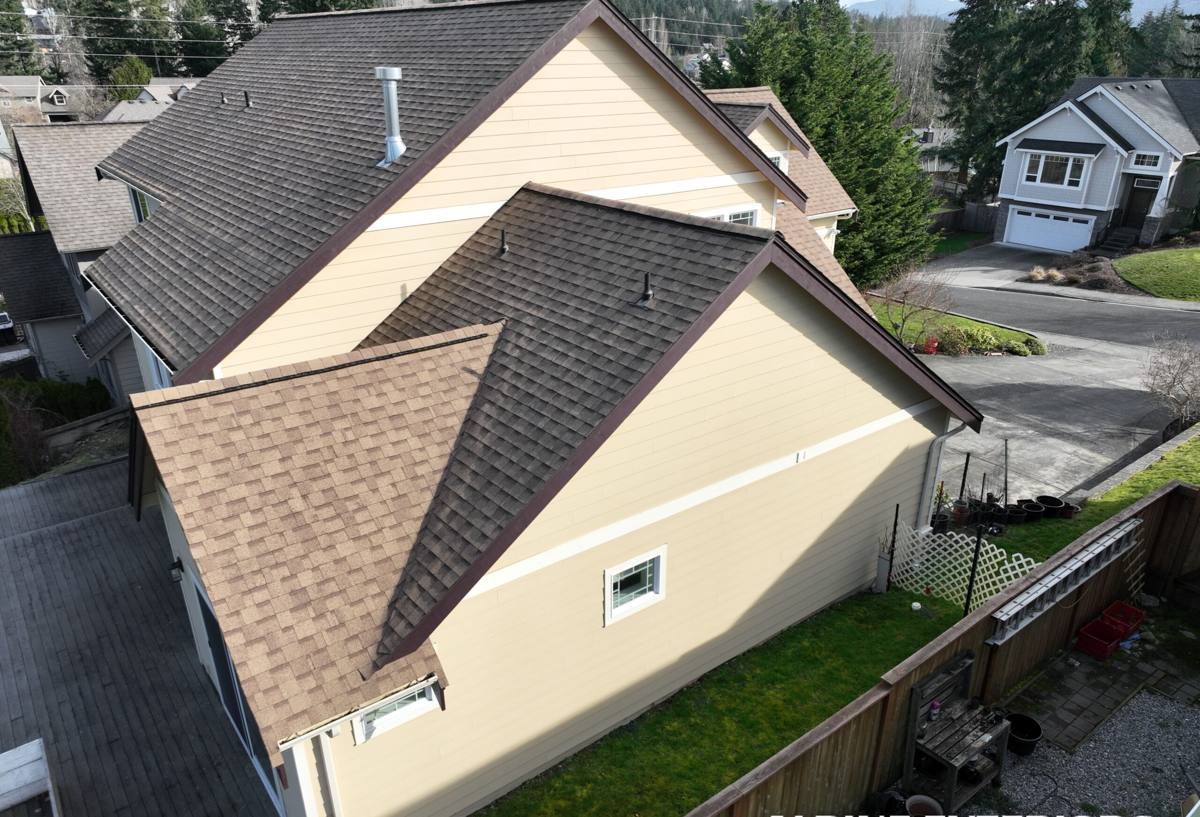
What the Local Climate Actually Does to a Window
Salt Air
Airborne salt from the water settles on exterior surfaces year-round, not just during storms. On lower-grade hardware, hinges, and cheap cladding, that salt exposure speeds up corrosion and pitting well before a window's expected service life is up. It also breaks down poor-quality sealants faster than inland exposure would.
Driving Rain
Wind off open water doesn't just drop rain — it pushes it sideways into wall assemblies and window openings. A window can have excellent glass and still leak or rot at the frame if the flashing and sill pan underneath it weren't built to handle rain being driven horizontally, not just falling straight down.
Moss and Persistent Damp
Shaded lots and long stretches of overcast, wet weather mean moss and algae growth on siding, trim, and window sills is a normal part of the season here — not a sign of neglect. Left alone, that moisture-holding growth keeps wood trim and sills damp far longer than they should be, which is exactly the condition that leads to soft wood, failed paint, and eventual rot around the window opening.
Signs Your Current Windows Are Underperforming
- Cold drafts near the frame even when the window is fully latched
- Condensation or fogging between panes — a sign the seal has failed
- Visible corrosion on hinges, locks, or cranks
- Soft, discolored, or moss-covered wood at the sill or bottom corners
- Paint or finish peeling faster on window trim than on the rest of the siding
- Rooms near windows that feel noticeably colder or draftier than the rest of the house
- Visible daylight or a whistling sound around the frame during windstorms
Any one of these on its own might just mean a window needs caulking or a hardware adjustment. Several of them together, especially on the weather-facing side of the house, usually mean the window and its installation are past the point where repair makes sense.
What "Energy-Efficient" Should Mean for a Point Whitehorn Home
Energy performance for a window comes down to a handful of measurable numbers, and in a marine climate like this one, some matter more than others. Whatcom County's winters are mild by national standards but persistently damp and windy, which puts the emphasis on heat retention and air sealing more than on blocking intense summer sun.
| Rating | What It Measures | Why It Matters Here |
|---|---|---|
| U-Factor | How much heat escapes through the window | Lower is better — this is the main driver of winter heat loss and heating cost in our climate |
| SHGC (Solar Heat Gain Coefficient) | How much solar heat passes through the glass | Moderate SHGC is usually fine here — we don't need aggressive solar blocking like a hot, sunny climate would |
| Air Leakage Rating | How much air passes through the assembly when closed | Directly tied to drafts and moisture intrusion during wind-driven storms |
| Condensation Resistance | How well the frame and glass resist interior fogging | Important in a damp climate where interior humidity is often higher |
We look for NFRC-labeled windows with double or triple glazing, low-E coatings, and gas fill appropriate to the local temperature swings — and we size the frame and glass package to the specific wall, not just the room it's going into.
Frame Materials: What Holds Up in This Climate
| Frame Type | Salt & Moisture Behavior | Maintenance | Our Take |
|---|---|---|---|
| Vinyl | Doesn't corrode or rot; performs well near the water | Low — occasional cleaning | Solid, cost-effective default for most Point Whitehorn homes |
| Fiberglass | Excellent stability, resists warping and moisture | Low | Worth the upgrade cost on higher-exposure elevations facing the water |
| Wood or Wood-Clad | Attractive but vulnerable to moisture and rot without diligent upkeep | High — regular painting/sealing required | We'll install it if a homeowner wants the look, but we're upfront that it needs real maintenance discipline in this climate |
| Aluminum | Prone to corrosion in salt air unless properly coated; conducts heat and cold readily | Moderate | Generally not our first recommendation for direct water exposure |
There's no universally "best" frame material — it's a trade-off between upfront cost, appearance, and how much upkeep a homeowner actually wants to commit to. Our job is to lay out that trade-off honestly rather than push whatever has the best margin.
Why Installation Matters as Much as the Window Itself
A high-end window installed with sloppy flashing will underperform a mid-grade window installed correctly — especially in a spot that takes driving rain off open water. Most of the leaks and rot we get called out to fix in this area trace back to the installation, not the window unit itself.
What a Correct Installation Includes
- Removing the old window and inspecting the framing and sheathing underneath for hidden moisture damage before anything new goes in
- Repairing or replacing any soft or rotted framing found during that inspection
- Installing a sloped sill pan so any water that gets past the window drains back out, not into the wall
- Integrating flashing tape and the window's nailing fin properly with the house's weather-resistive barrier, shingle-style so water sheds outward at every layer
- Setting the window level, plumb, and square, with proper shimming so it operates smoothly and seals evenly
- Insulating the gap between the frame and rough opening — not overpacking it, which can bow the frame
- Sealing and trimming the exterior with materials suited to ongoing salt and moisture exposure
Skipping the sill pan or reusing old flashing to save time is exactly how a new window ends up with the same rot problem as the old one, just a few years later.
Our Process for Point Whitehorn Homes
1. On-Site Assessment
We walk the exterior and interior of the home, check existing windows for the failure signs above, and look at which elevations take the most direct wind and rain — that exposure often varies significantly from one side of a house to another out here.
2. Straightforward Recommendation
We'll tell you plainly which windows need replacing now, which can wait, and which frame and glass package fits your home and budget — including where a mid-tier vinyl window is genuinely the right call versus where the added cost of fiberglass is worth it because of direct water exposure.
3. Careful Removal and Inspection
Every opening gets checked for hidden moisture damage before the new window goes in. If we find soft framing, we address it as part of the job rather than sealing a new window over a problem that's still there.
4. Installation to Manufacturer and Local Best Practice
Sill pans, proper flashing sequencing, and correct sealing every time — not shortcuts that only show their cost a few winters later.
5. Cleanup and Walkthrough
We walk through operation, finishes, and any care recommendations specific to the frame material chosen, including what to expect with moss and mildew on sills during the wetter months.
Living With Windows in a Marine Climate: A Maintenance Checklist
- Rinse salt residue off frames and glass periodically, especially after storms
- Keep weep holes at the base of window frames clear of debris so water drains properly
- Check and refresh exterior caulking annually, particularly on sun-and-rain-exposed elevations
- Address moss or algae on sills and trim promptly rather than letting it sit through a wet season
- Test hardware (locks, cranks, hinges) periodically and lubricate as needed to head off salt corrosion
- Watch for soft spots or paint failure at wood sills and trim, and address them before they spread
Why Hire a Crew That Already Works in This Area
A window installer who mostly works dry, inland jobs may never think twice about sill pan slope or flashing sequencing, because their local climate is more forgiving of small shortcuts. Point Whitehorn and the broader Birch Bay shoreline aren't forgiving in that way. We work this specific stretch of Whatcom County regularly, so we already know which elevations tend to take the worst of the weather, which frame materials actually hold up near the water, and what a correct installation needs to look like to survive years of salt air and driving rain rather than just look good on install day.
That local familiarity shows up in the details — the flashing detail we won't skip, the frame material we'll steer you away from on a water-facing wall, the extra minute spent making sure a weep hole isn't blocked. None of it is complicated, but all of it is the difference between windows that perform for twenty-plus years and windows that need attention again in five.
Get a Straightforward Estimate
If your windows are drafty, fogged, showing corrosion, or just old enough that you're wondering whether they're costing you on heating bills, we're happy to take a look. We'll give you a clear, no-pressure assessment of what's actually going on and what it would take to fix it right — use the form below to request a free estimate for your Point Whitehorn home.