 Birch Bay Siding
 Why Point Whitehorn Windows Wear Out Faster Than Most
Point Whitehorn sits on the coastal stretch of Whatcom County between Birch Bay and Blaine, right up against the Strait of Georgia. That location is the whole reason people build here — the water views are hard to beat — but it's also why windows in this neighborhood take a beating that inland Whatcom County homes never see. Salt-laden air off the strait works into hardware, weep systems, and metal components. Driving rain off the water hits west- and north-facing walls at an angle, not straight down, which pushes water into gaps that would stay dry on a more sheltered lot. And the long gray stretch from fall through spring keeps moss and mildew active on sills, trim, and glazing for months at a time.
None of that means your windows are doomed. It means the details of material choice and installation matter more here than they would on a house a few miles inland, and it's worth understanding what those details are before you sign a contract.
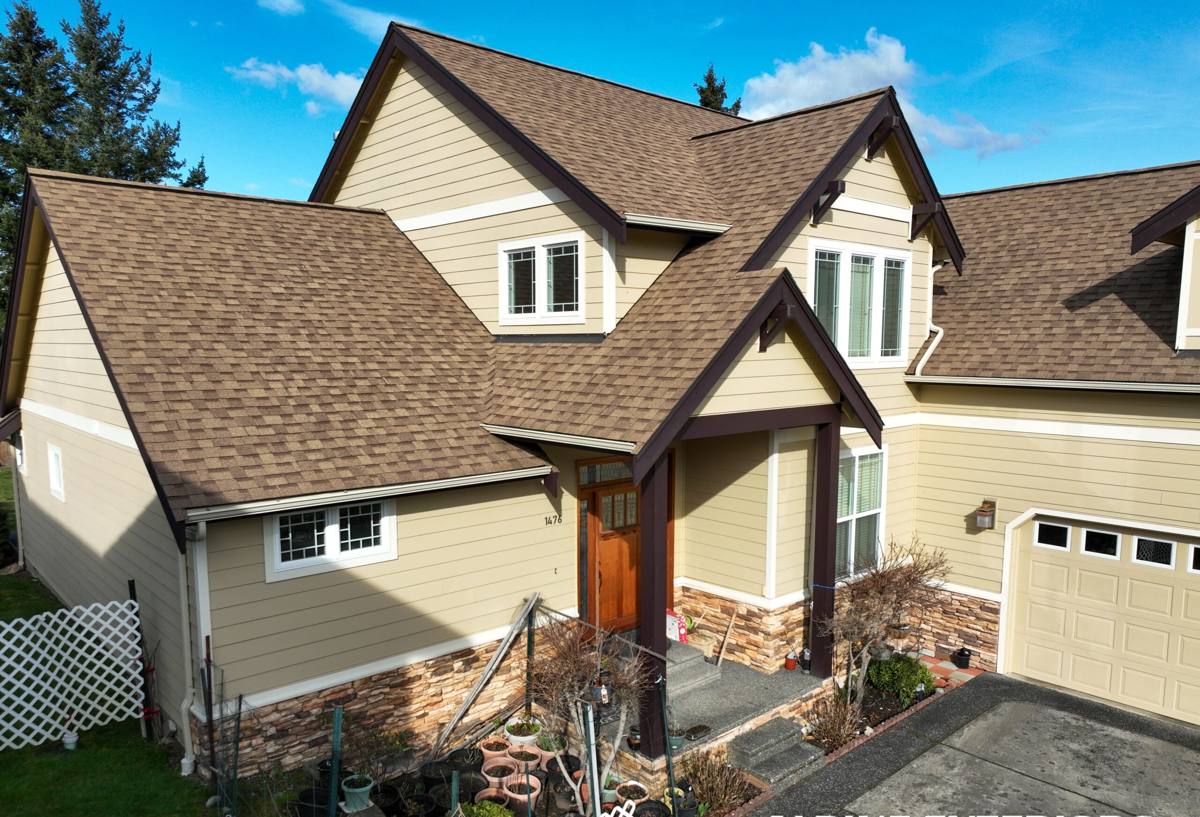
Signs Your Current Windows Are Losing the Battle
Most window failures on the coast don't show up as a sudden leak. They show up gradually, and homeowners often live with the early signs for a year or two before calling anyone. Watch for:
- Fogging or a permanent haze between the panes — the seal on the insulated glass unit has failed and moist air has gotten inside
- Soft or discolored wood at the sill or the bottom corners of the frame
- Paint or finish bubbling on the interior trim near the window, which usually means moisture is getting past the exterior seal
- Hardware — locks, cranks, hinges — that's stiff, pitted, or coated in white corrosion
- A draft you can feel with your hand along the frame edge on a windy day
- Green or black growth building up on the sill or lower sash faster than you can keep it cleaned off
- Windows that are noticeably harder to open and close than they used to be, which often points to a frame that's swelling or racking
Any one of these can be a minor fix. Several together, especially on the water-facing side of the house, usually mean the window system itself has reached the end of its useful life.
What "Custom" Actually Means for a Point Whitehorn Home
Non-Standard Openings
A lot of homes in this area were built or added onto in stages, and openings don't always match the sizes a big-box store stocks off the shelf. Bay windows, angled walls to catch a view, oversized picture windows, and additions with slightly different rough openings than the original structure all call for units built to the actual measurement, not a "close enough" stock size trimmed to fit.
View-Driven Layouts
Homes oriented toward the water often lean on large fixed panes flanked by smaller operable units for ventilation. That mix has to be engineered correctly — the fixed glass needs proper structural support and the operable sections need hardware rated for the wind exposure, not just whatever's cheapest.
Retrofit Into Older Framing
Older coastal homes sometimes have framing that's settled or slightly out of square after decades of wind load and moisture cycling. A custom approach means the installer corrects for that instead of forcing a modern window into an opening that isn't quite true, which is one of the most common causes of early leaks.
Choosing a Frame Material for This Climate
Every frame material has a place. On a coastal lot like Point Whitehorn, the tradeoffs shift because salt exposure and wind-driven rain punish some materials faster than others.
| Frame Material | Coastal Salt Air Behavior | Maintenance | Our Take |
|---|---|---|---|
| Vinyl | Doesn't corrode; UV-stable formulations hold color well | Low — occasional rinse | Solid value option for most openings |
| Fiberglass | Excellent — dimensionally stable through wet/dry and warm/cold cycles | Low | Best long-term performer for exposed, water-facing walls |
| Wood-clad | Interior wood is protected, but any breach in the exterior cladding invites rot | Moderate to high — cladding seams need monitoring | Good where interior wood tone matters, with realistic upkeep expectations |
| Bare aluminum | Prone to pitting and corrosion in salt air over time | High — refinishing eventually needed | We generally steer clients away from this on exposed coastal walls |
We're not against aluminum or wood as materials in general — they both have legitimate uses. On a bluff-facing wall taking direct salt spray and wind-driven rain year-round, though, we'd rather set the right expectations up front than sell something that looks great for two years and gives you problems by year five.
The Installation Details That Actually Determine Whether a Window Leaks
Flashing and Water Management
The window itself is almost never the reason a coastal install fails — the flashing detail around it is. Water has to be directed out and down, never allowed to pool at the sill or wick behind the siding. That means a proper sill pan under the rough opening, self-adhered flashing membrane integrated correctly with the house wrap (over at the top, under at the sides and bottom, always shingled so water sheds outward), and head flashing that actually kicks rain away from the wall instead of letting it run straight down behind the trim.
Sealant That's Built for Marine Exposure
Not every exterior sealant holds up to salt air and constant wet-dry cycling. We use products rated for the UV exposure and movement this climate puts them through, and we don't rely on caulk alone to do a flashing detail's job — caulk is the backup, not the primary water barrier.
Fit, Shimming, and Insulation
A window that's shimmed unevenly will rack over time, which stresses the seals and hardware. We plumb, level, and square every unit before fastening, then insulate the gap around the frame with a product that stays flexible rather than one that hardens and cracks away from the frame after a season or two of temperature swings.
How Our Process Works, Start to Finish
Assessment and Measurement
We start by looking at the existing opening, not just the window in it — checking for rot, checking how square the framing is, and noting wind exposure on that particular wall. Then we take precise measurements for custom-built units rather than working off a rough guess.
Ordering and Lead Time
Custom sizes take longer to build than stock units. We give you a realistic timeline up front so there are no surprises, and we schedule the install for a weather window that gives us a dry opening to work with — critical on the coast, where forecasts can shift fast.
Install Day
We remove the old unit, inspect the framing underneath (this is often the first time hidden rot or old flashing mistakes get discovered), repair anything compromised, install flashing and the sill pan, set and shim the new window, insulate, and seal the exterior.
Walkthrough and Cleanup
Before we consider the job done, we operate every window with you, check the seals, and clean up the work area. You should be able to move back into the room the same day.
Energy and Comfort Considerations for a Marine Climate
Whatcom County's building energy code sets minimum performance standards, and we build to meet or exceed them, but there's more to comfort here than the code minimum. Marine air carries more moisture than dry inland air, and homes right on the water often deal with condensation on interior glass during cold, damp stretches. Low-E glass coatings and warm-edge spacer systems help keep interior glass temperatures closer to room temperature, which cuts down on that condensation. For homes taking direct wind off the water, we also look at the whole-window air infiltration rating, not just the glass — a well-rated pane in a poorly sealed frame still lets cold, damp air through.
Why a Crew That Already Works This Coastline Matters
Window installation looks similar on paper everywhere, but the judgment calls change by location. A crew that regularly works Birch Bay and Point Whitehorn knows which walls on a typical lot here take the worst of the wind-driven rain, knows to check for salt corrosion on hardware that would still look fine after five years inland, and doesn't need to relearn the flashing sequence that actually holds up against this exposure. That experience shows up less in what you can see and more in what you don't have to deal with two winters later — no callback for a leak that traces back to a flashing shortcut, no premature hardware failure from a material that wasn't suited to salt air in the first place.
Keeping New Windows Performing Once They're In
A well-installed custom window on the coast should need very little from you, but a few habits extend its life:
- Rinse sills and lower sashes periodically to keep salt residue from building up on hardware and finishes
- Keep gutters and downspouts clear so roof runoff isn't dumping extra water down the wall near window heads
- Wipe down and lightly lubricate cranks and locks once or twice a year, since salt air accelerates wear on moving parts
- Address moss or mildew on sills promptly rather than letting it sit through a wet winter
- Have caulk lines and exterior sealant checked every few years — sealant is a wear item even when everything else is installed correctly
If you're weighing whether it's time to replace windows on a Point Whitehorn home, or you're planning custom sizes for a remodel or view addition, we're happy to take a look and give you a straightforward, no-pressure estimate — no obligation, just an honest read on what your windows actually need.