 Birch Bay Siding
 Siding Installation in Point Roberts: A Different Kind of Exposure
Point Roberts sits on its own peninsula, surrounded by water on three sides where the Strait of Georgia meets Boundary Bay. That geography is part of what makes the community special, but it's also what makes siding here work harder than siding almost anywhere else in Whatcom County. Homes get near-constant exposure to salt-laden marine air, wind-driven rain that hits siding sideways instead of straight down, and a long, damp shoulder season where moss and algae have plenty of time to take hold on north- and shade-facing walls.
None of that is a reason to panic about your siding. It's a reason to be specific about what "correct installation" means in this exact location, and to work with a crew that treats Point Roberts as its own microclimate rather than a generic Pacific Northwest job.
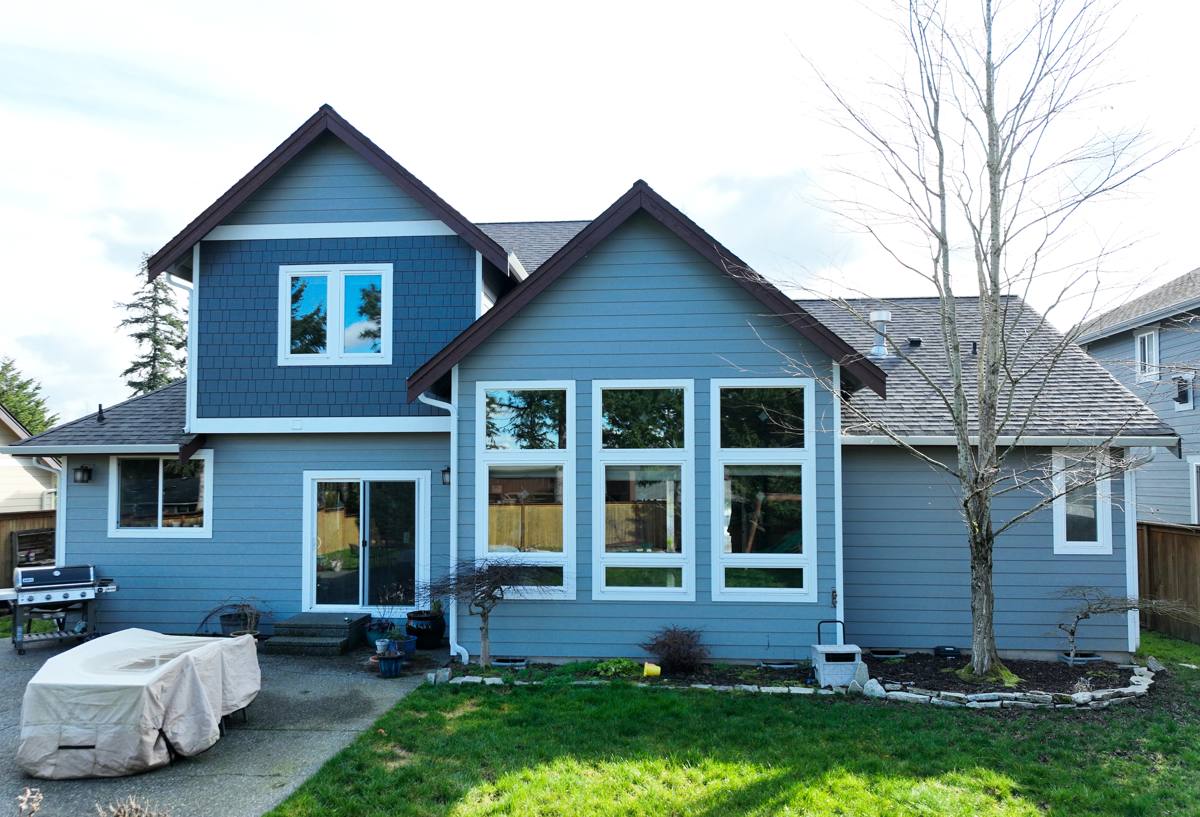
What Salt Air and Driving Rain Actually Do to Siding
Salt air doesn't just sit on a wall — it works its way into fasteners, trim joints, and any seam that wasn't sealed correctly. Over years, that accelerates corrosion in exposed metal fasteners and slowly breaks down caulking and paint films that weren't rated for coastal exposure. Wind-driven rain adds a second problem: it pushes moisture up under laps and around window and door trim that would stay dry in a calmer inland setting.
Put those two together and you get the two most common siding failures we see on peninsula and shoreline-adjacent homes:
- Moisture intrusion behind the siding plane at butt joints, trim returns, and penetrations that weren't flashed for sideways-driven rain
- Premature finish failure — chalking, fading, or peeling paint — from UV and salt exposure on a coating that wasn't built for it
A long moss season compounds both. Moss holds moisture against the wall surface for extended periods, which keeps siding damp longer after every rain event and gives any weak point in the water management system more time to fail.
Why This Matters More on a Peninsula
Inland Whatcom County homes get plenty of rain, but they aren't sitting in near-continuous marine air. Point Roberts homes are. That's why a siding system and installation approach that's "good enough" twenty minutes inland can underperform here — the exposure is simply more constant and more corrosive.
What a Correct Siding Installation Needs to Include Here
For a Point Roberts home, we treat a few details as non-negotiable rather than optional upgrades:
Rainscreen Drainage Behind the Siding
A drainage gap between the siding and the water-resistive barrier lets any moisture that does get past the outer layer drain and dry out instead of sitting against the sheathing. On a home taking regular wind-driven rain, this is one of the highest-value details in the whole job.
Flashing at Every Penetration and Transition
Windows, doors, deck ledgers, hose bibs, vents — every place something interrupts the siding plane is a place water can find its way in if the flashing sequence isn't done correctly, in the right order, lapped the right direction.
Fastener Choice and Placement
Corrosion-resistant fasteners, driven at the manufacturer-specified depth and location, matter more here than in a low-exposure area. Overdriven or improperly placed fasteners are a leading cause of early siding problems in coastal and marine-exposed settings.
Factory-Applied Finish Instead of Field Painting
A finish applied and cured under factory conditions holds up to UV and salt exposure far more consistently than a field-applied coat, which is one of the reasons we standardized on a product line that comes prefinished rather than painted on site.
Why We Install Only James Hardie Fiber Cement
We don't install vinyl, LP SmartSide, primed wood, or cedar, and Point Roberts is exactly the kind of environment that explains why. Vinyl can warp and become brittle with repeated temperature swings and sustained wind exposure, and its seams rely heavily on the installer getting overlap and fastening exactly right in conditions where wind loads are real. Wood-based and primed wood products need a maintenance commitment — repainting, caulking, moisture checks — that's harder to keep up with in a persistently damp marine climate, and any lapse in that maintenance shows up as swelling or rot faster here than inland.
James Hardie fiber cement is non-combustible, dimensionally stable across temperature and moisture swings, and available in HZ product lines specifically engineered for climate zones like ours. The ColorPlus factory finish is baked on and warrantied against fading and chipping in a way field-applied paint can't match, and the product carries a strong transferable warranty when installed to Hardie's specifications. It isn't the cheapest material on the market, but it's the one we're willing to put our name behind for homes taking this kind of exposure year after year.
Signs Your Point Roberts Home May Need New Siding
- Persistent moss or algae staining that returns shortly after cleaning
- Soft spots, bubbling, or visible warping in wall siding, especially on north- or shade-facing walls
- Paint or finish that's chalking, fading unevenly, or peeling in sheets
- Visible gaps or separation at trim joints and corner boards
- Rising heating bills that suggest the wall assembly is no longer keeping moisture and air out
- Fastener heads showing rust streaks down the face of the siding
Any one of these on its own might just need a repair. Several together usually mean the water management behind the siding has been compromised for a while, and it's worth a full evaluation before a partial fix or repaint.
Our Installation Process
- On-site evaluation — we walk the exterior, check for existing moisture damage, and assess wall orientation relative to prevailing wind and rain direction
- Tear-off and sheathing inspection — old siding comes off and we inspect the sheathing underneath for rot or damage before anything new goes up
- Water-resistive barrier and rainscreen installation — a correctly lapped barrier plus a drainage gap sized for this climate
- Flashing at all penetrations — windows, doors, and any wall penetrations flashed before siding installation begins
- James Hardie siding installation — installed to manufacturer fastening and clearance specifications, not shortcuts
- Trim, caulking, and final detailing — sealed and finished at every joint that could otherwise take on wind-driven rain
- Final walkthrough — we go over the finished job with you before calling it complete
Cost Factors for Siding Installation on the Peninsula
| Factor | Why It Affects Point Roberts Jobs |
|---|---|
| Home size and wall complexity | More corners, dormers, and penetrations mean more flashing detail work |
| Existing sheathing condition | Moisture-damaged sheathing found during tear-off adds repair scope before new siding goes up |
| Material and crew logistics | Point Roberts is accessible only by crossing an international border or by water, which affects delivery scheduling and crew travel time |
| Rainscreen and drainage detailing | Marine exposure makes this a standard inclusion here rather than an optional add-on |
| Siding profile and color | Lap width, board texture, and ColorPlus finish selection affect material cost |
| Site access | Waterfront and hillside lots can require extra staging and material handling |
Why a Crew That Already Works in Point Roberts Matters
Point Roberts is a U.S. exclave — the only way to reach it by land is through Canada. That single fact changes how a siding job actually gets done. Material deliveries, crew scheduling, and even simple mid-job supply runs all have to account for a border crossing, and a contractor who hasn't planned for that will either pad your timeline with surprises or cut corners to avoid the hassle.
A crew that already works this area knows how to schedule around that reality, has already worked out reliable material logistics, and understands the specific wind and rain exposure this peninsula gets compared to the rest of Whatcom County. That's the difference between a siding job that goes smoothly and one that turns into a string of delays.
What Point Roberts Homeowners Should Expect From an Estimate
A proper estimate should include a hands-on exterior evaluation, not just a measurement from a satellite photo. It should address the condition of your current wall assembly, whether a full tear-off is warranted, and how the rainscreen and flashing details will be handled — not just a per-square-foot number for materials.
If you're weighing a siding replacement or repair on a Point Roberts home, we're happy to walk the exterior with you and give you a straight answer about what your home actually needs. Reach out for a free, no-pressure estimate using the form below.