 Birch Bay Siding
 Why Point Roberts Roofs Wear Out Differently
Point Roberts sits in a spot most roofing crews rarely see up close — a peninsula exposed on nearly every side to Boundary Bay and the Strait of Georgia. That exposure means homes here take a different kind of beating than a roof three miles inland. Salt-laden air corrodes exposed metal faster, wind-driven rain gets pushed sideways up under shingle tabs and flashing laps, and the shaded, moisture-heavy tree cover common to this part of Whatcom County keeps roof surfaces damp long after a storm passes. That combination is exactly what feeds moss, and moss is one of the fastest ways to shorten a roof's life.
None of this means Point Roberts roofs fail early by accident. It means the materials, fasteners, and detailing have to be chosen and installed with this specific exposure in mind. A roof spec'd for a dry inland neighborhood and installed here without adjustment will show its age faster — curling shingles, rusted fastener heads, soft decking under moss mats — often years before it should.
What We See Most Often on Roof Inspections Out Here
- Moss and algae growth concentrated on the north- and shade-facing slopes
- Corroded or rusting exposed fasteners and flashing, especially on older metal roofs or budget-grade shingles
- Granule loss on shingles from years of wind-driven rain and salt exposure
- Soft or delaminating decking under long-standing moss mats, found only once the roof is opened up
- Undersized or poorly sealed flashing at chimneys, skylights, and roof-to-wall transitions
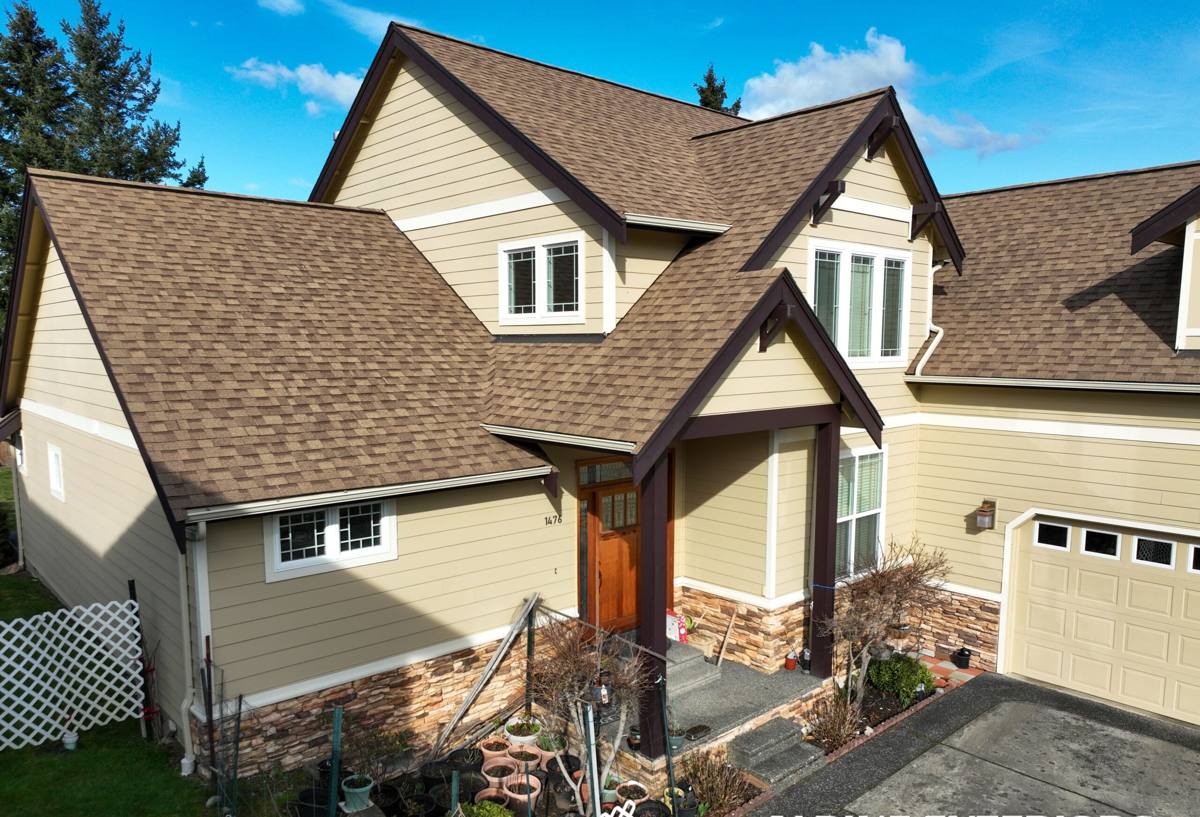
What a Correct Roof Replacement Looks Like Here
A roof replacement done right in this climate isn't just about swapping old shingles for new ones. It's a system: decking, underlayment, flashing, ventilation, and the finish material all working together to shed water fast and resist the salt and moisture load this peninsula gets. Skip any one layer and the roof underperforms no matter how good the shingles look on day one.
Decking
Every tear-off is a chance to actually see the roof deck, not guess at its condition from the attic. Where moss has held moisture against the sheathing for years, we routinely find soft spots that aren't visible from below. Any compromised decking gets replaced before anything else goes down — installing new roofing over weak sheathing just hides the problem for the next owner to deal with.
Underlayment and Ice/Water Protection
Given how much wind-driven rain this area gets, we don't treat underlayment as an afterthought. Self-adhered ice-and-water membrane at eaves, valleys, and around every penetration gives the roof a second line of defense in exactly the spots where wind pushes water backward under the shingle line — which is how most "mystery" leaks actually start.
Flashing
Flashing is where most roof failures actually originate, not in the field of the roof itself. Chimneys, skylights, dormers, and wall transitions all need step flashing, counter-flashing, and sealant details sized and lapped correctly for the amount of rain this area sees. We replace flashing during a roof replacement rather than reusing old pieces — reused flashing is one of the most common causes of an early callback.
Ventilation
Balanced intake and exhaust ventilation keeps the underside of the deck dry and helps the shingles themselves shed heat and moisture properly. In a climate where the roof surface rarely gets a long dry stretch, good attic ventilation is part of what keeps moss and mildew from creeping back in the first year or two after a new roof goes on.
Choosing a Roofing Material for This Exposure
There's no single "best" roofing material for every home — it depends on budget, roof pitch, how much shade and moss pressure the property gets, and how long the homeowner plans to own the house. Here's how the common options actually perform in a salt-air, high-moisture setting like Point Roberts.
| Material | How It Handles This Climate | Trade-Offs to Know |
|---|---|---|
| Architectural asphalt shingles | Good performance when installed with proper underlayment and ventilation; algae-resistant granule options help slow moss/algae staining | Shorter lifespan than metal; still needs periodic moss treatment on shaded slopes |
| Standing seam metal | Sheds wind-driven rain very well; long service life when fasteners and coatings are rated for coastal exposure | Higher upfront cost; requires correct fastener/coating selection to resist salt-air corrosion — this is not a spot to cut corners |
| Cedar shake | Traditional look that fits many Northwest homes | Highest maintenance burden in a damp, shaded, moss-prone environment; we're upfront that it needs more attention here than in a drier climate |
| Synthetic/composite shingles | Resists moisture absorption and moss better than wood; consistent appearance | Material and warranty quality varies significantly by manufacturer — worth reviewing carefully |
Our Process, Start to Finish
- On-site inspection. We walk the roof (weather permitting) and check the attic from inside, looking at decking condition, ventilation, existing flashing, and moss/moisture patterns specific to the property's shade and wind exposure.
- Written estimate. You get a clear scope of work and price — what's being torn off, what decking replacement is likely versus possible, what underlayment and flashing package is included, and the material options that fit the home and budget.
- Scheduling around the weather. We plan tear-off and dry-in around the forecast as closely as possible. A partially open roof and an unexpected rain system don't mix, and we don't take that risk with your home.
- Tear-off and deck inspection. Old roofing comes off, decking gets inspected in daylight, and any soft or damaged sheathing is flagged and replaced before we move forward.
- Install: underlayment, flashing, roofing material. Each layer goes down in the sequence that actually sheds water — ice-and-water membrane at vulnerable areas first, then underlayment, new flashing, then the finish roofing material.
- Cleanup and final walkthrough. Magnetic sweep for stray fasteners, site cleanup, and a walkthrough so you know exactly what was done and what maintenance (if any) to expect going forward.
Maintenance That Actually Extends a Roof's Life Here
A new roof is a good start, not a guarantee. In a climate that keeps roofs damp and shaded for long stretches, a little regular attention goes a long way:
- Keep gutters and downspouts clear so water isn't sitting against the eaves
- Trim back overhanging branches to cut down on shade and debris buildup — both feed moss
- Have moss growth treated or removed before it spreads, rather than after it's established
- Get flashing and sealant checked every few years, especially around chimneys and skylights
- Schedule a roof inspection after any major windstorm, since wind-driven rain damage isn't always visible from the ground
Why Hire a Crew That Already Works Point Roberts
Point Roberts has its own logistics — it's a border-crossing community, and material delivery, scheduling, and site access all take a little more planning than a job in the middle of Bellingham or Birch Bay proper. A crew that's done roofs out here before isn't guessing at timelines or getting surprised by the border crossing on delivery day.
More importantly, we've seen how this specific stretch of Whatcom County coastline treats a roof over time — which slopes hold moss, which fastener types corrode faster in the salt air, which flashing details actually stand up to driving rain off the water. That's not something you get from a general spec sheet; it's something you get from doing this work in this exact environment, repeatedly, and paying attention to what comes back for repair versus what doesn't.
Cost Factors Worth Understanding Upfront
Roof replacement pricing varies by roof size, pitch, number of layers being removed, decking condition, and material choice — there's no honest flat number without seeing the roof. That said, a few factors tend to move the price the most in this area specifically:
| Factor | Why It Matters Here |
|---|---|
| Decking replacement extent | Moss-related moisture damage isn't visible until tear-off; homes with a long history of untreated moss often need more deck repair than expected |
| Roof pitch and access | Steeper roofs and limited site access (common on wooded or waterfront lots) add labor time |
| Material choice | Metal and premium synthetic materials cost more upfront but generally require less coastal-climate maintenance over time than budget asphalt or cedar |
| Flashing and ventilation scope | Homes with multiple penetrations (skylights, chimneys, dormers) need more detail work, which affects both time and cost |
If your roof in Point Roberts is showing moss, granule loss, or you're just not sure how many more wet seasons it has left in it, we're glad to take a look. A free, no-pressure estimate gets you a straight answer about what your roof actually needs — use the form below to get started.