 Birch Bay Siding
 Point Roberts' Climate Puts Real Stress on Siding
Point Roberts sits on its own peninsula, with water on three sides and nothing between most homes and the open air coming off Boundary Bay and the Strait of Georgia. That location is part of what makes the area beautiful, and it's also exactly what makes siding fail early if it isn't matched to the conditions. Salt-laden air, near-constant humidity, driving rain that comes in sideways during winter storms, and a moss and algae season that can run from fall through spring all combine to punish exterior materials that aren't built for it.
Most siding products sold in the Pacific Northwest were never engineered with a place like Point Roberts in mind. They're rated for general moisture exposure, not for salt spray working its way into seams and fasteners day after day, year after year. That's the gap this page is about closing — what this specific climate does to siding, what a correctly installed James Hardie system does differently, and what our process looks like when we work on a home out here.
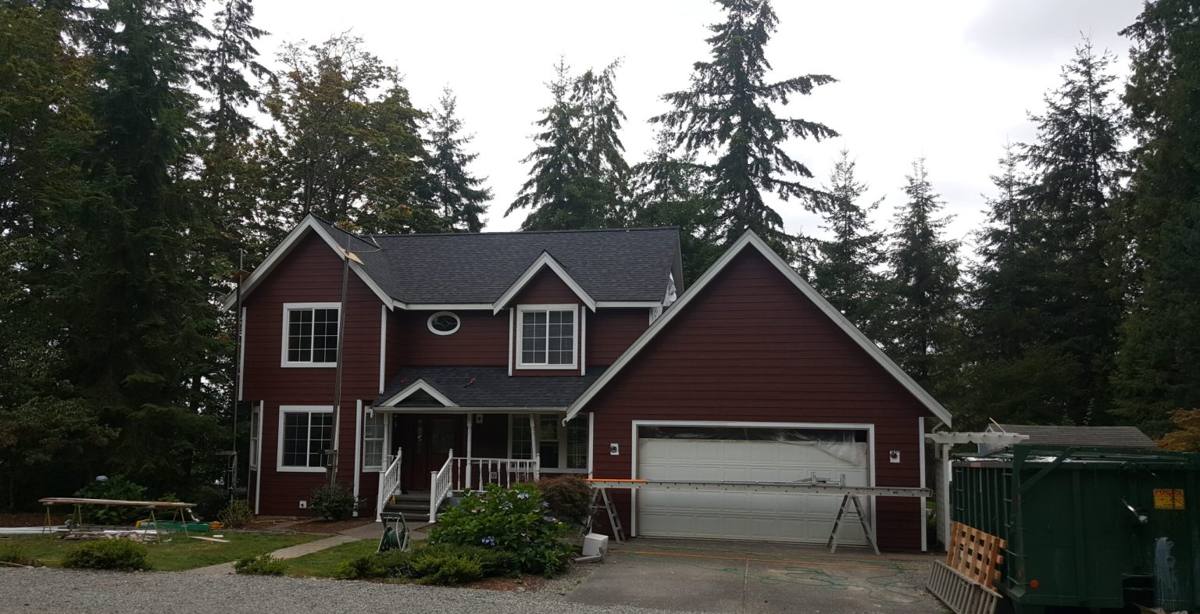
What Salt Air, Rain, and Moss Do to Different Siding Materials
Every siding material responds differently to a coastal, moss-prone climate. Some of that difference shows up in year one. Some of it doesn't show up until year eight or ten, when it's a much bigger repair. Here's a straightforward comparison of how common materials hold up under Point Roberts conditions:
| Material | Salt air / moisture behavior | Moss & algae resistance | Long-term concern |
|---|---|---|---|
| Vinyl siding | Doesn't rot, but seams and J-channels can trap moisture; can warp or fade under sun/salt cycling | Low — smooth surface still hosts growth in shaded, damp areas | Cracks in cold snaps; color fades unevenly over time |
| Cedar / wood siding | Absorbs moisture readily; needs consistent sealing to resist salt-driven decay | Low without regular treatment | Repainting/staining cycle, rot at butt joints and lower courses |
| Primed spruce / engineered wood (e.g. LP SmartSide) | Wood-based core is vulnerable if the factory coating is breached; edge swelling is common | Moderate, depends on coating | Moisture intrusion at cut edges and fastener points is hard to catch early |
| James Hardie fiber cement | Cement-based composition doesn't rot, rust, or absorb moisture the way wood does | Higher — factory finish resists surface growth better than raw or painted wood | Correct installation and joint treatment still matter |
No material is completely maintenance-free in this environment. The difference is what happens when maintenance slips for a season or two — which, realistically, happens to every homeowner at some point.
Why James Hardie Fiber Cement Is Built for This Environment
We install James Hardie exclusively, and a climate like Point Roberts' is a big part of why. Fiber cement is made from cement, sand, and cellulose fibers — it doesn't have the organic wood content that gives salt air and moisture something to work on. That single difference in composition is what separates a siding system that shrugs off decades of coastal weather from one that's fighting it from day one.
The HZ5 Engineered-for-Climate System
James Hardie makes different formulations for different climate zones, and the HZ5 line is engineered specifically for regions with significant moisture and temperature cycling — which describes Whatcom County's coastline well. It's built to resist moisture-related damage in wet climates rather than being a one-size-fits-all product shipped to every region the same way.
ColorPlus Technology and Salt-Air Fading
Salt air is hard on paint. It accelerates UV breakdown and can cause uneven fading, especially on the ocean-facing side of a home. James Hardie's ColorPlus finish is baked on at the factory under controlled conditions, which gives it better fade and chip resistance than most field-applied paint jobs — and it comes with its own finish warranty. For a home exposed to constant salt spray, that factory-cured finish is doing real work, not just providing color.
What a Correct Installation Looks Like Here
Fiber cement siding is only as good as the installation behind it. In a climate like this, the details that get skipped on a rushed job are exactly the details that cause problems five years later.
Flashing and Water Management Details
Every window, door, and horizontal trim transition needs proper flashing so wind-driven rain is directed out and away from the wall assembly, not behind the siding. On a Point Roberts home, where driving rain off the water is a regular event rather than an occasional storm, flashing that's "close enough" isn't close enough.
Fastening and Gaps for Coastal Moisture Cycling
Fiber cement panels need to be fastened per manufacturer spec — correct nail placement, proper gaps at butt joints, and expansion clearance where panels meet trim. Coastal air brings daily humidity swings, and siding that's fastened too tight or gapped incorrectly can telegraph stress cracks over time.
Rain Screen / Drainage Plane Considerations
A drainage plane behind the siding gives any moisture that does get past the surface a way to escape instead of sitting against the wall sheathing. This matters more in a high-moisture, salt-air environment than almost anywhere else in the region, because the wall assembly rarely gets a long dry stretch to fully recover.
Our Process for a Point Roberts Project
Site Assessment and Material Planning
We start by walking the exterior and assessing sun exposure, prevailing wind direction, existing moisture damage, and how exposed each elevation is to salt spray off the water. Because Point Roberts is only reachable by land through Canada, we plan material deliveries and crew scheduling in advance rather than assuming same-day flexibility — that planning is built into the estimate, not an afterthought once work has started.
Installation and Cleanup
Old siding is removed, the wall is inspected for hidden moisture damage before anything new goes up, and James Hardie panels are installed to manufacturer spec with correct flashing, fastening, and joint treatment throughout. We clean up debris and leftover materials as part of the job, not as a separate line item.
Choosing a Line and Color for Point Roberts Homes
James Hardie offers several siding profiles — lap siding, board and batten, shingle-style panels — and a range of ColorPlus colors plus the Statement Collection and Artisan lines for homeowners wanting a more custom look. For a Point Roberts home, we typically talk through how much direct salt exposure each elevation gets, since the water-facing side of a house often benefits from a slightly different maintenance conversation than the sheltered side, even with the same product. Darker colors can show salt residue and moss growth differently than lighter tones, which is worth factoring in before you commit to a shade.
What Point Roberts Siding Projects Typically Cost
Every home is different, but the factors that move the price on a Point Roberts project are fairly consistent. This isn't a quote — it's what to expect the estimate to weigh:
| Cost factor | Why it matters here |
|---|---|
| Home size and elevation count | More exterior wall area and complex rooflines mean more material and labor |
| Existing siding removal | Wood or engineered siding with moisture damage often needs sheathing repair before new siding goes on |
| Trim and detail work | Corner boards, window trim, and fascia detailing add labor time |
| Product line and finish | HZ5 lap siding, board and batten, and Statement Collection colors are priced differently |
| Site access and logistics | Point Roberts' location affects delivery scheduling, which we account for up front |
Maintaining James Hardie Siding in a Coastal, Moss-Prone Climate
Fiber cement is low-maintenance compared to wood, but "low-maintenance" isn't "no-maintenance," especially this close to the water. A simple seasonal routine goes a long way:
- Rinse salt residue off the siding a couple of times a year, especially on the water-facing elevation
- Check caulking around windows, doors, and trim annually for cracking or gaps
- Look for moss or algae buildup in shaded, north-facing areas and clean it before it spreads
- Keep gutters clear so water isn't sheeting down the siding face during heavy rain
- Trim back vegetation that keeps siding damp or shaded for long stretches
- Have any hairline cracks or loose caulking addressed promptly rather than waiting for the next season
Why Hire a Crew That Already Works in Point Roberts
Working in Point Roberts isn't the same as working anywhere else in Whatcom County. Material deliveries, crew logistics, and scheduling all need to account for the community's location, and a crew that hasn't done it before will learn that on your project's timeline, not before it. We've worked this area enough to plan around it rather than be surprised by it, and we bring that same James Hardie-only standard here that we hold everywhere else: correct flashing, correct fastening, correct joint treatment, no shortcuts because the site is harder to get to.
If you're weighing a siding project for a Point Roberts home, we're happy to walk the property, talk through what your specific elevations are dealing with, and put together a straightforward, no-pressure estimate — just fill out the form below to get started.