 Birch Bay Siding
 Windows Built for a Peninsula, Not Just a House
Point Roberts sits on its own peninsula at the far edge of Whatcom County, wrapped on three sides by the Strait of Georgia and Boundary Bay. That location is part of what makes it a special place to live — and part of why windows here take more of a beating than windows almost anywhere else in the county. Wind off the water carries salt, storms come in sideways instead of straight down, and the long, wet stretch of fall through spring keeps everything damp long enough for moss and algae to take hold. A window that would hold up fine in a sheltered inland neighborhood can start failing early out here if it wasn't chosen or installed with that exposure in mind.
This page is about one job, done right, in one place: energy-efficient window replacement and upgrades for homes in Point Roberts. Not a general window brochure — the specific things that matter when the house you're working on faces open water most of the year.
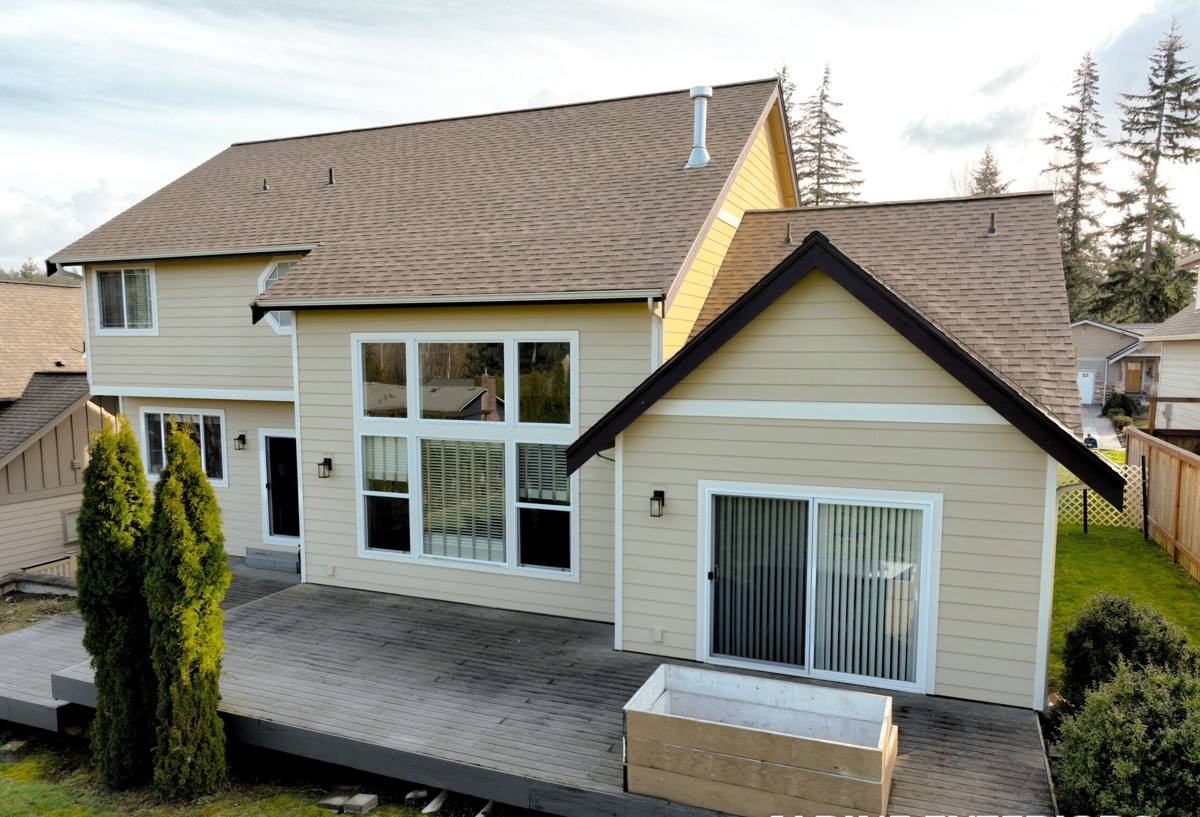
What the Local Climate Actually Does to Windows
Salt Air
Airborne salt is corrosive to metal hardware — hinges, cranks, balance systems, and lower-quality fasteners all wear out faster near the water than they would a few miles inland. It also breaks down cheap sealants and finishes over time, which is why window frames on exposed elevations often show wear years before the interior-facing side of the same house does.
Driving Rain
Wind-driven rain doesn't just fall on a window, it gets pushed into every gap, seam, and fastener hole that isn't properly sealed. On a peninsula with open water exposure on multiple sides, that's a near-constant condition for months at a time. Windows that rely on caulk alone instead of proper flashing and drainage details are the ones that eventually let water into the wall cavity — usually discovered as staining, soft trim, or a musty smell long after the water got in.
The Long Moss Season
Western Washington's wet season runs long, and shaded or north-facing surfaces — including window sills, trim boards, and frame corners — stay damp for extended stretches. Moss and algae thrive in that dampness, and where they take hold on wood trim or sills, they hold moisture against the surface even longer, accelerating rot underneath paint or caulk that still looks fine from a distance.
None of this means windows can't perform well in Point Roberts — it means the product, the installation details, and the maintenance expectations all need to be matched to the exposure, not treated the same as a sheltered lot a few miles inland.
What "Energy-Efficient" Should Mean for This Location
Energy efficiency in a window comes down to a handful of measurable factors, and for a coastal Whatcom County home, a couple of them matter more than they would elsewhere.
- U-factor: how well the window resists heat transfer — lower is better for keeping heat in during our long heating season.
- Solar Heat Gain Coefficient (SHGC): how much solar heat passes through the glass — matters most on south- and west-facing walls that catch afternoon sun off the water.
- Low-E coatings: a microscopically thin coating that reflects heat while still letting light through, standard on any window worth installing today.
- Gas fill and spacer type: argon-filled double or triple glazing with a warm-edge spacer resists condensation and heat loss better than older cold-edge designs — and condensation resistance matters more here given the humidity.
- Frame material: the piece most specific to this location, covered below, because not every frame material handles salt air and constant moisture the same way.
Frame Material Comparison for Coastal Exposure
| Frame Material | Salt Air / Moisture Performance | Maintenance | Typical Trade-Off |
|---|---|---|---|
| Vinyl | Won't rust or corrode; performs well in salt air | Low — occasional cleaning | Limited color options; can't be repainted easily |
| Fiberglass | Excellent — very stable, resists moisture and salt exposure | Low | Higher upfront cost than vinyl |
| Wood-clad | Good if cladding stays intact, but any breach exposes wood to rot risk | Higher — cladding seams and any exposed wood need monitoring | Best interior appearance, most exposure-sensitive |
| Aluminum | Corrosion-resistant coatings help, but bare aluminum pits in salt air over time | Moderate | Poor insulator unless thermally broken |
We don't push one material on every house. A sheltered wall on the lee side of a home can often carry a wood-clad window just fine for decades; a wall that takes the brunt of the weather off the water is usually better served by vinyl or fiberglass. Part of a proper assessment is looking at each elevation separately instead of specifying one window package for the whole house.
Where Installation Quality Matters More Than the Window Itself
A high-efficiency window installed poorly will underperform a mid-grade window installed correctly — this is true everywhere, but the margin for error is smaller on an exposed peninsula lot. Correct installation in this climate includes:
- A properly sloped sill pan under the window opening so any water that does get past the exterior sheds outward instead of pooling against the framing.
- Flashing tape and a weather-resistant barrier integrated in the correct shingle-lap order — not caulk used as a substitute for flashing.
- Sealants and backer rod rated for continuous UV and moisture exposure, not general-purpose caulk that hardens and cracks within a couple of seasons.
- Fasteners and hardware specified for corrosion resistance, especially on elevations facing open water.
- A decision, made honestly, between full-frame replacement and pocket (insert) replacement — pocket replacement is faster and less invasive but only appropriate when the existing frame and sill are still sound. If there's already moisture damage behind the old window, it needs to come out and be addressed, not sealed over.
How We Approach a Point Roberts Window Project
The process is the same discipline we bring to any siding or exterior job, applied specifically to windows:
- On-site assessment: we look at each window opening individually, checking for existing moisture damage, sill condition, and which elevations take the worst weather exposure.
- Product selection: we walk through frame material and glass package options based on that specific wall's exposure and your budget — not a one-size answer for the whole house.
- Removal and inspection: once the old window is out, we check the framing and sill for hidden rot or water intrusion before anything new goes in. Problems found here get addressed, not covered up.
- Installation: proper flashing, sill pan, air sealing, and fastening sequence, done to manufacturer specification so the warranty stays intact.
- Final inspection and walkthrough: we check operation, sealing, and finish work with you before calling the job done.
Why Local Experience in Point Roberts Specifically Matters
Point Roberts is a unique piece of Whatcom County — it's connected to the rest of Washington by land only through Canada, which means any contractor working there needs to plan for border crossing with crews, tools, and materials, not just drive over like it's the next neighborhood. A crew unfamiliar with that reality can end up with delays, wasted trips, or materials staged in the wrong place. A crew that's already worked the peninsula plans around border crossing times, stages materials ahead of the job, and doesn't treat the logistics as a surprise mid-project.
There's also a feel for the place that only comes from having worked there: which streets sit fully exposed to Boundary Bay wind versus which are somewhat sheltered by tree cover, how the moss season behaves on shaded lots versus sun-exposed ones, and what Whatcom County permitting and inspection expects for exterior work. None of that replaces a proper on-site assessment of your specific house, but it means fewer surprises and a more accurate estimate from the start.
Signs Your Current Windows Are Already Costing You Money
Homeowners often wait longer than they should to replace failing windows because the signs show up gradually. Worth checking for:
- Noticeable drafts near the frame, especially during a windy stretch off the water
- Fogging or moisture trapped between panes of a double-pane window — a sign the seal has failed and the insulating gas is gone
- Windows that are hard to open, close, or lock, often from swelling wood or corroded hardware
- Visible soft spots, discoloration, or moss growth on the sill or surrounding trim
- A heating bill that's crept up without an obvious cause
- Condensation forming on the inside of the glass regularly through the wet season
Any one of these on its own might just need attention rather than full replacement — but a few of them together on the same window, especially on a weather-exposed wall, usually means it's past the point of a simple fix.
What Drives the Cost of a Window Project
| Cost Factor | Why It Matters |
|---|---|
| Frame material | Vinyl is typically the most affordable; fiberglass and wood-clad cost more upfront but bring different maintenance and lifespan trade-offs |
| Glass package | Double-pane with standard low-E costs less than triple-pane or upgraded coatings, but triple-pane can pay back faster in a home with high heating use |
| Full-frame vs. pocket replacement | Full-frame costs more in labor because it addresses the framing and sill, not just the sash — but it's the right call when there's existing moisture damage |
| Number and size of openings | Larger openings and specialty shapes cost more in both material and labor |
| Access and site conditions | Second-story or hard-to-reach openings add labor time regardless of location |
As a general range, homeowners typically see per-window installed costs from the low hundreds up into four figures depending on size, material, and glass package — the honest way to know what your project will run is a walkthrough of your specific windows, not a number pulled from an average.
If your windows are drafty, fogged, hard to operate, or you're just planning ahead for a home on an exposed Point Roberts lot, we're glad to come take a look. Fill out the form below for a free, no-pressure estimate — we'll walk the house, tell you honestly what each window needs, and give you real numbers to work from.