 Birch Bay Siding
 Building a Deck for Point Roberts' Marine Climate
Point Roberts sits right on the water, and that changes what a deck has to survive. It isn't just rain — it's salt-laden air blowing in off the Salish Sea, wind-driven moisture that finds every gap in a ledger board, and a moss season that runs longer here than it does twenty miles inland. A deck built the same way you'd build one in a dry inland town will show problems within a few years: rusted fasteners, soft framing under the decking, green slick spots that never fully dry out. We work out of Birch Bay in Whatcom County, and Point Roberts is part of our regular service area, so this isn't theoretical for us — it's the climate we build in every week.
This page is about deck building specifically for Point Roberts homes: what the local conditions actually do to a deck over time, what a correctly built one involves, and how we approach the job from first visit to final walkthrough.
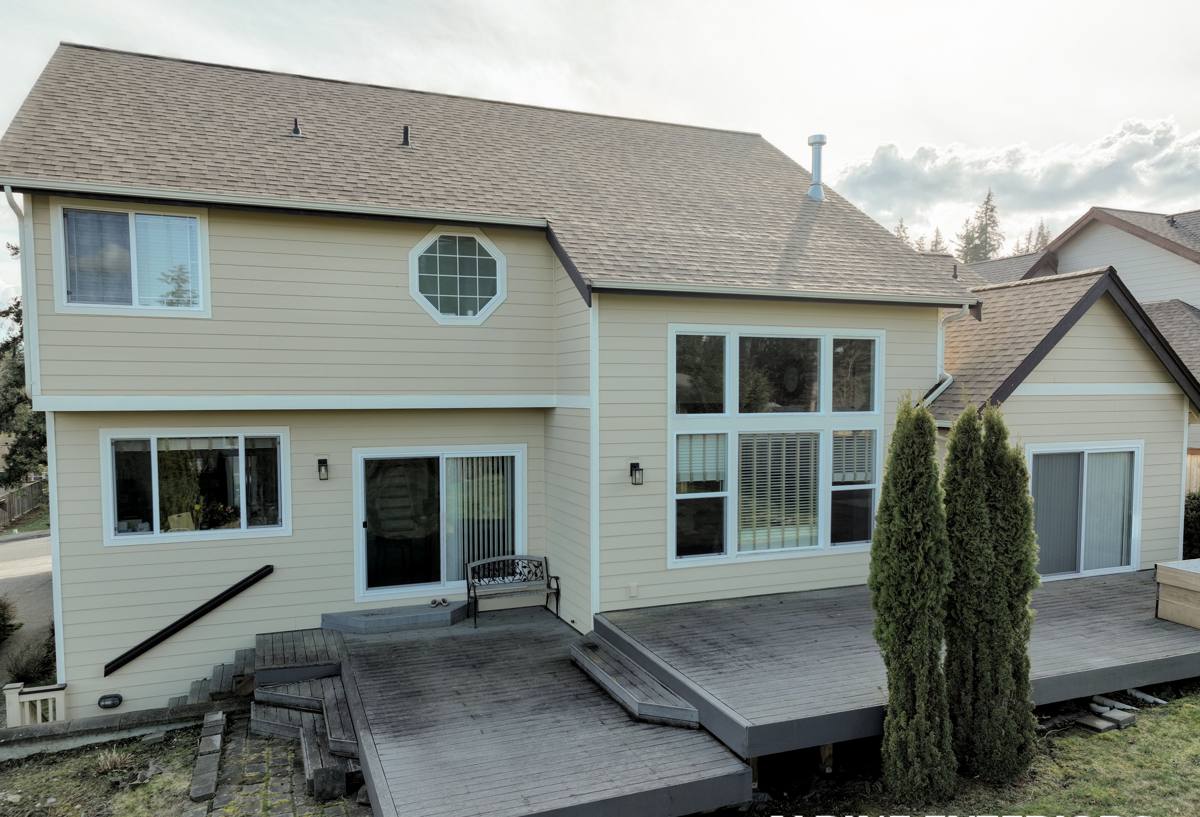
What the Weather Does to an Unprepared Deck
Most deck failures we get called out to inspect aren't dramatic — they're slow. Something was built to a minimum standard, or built for a drier climate, and a few years of Point Roberts weather found the weak point.
Salt Air and Hardware Corrosion
Airborne salt accelerates corrosion on anything metal — screws, joist hangers, bolts, post bases. Standard electro-galvanized fasteners can start rusting within a couple of seasons this close to the water. Once a fastener corrodes, it loses holding strength long before the rust is visible from the top of the deck, which is part of why hardware grade matters more here than it would forty miles inland.
Driving Rain and Water Intrusion
Wind-driven rain doesn't fall straight down — it gets pushed sideways, up under drip edges, and into any gap where a deck ledger meets the house. If the flashing detail at that connection is wrong, water tracks behind the siding and into the rim joist, and you don't see the damage until it's already rotted framing. This single detail causes more structural deck problems than any other part of the build.
Moss, Algae, and Slip Hazards
Shaded or north-facing decks in this climate grow moss and algae for a good part of the year, not just in the wettest months. Beyond looking bad, a mossy deck surface is a real slip hazard, and moss holds moisture against the decking boards, which shortens the life of wood surfaces and can stain composite ones if it's left to build up.
Choosing the Right Decking Material
There's no single "best" decking material — there's the right material for the budget, the look you want, and how much maintenance you're willing to do. Here's how the common options hold up specifically in a salt-air, high-moisture climate like Point Roberts:
| Material | Upfront Cost | Maintenance | How It Handles This Climate |
|---|---|---|---|
| Pressure-treated lumber | Lowest | Annual cleaning, re-sealing every 1-2 years | Affordable but needs consistent upkeep; unsealed boards cup and check faster near the water |
| Cedar | Moderate | Regular sealing or staining to hold color | Naturally rot-resistant and looks good, but still needs real maintenance to fight moss and graying |
| Composite (uncapped) | Moderate-High | Periodic cleaning | Better moisture resistance than wood, but can absorb some moisture at cut edges over time |
| Capped composite / PVC | Highest | Occasional washing | Best resistance to moisture, staining, and moss buildup; strongest fit for a marine climate |
We'll walk you through this trade-off honestly rather than just upselling the most expensive option. A well-built cedar or treated-lumber deck that's properly sealed and maintained will last for years out here — it just asks more of the homeowner over time than a capped composite does. What matters most is matching the material to how much maintenance you actually want to keep up with.
Other Cost Factors Beyond Material
The decking material is only part of what drives the price of a deck. Overall square footage matters most, but height above grade adds cost too, because a deck that's several feet up needs deeper footings, taller posts, and often a code-required staircase to grade. Site access plays a role as well — a backyard that's hard to reach with equipment or material means more labor time. Removing and hauling away an old deck before building the new one is its own line item, and it's worth asking whether a bid includes that or assumes you'll handle it. Permit fees vary by scope and are typically a small but real part of the total. We break all of this out for you up front rather than folding it into one vague number, so you know what you're actually paying for.
What Correct Deck Construction Involves
The decking surface is the part everyone sees, but the parts that determine whether a deck lasts are underneath it and behind it.
Footings and Framing
Footings need to be sized and set to the correct depth for the soil and frost conditions on the site, and framing needs to be spaced and sized for the actual loads the deck will see — not just whatever the lumber yard had in stock. Undersized joists or footings are one of the more common shortcuts we see on decks that were built cheap.
Ledger Attachment and Flashing
Where the deck attaches to the house is the single most important detail on the whole structure. It needs proper flashing — typically a metal flashing piece integrated with the house's water-resistive barrier, not just caulk over the top of the ledger board — so wind-driven rain can't track behind the siding and into the framing. This is the detail we're most careful about, because it's also the one that's hardest to inspect once the deck is finished.
Fasteners and Hardware Grade
Given the salt air, we use fasteners and structural hardware rated for corrosion resistance — stainless steel or heavy-duty coated fasteners rather than standard-grade hardware. It costs more upfront, and it's the difference between hardware that's still sound in fifteen years and hardware that's rusting through in five.
Drainage and Airflow Underneath
A deck that traps moisture underneath it — because grading, spacing, or ventilation weren't thought through — stays damp longer after every rain and gives moss and mildew more time to take hold. Good airflow and drainage under the structure is a design decision, not an afterthought.
Railings, Stairs, and Code Basics
Any elevated deck needs a guardrail, and current building codes typically call for a minimum guard height with baluster spacing tight enough that a small child can't pass through the gap. Stairs have their own rules for rise, run, and handrail requirements. These aren't places to guess — a deck that doesn't meet code can hold up an inspection, a sale, or an insurance claim down the road. Part of doing this job correctly is building to the code that applies at the time of construction and pulling the right permit so there's a record of it having passed inspection.
Our Process for a Point Roberts Deck Project
We keep the process straightforward, because a deck build shouldn't feel like a mystery from the homeowner's side.
- On-site visit to look at the site, existing structure (if any), drainage, and sun/shade exposure
- Honest conversation about material options and what each one will actually cost you in upkeep over time
- A clear, written scope covering footings, framing, decking, railings, and hardware grade — no vague line items
- Permit handling through the appropriate jurisdiction before any framing starts
- Construction with corrosion-rated fasteners and proper ledger flashing, inspected at the stages that matter
- Final walkthrough where we go over the finished deck and basic care with you before we consider the job done
If you're comparing bids, that list is also a fair checklist to hold any contractor to — not just us.
Seasonal Maintenance in a Marine Climate
Even a well-built deck needs some seasonal attention out here. A yearly rinse-down and moss/algae removal keeps the surface from staining and stops moisture from sitting against the boards. Wood decks need their sealant or stain checked every year or two and reapplied before it fully wears through, not after. Composite and capped composite surfaces need far less — usually just a wash to keep pollen, moss spores, and salt residue from building up. Whatever the material, it's worth a quick look each fall at the fasteners and connection points, since that's where corrosion shows up first.
Why a Crew That Already Works in Point Roberts Matters
Point Roberts is geographically separated from the rest of Whatcom County — it sits on a peninsula reached by land only through Canada, or by water. That's not a small detail for a construction project. Scheduling crews, timing material deliveries, and coordinating trips take more planning than they would on a job a few blocks from the shop, and a contractor who hasn't built there before can underestimate that and let it turn into delays. We already know how to plan around it, because we've done it before.
There's also the climate knowledge itself. A crew that mostly builds decks inland doesn't think the same way about hardware grade, ledger flashing, or moss-prone shade patterns that a crew working the Birch Bay and Point Roberts area does every season. That local experience shows up in the details that determine whether a deck is still solid in fifteen years or starting to show problems in five.
If you're planning a new deck or need to replace one that's showing its age, we're glad to come take a look and give you a straightforward, no-pressure estimate — no invented urgency, just an honest read on what your project needs. The form below is the easiest way to reach us.