 Birch Bay Siding
 Windows in Nooksack Face a Different Kind of Wear
Nooksack homes sit inland from the water but still catch the same weather pattern that defines this whole stretch of Whatcom County: long stretches of steady rain, cool damp air that lingers for months, and short windows of hard sun that stress materials in the opposite direction. Add the salt-laden air that moves in off the Strait and up through the lowlands, and you've got a combination that's tough on window frames, seals, and glazing in ways that homes further inland or further south just don't deal with.
Old aluminum-frame and early-generation vinyl windows in this area tend to show their age the same way: fogged glass from failed seals, frames that won't latch square anymore, and sills that stay damp long after the rain stops. None of that is cosmetic — it's moisture finding a way in, and moisture that sits is moisture that eventually rots wood, feeds mold, and drives up heating bills. Replacing windows here isn't just about looks. It's about closing off the entry points that this climate is constantly probing.
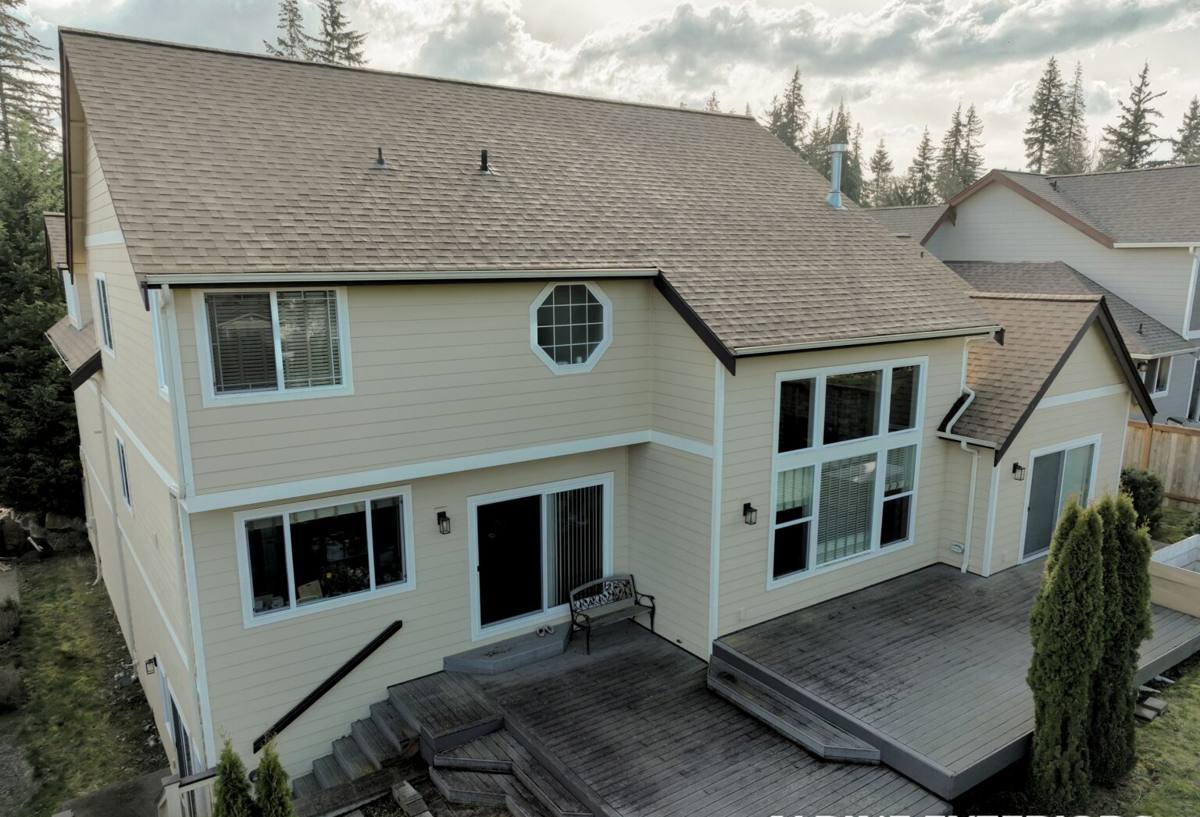
What Correct Window Replacement Actually Involves
A lot of window jobs go wrong not because of the window itself, but because of what happens — or doesn't happen — around it. In a climate like Whatcom County's, the installation details matter as much as the product.
The parts homeowners don't see
- Removing the old window without tearing out more of the surrounding wall than necessary, then inspecting the framing and sill for hidden rot before anything new goes in
- Flashing the rough opening properly so any water that gets past the window sheds outward and down, never behind the siding
- Sealing with the right products in the right order — housewrap integration, backer rod, and sealant that's rated for the temperature swings and moisture load our winters bring
- Shimming the unit square and plumb so the sash operates smoothly and the weatherstripping actually compresses evenly for years, not just on install day
- Insulating the gap between the frame and the rough opening without overpacking it, which can bow the frame and cause operational problems down the road
Skip or rush any one of these steps and you can end up with a brand-new window that still leaks, still fogs, or still lets drafts through within a couple of years. This is why we treat the flashing and sealing work as equal in importance to the window unit itself — a premium window installed carelessly will underperform a mid-range window installed correctly.
Choosing the Right Window for This Climate
Not every window on the market is a good fit for a house that sits in near-constant damp for half the year. We steer homeowners toward frame materials and glazing packages that hold up to sustained moisture exposure rather than just looking good in a showroom.
| Factor | Why it matters in Whatcom County |
|---|---|
| Frame material | Needs to resist moisture absorption and won't warp or swell with repeated wet-dry cycles through fall and winter |
| Glazing (double vs. triple pane) | Double-pane low-E is the standard baseline here; triple-pane adds comfort and sound dampening but comes at a higher cost that's worth discussing against your specific goals |
| Weatherstripping quality | Cheap weatherstripping compresses permanently within a few seasons and stops sealing — a common source of drafts in older replacement windows |
| Hardware finish | Salt-influenced air corrodes lower-grade hardware faster; look for finishes rated for coastal or marine-adjacent exposure |
| Drainage design | Frames need functioning weep systems so any water that gets into the track has somewhere to go instead of pooling |
We don't push a single brand as the answer for every home. What we do insist on is glazing and hardware that's rated for sustained moisture exposure, because that's the actual condition your windows live in, not an occasional rainy week.
Why we're selective about vinyl and aluminum options
Some lower-tier vinyl and aluminum products look identical to better options at a glance but use thinner-gauge frames, weaker corner welds, or basic weatherstripping that wasn't designed for year-round damp exposure. That's not a knock on the material itself — vinyl and aluminum both have their place — it's a standard we hold on construction quality. We'd rather walk a homeowner through the trade-offs up front than install something that needs revisiting in three years.
Moss, Algae, and the Long Damp Season
Whatcom County's moss season isn't limited to roofs and siding — it affects window sills, tracks, and the caulk lines around frames too. Organic growth on a sill or in a track holds moisture against the frame far longer than open air would, and that constant dampness is exactly what breaks down sealants and invites rot in wood-adjacent trim. Part of doing this job right in Nooksack means detailing the sill and track design so water drains fully and doesn't pool in the corners where moss and algae like to start.
If your current windows have visible green or black growth building up in the corners or along the bottom track every winter, that's a sign the drainage isn't keeping up — worth flagging during any inspection, replacement or not.
Our Process for Nooksack Homeowners
- On-site assessment — we look at each window individually, not just the house as a whole. Sun exposure, wall orientation, and existing damage all vary window to window.
- Honest scope and pricing — you'll know upfront whether we're looking at straightforward replacements or whether hidden rot or framing issues need addressing first.
- Material selection — we walk through frame and glazing options suited to your home's exposure and your budget, without steering you toward the most expensive option by default.
- Removal and prep — old units come out carefully, and we check the rough opening condition before anything new goes in.
- Flashing, install, and seal — proper flashing sequence, square and level installation, and moisture-appropriate sealants throughout.
- Final walkthrough — every window operates, locks, and seals the way it should before we consider the job finished.
What Replacement Windows Cost — And What Drives the Range
Window replacement pricing varies more than most homeowners expect, and it's rarely about the glass alone. The honest answer is that a per-window quote depends on several factors working together:
| Cost factor | How it affects your project |
|---|---|
| Window size and type | A standard double-hung costs less than a large picture window or a custom-shaped unit |
| Frame material and glazing tier | Entry-level vinyl sits at the lower end; triple-pane or premium hardware finishes push cost up |
| Condition of the existing opening | Hidden rot or framing damage found during removal adds labor and material not visible in an initial walk-through |
| Number of windows and access | Whole-house jobs often run more efficiently per unit than one-off replacements; second-story or hard-to-access windows add labor time |
| Trim and finish work | Matching existing interior or exterior trim, or upgrading it, is a separate line item from the window itself |
We'd rather give you a real number after seeing the actual windows than a rough figure that changes once we're on-site. That's what the on-site assessment is for.
A Simple Checklist Before You Call Anyone
Whether you end up calling us or comparing quotes, these are worth checking on your own windows first:
- Do any panes show fogging or moisture trapped between the glass layers? That's a failed seal, not something that can be repaired — the unit needs replacing.
- Does the sash operate smoothly, or does it stick, drag, or fail to latch fully?
- Is there visible moss, algae, or dark staining building up on sills or in tracks each winter?
- Do you feel a draft near the frame when it's windy, even with the window fully closed and locked?
- Is there any soft or discolored wood on the interior sill or exterior trim around the frame?
- Are your energy bills noticeably higher in the coldest months compared to homes of similar size nearby?
Any one of these on its own might just need a repair or a re-seal. Several of them together, especially on windows original to the house, usually point to replacement being the more cost-effective long-term move.
Why a Crew That Already Works Nooksack Matters
Window replacement done well in this part of Whatcom County isn't generic work — it's work informed by seeing the same failure patterns repeat house after house in this specific microclimate. A crew that already services Nooksack and the surrounding Birch Bay area knows which frame materials hold up to the salt air, how the local damp season stresses seals over multiple winters, and what drainage details actually keep moss and standing water from becoming a long-term problem. That local pattern recognition is hard to replicate with a crew that's unfamiliar with how this coastline behaves.
It also means straightforward logistics — scheduling around our actual weather windows, sourcing materials that perform in this environment, and standing behind the work because we're not driving in from out of the area for a one-time job.
Get a Straight Answer on Your Windows
If your windows are fogging, sticking, drafting, or just showing their age, it's worth getting a second set of eyes on them before deciding what to do. We'll walk your home, tell you honestly what's replacement-worthy versus what can wait, and give you real numbers to work from. Use the form below to request a free, no-pressure estimate for your Nooksack home.