 Birch Bay Siding
 Why Nooksack Roofs Age Differently Than Roofs Inland
A roof in Nooksack does its job under a specific set of conditions: salt-laden air moving off the water, long stretches of driving rain that comes in sideways as much as straight down, and a moss season that can run most of the fall through spring. None of these are dramatic events on their own. The damage they cause is cumulative — a shingle mat that dries out and curls a little faster, fasteners that corrode a little sooner, an underlayment lap that lets in a trickle of water nobody notices until there's a stain on a ceiling two winters later. New roof installation done right in this part of Whatcom County isn't about installing anything exotic. It's about installing standard, well-understood roofing systems with the details tightened up for what this specific location throws at a house.
That distinction matters when you're comparing quotes. Two roofers can propose the same shingle brand and the same warranty, and still hand you two very different roofs, because the difference lives in the flashing details, the fastener choice, and the underlayment package — not in the shingle wrapper.
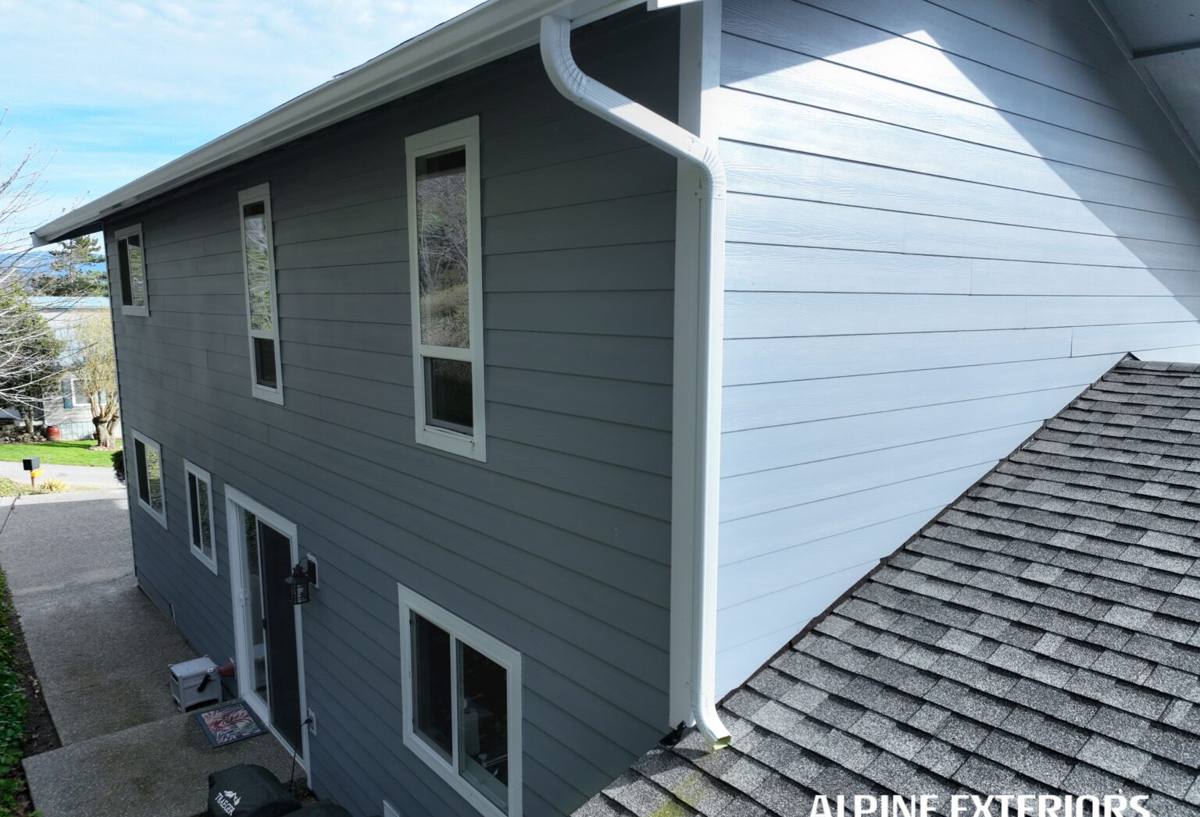
How Coastal Exposure Shows Up on a Roof
Salt Air and Corrosion
Salt air accelerates corrosion on any exposed metal — nails, flashing, vent stacks, gutter hardware. On a roof close to the water, standard electro-galvanized fasteners can start showing rust streaks well before a comparable roof further inland. This is one of the most common places we see corners cut on lower-bid jobs: the shingles look fine, but the fasteners and flashing metal underneath weren't upgraded for the environment.
Driving Rain and Wind-Driven Water
Rain that comes in at an angle behaves differently than rain that falls straight down. It gets pushed up under shingle tabs, into exposed nail heads, and along any horizontal seam that isn't properly lapped or sealed. A roof system built for calmer inland weather can perform for years there and still leak here, simply because it was never asked to shed water moving sideways.
Moss and a Long Wet Season
Moss needs shade, moisture, and time — and this area supplies all three for most of the year. Moss holds water against the roof surface, works its way under shingle edges as it grows, and eventually lifts tabs enough to expose the underlayment. Left alone long enough, a moss-covered roof is doing physical damage well before it looks that bad from the ground.
Signs a Roof Needs Replacement, Not Another Repair
Not every roof problem calls for full replacement, and we'll tell you plainly when repair is the honest answer. But there's a point where patching becomes throwing money at a roof that's structurally past its useful life. Common signs we look for on a Nooksack-area roof include:
- Granule loss heavy enough that you can see bare, shiny patches on the shingle surface
- Shingles that are curling, cupping, or cracking across multiple slopes, not just one localized spot
- Soft or spongy decking felt underfoot during inspection, especially near valleys and eaves
- Daylight visible through the roof deck from inside the attic
- Persistent moss growth that returns within a season or two of cleaning, even after treatment
- Multiple past repairs in different areas, suggesting the underlayment and decking are failing broadly, not just at one point
- A roof at or past the manufacturer's expected service life for its material and this climate
If a roof is showing two or more of these at once, replacement usually costs less over five years than continuing to chase repairs.
What a Correct Installation Actually Includes
A new roof is more than shingles nailed to a deck. The parts that determine whether a roof performs well in this climate are mostly things you won't see once the job is finished:
Deck Inspection and Repair
Every square foot of decking gets checked once the old roofing is stripped. Soft, delaminated, or water-stained sheathing gets replaced before anything new goes down — installing new roofing over a compromised deck just hides the problem for one more cycle.
Ice and Water Shield at Vulnerable Points
Self-adhering waterproof membrane belongs at eaves, valleys, and around every penetration — chimneys, vent stacks, skylights. These are the areas where wind-driven rain and moss-related water intrusion cause the most damage, so they get the highest level of protection, not just felt paper.
Synthetic Underlayment Across the Field
A quality synthetic underlayment sheds water better than old-style felt and holds up longer to the wet install conditions common here, where a roof crew may be working between rain bands rather than under a guaranteed dry week.
Flashing Details
Step flashing at walls, proper counter-flashing at chimneys, and correctly lapped valley metal are where most leaks actually originate — not in the field of the shingles. Flashing gets replaced as part of a new roof, not reused, because reused flashing is one of the most common causes of a "brand new roof that still leaks."
Ventilation That Matches the Attic
Balanced intake and exhaust ventilation keeps the attic space dry and temperature-stable, which protects the underside of the new decking and helps prevent the kind of trapped moisture that feeds mold and accelerates shingle aging from below.
Fasteners Rated for Coastal Exposure
Given the salt air in this area, we use fasteners and exposed metal components rated to resist corrosion rather than the minimum-spec hardware that's fine two counties inland.
Roofing Materials: What Performs Well Here
Most Nooksack-area homes are well served by architectural asphalt composition shingles or a standing seam metal roof. Both can be installed correctly or poorly — the material choice matters less than the installation details above, but each has real trade-offs worth understanding upfront.
| Material | Typical Lifespan Here | Moss/Moisture Behavior | Maintenance | Rough Installed Cost Range* |
|---|---|---|---|---|
| Architectural asphalt shingle | 20–30 years | Algae-resistant granules help; still needs periodic moss removal | Low; occasional cleaning and gutter checks | $450–$650 per square |
| 3-tab asphalt shingle | 15–20 years | More prone to curling and moss lift over time | Low, but shorter service life shifts cost sooner | $350–$450 per square |
| Standing seam metal | 40–50+ years | Sheds water and moss buildup much better than shingle | Very low | $900–$1,300 per square |
| Cedar shake (natural) | 20–30 years with upkeep | Higher moisture retention; needs active moss/moisture management | Higher; periodic treatment required | $700–$1,000 per square |
*"Per square" means per 100 square feet of roof area. Actual pricing depends on roof pitch, number of layers being removed, decking condition, penetrations, and access — a firm number only comes from an on-site look, not a phone estimate.
We're honest about where we set our standard: we don't push cedar shake as a low-maintenance option in this climate, because it isn't one here. If a homeowner wants that look and understands the upkeep it requires, we'll install it correctly. But we won't sell it as maintenance-free, because the moisture behavior of natural wood in a long wet season doesn't support that claim.
Our Nooksack New Roof Installation Process
- On-site inspection. We walk the roof and the attic, check the deck condition, and identify problem areas specific to the home — orientation to wind, tree cover contributing to moss, existing ventilation.
- Written estimate. A clear breakdown of material, labor, and scope — no vague allowances that turn into surprise change orders mid-project.
- Tear-off and deck inspection. Full removal of old roofing, with any compromised decking replaced before new materials go down.
- Waterproofing and underlayment. Ice and water shield at vulnerable points, synthetic underlayment across the field.
- Flashing and ventilation work. New flashing throughout, ventilation confirmed or corrected to match the attic space.
- Roofing installation. Shingles or metal panels installed to manufacturer spec, with fastener choice matched to the coastal exposure.
- Cleanup and final walkthrough. Site cleared of debris and nails, roof reviewed together before we consider the job done.
Why a Crew That Already Works This Area Matters
A roofer who works Whatcom County's coastal side regularly already knows what mistakes to avoid before the first shingle goes down. That includes knowing which fastener and flashing upgrades are worth the added cost near the water, how to sequence a tear-off around a wet forecast instead of gambling on a dry window, and what moss-prone rooflines in this area tend to need in the way of ventilation and shade management. It also means understanding local permitting requirements and building department expectations for the jurisdiction the home falls under, so the job doesn't stall on paperwork. None of that is complicated, but it's the kind of local knowledge that only comes from doing the work here repeatedly, not from a general roofing checklist applied the same way everywhere.
Moss and Long-Term Roof Care After Installation
A new roof still needs basic upkeep in this climate. Keeping overhanging branches trimmed back reduces shade and debris buildup, both of which feed moss growth. Gutters should be checked and cleared at least twice a year, since clogged gutters back water up under the roof edge exactly where ice and water shield does its job — but only if water isn't sitting there constantly. Zinc or copper strips near the ridge can help suppress moss regrowth over time by releasing a small amount of metal ion with each rain, and we're happy to include them as part of a new install if a homeowner wants that extra layer of prevention. None of this replaces professional moss removal when it does return — pressure washing shingles yourself can strip granules and shorten the roof's life, so it's worth having it done by someone who knows the right method for the material.
What Affects Your Estimate
Every roof is priced individually, but the factors that move a number up or down are consistent:
| Factor | Why It Matters |
|---|---|
| Roof pitch and complexity | Steeper roofs and more valleys/hips take longer and require more safety setup |
| Number of existing layers | Tear-off of multiple layers adds labor and disposal cost |
| Deck condition | Rotten or soft sheathing found during tear-off adds material and labor to replace |
| Penetrations | Chimneys, skylights, and multiple vent stacks each need individual flashing work |
| Access | Difficult site access can add time for material staging and cleanup |
| Material choice | Shingle grade or metal vs. shingle changes both material and labor cost |
Questions Worth Asking Before You Sign
- Does the estimate specify underlayment type and where ice and water shield will be installed?
- Is flashing being replaced, or reused?
- Are fasteners upgraded for coastal exposure, or standard-spec?
- Is attic ventilation part of the scope, or assumed fine without inspection?
- What happens if the deck inspection reveals rotten sheathing — is that a change order or a listed allowance?
- Is the crew insured and are they pulling the required permit for the jurisdiction?
A contractor who answers these clearly and specifically, without hedging, is usually one who does this work carefully and often enough to have a straight answer ready.
If your roof in the Nooksack area is showing its age, or you just want a straight assessment of what condition it's actually in, we'll come take a look and put together a clear, no-pressure estimate — no hard sell, just an honest read on what the roof needs and what it will cost to do right.