 Birch Bay Siding
 Roofing in Whatcom County Isn't a One-Climate Job
Whatcom County stretches from the coastal air around Birch Bay to inland farm and river-valley communities like Nooksack, and the weather doesn't treat every roof the same way. Homes closer to the water deal with salt-laden air that speeds up corrosion on fasteners, flashing, and vents. Homes further inland, including Nooksack, take a different beating: long stretches of driving rain, heavy shade from surrounding trees and terrain, and a moss season that can run eight months or more out of the year. Both situations wear on an asphalt shingle roof, just in different ways — and a roof that's installed without accounting for that difference tends to fail early in the exact spots you'd expect: valleys, eaves, and anywhere moisture has time to sit.
We install and repair asphalt shingle roofing on homes throughout this stretch of Whatcom County, and the Nooksack-area jobs get the same attention to detail as anything closer to Birch Bay. The material might be the same shingle on the shelf, but the underlayment choices, ventilation setup, and edge details change based on what the local weather actually does to a roof over ten or twenty years.
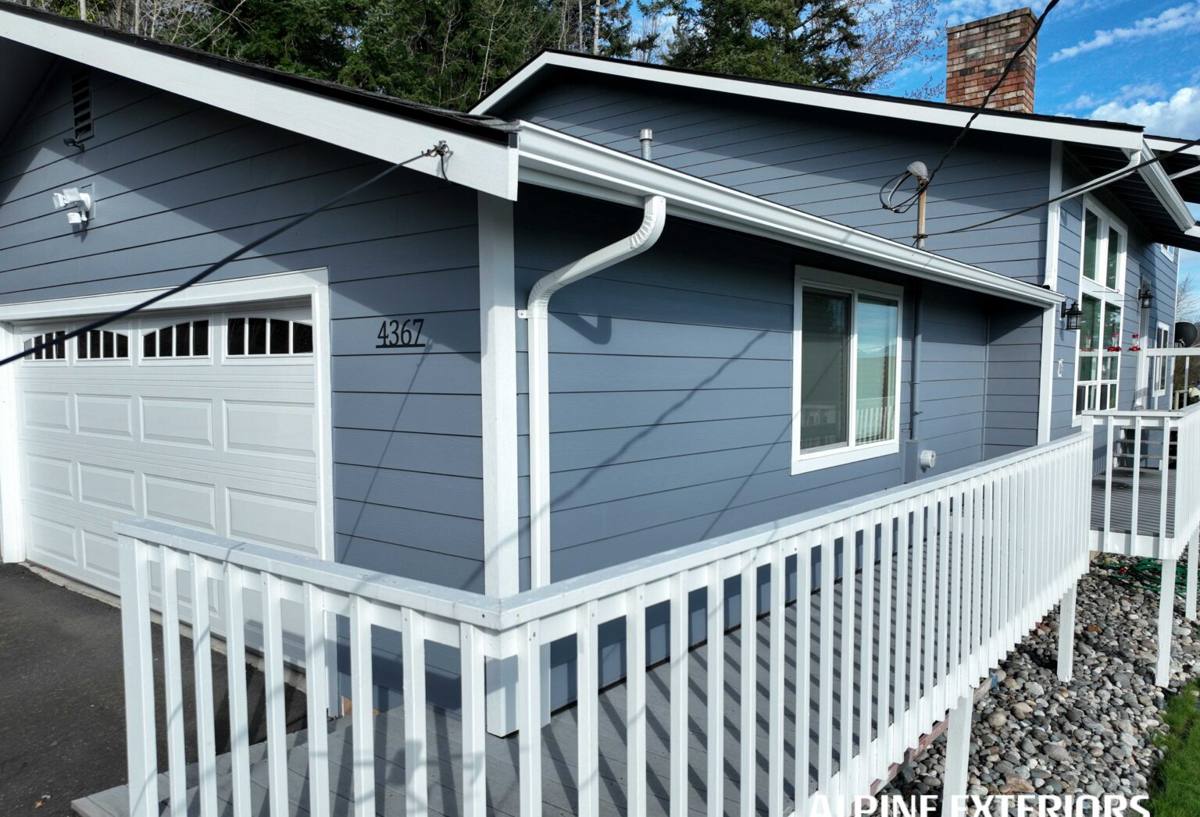
What Nooksack-Area Weather Does to an Asphalt Shingle Roof
Driving Rain and Wind-Blown Water
Straight-down rain is easy for any roof to shed. The problem is wind-driven rain that comes in at an angle, works its way under shingle tabs, and finds its way to nail lines and valleys. Over years, this is how you get slow leaks that show up as a stain on a ceiling long after the water actually got in. A correctly installed roof plans for this with proper shingle overlap, sealed nail patterns, and underlayment that doesn't rely on the shingle alone to keep water out.
Moss, Shade, and Standing Moisture
Tree cover and a long wet season are a perfect setup for moss and algae growth on asphalt shingles. Moss isn't just cosmetic — its root structure lifts shingle edges, holds moisture against the roof deck, and accelerates granule loss. Once a shingle starts losing granules, it loses UV protection and ages faster than the rest of the roof. North-facing slopes and areas under heavy tree canopy are usually the first places moss takes hold, and they're the areas we check first on any inspection.
Marine Air and Metal Components
Even homes set back from the water in this part of the county see some benefit or cost from proximity to Birch Bay's marine air, depending on wind direction and season. Salt-influenced moisture accelerates rust on exposed fasteners, cheap flashing, and lower-grade vents. It's a slower process than the moss issue, but it's why we don't cut corners on flashing material or fastener quality, even on a straightforward reroof.
What a Correct Asphalt Shingle Job Actually Includes
A shingle roof is only as good as what's underneath it. Homeowners often assume the shingle brand is the main decision, but the components you don't see are what determine whether the roof handles this climate for its full lifespan.
- Ice and water shield at eaves and valleys — a self-adhering membrane in the areas most exposed to backed-up water and driving rain, not just a code minimum but extended coverage where local conditions call for it
- Synthetic underlayment across the full deck — a secondary water barrier that doesn't degrade in prolonged wet conditions the way older felt products can
- Balanced attic ventilation — intake at the eaves and exhaust at the ridge, sized to the attic volume, so moisture doesn't condense on the underside of the deck
- Proper flashing at every penetration — chimneys, skylights, plumbing stacks, and wall intersections, using materials that hold up to years of wet-dry cycling
- Correct nailing pattern and fastener count — matched to the shingle manufacturer's wind rating, not just "enough to hold it down"
- Starter strip and drip edge at all eaves and rakes — the detail most often skipped on lower-quality installs, and the first place wind-driven rain finds a gap
Skip any one of these and the shingles on top can still look fine from the ground while the roof underneath is failing.
Signs a Nooksack-Area Roof Needs Attention
- Granules collecting in gutters or at downspout outlets
- Dark streaking or green-black patches, especially on shaded or north-facing slopes
- Shingle edges that look lifted, curled, or cupped
- Soft spots or noticeable sag when walking the roof
- Daylight visible through the attic roof deck
- Water stains on interior ceilings after heavy rain
- Moss growth thick enough to hold visible moisture after a dry stretch
Our Process for a Shingle Roof Installation
- On-site inspection. We check the existing roof, attic ventilation, deck condition, and any problem areas — moss buildup, soft decking, flashing issues — before quoting anything.
- Written estimate. You get a clear scope: tear-off or overlay, underlayment type, flashing plan, ventilation changes if needed, and shingle options, with pricing that matches what's actually being done.
- Tear-off and deck check. Old roofing comes off down to the deck, and we address any damaged or soft sheathing before anything new goes down — this is where hidden moisture damage from years of moss or slow leaks usually shows up.
- Underlayment and flashing. Ice and water shield at eaves and valleys, synthetic underlayment across the field, new flashing at every penetration and wall intersection.
- Shingle installation. Installed to manufacturer spec for nailing pattern and exposure, with attention to the details — starter strip, drip edge, ridge cap — that separate a roof built to last from one that just looks finished.
- Ventilation check. We confirm intake and exhaust are balanced for the attic, correcting undersized or blocked ventilation while we're already up there.
- Cleanup and final walkthrough. Magnetic sweep for nails, debris hauled off, and a walkthrough so you know what was done and what to watch for going forward.
Shingle Options and Cost Factors
Most homes in this area do well with a quality architectural (dimensional) shingle. It costs more upfront than a basic three-tab but holds up noticeably better against wind, moss, and UV wear over time, which matters given how long the wet season runs here. The table below is a general guide, not a quote — actual pricing depends on roof size, pitch, tear-off complexity, and deck condition.
| Factor | 3-Tab Shingle | Architectural Shingle |
|---|---|---|
| Typical lifespan | 15–20 years | 25–30+ years |
| Wind resistance | Lower rating | Higher rating, better for gusty exposures |
| Moss/algae resistance options | Limited | Available with algae-resistant granules |
| Upfront cost | Lower | Moderate to higher |
| Long-term value in this climate | Lower — more frequent replacement | Higher — fewer replacement cycles |
Algae-resistant shingles use copper-infused granules that slow moss and algae regrowth. They don't eliminate the need for occasional roof cleaning in a climate like this one, but they buy time between treatments, which matters on a heavily shaded lot.
Ventilation: The Part of the Job Homeowners Don't See
A shingle roof can be installed perfectly and still fail early if the attic underneath isn't ventilated correctly. Warm, moist air from the living space rises into the attic, and without a clear path in at the eaves and out at the ridge, that moisture condenses on the underside of the deck. Over a wet Whatcom County winter, that's enough to rot sheathing from the inside — a problem that has nothing to do with shingle quality and everything to do with airflow. We check this on every reroof, not just new construction, because a lot of older homes in the area were built with less ventilation than current standards call for.
Moss Management After the Roof Is On
A new roof buys you time, but it doesn't stop moss from trying. In a long, shaded, wet season, the most useful maintenance habit is simple:
- Keep gutters clear so water isn't backing up under the shingle edge
- Trim back overhanging branches to cut down on shade and debris buildup
- Have moss growth treated or gently removed before it thickens, rather than after
- Schedule a roof check every year or two, especially after a heavy storm season
None of this is complicated, but it's the difference between a roof that reaches its full lifespan and one that needs early repair because moss and trapped moisture got a head start.
Why It Matters That We Already Work in This Area
Roofing crews that mainly work in drier climates or dense urban areas don't always think about moss-resistant granules, extended ice-and-water coverage, or ventilation sized for a genuinely wet season — because they don't have to. Working across Whatcom County, from the marine-influenced air near Birch Bay to inland communities like Nooksack, means we see how this specific climate ages a roof over real years, not just at installation. That shows up in the underlayment we choose, the flashing we won't skimp on, and the ventilation details we check even when they weren't part of the original quote.
It also means we're not guessing at permitting, typical roof pitches, or the kind of tree cover and drainage patterns common to this area. That familiarity translates into fewer surprises mid-project and a roof that's built for the conditions it actually has to survive, not generic conditions from a manufacturer's spec sheet.
Get a Straight Answer About Your Roof
If you're not sure whether your roof needs a full replacement, a repair, or just a moss treatment and closer look, we're happy to come take an honest look. We'll walk you through what we find, what it means for the roof's remaining life, and what your real options are — no pressure, no upsell. Fill out the form below to schedule a free estimate for your Nooksack-area home.