 Birch Bay Siding
 Building New in Marietta? The Windows Have to Be Right the First Time
Marietta sits close enough to the water that every new build here is dealing with the same conditions as the rest of the Birch Bay shoreline: salt-laden air, wind-driven rain off the Strait, and a wet season that runs long enough to grow moss on anything that stays damp too long. When you're framing a new home or a major addition, the window installation happens once, behind housewrap and trim that won't come off easily afterward. Get the flashing and drainage details wrong at this stage and you're not looking at a minor callback — you're looking at rot inside a wall cavity that nobody sees until the siding comes off years later.
New-construction windows are a different job than a replacement. There's no existing frame to work around, no old flashing to inspect and decide whether to reuse. You're building the water management system from the sheathing out, which means the crew doing the install has full control over how the window integrates with the house wrap, the flashing tape, and the drainage plane. Done right, that's an advantage — you get a genuinely sealed assembly instead of a retrofit. Done carelessly, it's the same advantage working against you, because there's nothing to catch a mistake.
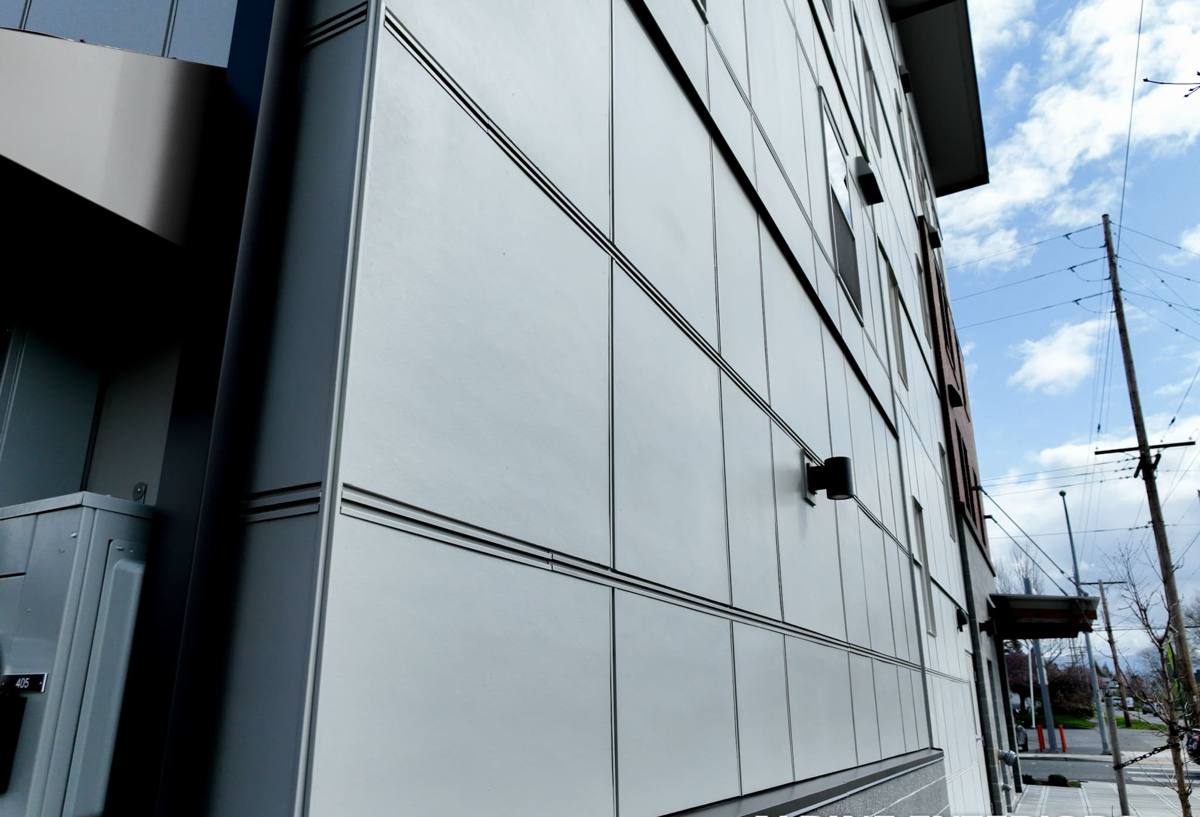
What Whatcom County's Coastal Climate Demands from a New Window Install
Birch Bay and the Marietta area get weather off the Strait of Georgia that inland Whatcom County simply doesn't see in the same combination. Three things matter most for a new-construction window opening:
Wind-driven rain
Rain here doesn't fall straight down as often as it should. Wind pushes it sideways into wall assemblies, which means the flashing detail at the sill and jambs has to shed water outward under pressure, not just by gravity. A sill pan that relies on caulk alone instead of a properly lapped, sloped pan is a common source of slow leaks in coastal builds.
Salt air
Airborne salt accelerates corrosion on fasteners, hardware, and unprotected metal flashing. It also degrades certain sealants faster than manufacturers' inland test data suggests. Material choices that hold up fine forty miles inland can underperform here.
Extended damp season and moss
Moss doesn't just grow on roofs. It takes hold on horizontal trim, sills, and anywhere moisture sits without drying out. A window detail that traps water — a sill without positive slope, a missing weep path — gives moss and rot a head start it wouldn't get in a drier climate.
None of this means Marietta needs exotic materials. It means the ordinary details — pan flashing, head flashing with a drip cap, correctly lapped house wrap, sealant rated for coastal exposure — can't be skipped or rushed, because this climate finds every shortcut eventually.
What a Correct New-Construction Window Install Actually Involves
There's a sequence to this, and it matters more than the window brand you choose. In order, from the rough opening out:
- Rough opening check — squared, correctly sized to the window's flanged dimensions with the right margin for shimming and leveling.
- Sill pan flashing — a sloped, sealed pan that directs any water that gets past the window back outward, not into the wall.
- Window set and shim — leveled, plumb, and squared before a single fastener goes in permanently, checked again after.
- Jamb and head flashing — flashing tape or metal flashing lapped in the correct shingle-style order (sill, then jambs, then head) so every layer sheds onto the one below it.
- House wrap integration — the wrap lapped over the head flashing, never under it, maintaining the drainage plane's continuity.
- Interior and exterior sealant — a backer rod and sealant bead sized and placed correctly, not just a thick smear of caulk covering a gap.
- Fastening per manufacturer spec — correct fastener type, spacing, and location to preserve the warranty and structural performance rating.
Skipping or reordering any one of these steps is how you get a window that looks finished from the outside but leaks the first time wind-driven rain hits it at the wrong angle.
Choosing Window Specs for a Marietta Build
New construction gives you the chance to spec windows correctly from the start instead of working within the constraints of an existing opening. A few decisions matter more here than they would inland:
- Frame material — vinyl, fiberglass, and clad-wood each handle salt air and moisture differently; fiberglass and quality vinyl tend to resist coastal corrosion better than bare aluminum or unprotected wood.
- Glass package — double-pane with a low-E coating is the standard baseline for this climate; argon-filled units add a modest efficiency bump worth considering given our heating-season length.
- Hardware finish — corrosion-resistant hardware is worth the small upcharge on any home within a few miles of the water.
- Weather rating — look for a design pressure (DP) rating suited to exposed coastal walls, not just the manufacturer's standard inland default.
- Sill and trim detailing — sloped exterior sills and drip caps that actually shed water, not decorative trim that creates a horizontal ledge for moisture to sit on.
| Factor | Why It Matters in Marietta | What to Ask About |
|---|---|---|
| Frame material | Salt air accelerates corrosion and degrades some coatings faster than inland use | Coastal-rated finish or fiberglass/vinyl option |
| Sill pan flashing | Wind-driven rain gets past the window plane more often here | Sloped, lapped pan — not caulk-only |
| Sealant type | Standard caulk can fail faster under UV and salt exposure | Sealant rated for coastal/marine exposure |
| Design pressure rating | Exposed walls near the Strait see higher wind loads | DP rating appropriate to the wall's exposure |
| Exterior trim profile | Flat horizontal trim collects moisture and grows moss | Sloped sills, drip caps, ventilated details |
Why the Installing Crew Matters as Much as the Window Itself
A premium window installed with a rushed or generic flashing sequence will underperform a mid-range window installed correctly. That's not a sales line — it's just how water management works. The window itself is one component in a system that includes the sheathing, the wrap, the flashing, and the trim, and every one of those has to be sequenced correctly for the whole thing to shed water the way it's designed to.
A crew that installs windows regularly in Birch Bay and Whatcom County's coastal zone has already worked out the flashing sequence for this climate, knows which sealants hold up to salt exposure over years rather than months, and isn't guessing at how much slope a sill needs to actually drain. That's the difference between a crew reading a generic install manual on a job site and a crew that's installed a hundred windows in weather like this one.
Our Process for New-Construction Window Installs
We work directly with builders, general contractors, and owner-builders on new construction and major additions in the Birch Bay and Marietta area. The process typically runs:
- Plan review — we look at the rough opening schedule and window specs before framing is finalized, so opening sizes and flashing details are coordinated up front.
- Product selection support — honest guidance on frame material, glass package, and hardware suited to a coastal exposure, at a range of budgets.
- Flashing and install — sill pan, window set, jamb and head flashing, and house wrap integration done in the correct sequence, inspected at each stage before it's covered by siding.
- Sealant and fastening — manufacturer-spec fastening and coastal-rated sealant application.
- Final check — operation, seal, and squareness verified before the job is signed off.
We coordinate with your builder's schedule rather than working in isolation, since window installation touches framing, house wrap, and siding trades that all need to stay in sequence.
A Few Things We See Go Wrong on New Builds Near the Water
Most of the callbacks we get asked to fix on newer coastal homes trace back to a handful of repeat issues:
- Sill pans skipped or replaced with caulk alone, which fails faster than a proper sloped pan.
- House wrap lapped under the head flashing instead of over it, reversing the drainage plane.
- Flat exterior trim with no slope, which holds water against the frame and feeds moss growth.
- Standard-grade sealant used where a coastal-rated product would have lasted years longer.
- Fasteners that don't match the manufacturer's spec, which can void the window warranty even if the install looks fine.
None of these are visible from inside the finished house. They show up years later as staining, soft trim, or a musty smell near a window — by which point the fix involves opening up the wall, not just re-caulking.
Checklist Before You Sign Off on a New-Construction Window Package
- Frame material and finish specified for coastal/salt-air exposure, not the manufacturer's standard inland default
- Sill pan flashing detail included in the install plan, not left to field judgment
- Sealant type confirmed as rated for marine/coastal exposure
- Design pressure (DP) rating matched to wall exposure, especially on water-facing elevations
- Exterior trim and sill profiles sloped to shed water, not flat
- Installer familiar with Whatcom County's coastal wind-driven-rain conditions, not just general new-construction experience
- Written warranty terms reviewed, including what fastening and sealant requirements must be met to keep them valid
Get an Estimate for Your Marietta Build
If you're planning a new build or major addition in Marietta or elsewhere around Birch Bay, we're happy to walk through your window plans, talk through frame and glass options for this climate, and give you a straightforward estimate — no pressure, no upsell. Use the form below to get started.