 Birch Bay Siding
 New-Construction Windows in Ferndale: What Makes This Job Different
New-construction window installation is not the same trade as replacing an old window in an existing wall. On a new build in Ferndale, we're setting windows into a bare rough opening before siding, house wrap, and trim are finished — which means the window and the wall's water-management system have to be installed together, in the right order, by whoever is doing the windows. Get that sequence wrong and no amount of good caulking fixes it later, because the flashing that matters most ends up buried behind the siding.
This page is specifically about that new-construction process for homes going up in and around Ferndale, in Whatcom County. If you're replacing windows in a home that's already finished, that's a different job with different priorities — this is about doing it right the first time, while the wall is still open.
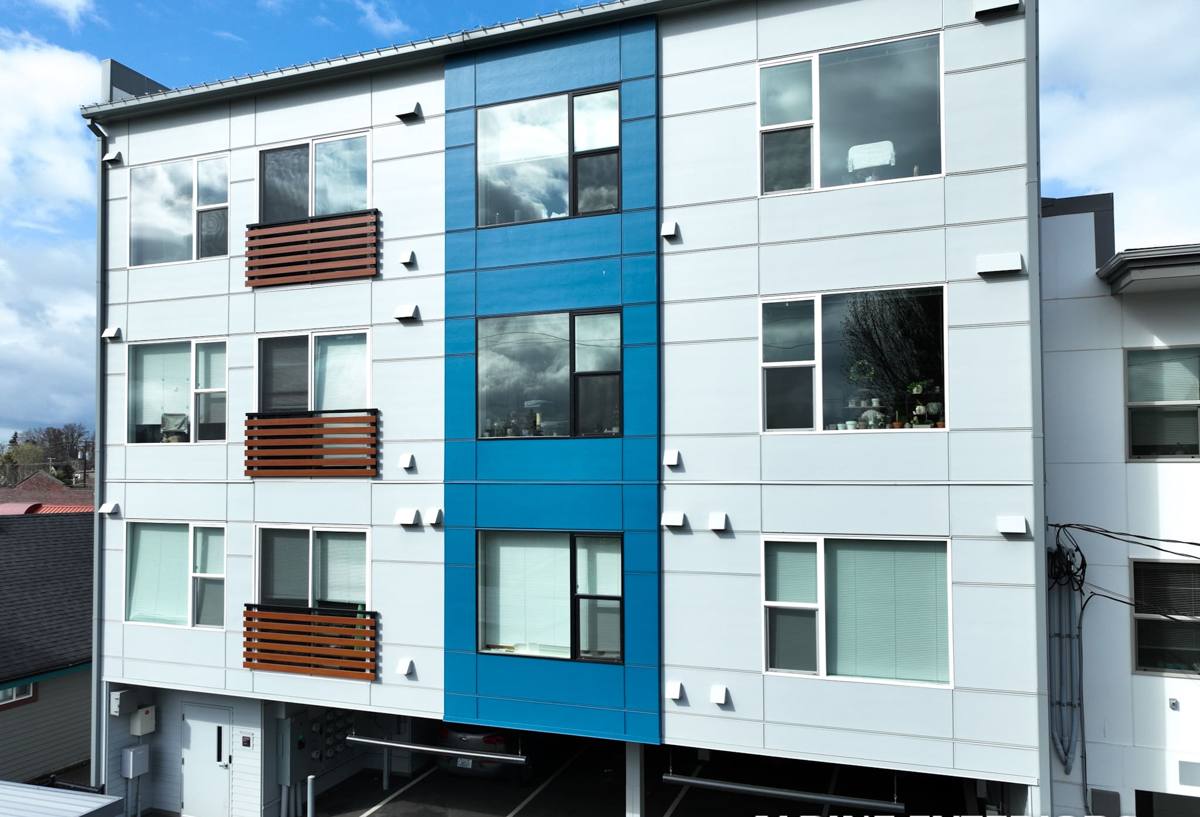
What Ferndale's Climate Actually Does to a Window Opening
Ferndale sits close enough to the water that salt-laden air is a real factor on hardware, fasteners, and finishes, not just a coastal talking point. Add Whatcom County's long stretch of driving rain — wind-driven, sideways rain that hits walls at an angle rather than falling straight down — and you have conditions that expose any weak point in a window's water management within the first few wet seasons, not decades later.
Then there's moss. Whatcom County's moss season runs long, and it's not just a roof problem. Moss and algae hold moisture against exterior surfaces, including window sills, trim, and the transition points where flashing meets siding. A window opening that's sealed correctly sheds that moisture. One that isn't holds it right where wood rot and vinyl degradation start.
None of this means new-construction windows in Ferndale need to be exotic or over-built. It means the installation details — flashing laps, sill pans, sealant placement — have to be done correctly every time, because this climate doesn't forgive shortcuts the way a drier region might.
Why "It's a New Wall, So It's Easier" Is a Myth
New construction gets treated like the easy version of window work because there's no old caulk to scrape out and no rotten trim to replace. In practice, new construction demands more precision, not less — the rough opening has to be exactly right, the sequencing with the house wrap and flashing tape has to happen in the correct order, and there's no siding yet to hide a sloppy job. Mistakes made now get sealed behind exterior finishes and aren't visible again until there's a leak.
What a Correct New-Construction Window Install Involves
A properly installed new-construction window is really a system, not a single product. The window unit itself is only one piece. The parts that actually keep water out of the wall are the sill pan, the flashing tape integration with the weather-resistive barrier (WRB), and the order of operations around the nailing fin.
- Rough opening checked for level, plumb, and square before the window ever goes in
- Sloped sill pan installed at the base of the opening so any water that gets past the window drains back outward, not into the wall cavity
- Window set and fastened per the manufacturer's nailing schedule — not just "enough nails to hold it"
- Flashing tape applied in the correct shingle-lap order: sill first, jambs next, head last, so water always sheds downward and outward
- Integration with the house wrap so the WRB laps over the head flashing, maintaining a continuous drainage plane
- Backer rod and low-expansion sealant at the interior air seal, separate from the exterior water seal
- Final check of reveal, operation, and squareness before trim and siding close the opening up
Skip or reorder any one of these steps and the window can look perfectly installed for years while a slow leak works behind the wall. That's the real risk with new construction — problems don't show up at closing, they show up two or three wet seasons later.
Our Process on a Ferndale New-Construction Job
1. Coordinate With the Build Schedule
We work directly with the builder or general contractor's timeline. Windows go in after the WRB is on and before siding starts, and that window in the schedule can be tight. We show up when the opening is ready, not on a fixed date regardless of framing progress.
2. Verify Rough Openings Before Delivery
We check actual field measurements against the window order before units arrive on site. Framing tolerances vary, and catching a tight or oversized opening before the window shows up saves a delay mid-build.
3. Install Sill Pans and Flashing in Sequence
This is the step that determines whether the window performs in driving rain. We follow a consistent shingle-lap sequence on every opening, regardless of which crew member is on the ladder that day, so the result doesn't depend on who's doing the work.
4. Set, Fasten, and Air-Seal
The window is set to the manufacturer's specified fastening pattern, then air-sealed on the interior side separately from the exterior water seal. Mixing up interior and exterior sealant roles is a common cause of trapped moisture in wall cavities.
5. Document and Walk the Job
Before we leave, we walk every opening, confirm operation, check reveals are consistent, and make sure the flashing detail is ready for the siding crew to lap correctly against it.
Choosing Window Products for a Ferndale New Build
Brand matters less than most homeowners expect; installation quality and product category matter more. That said, the frame material affects long-term performance in this climate, particularly around salt air and sustained moisture exposure.
| Frame Type | How It Handles Salt Air & Rain | Maintenance | Typical Fit for New Builds |
|---|---|---|---|
| Vinyl | Good — won't corrode or rot; UV-stable finishes hold up well | Low; occasional cleaning | Most common choice for budget-conscious new construction |
| Fiberglass | Very good — dimensionally stable, resists moisture-driven expansion | Low | Strong option where wider spans or darker exterior colors are wanted |
| Wood-clad | Fair to good depending on cladding quality — cladding protects the wood, but any breach in the seal invites rot | Higher; seals need periodic inspection | Chosen for interior wood aesthetic; needs disciplined installation and upkeep |
| Aluminum | Poor without thermal breaks — prone to condensation and, near salt air, corrosion at fasteners over time | Moderate | Limited use in residential new construction here; better suited to specific architectural applications |
We don't push one brand across every job. What we insist on is a product with a documented installation instruction set we can follow precisely, and hardware rated for coastal exposure — stainless or coated fasteners rather than bare steel, which corrodes faster in salt-influenced air.
Common New-Construction Mistakes We See in This Area
Most of the callbacks we get on new-build windows trace back to a small set of recurring errors, usually from crews unfamiliar with local conditions or rushing to keep pace with a build schedule.
- Flashing tape applied out of shingle-lap order, letting water run behind the WRB instead of over it
- No sloped sill pan, so water pools at the base of the opening instead of draining out
- Interior sealant used to try to do the job of exterior water flashing (they are not interchangeable)
- Nailing fin fastened before confirming the opening is square, forcing the window frame slightly out of true
- Siding installed tight against the window without the flashing lap it needs to shed water correctly
- Generic caulk used in place of a proper backer-rod-and-sealant joint, which fails faster under constant rain exposure
Every one of these is avoidable with a consistent process. None of them show up on a walkthrough at closing — they show up as staining, soft trim, or interior moisture a season or two later, which is exactly why the installation sequence matters more than almost anything else on this job.
Working With Your Builder or GC
Most homeowners building new in Ferndale aren't hiring the window installer directly — the builder is. Where we come in as a subcontractor, we coordinate flashing details directly with the builder's framing and siding crews so nobody's guessing who's responsible for which lap. Where a homeowner is acting as their own GC or has flexibility in choosing trades, we're glad to work directly and communicate with the siding and wrap crews to keep the water-management plan consistent from framing through finished exterior.
Either way, the goal is the same: no gaps in responsibility between "who did the wrap," "who did the windows," and "who did the siding." Leaks happen in the seams between trades as often as they happen from bad materials.
Why a Crew That Already Works Ferndale Matters
Window installation instructions are written for generic conditions. Whatcom County isn't generic — the combination of salt air, sustained wind-driven rain, and a moss season that runs much of the year means the margin for error on flashing and sealant work is smaller here than in drier inland regions. A crew that's already installed windows on new builds around Birch Bay and Ferndale has already seen what happens when a detail is skipped in this specific climate, and adjusts the process accordingly rather than following a one-size-fits-all install sheet.
There's also a practical scheduling benefit. A local crew can respond to a builder's shifting timeline without a long drive eating into the workday, which matters when window installation has to happen in a narrow window between WRB and siding.
What Happens After Installation
Once your windows are in and the siding crew has closed up the exterior, there's very little ongoing maintenance required if the install was done correctly — that's the point of doing it right the first time. We recommend a simple annual check as part of general home upkeep:
- Inspect exterior sealant joints for cracking or separation, especially after the first full wet season
- Clear any moss or debris buildup from sills and trim before it holds moisture against the frame
- Confirm weep holes (on vinyl and fiberglass units) are clear and draining
- Check interior corners of window frames for any signs of condensation staining, which can indicate an air-seal issue worth addressing early
Manufacturer warranties typically cover the window unit itself; installation workmanship is a separate matter, which is why we stand behind our own installation work independently of whatever warranty terms come with the window brand your builder specifies.
If you're building in Ferndale and want windows installed by a crew that treats the flashing sequence as seriously as the product itself, we're happy to walk the plans, talk through timing with your builder, and give you a straightforward, no-pressure estimate using the form below.