 Birch Bay Siding
 Metal Roofing Built for Blaine's Coastal Climate
Blaine sits right on the water, and that changes what a roof has to deal with compared to homes even a few miles inland. Salt-laden air off the bay, wind-driven rain that gets pushed sideways under poorly flashed edges, and a moss season that can run most of the year in the shade of the trees common throughout Whatcom County — all of it adds up. A roof that would hold up fine in a drier climate can start showing problems here in half the time if it wasn't built with this exposure in mind.
Metal roofing, done correctly, handles these conditions better than most other roofing materials available to homeowners in Blaine and Birch Bay. But "done correctly" is doing a lot of work in that sentence. Metal roofing is unforgiving of shortcuts — the wrong fastener, the wrong underlayment, or a panel run without proper attention to thermal movement will fail faster near the coast than it would somewhere drier and calmer. This page covers what actually matters for a metal roof installed in this specific area, not generic marketing points that apply anywhere.
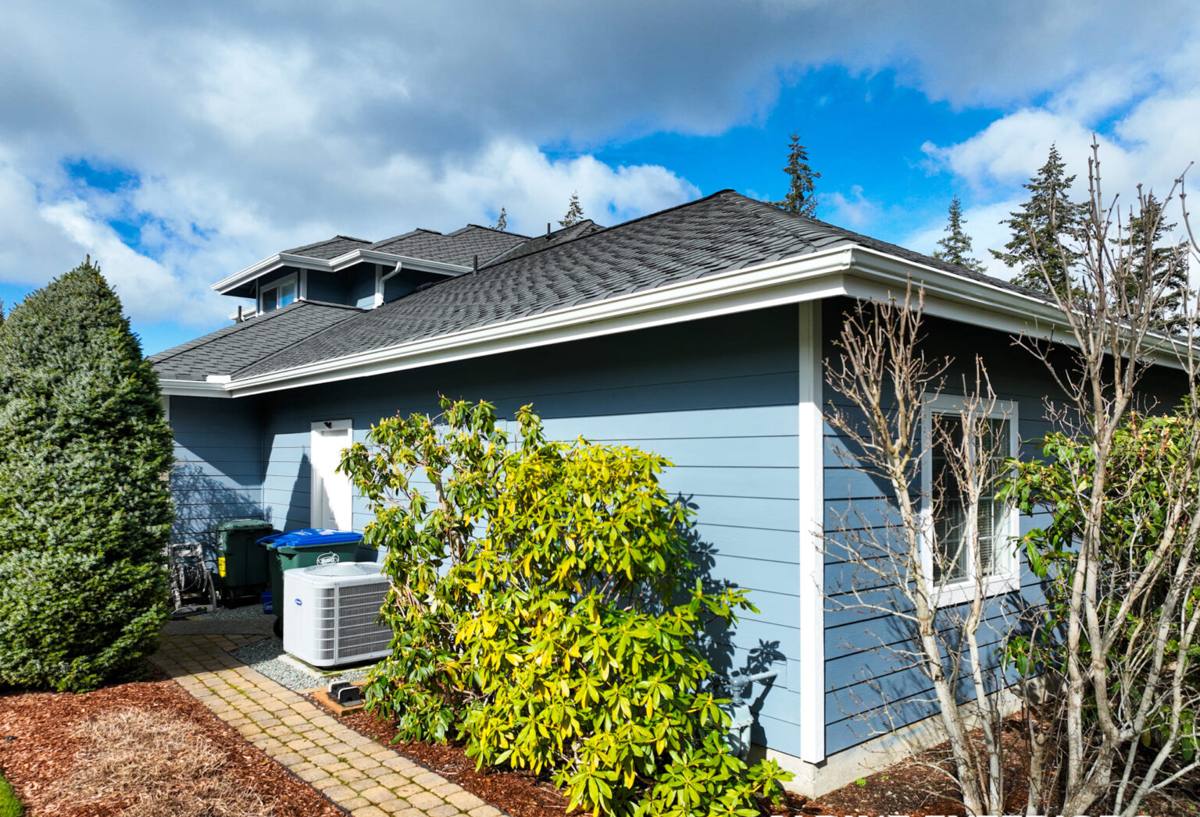
Why Salt Air and Driving Rain Change the Job
Salt Air and Corrosion
Airborne salt is corrosive to unprotected or poorly coated metal, and it doesn't stay near the shoreline — wind carries it well inland on a regular basis. Fasteners, flashing, and panel edges are where corrosion typically starts first, because that's where raw or minimally protected metal is most likely to be exposed. The fix isn't complicated, but it does require using materials rated for coastal exposure and installing them the way the manufacturer specifies, not the way that's fastest.
Driving Rain and Wind-Driven Water
Rain in this part of Washington rarely falls straight down. Wind off the water pushes it sideways and under laps, ridges, and penetrations that aren't sealed and flashed properly. A metal roof's water-shedding performance depends almost entirely on the details at seams, valleys, and roof-to-wall transitions — the field panels themselves are the easy part. This is where a rushed or inexperienced install shows up as a leak a year or two later, not on day one.
Moss and Organic Debris
Whatcom County's tree cover and damp shoulder seasons mean moss and algae growth is a near-constant pressure on any roof, metal included. Metal sheds moss far better than shingles because there's no rough surface for spores to grab onto, but valleys, low-slope sections, and areas that stay shaded can still accumulate debris that traps moisture against the panel over time if it's never cleared.
What a Correctly Installed Metal Roof Includes
A metal roof is a system, not just a set of panels. For Blaine and Birch Bay homes, we pay particular attention to:
- Panel and fastener materials rated for coastal/marine exposure, not standard-grade hardware
- A synthetic underlayment layer that manages moisture even if wind-driven rain gets past the panel seams
- Ice-and-water membrane at eaves, valleys, and roof-to-wall transitions where wind-driven rain concentrates
- Proper attic and roof ventilation, since trapped moisture under metal panels is a common cause of premature deck rot
- Flashing details sized and installed for this region's rain volume, not minimum code allowances
- Fastener spacing and clip systems that account for panel expansion and contraction through temperature swings
None of this is unusual or exotic — it's simply the difference between a roof installed to a spec sheet and one installed to survive the specific conditions Blaine's shoreline throws at it year after year.
Panel Types: What We Recommend and Why
Not every metal roofing product performs the same way in a marine climate. Here's how the common options compare for a home in Blaine or Birch Bay.
| Panel Type | Best Suited For | Maintenance Needs | Coastal Durability |
|---|---|---|---|
| Standing Seam | Most homes; concealed fasteners reduce leak points | Low — occasional debris clearing | Excellent when properly coated and clipped |
| Exposed-Fastener Panel | Outbuildings, shops, budget-conscious projects | Moderate — fasteners need periodic inspection | Good, but fastener seals are the weak point over time |
| Stone-Coated Steel | Homeowners wanting a shingle or tile look | Low | Good, dependent on coating quality and install detail |
We lean toward standing seam for most full roof replacements in this area because concealed fasteners eliminate the most common failure point in a marine climate — exposed screw heads that lose their seal as gaskets age and salt air accelerates wear. That's a professional judgment based on long-term maintenance, not a claim that other panel types are poor products; exposed-fastener systems still have a legitimate place on outbuildings and lower-budget projects.
Our Process for a Blaine or Birch Bay Metal Roof
1. On-Site Assessment
We walk the roof, check the deck condition, evaluate ventilation, and look at how the home is exposed to prevailing wind and rain off the water. Homes closer to the shoreline sometimes warrant upgraded coatings or fastener specs compared to homes set further back or shielded by trees.
2. Tear-Off and Deck Inspection
We remove the existing roofing down to the deck and check for rot or soft spots, which are common on older roofs in this climate where moisture has been getting in slowly for years. Any damaged decking gets replaced before anything new goes down — installing over a compromised deck just hides a problem instead of fixing it.
3. Underlayment and Flashing
This is where most of the long-term water resistance actually comes from. We install synthetic underlayment across the field and ice-and-water membrane at the vulnerable areas — eaves, valleys, chimneys, and any wall intersections — before a single panel goes up.
4. Panel Installation
Panels are installed with coastal-rated fasteners or concealed clip systems, spaced and secured to manufacturer spec, with attention to expansion allowance so panels aren't stressed as temperatures swing through the seasons.
5. Final Walkthrough
We check every penetration, seam, and flashing detail before calling the job done, and walk the roof with the homeowner (from the ground or safely, as conditions allow) to explain what was done and what, if anything, needs periodic attention going forward.
What Drives Cost on a Metal Roofing Project
| Factor | Why It Matters |
|---|---|
| Panel type and coating | Standing seam and coastal-grade coatings cost more upfront than exposed-fastener panels but reduce long-term maintenance |
| Roof complexity | Valleys, dormers, and multiple roof planes require more flashing work and labor time |
| Deck condition | Rot or soft decking found during tear-off adds repair cost before new roofing can go on |
| Ventilation upgrades | Older homes often need ventilation improvements to prevent moisture buildup under a new metal roof |
| Roof pitch and access | Steeper roofs or difficult access affect labor time and safety requirements |
We don't quote a job without seeing the roof — anyone who gives you a firm number over the phone for a metal roof in this climate is guessing. What we can say honestly is that upfront cost is only part of the picture; a properly installed metal roof typically outlasts asphalt shingles by a wide margin, which matters a lot in a climate this hard on roofing materials.
Signs Your Current Roof Needs Attention
Whether you currently have shingles or an older metal roof, these are worth having checked, especially heading into the wetter months:
- Moss buildup in valleys or along shaded roof edges
- Rust streaking or discoloration around fasteners or flashing on an existing metal roof
- Granule loss or curling shingles if you're currently on asphalt
- Water stains on interior ceilings, especially near chimneys or wall intersections
- Visible gaps or lifted flashing around vents, skylights, or roof-to-wall transitions
- A roof approaching or past 20 years old with no major work done
Catching these early is almost always cheaper than waiting for an active leak, particularly in a climate where trapped moisture has months of damp weather to do damage before it dries out.
Why Local Experience in Blaine and Birch Bay Matters
A crew that only occasionally works this close to the water can miss things that a crew familiar with Blaine and Birch Bay catches automatically — how far salt exposure reaches inland on a given property, which roof orientations take the worst of the wind-driven rain, and how aggressively moss grows under the tree cover common in this part of Whatcom County. That familiarity shows up in the details: fastener choice, flashing sequencing, and where to spend extra attention versus where standard practice is sufficient.
It also means we're not learning the local climate on your roof. We already know what tends to fail first on homes exposed to this coastline, and we build against those failure points from the start rather than reacting to them after the fact.
Get a Straight Answer About Your Roof
If you're weighing a metal roof for a home in Blaine or Birch Bay, we're happy to take a look and give you an honest read on your options — no pressure, no upsell. Use the form below to request a free estimate, and we'll walk you through what your roof actually needs.