 Birch Bay Siding
 Why Lynden Roofs Take a Different Kind of Beating
Lynden sits far enough inland that people sometimes assume it's spared the worst of what Whatcom County weather throws around. It isn't. The same Pacific storm systems that push salt air and driving rain off the Strait of Georgia and Birch Bay still carry plenty of moisture and wind energy by the time they reach Lynden — and the surrounding farmland means less windbreak from trees and terrain than you'd get in a denser or more forested area. Add in the long, wet moss season that Whatcom County deals with from fall through spring, and you've got a roof that's working hard almost year-round, not just during the occasional named storm.
Storm damage here rarely looks like a single catastrophic event. More often it's wind-lifted shingles from a February gale, a skylight flashing that started weeping during a heavy November rain, or moss that's been quietly working its way under shingle tabs for two winters straight. By the time a homeowner notices a stain on the ceiling, the damage underneath has usually been developing for a while.
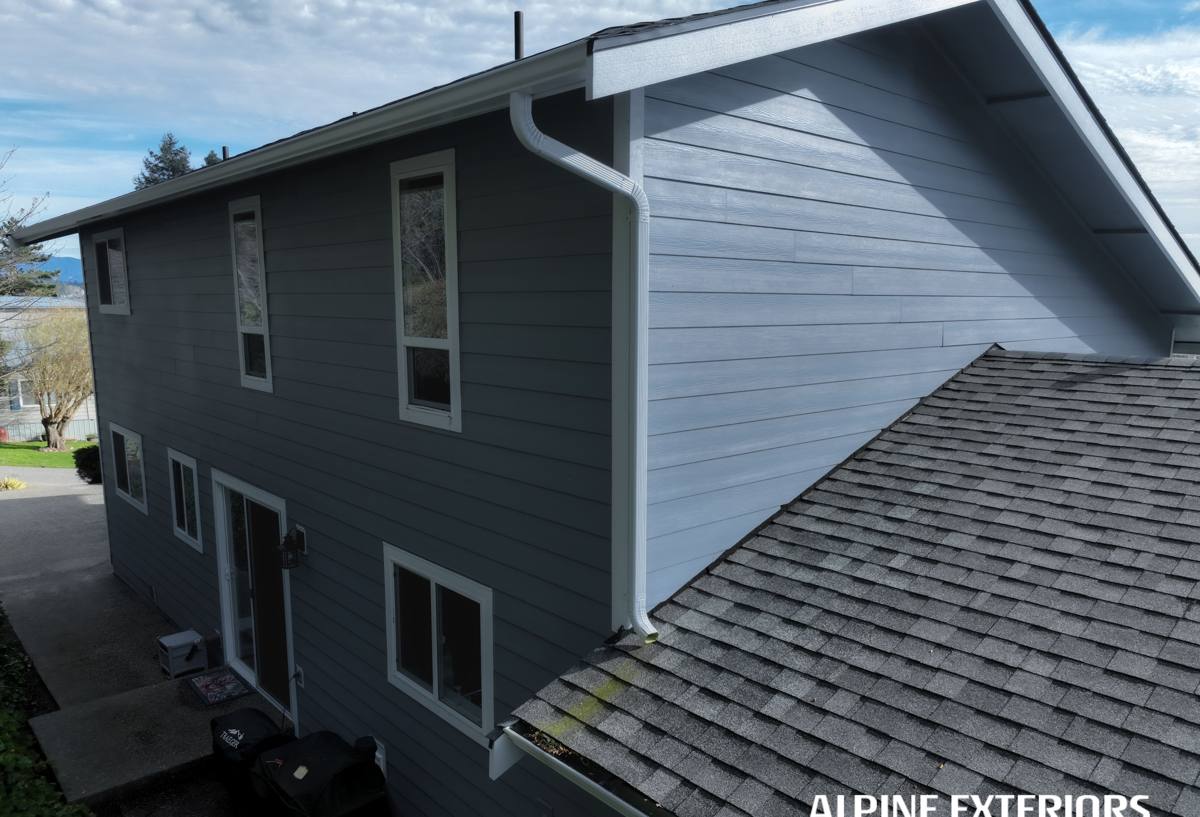
What Counts as Storm Damage on a Lynden Roof
"Storm damage" covers more ground than most homeowners expect. It's not just missing shingles after a windstorm — it's anything a storm event triggers or accelerates, including damage that shows up weeks later.
Wind Damage
Sustained wind and gusts common to Whatcom County winters can lift shingle tabs, break the adhesive seal strip, or tear shingles off outright. Even when shingles stay in place, a broken seal lets wind-driven rain get underneath on the next storm, which is when the real damage — sheathing rot, insulation saturation — actually starts.
Wind-Driven Rain Intrusion
Rain that comes in sideways during a storm finds every weak point in flashing, vent boots, and shingle laps that a straight-down rain would never reach. This is one of the most common damage patterns we see on Lynden roofs, and it's often invisible from the ground.
Moss and Debris Buildup
Moss isn't cosmetic. It holds moisture against the shingle surface, lifts tabs as it grows, and channels water sideways instead of down and off the roof. A moss mat that built up over one wet season can turn a routine storm into a leak event, because the water has nowhere to shed properly.
Impact Damage
Wind-thrown branches, fence debris, or hail (less common here but not unheard of) can bruise or puncture shingles and dent flashing and gutters. Bruised shingles don't always show visible cracking right away — the granule layer gets compromised and the shingle fails early, sometimes a full season or two later.
How We Assess Storm Damage
An honest assessment starts on the roof, not from a photo taken with a drone or a quick look from the driveway. We walk the roof surface, check every penetration (vent boots, chimney flashing, skylights), and inspect the attic from underneath if access allows — because interior signs of moisture often show up before exterior damage is obvious.
- Shingle condition: lifted tabs, broken seals, granule loss, cracking
- Flashing integrity at valleys, chimneys, skylights, and wall intersections
- Moss and organic debris coverage, and how it's affecting water flow
- Gutter and downspout function — clogged or damaged gutters back water up under the roof edge
- Attic and ceiling check for staining, damp insulation, or daylight through the decking
- Sheathing condition where accessible, since prolonged moisture can soften the wood underneath
We document what we find with photos and a written scope before any work starts. If the damage is tied to a specific storm date, we build the report in a way that's usable for an insurance claim — but we tell you plainly whether the damage looks storm-related or is closer to normal wear, because those are different conversations with your insurer.
Repair vs. Replacement: How We Make the Call
Not every storm-damaged roof needs a full replacement, and we're not going to tell you it does just because a crew is on-site. The decision comes down to a few honest factors.
| Factor | Leans Repair | Leans Replacement |
|---|---|---|
| Age of roof | Under 10-12 years, otherwise healthy | Near or past expected lifespan for the material |
| Extent of damage | Localized to one slope or area | Spread across multiple slopes or systemic (moss/moisture damage widespread) |
| Underlying decking | Sound, no soft spots | Soft, rotted, or delaminated sheathing found |
| Shingle condition elsewhere | Remaining shingles still sealing and flexible | Widespread granule loss or brittleness on undamaged areas too |
| History of repairs | First or second repair on this roof | Repeated patch jobs in different spots over recent years |
A patch-and-repair approach is the right call more often than people assume — especially for isolated wind damage on a roof that's otherwise in good shape. Where we push back is when a roof has enough age and enough spread-out moisture history that another repair is just delaying an inevitable full replacement, and we'd rather tell you that upfront than let you pay for repairs twice.
Our Repair Process
- On-site inspection and written scope, with photos of the damage
- Removal of damaged shingles and inspection of the decking underneath
- Sheathing repair or replacement if moisture has compromised the wood
- Flashing repair or replacement at any affected penetrations
- New underlayment in the repaired section, tied properly into the existing roof
- Matching shingles installed and sealed, with attention to how the repair blends into surrounding courses
- Gutter and downspout check, since clogged drainage is often what turned minor damage into a leak
- Final walkthrough with you before we consider the job done
Moss Prevention Isn't Optional Here
Given how long the moss season runs in Whatcom County, we treat moss control as part of storm damage prevention, not a separate cosmetic service. After any repair, we'll talk through options — zinc or copper strips near the ridge, periodic soft-washing, and keeping tree cover trimmed back where it's dropping shade and debris onto the roof. None of this eliminates moss entirely, but it buys years of extra life on shingles that would otherwise be fighting a losing battle against trapped moisture every winter.
Simple Signs a Lynden Homeowner Can Check For
- Granules collecting in gutters or at the base of downspouts after a storm
- Shingle tabs that look lifted or curled at the edges, especially on the roof faces that catch prevailing wind
- Dark streaking or green growth concentrated on north-facing or shaded slopes
- Ceiling stains that appear or darken after a heavy rain event, even if they seem to dry out between storms
- Daylight visible through the roof deck from inside the attic
- Sagging or soft-feeling spots when walking the roof (a sign to stop and call, not to keep walking)
Why It Matters to Hire a Crew That Already Works Lynden
Storm damage repair is one of those jobs where local experience actually changes the outcome. A crew that works Whatcom County roofs through multiple wet seasons knows which flashing details tend to fail first in this climate, how aggressively moss builds up on shaded northern exposures common to the area, and what a legitimate storm-damage pattern looks like versus long-term neglect that a storm just exposed. That distinction matters for your wallet and, if you're filing a claim, for how your insurer views the report.
It also means faster response. After a real wind event, a lot of roofing companies get flooded with calls from homeowners across the whole region, and outfits with no local base end up stretched thin or simply not showing up for smaller jobs. A crew already working in and around Birch Bay and Lynden can typically get eyes on your roof sooner, tarp anything urgent, and schedule the actual repair without you waiting weeks while an active leak keeps doing damage.
What to Do Right After a Storm
- Check your attic and ceilings for new staining or dampness as soon as it's safe to do so
- Photograph any visible exterior damage from the ground — don't get on the roof yourself after a storm
- Clear debris away from gutters and downspouts if you can do it safely, to keep water moving off the roof
- Call for an inspection promptly; a small leak addressed in days is a repair, the same leak ignored for months is often a replacement
- Keep any documentation if you plan to file an insurance claim, including dates of the storm and photos
If your roof took a hit in a recent storm, or you've just noticed moss and staining that's been building for a while, we're happy to come take an honest look. We'll tell you straight whether it's a repair, what it involves, and what it's likely to cost — no pressure, no upsell. Reach out for a free estimate using the form below.