 Birch Bay Siding
 Why Lynden Siding Takes a Different Kind of Beating
Lynden sits inland from the water compared to the immediate Birch Bay shoreline, but it still lives inside the same marine-influenced weather system that defines Whatcom County. Moist air moves in off the Salish Sea and settles across the county for long stretches of the year, and Lynden's mix of open farmland and mature tree cover means homes here deal with their own version of the same problem every coastal property faces: siding that rarely gets a real chance to dry out. Add driving rain that comes in sideways during winter storms, freeze-thaw cycles that stress joints and fasteners, and a moss season that can stretch from fall through spring, and you have a climate that is genuinely tough on exterior materials — even ones that look fine from the curb.
Siding repair in this environment is not just about patching a hole or replacing a cracked board. It is about understanding why that section failed in the first place, because in Whatcom County, most siding damage traces back to moisture that had somewhere to hide and nowhere to escape.
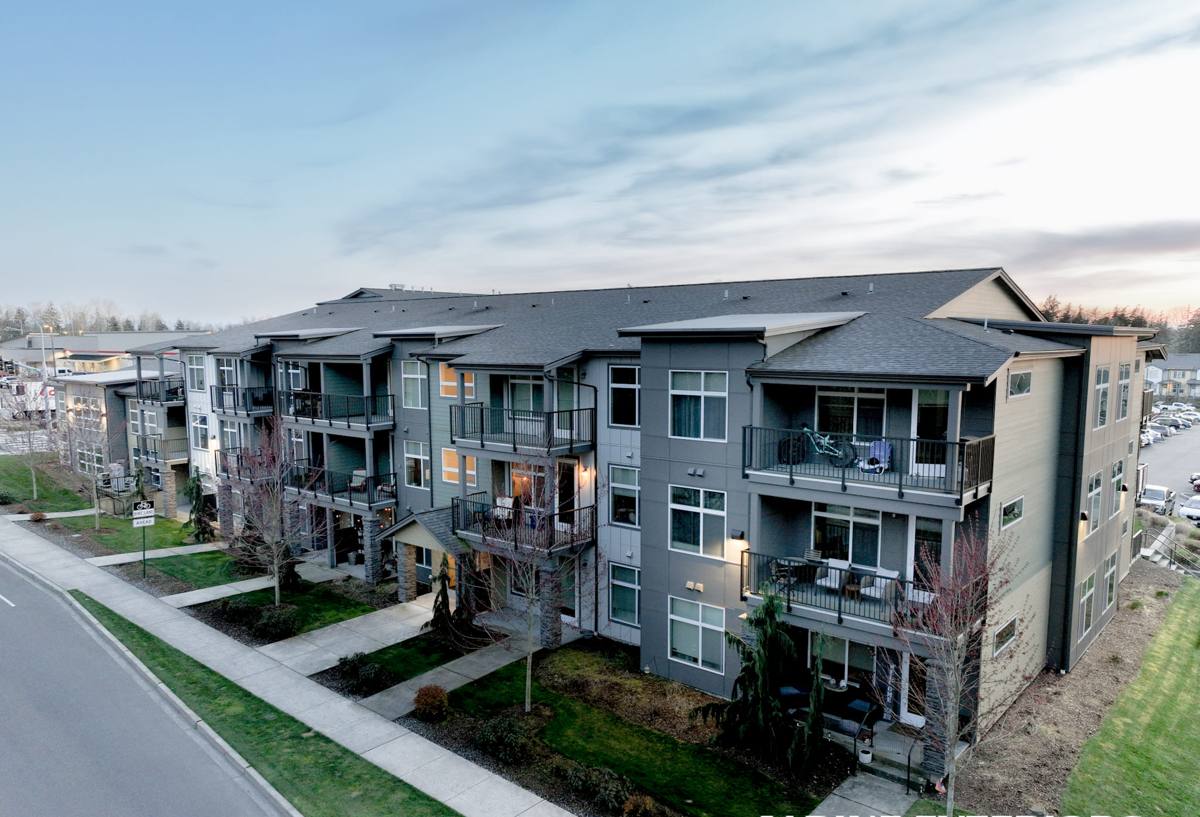
Common Siding Problems We See on Lynden Homes
Moisture and Rot at Vulnerable Points
The most frequent repair calls we get involve moisture damage concentrated at predictable weak points: butt joints between siding courses, corners, areas around windows and doors, and anywhere siding meets a roofline, deck, or porch. Older wood-based products and even some engineered wood siding can swell, delaminate, or rot at these seams when water gets behind the material and stays there. On a property like a Lynden home that sees repeated wet-dry cycles, small gaps in caulking or flashing that seemed harmless when the home was built can turn into real structural problems within a decade.
Moss, Algae, and Surface Staining
Whatcom County's long moss season is not just a cosmetic nuisance. Moss and algae hold moisture directly against the siding surface, which accelerates whatever underlying deterioration is already happening. On north-facing walls and shaded sections near trees or fences — common on Lynden lots with mature landscaping — this buildup can mask damage until it's more advanced than a homeowner realizes.
Impact Damage and Material Fatigue
Storm debris, lawn equipment, hail, and simple age all take their toll. Older vinyl can crack and become brittle in cold snaps, primed wood siding checks and splits as it weathers, and cement-based products that were installed or finished incorrectly can show cracking at seams or fastener heads working loose over time. Each of these needs a different repair approach, which is why an accurate diagnosis matters more than a quick patch.
What a Correct Siding Repair Actually Involves
Finding the Root Cause, Not Just the Symptom
A visible crack or stain is usually a sign of a problem, not the problem itself. Correct repair work starts by pulling back enough of the siding and trim to see what's happening underneath — checking the house wrap or building paper, the condition of the sheathing, and whether flashing at windows, doors, and horizontal transitions is doing its job. Patching over a moisture source without addressing it just buys a homeowner a year or two before the same spot fails again.
Matching Material and Finish
Repairs need to match not just in color but in profile, reveal, and butt-joint style so the section doesn't stand out and, more importantly, so it sheds water the same way the surrounding siding does. This is harder than it sounds on older homes where the original product may be discontinued or faded from years of sun exposure.
Water Management First
Any repair worth doing re-establishes proper water management: correct flashing laps, sealed but not over-caulked joints (caulk should manage small gaps, not substitute for flashing), and drainage paths that let incidental moisture escape rather than pool. In a climate with as much sustained rainfall as this region gets, this step is what separates a repair that lasts from one that doesn't.
Repair or Replace: How to Think It Through
Not every siding problem calls for a full re-side, and not every damaged section is worth patching. The right call depends on a few honest factors.
| Factor | Favors Repair | Favors Replacement |
|---|---|---|
| Extent of damage | Isolated to one wall or a few boards | Widespread across multiple elevations |
| Cause | One-time impact or localized flashing failure | Systemic moisture intrusion behind the wall assembly |
| Material age | Newer siding still within its useful life | Original siding nearing or past expected lifespan |
| Material type | Durable material still available or matchable | Discontinued, faded, or failure-prone product |
| Cost over time | Repair cost is a fraction of full replacement | Repeated repairs are starting to add up |
A straightforward spot repair might run a homeowner a few hundred dollars; a larger section with hidden water damage that requires opening up the wall can run into the thousands. Part of our job on every visit is giving you a clear, honest read on which category your situation falls into before any work starts.
Why We Repair With James Hardie Fiber Cement
When a repair calls for new material — whether it's a few boards or a full section — we install James Hardie fiber cement, and only James Hardie. We do not install LP SmartSide, vinyl, Cemplank, Allura, primed spruce, or cedar. That is a deliberate standard, not a default, and it applies to repair work just as much as full re-sides.
Fiber cement is non-combustible and dimensionally stable, meaning it does not swell and shrink with moisture the way wood-based products do — a real advantage in a climate where wet-dry cycling is constant. Hardie's ColorPlus factory-applied finish is baked on under controlled conditions, which gives repaired sections a far better chance of matching the surrounding siding's color and holding that match over time than a field-painted patch would. And Hardie's HZ5 product line is specifically engineered for climates with significant moisture exposure and freeze-thaw activity, which describes Whatcom County well. When we patch a section of Hardie siding, we're not just filling a gap — we're extending a system that was designed to perform as a whole.
If your existing siding is a different product, we'll be straightforward about your options: we can often match certain repairs closely enough to bridge until a full replacement makes sense, but we won't pretend every material patches as cleanly as fiber cement does. That's part of the honest assessment you get with any repair estimate from us.
Our Siding Repair Process
- Inspection. We walk the exterior, looking past the obvious damage for related issues at nearby joints, corners, and penetrations.
- Diagnosis. We identify what caused the failure — flashing, caulking, grade issues, material fatigue — so the repair addresses the source.
- Written estimate. You get a clear scope and price before anything is touched, including whether repair or partial replacement makes more sense.
- Repair. We remove only what needs to come out, correct the underlying water management, and install matched material.
- Final check. We confirm the finished repair sheds water correctly and blends with the surrounding siding.
Here's what a homeowner should expect from a properly done inspection and repair visit:
- A specific explanation of what failed and why, not just "this board needs to be replaced"
- A look behind the siding at the affected spot, not just a surface assessment
- An honest recommendation on repair versus replacement, including the trade-offs
- Material and color matching discussed up front, before work begins
- A written scope of work and price, with no pressure to expand into a full re-side unless it's actually warranted
Why Local Experience in Lynden Matters
A crew that regularly works Whatcom County homes knows the patterns before they even get on the ladder — which elevations tend to hold moisture longest through the fall, how far moss establishes itself before it starts causing real damage, and how local grading and landscaping around older Lynden properties tends to affect water flow near the foundation. That local pattern recognition speeds up an accurate diagnosis and helps avoid the mistake of treating a Lynden home's siding problem the same way you'd treat one in a drier climate. It also means we're a known, reachable local contractor if a repair needs a follow-up look after the next wet season, not a crew that did one job and moved on.
Protecting Your Siding After the Repair
A good repair holds up longer with a little basic upkeep. Keep gutters clear so overflow doesn't run down the wall directly above a repaired section. Trim back vegetation that shades siding and keeps it damp longer than it should be. Rinse visible moss or algae growth before it has a chance to spread, and do a quick visual check of caulking at joints and trim each year, since caulk is a maintenance item, not a permanent fix. None of this requires special equipment — it just requires doing it before the next moss season sets in rather than after.
If you're noticing a soft spot, a stain, cracking, or a section of siding that just doesn't look right anymore, we're happy to take a look. We offer free, no-pressure estimates for Lynden homeowners — we'll tell you honestly whether you're looking at a simple repair or something bigger, with no obligation either way. Just fill out the form below to get started.