 Birch Bay Siding
 Energy-Efficient Windows in Lynden: Why the Rating Number Isn't the Whole Story
Lynden sits inland in the Nooksack River valley, in the farm country of northern Whatcom County. It doesn't take the direct salt spray that hits a waterfront property, but it sits inside the same marine-driven weather system that shapes exterior work across this whole corner of Washington — damp air moving in off the Sound, long stretches of wind-driven rain, and a moss and mildew season that runs longer here than it would in a drier climate. That combination matters for energy-efficient windows specifically, because a window's efficiency isn't just a number printed on a label. It's how well that window keeps performing after a few wet winters, and whether the installation around it lets the glass and frame actually do the job they were built for.
We work on siding, roofing, windows, and decks across this stretch of Whatcom County, including both the waterfront exposure near Birch Bay and inland communities like Lynden. That range matters here: a window chosen and installed correctly for Lynden's conditions doesn't need to be over-built for salt exposure it won't see, but it does need to handle sustained moisture, seasonal condensation, and a heating season that runs long enough for the efficiency numbers to actually matter to a utility bill.
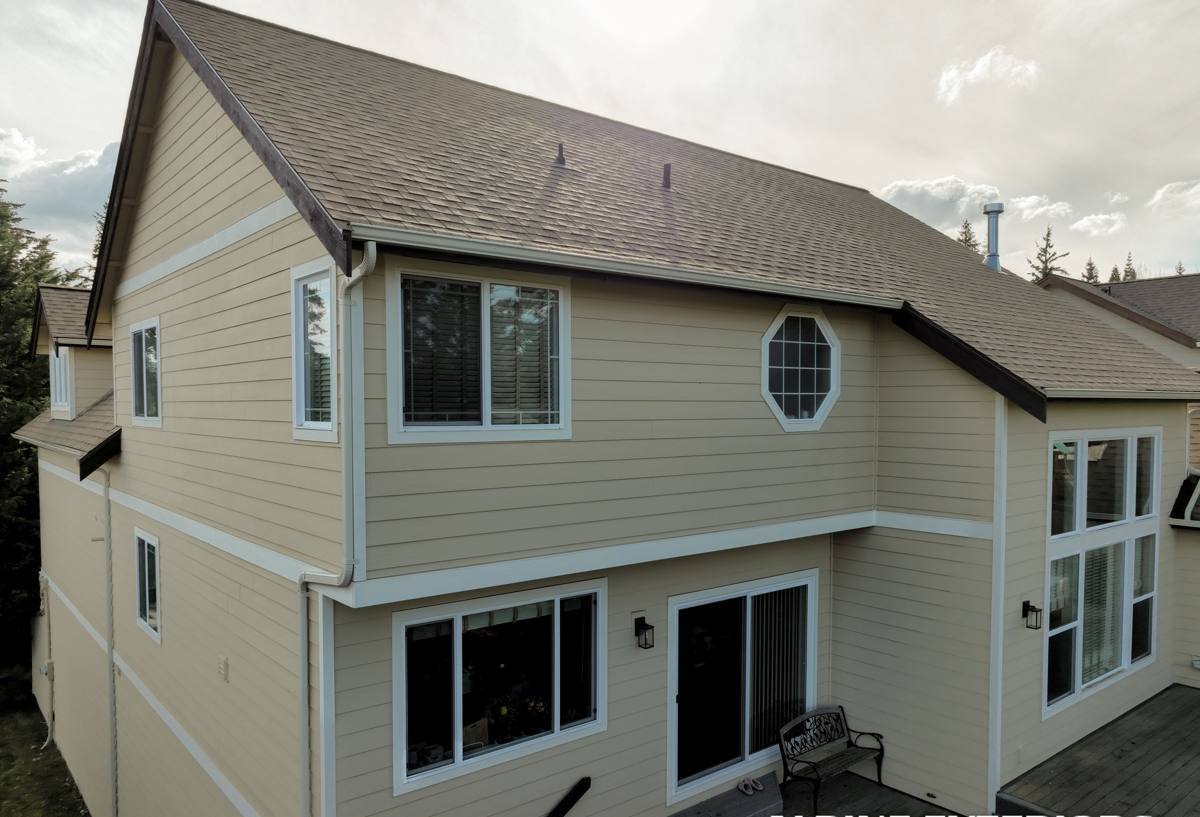
What "Energy-Efficient" Actually Means on a Window Label
Every legitimate window sold in the U.S. carries an NFRC (National Fenestration Rating Council) label with a handful of performance numbers. Homeowners usually hear "energy-efficient" as marketing language, but the label itself is where the real comparison happens.
- U-factor: How well the window resists heat flow. Lower is better for a heating-dominated climate like this one — it's the single most important number for a Lynden home's winter energy performance.
- Solar Heat Gain Coefficient (SHGC): How much solar heat passes through the glass. In this climate, moderate SHGC is usually the right call — enough solar gain to help on clear winter days without overheating south-facing rooms in summer.
- Visible Transmittance: How much natural light passes through. Lower-quality low-E coatings sometimes cut this more than necessary, darkening a room to chase an efficiency number.
- Air Leakage: How much air passes through the window assembly itself. This number is only meaningful if the installation around the frame is also air-sealed correctly — a tight window in a leaky rough opening still leaks air.
A window with strong numbers on paper still has to be installed correctly to deliver them. We've seen plenty of properly rated windows underperform because of gaps in the installation, and a few older, modestly rated windows outperform expectations because the flashing, sealing, and insulation around them were done right.
Frame Material: Insulating Value and Moisture Behavior Together
Frame material affects both energy performance and how the window holds up to Whatcom County's wet, moss-prone conditions. Those two things are connected more than most homeowners expect — a frame that takes on moisture or distorts over time stops sealing correctly, and a window that stops sealing correctly stops being energy-efficient no matter what its original rating was.
| Frame Material | Thermal Performance | Moisture Behavior Here | Long-Term Efficiency Risk |
|---|---|---|---|
| Vinyl (multi-chambered) | Good; hollow chambers reduce heat transfer | Won't rot; performance depends on weld and seam quality | Low, if installed and sealed correctly |
| Fiberglass | Very good; low thermal conductivity, expands/contracts near the same rate as glass | Excellent; dimensionally stable in sustained damp conditions | Low |
| Wood, painted or clad | Very good insulator naturally | Vulnerable at joints and sills without diligent upkeep | Moderate to high without regular maintenance |
| Aluminum | Poor without a thermal break; conducts cold directly | Can corrode over time in damp, salt-influenced air without a good finish | High unless thermally broken |
Aluminum without a thermal break is the one we steer people away from for this climate specifically — it conducts cold straight through the frame, which shows up as a cold ring around the glass and, often, condensation on the interior frame during Lynden's damp winters. Vinyl and fiberglass are where most of our energy-efficient window installs in this area land, with the choice between them usually coming down to budget and how long the homeowner plans to stay in the house.
Glazing: Double-Pane, Triple-Pane, and What's Actually Worth Paying For
Double-pane, low-E glass with an argon gas fill is the standard energy-efficient package for most homes in this part of Washington, and it performs well here. Triple-pane adds another layer of insulation and can reduce interior condensation risk further, but the added cost is a real trade-off, not an automatic upgrade.
When Triple-Pane Makes Sense in Lynden
Triple-pane tends to pay off on homes with unusually high heating demand, on north-facing rooms that stay cold and damp, or where a homeowner has already had recurring condensation on the interior of double-pane glass during winter. For an average Lynden home with reasonable sun exposure, a well-installed double-pane low-E unit with the right gas fill usually delivers most of the benefit for less money.
Low-E Coatings Aren't All the Same
Low-emissivity coatings are tuned differently depending on climate. A coating optimized for a hot, sun-heavy climate prioritizes blocking solar heat; a coating tuned for a heating-dominated climate like this one prioritizes retaining interior heat while still allowing reasonable solar gain. We spec glass packages based on which side of the house a window sits on and how it'll actually be used, not a single default coating for every opening.
Installation Is Where Energy Efficiency Is Actually Won or Lost
This is the part of the job that never shows up on a manufacturer's brochure, and it's the part that determines whether a window's rated performance shows up in a real heating bill. A window can carry excellent numbers and still leak air and heat if the installation around it is sloppy.
- Correct shimming so the frame isn't racked or twisted, which can distort seals and create gaps over time
- Low-expansion foam or backer rod and sealant used correctly around the frame perimeter — not sprayed in a way that bows the frame inward
- Continuous air sealing between the window frame and the rough opening, not just caulk at the visible trim line
- A properly pitched sill pan and integrated flashing, so wind-driven rain doesn't undo the insulation work by soaking the framing behind the wall
- Interior air sealing at the drywall return, which matters as much for draft control as anything visible from outside
Most of the "drafty new window" complaints we get called out on trace back to one of these steps being skipped, not to the window product itself. In a climate with this much sustained rain and humidity, a poorly sealed installation also has a second cost beyond energy loss — it gives moisture a path into the wall assembly, which is a bigger and more expensive problem than a slightly higher heating bill.
Washington's Energy Code and Utility Incentives
Washington's state energy code sets minimum performance requirements for replacement windows, and those requirements have gotten stricter over recent code cycles. Any legitimate replacement window installed today has to meet those baseline U-factor requirements, which puts a reasonable floor under performance regardless of brand. Beyond code minimums, many local utilities offer rebate or incentive programs for qualifying energy-efficient window upgrades, though program details, eligibility, and funding availability change from year to year. We'll tell you what's currently available when we scope your project rather than quote a number that might be outdated by the time you're ready to move forward.
What This Means for Your Project
Because code minimums already require reasonably efficient glass, the bigger efficiency gains on most Lynden replacement projects come from choosing the right glazing package for your specific exposure and getting the installation details right — not from chasing the single highest-rated window on the market regardless of price.
Signs a Lynden Home Is Losing Energy Through Its Windows
- Noticeable cold spots or drafts near a window even when it's fully closed and latched
- Condensation or frost forming on the interior of the glass or frame during cold snaps
- Rooms with several windows that are consistently harder to heat than the rest of the house
- Visible daylight or a moving flame test showing air movement around the frame
- An older aluminum-framed window that feels cold to the touch well away from the glass itself
- A heating bill that's crept up without an obvious cause, especially in a home with original single- or older double-pane windows
Any of these is worth a look before you assume the whole house needs new windows. Sometimes the fix is resealing or weatherstripping a handful of problem units rather than a full replacement.
Our Process for an Energy-Efficient Window Project
- On-site assessment — we look at existing window condition, frame material, orientation, and where drafts or condensation are actually showing up
- Honest recommendation — full replacement, targeted replacement of the worst-performing units, or repair and resealing, based on what we actually find
- Glazing and frame selection — matched to each elevation's sun exposure and your budget, not a single default package for the whole house
- Flashing and air-sealing plan — built around this climate's wind-driven rain and sustained humidity, not a generic manufacturer install sheet
- Installation — proper shimming, sealing, sill pans, and flashing integration with the surrounding siding
- Walkthrough — we show you what was done and why, so you know what you're getting for the investment
Why a Crew That Already Works Both Birch Bay and Lynden Matters
Coastal and inland conditions in Whatcom County aren't identical, and a window installer who only works one or the other tends to over-build for conditions that aren't present or under-build for conditions that are. A crew that regularly works waterfront Birch Bay knows what direct salt exposure does to hardware and finishes over time. Working inland communities like Lynden as well means knowing that the bigger factor here is usually sustained damp air and a long heating season rather than salt corrosion, which changes which details are worth extra attention and which ones aren't necessary to over-spec. That range shows up in practical decisions — which glazing package actually earns its cost on a given elevation, how much air-sealing detail a specific rough opening needs, and when a homeowner is better served by a moderate, well-installed window than the most expensive option on the shelf.
If your Lynden home has drafty windows, a heating bill that's crept up, or you're just ready to upgrade before the next wet season, we're glad to take a look and walk you through what actually makes sense for your house. Reach out using the form below for a free, no-pressure estimate.