 Birch Bay Siding
 Lynden's Weather Is Harder on Windows Than It Looks
Lynden sits inland from the coast, and that changes what its windows deal with compared to a house closer to the water in Birch Bay. You get less of the direct salt air that eats at hardware and finishes near the Salish Sea, but you get more exposure to something else: the cold, dry outflow winds that funnel down out of the Fraser Valley through the Sumas Gap in winter. When those events hit, temperatures can drop fast and wind-driven rain gets pushed hard against west- and north-facing walls. Combine that with Whatcom County's long stretch of grey, damp weather from fall through spring, and you have a climate that quietly stresses window seals, frames, and flashing year after year, even when nothing looks obviously wrong.
The result shows up slowly: a foggy pane here, a draft there, a little moss creeping onto a sill. None of it happens overnight, which is exactly why so many Lynden homeowners don't think about their windows until a heating bill jumps or a frame starts to feel soft under a thumb.
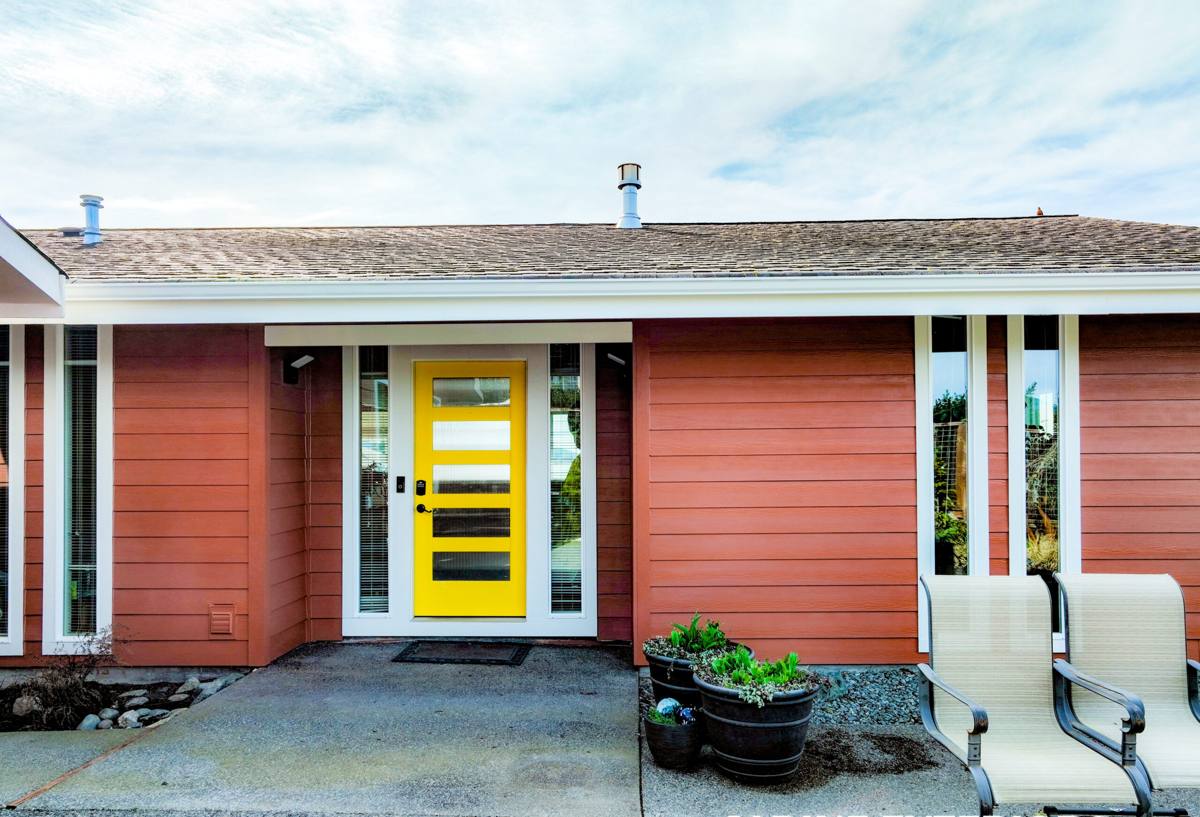
What This Climate Actually Does to a Window Over Time
Every window on a Lynden home is doing constant, low-level work against moisture and pressure. Over enough seasons, that adds up in a few predictable ways:
- Seal failure in double-pane glass. The insulated glass unit (IGU) seal is a wear item. Once it fails, moisture gets between the panes and you get permanent fogging that no amount of cleaning fixes.
- Wood rot at sills and corners. Wherever caulking has cracked or flashing was installed poorly, driving rain finds a way in. Wood-framed and wood-clad windows are especially vulnerable at the bottom corners, where water sits longest.
- Air infiltration during wind events. Weatherstripping that was fine in calm weather can leak badly during an outflow wind event, which is when you actually notice the draft.
- Moss and algae staining. Damp, shaded sides of a house — often the north or east elevation — grow moss on sills, trim, and nearby siding, which holds moisture against the window frame longer than it should sit.
- Swelling and sticking. Wood and some composite frames absorb moisture and swell during the wet months, making windows hard to open or close.
Signs It's Time to Look at Your Windows
Most window problems in this area give warning signs well before they become a real repair headache. Worth checking for:
- Condensation or fog trapped between the panes of a double-pane window
- A noticeable draft near the frame during windy or stormy weather
- Soft, discolored, or spongy wood at the sill or lower corners
- Windows that stick, won't latch fully, or need force to open
- Moss, black streaking, or algae building up on the frame or nearby trim
- A heating bill that's climbed without an obvious reason
- Visible daylight or gaps around the frame from outside
Any one of these on its own might not mean much. Two or three together usually means the window is past the point where caulk and weatherstripping will fix it.
What "Custom" Actually Means on a Job Like This
Older and Farmhouse-Style Homes
A lot of housing stock around Lynden predates modern standard window sizing. Rough openings were framed by hand to whatever dimensions made sense at the time, and after decades of settling they're rarely square anymore. A true custom window is measured and built to the actual opening as it exists today — not to a catalog size that gets trimmed, packed, and shimmed to fit. That distinction matters more here than in a newer subdivision, because a poorly fitted retrofit window in an out-of-square opening is exactly where wind-driven rain finds its way in.
Newer Construction and Additions
Newer homes and additions are usually closer to standard sizing, but "custom" still comes into play with shape (arched tops, unusual widths), matching sightlines and grid patterns across a whole elevation, and picking glass packages suited to a specific exposure — for instance, more wind-resistant glazing on a wall that takes the brunt of winter storms.
Choosing the Right Window for This Climate
Frame Material
There's no single "best" window material — each has a real trade-off in maintenance, cost, and how it holds up to sustained moisture and temperature swings. Here's how the common options compare for a Lynden home:
| Frame Material | Moisture Resistance | Maintenance | Typical Lifespan |
|---|---|---|---|
| Vinyl | Good — won't rot, but seams and welds matter | Low — occasional cleaning | 20–30 years |
| Fiberglass | Very good — dimensionally stable in temperature swings | Low | 30–40+ years |
| Wood (clad exterior) | Depends entirely on the cladding and detailing | Higher — interior wood needs upkeep | 20–40 years with maintenance |
| Aluminum | Poor thermal performance, prone to condensation | Low | 20–30 years |
For most Lynden homes, we lean toward vinyl or fiberglass for the combination of moisture tolerance and minimal upkeep. Wood-clad windows can still be the right call on a home where matching an existing architectural style matters more than maintenance-free living — that's a homeowner's call to make with full knowledge of the trade-off, not something we talk anyone out of.
Energy Performance and Comfort
The cold snaps that come with a Fraser Valley outflow event are usually short, but they're sharp, and they expose weak windows fast. A window with a poor U-factor — the measure of how much heat passes through it — will feel cold to stand near and will lose heat quickly exactly when your furnace is working hardest. Low-emissivity ("low-E") glass coatings and gas fills between the panes, typically argon, cut that heat loss substantially without changing how the glass looks. Washington's state energy code sets minimum performance requirements for replacement windows, and any legitimate installer should be able to tell you the U-factor and solar heat gain rating of what they're proposing, not just the brand name.
Orientation matters too. A window on a wall that catches the worst of the winter wind and rain benefits from a stronger glass package than one on a sheltered, south-facing wall, even on the same house. Part of doing this job right is matching the glass to the exposure, not installing the same spec everywhere out of convenience.
How We Approach a Window Installation
- On-site measurement. Every opening is measured individually — assumptions about "standard" sizing cause more callbacks than almost anything else.
- Removal and opening inspection. Once the old window is out, we check the framing and sill for rot or water damage before anything new goes in. Hidden damage found here gets addressed, not covered up.
- Flashing and weatherproofing. This is the step that matters most in a climate like this. Proper flashing integration with the house wrap or building paper, correctly lapped and sealed, is what actually keeps driving rain out — more than the window itself.
- Setting, shimming, and insulating. The window is leveled, shimmed square, and the gap around it is insulated without over-packing, which can bow the frame.
- Sealing and finish work. Interior and exterior trim, caulking, and final adjustment so sashes operate smoothly.
Why It Matters to Hire a Crew That Already Works in Lynden
Window installation isn't complicated in theory, but the details that prevent leaks and drafts are learned by seeing the same conditions repeatedly in the same place. A crew that regularly works in and around Lynden already knows which flashing details hold up against wind-driven rain from the west, which older homes tend to have out-of-square openings, and what kind of exposure a given elevation gets during a Fraser Valley outflow event. That's not something you get from a general how-to guide — it comes from doing the work here, on homes like yours, more than once.
There's a practical side too: permitting requirements and inspection expectations vary by jurisdiction, and a crew that already works in Whatcom County knows the process instead of learning it on your project. And if a warranty issue comes up two winters from now, you want a contractor who's still local and easy to reach — not one who was passing through.
What Drives the Cost of a Custom Window Project
Every project is different, so we won't quote a number without seeing the home — but the factors that move the price are consistent:
| Cost Factor | Why It Matters |
|---|---|
| Number and size of openings | More or larger windows means more material and labor |
| Frame material | Fiberglass and premium wood-clad cost more upfront than standard vinyl |
| Glass package | Double-pane vs. triple-pane, and low-E coatings, add cost but improve comfort and efficiency |
| Opening condition | Rot repair or out-of-square framing adds labor before the new window ever goes in |
| Access and height | Second-story or hard-to-reach openings take more time and equipment |
| Shape and custom sizing | Arched, angled, or non-standard shapes cost more than a straightforward rectangle |
As a rough, honest range, most single-window replacements land somewhere in the low-to-mid four figures installed, with full-house projects scaling from there depending on the factors above. A written, itemized estimate after an on-site look is the only way to get a real number for your home.
Protecting Your Investment After Installation
New windows still need a little attention to get their full lifespan out of this climate:
- Check exterior caulking every year, especially before the wet season starts
- Clear moss or debris off sills and nearby trim before it holds moisture against the frame
- Keep weep holes (the small drainage openings on the exterior of most vinyl and fiberglass frames) clear of dirt and paint
- Watch for early condensation between panes — it's the first sign of a failing seal, and catching it early keeps the fix simple
- Trim back vegetation that shades a window and keeps it damp longer than the rest of the house
If your Lynden home has windows that fog, stick, draft, or just feel like they're losing the fight against the weather, we're happy to take a look. A free, no-pressure estimate gives you a clear, itemized picture of what's actually needed — no obligation, no hard sell. Use the form below to get started.