 Birch Bay Siding
 Board & Batten in a Whatcom County Climate
Board & batten is one of the oldest siding profiles in the Pacific Northwest for a reason — the vertical lines shed water fast, and the raised battens give a home real dimension instead of a flat wall. In Lynden and the greater Birch Bay service area, that profile has to do more than look good. It has to stand up to months of driving rain, salt-tinged air moving in off the water, and a moss season that seems to stretch longer every year. A board & batten job that looks sharp in July and starts staining, cupping, or growing moss by the following spring isn't a good job, no matter how clean the install looked on day one.
We build every board & batten project around that reality. That means the material choice, the water management behind the siding, and the fastening pattern all get treated as one system — not three separate decisions.
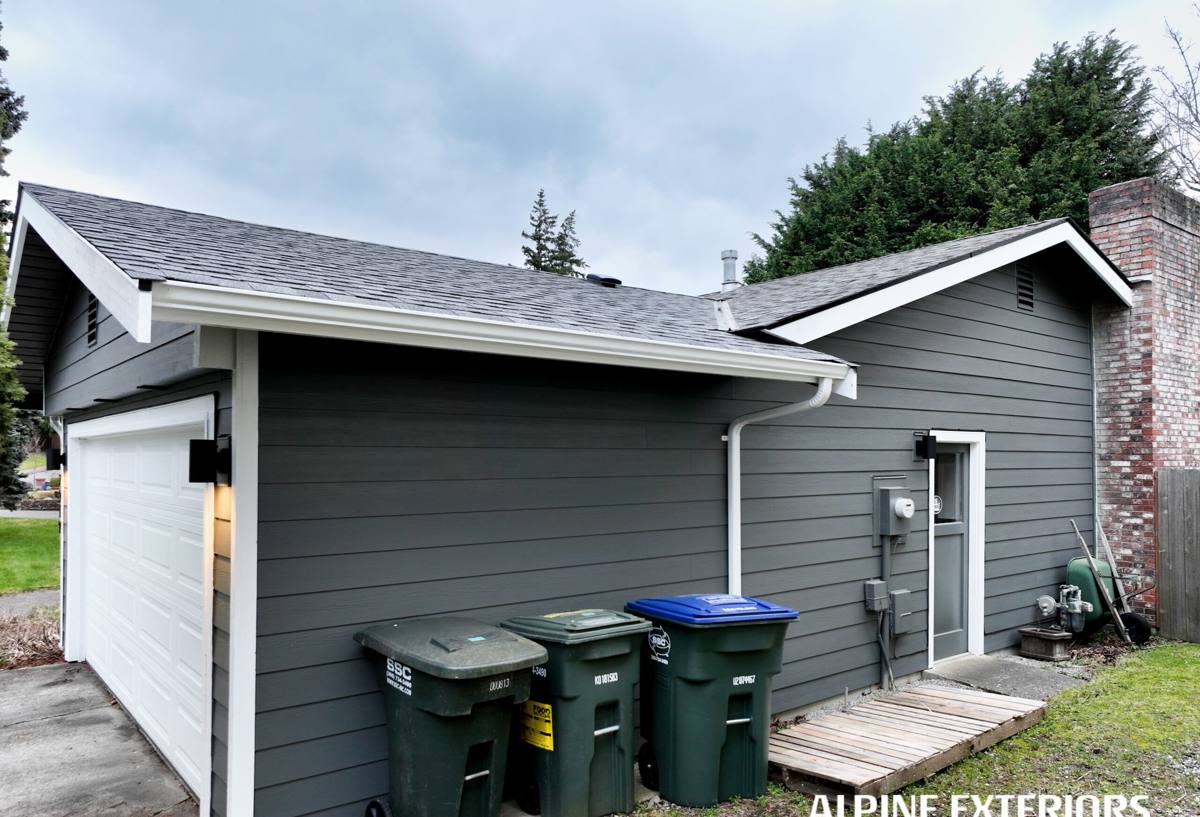
What Local Homes Actually Need From This Siding
Whatcom County weather doesn't hit a house with one big storm and move on. It sits. Weeks of low-intensity rain, humidity that never really drops, and short winter days that don't dry a wall out between weather systems. Add proximity to salt air near Birch Bay and the coast, and you've got three separate stresses working on a wall at once:
- Moisture absorption — any board that soaks up water and holds it will eventually swell, cup, or rot at the edges, especially where boards butt against battens or trim.
- Moss and algae growth — shaded north and west walls under trees stay damp longest and are where moss gets a foothold first, especially on porous or fibrous materials.
- Salt-air corrosion — fasteners, flashing, and any exposed metal need to be rated for it, or they'll rust and stain the siding around them within a few years.
A board & batten system that's engineered for this climate handles all three without babying. That's the bar we hold every install to.
Why We Install James Hardie Board & Batten — and Nothing Else
We are a James Hardie-only siding contractor. We don't install vinyl, LP SmartSide, Cemplank, Allura, primed spruce, or cedar board & batten — not because those products have no place in the world, but because we've made a professional decision about what we're willing to put our name on in this climate, and Hardie fiber cement is what we stand behind.
Cedar board & batten is a beautiful, traditional look, and we understand why homeowners want it. But real wood in a wet, moss-prone climate needs a maintenance commitment most people underestimate: regular refinishing, close attention to end grain and butt joints, and vigilance about moss and rot in shaded areas. LP SmartSide is an engineered wood product with real strengths, but it's still wood-based at its core, meaning cut edges and fastener penetrations need consistent sealing to perform long term. Vinyl board & batten is low-maintenance and inexpensive, but it's a thin plastic product that can warp in heat, crack in cold, and simply doesn't hold the crisp shadow lines that make board & batten look right — and it's not something we install regardless of climate.
James Hardie fiber cement board & batten (through the HardiePanel vertical siding system paired with Hardie battens, or the Artisan vertical collections) is cement, sand, and cellulose fiber. It doesn't rot, it's non-combustible, and it's engineered specifically for climates like ours through Hardie's HZ10 product line, built for cold, wet Pacific Northwest weather. It holds paint and its factory ColorPlus finish far longer than wood-based alternatives, and it comes with a strong transferable warranty when installed to Hardie's specifications.
How the options actually compare
| Factor | James Hardie Fiber Cement | Cedar / Wood | Vinyl |
|---|---|---|---|
| Moisture / rot resistance | Does not rot; engineered for wet climates | Requires ongoing sealing and maintenance | Won't rot, but can warp and trap moisture behind it |
| Moss/algae resistance | Factory finish resists staining and growth | Porous surface, prone to moss in shaded areas | Resists moss but shows dirt and mildew film |
| Fire resistance | Non-combustible | Combustible | Combustible, can melt/deform near heat |
| Salt-air durability | Strong, with corrosion-rated fasteners | Moderate, fasteners and finish degrade faster | Good material durability, poor authentic profile |
| Long-term appearance | Holds crisp lines and color for decades | Needs refinishing every few years | Can fade, warp, and look flat over time |
What a Correct Board & Batten Install Involves
The siding material is maybe half the equation. The other half is everything happening behind it, and this is where a lot of board & batten jobs go wrong — not because the boards fail, but because the water management behind them wasn't built right.
Water-resistive barrier and flashing
Every wall gets a properly lapped water-resistive barrier before a single panel goes up. Window and door flashing, kick-out flashing at roof-wall intersections, and flashing at any horizontal trim need to direct water out and away from the wall assembly, not just rely on the siding to keep it out. In a climate that gets sustained rain rather than short bursts, this layer matters as much as the visible siding.
Rainscreen or drainage gap
Board & batten profiles benefit from a drainage gap between the WRB and the siding panel, giving any moisture that does get behind the boards a path to drain and dry instead of sitting against the wall sheathing. This is especially important on shaded elevations where things stay damp longest.
Fastening and batten layout
Battens need consistent spacing and fastening into structural framing, not just the panel behind them, using corrosion-resistant fasteners rated for coastal exposure. Panel joints and butt seams get treated according to Hardie's installation instructions so they don't become the first place moisture works its way in.
Finish and caulking
Hardie's ColorPlus factory finish comes with matching caulk and touch-up product, which keeps color-matching consistent at joints and trim — something field-painted materials often can't match years down the road.
Our Process, Start to Finish
- On-site assessment — we look at your current siding, sheathing condition, and any moisture or moss problem areas before quoting anything.
- Honest scope and estimate — you get a clear breakdown of what's being replaced, what the water management plan looks like, and a real cost range, no pressure to decide on the spot.
- Tear-off and inspection — old siding comes off and we inspect sheathing for hidden rot or moisture damage before anything new goes up.
- WRB, flashing, and drainage layer — the parts you won't see again once the job's done, but that determine whether it lasts.
- Hardie board & batten installation — panels and battens installed to manufacturer spec, with corrosion-rated fasteners throughout.
- Final walkthrough — we go over the finished job with you before calling it complete.
What to Expect Over the Years
A correctly installed James Hardie board & batten system is genuinely low-maintenance, but "low-maintenance" doesn't mean "no attention ever." Here's what keeps it performing the way it's supposed to:
- Rinse off pollen, dust, and salt film with a garden hose a couple of times a year — no pressure washer directly at joints or fasteners.
- Keep gutters clear so water isn't sheeting down the wall face during heavy rain.
- Trim back vegetation and tree cover that keeps shaded walls damp and slow to dry — this is where moss gets started first.
- Check caulking at trim and penetrations every couple of years and touch up if it's cracked or pulling away.
- Address any impact damage promptly rather than letting an exposed edge sit through a wet season.
Why a Crew That Already Works Lynden and Birch Bay Matters
Board & batten installed by a crew that hasn't worked this specific climate tends to make the same avoidable mistakes: under-flashed transitions, skipped drainage gaps, standard fasteners that aren't rated for salt exposure. We work throughout Whatcom County, and the moisture and moss patterns here — which walls stay wet longest, how driving rain off the water hits certain exposures — inform how we detail every job, not just the ones close to the shoreline. That's the difference between a board & batten install that looks good for a season and one that's still doing its job in twenty years.
If you're thinking about board & batten siding for a home in Lynden or anywhere in the Birch Bay area, we're glad to come take a look and give you a straight answer on what it would take — no pressure, no obligation. Fill out the form below for a free estimate.