 Birch Bay Siding
 Lummi Island Is a Different Kind of Siding Job
Lummi Island sits just off the Whatcom County mainland, reachable only by a short ferry crossing, and that changes how a siding replacement has to be planned before a single board is cut. The island shares the same marine exposure that shapes weather patterns up and down this stretch of coastline near Birch Bay, but homes here often sit closer to open water, with fewer windbreaks and more direct exposure to salt-laden air. A siding job on the island isn't just a bigger version of a mainland project — it's a mainland-quality install with logistics, tide-dependent scheduling, and material staging built in from day one.
We've done enough work out here to know that guessing doesn't work. A crew that shows up once, quotes a job, and leaves the scheduling and access questions for later usually ends up costing the homeowner in delays. A crew that already understands the island's rhythm — ferry timing, weather windows, and what the salt air actually does to a house over a few decades — gets it right the first time.
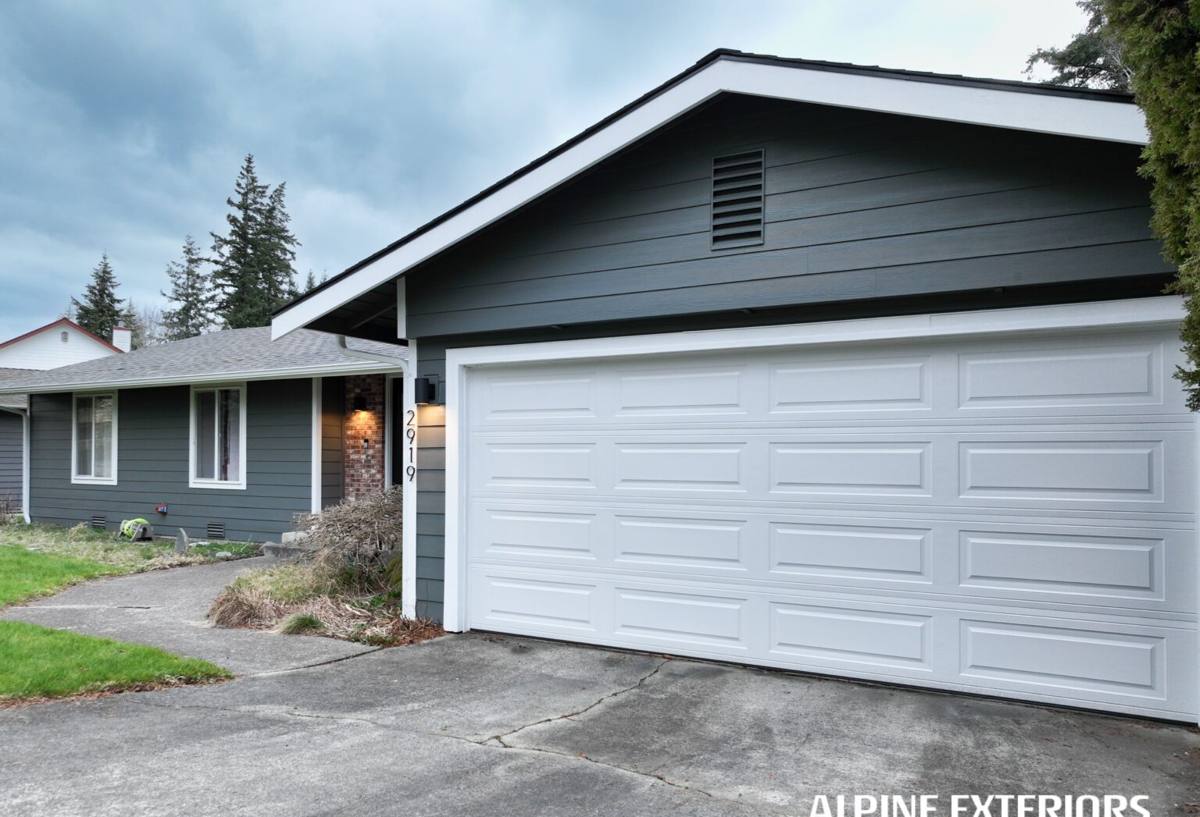
What This Climate Actually Does to Siding
Three things wear down siding on Lummi Island faster than they would on a more sheltered inland lot: salt air, wind-driven rain, and a moss season that runs longer than most homeowners expect.
Salt Air and Fastener Corrosion
Airborne salt doesn't just dull a finish — it accelerates corrosion on exposed fasteners, lower-grade trim, and any metal flashing that isn't rated for coastal exposure. Once corrosion starts at a nail head or a joint, it shows up as rust streaking and, eventually, as a failure point where water can start working its way behind the siding.
Wind-Driven Rain and Water Intrusion
Storms off the water push rain sideways, not straight down. That matters because siding systems are designed to shed water moving downward — driving rain finds the gaps that gravity alone wouldn't reach: unsealed butt joints, inside corners, and window returns facing the prevailing weather. Over time, that's where hidden moisture damage starts, often well before anything looks wrong from the ground.
A Long Moss and Algae Season
Shaded, tree-covered lots combined with a damp climate mean moss and algae growth can persist most of the year on north-facing walls and anywhere sun doesn't reach. That's more than a cosmetic problem — moss holds moisture against the surface underneath it, keeping that section of wall wetter for longer stretches than an exposed, sun-drying section of the same house. On siding materials that aren't built to handle sustained dampness, that's a direct path to rot.
Signs a Lummi Island Home Needs Replacement, Not Just Repair
Repair makes sense when the damage is isolated and the rest of the siding is sound. Replacement becomes the right call once the damage is systemic — a sign the original material or install method was never a good match for this environment. Walk your exterior and look for:
- Soft or spongy spots, especially near the bottom courses and around ground-level trim
- Bubbling, peeling, or flaking paint that keeps coming back after repainting
- Dark staining or rust bleed streaking down from fastener heads
- Boards that have swollen, delaminated, or separated at cut edges
- Moss or mildew that returns within a single season of being cleaned
- Visible gaps, cupping, or warping at butt joints and corners
- Musty smells or soft drywall on interior walls that back up to exterior siding
Any one of these on its own might be a repair. Several of them together, especially on the sides of the house facing open water, usually mean the whole wall system has been absorbing moisture for a while.
Why We Install Only James Hardie Fiber Cement
We standardized on James Hardie fiber cement siding and don't install vinyl, LP SmartSide, primed spruce, cedar, or other fiber cement brands. That's not a marketing position — it's a professional judgment call made after seeing how different materials actually hold up in this specific climate. Fiber cement is non-combustible, which matters on wooded lots, and it's engineered to handle sustained moisture exposure without the swelling, delamination, or rot risk that wood-based and wood-fiber composite products carry. James Hardie's ColorPlus factory-applied finish is baked on under controlled conditions, which holds up better against UV and salt exposure than field-applied paint and cuts down how often a homeowner needs to repaint.
James Hardie also engineers different product lines for different climate zones. The HZ5 line, which we use on Lummi Island and throughout the Birch Bay area, is built for regions that see more sustained moisture and wider seasonal temperature swings — exactly the conditions this stretch of Whatcom County deals with. It's a product-and-installation combination chosen for this specific environment, not a one-size-fits-all default.
What a Correct Installation Involves
Fiber cement siding performs the way it's supposed to only when it's installed to spec. On a coastal, high-moisture site like this, a few details matter more than usual:
Tear-Off and Sheathing Inspection
Every full replacement starts with removing the old siding down to the sheathing so we can actually see what's underneath — not guess at it. This is when hidden moisture damage from years of wind-driven rain gets found and addressed before new siding goes up, not after.
Moisture Barrier and Drainage Plane
A correctly installed weather-resistive barrier, with proper lapping and flashing at every penetration, gives water a path to drain out instead of getting trapped against the sheathing. On a site this exposed, this layer is doing real work, not just meeting code minimums.
Fastener Placement and Clearances
Fastener spacing, edge distance, and clearance from grade, decks, and roof lines all affect how well the assembly resists wind-driven rain and splash-back. Manufacturer clearance specs exist for a reason, and on a lot with direct salt exposure, cutting corners here shows up as problems within a few years, not decades.
Trim, Joints, and Factory Finish
Butt joints, corners, and trim transitions are where most water intrusion actually starts. Correct joint treatment and quality caulking at these transition points, paired with the factory ColorPlus finish, is what keeps the whole system watertight over time.
Our Process for Lummi Island Projects
- On-site assessment — we walk the exterior, check for existing moisture damage, and take accurate measurements before quoting anything.
- Material staging and scheduling — because everything and everyone crosses by ferry, we plan deliveries and crew scheduling around that reality up front, so the job isn't held up mid-project waiting on materials.
- Tear-off and sheathing check — old siding comes off, sheathing gets inspected, and any hidden rot or damage gets addressed before anything new goes up.
- Installation to manufacturer spec — moisture barrier, flashing, fastener clearances, and joint treatment all done to James Hardie's published requirements for the HZ5 climate zone.
- Final walk-through — we go over the finished work with the homeowner before calling the job done.
Cost Factors for Lummi Island Siding Replacement
Every home is different, and we don't quote a job without seeing it. But these are the main variables that move the price on a project out here:
| Factor | Why It Matters on This Job |
|---|---|
| Home size and story count | More wall area and higher work means more material and labor hours |
| Extent of hidden moisture damage | Rotted sheathing or framing found during tear-off needs repair before new siding goes on |
| Access and material transport | Ferry-dependent delivery and staging adds planning time that a mainland job doesn't require |
| Old siding removal and disposal | Type and amount of existing material affects tear-off time and haul-away cost |
| Trim, window, and door detail | More corners, returns, and transitions mean more time spent on the joints most prone to leaks |
| Color and finish selection | ColorPlus factory finishes vary by product line and color availability |
Why Hire a Crew That Already Works the Island
Familiarity saves money and headaches here in ways that aren't obvious until a job is underway. A crew that already understands ferry scheduling doesn't waste a work day waiting on materials that missed a crossing. A crew that's worked other Lummi Island homes knows what direct salt exposure actually does to fasteners and trim over time, and installs accordingly instead of relying on generic mainland assumptions. And a crew with an established process for this environment isn't learning on the homeowner's dime — the moisture barrier detailing, clearance spacing, and joint treatment are already second nature, not something being figured out mid-project.
Birch Bay and the surrounding Whatcom County coastline share enough of this same weather that the lessons carry over directly. A siding system built to hold up on one exposed, salt-air lot is built to hold up on the next one.
If you're weighing a siding replacement on Lummi Island, we're happy to take a look and put together a straightforward, no-pressure estimate. Fill out the form below and we'll follow up to schedule a visit.