 Birch Bay Siding
 Lummi Island's Climate Is Harder on Siding Than Most Homeowners Realize
Lummi Island sits out in the marine air of Whatcom County, and that location comes with a specific set of stresses on a home's exterior. Salt-laden air off the water accelerates corrosion on fasteners, trim, and anything with exposed metal. Wind-driven rain off the Strait doesn't just wet a wall surface — it pushes moisture sideways and up under laps, seams, and trim that a calmer inland climate would never test. And the long, damp shoulder seasons here mean moss, algae, and mildew get a real head start on north-facing and shaded walls before summer ever dries things out.
None of that is unique to any one house on the island — it's the baseline every exterior on Lummi Island is working against, year-round. Siding that isn't specifically suited to a wet, salt-exposed marine environment tends to show it early: swelling seams, peeling paint, soft spots at the bottom courses, streaking and green growth that keeps coming back no matter how often it's washed.
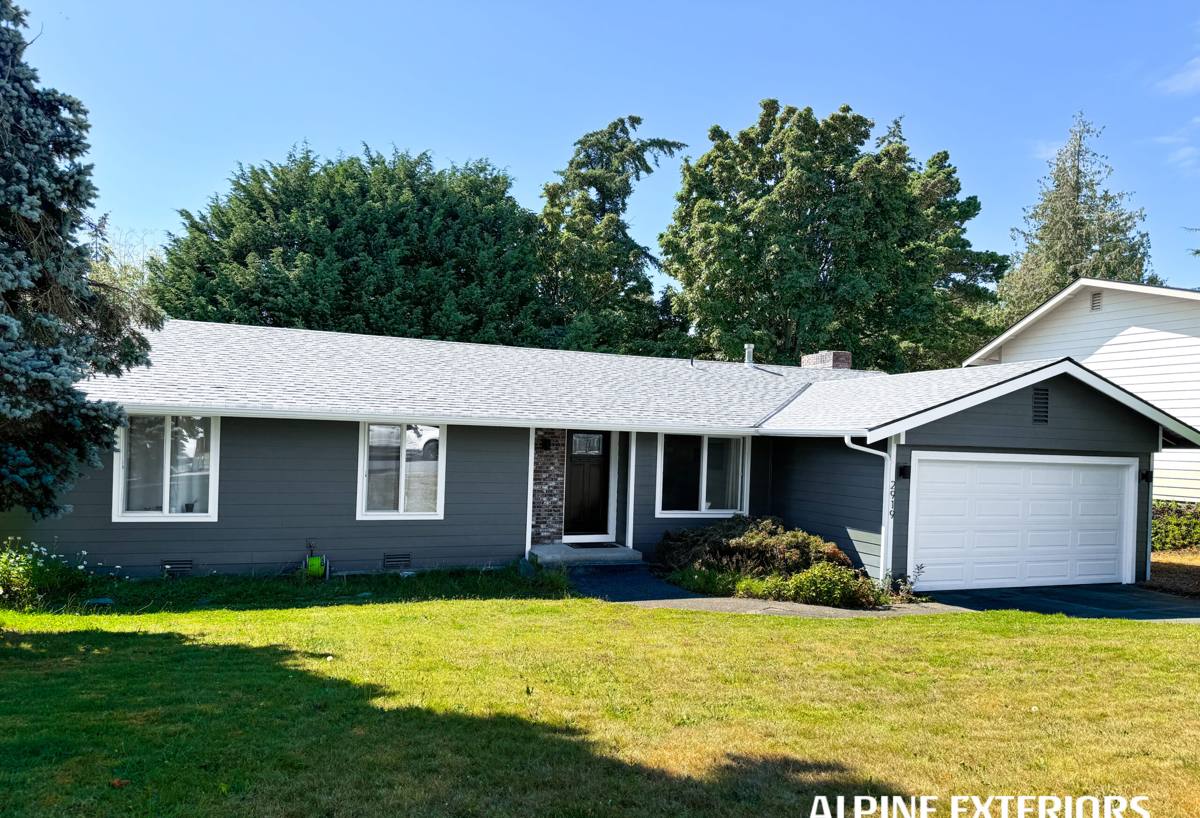
Why We Only Install James Hardie Fiber Cement Here
We install James Hardie siding exclusively — not vinyl, not LP SmartSide, not cedar or primed spruce, not other fiber cement brands. That's a deliberate standard, not a sales preference, and on an island climate like this one the reasoning matters more than usual.
James Hardie's fiber cement is non-combustible and dimensionally stable — it doesn't expand and contract with moisture the way wood-based products do, which matters directly in a climate where the material is wet more often than it's dry. Hardie engineers its boards by climate zone (its HZ5 line is built for regions that see the kind of moisture cycling and freeze-thaw swings the Pacific Northwest gets), and it's finished with the factory-applied ColorPlus finish rather than a field-applied paint job. That finish is baked on under controlled conditions and backed by its own warranty coverage — a meaningful advantage when the alternative is a painted wood or composite product that will need refinishing on a schedule, in a place where damp weather already shortens the window to do that work correctly.
We're not going to tell you competing products are junk — plenty of them work fine in the right setting. But we've made a professional call that on Whatcom County's marine coastline, the maintenance burden, moisture behavior, and long-term cost picture favor Hardie clearly enough that it's the only thing we put our name behind.
What This Looks Like in Practice
- Fiber cement board and panel resist swelling, rot, and insect damage that wood-based sidings are vulnerable to in constant moisture
- Factory-cured ColorPlus finish holds color and resists the fading and chalking that field-painted siding shows first on sun- and salt-exposed walls
- Non-combustible material — a real consideration for insurance and for homes near dry brush or wildland edges
- Engineered product lines matched to regional moisture and temperature cycling rather than a one-size-fits-all board
What a Correct Installation Actually Involves
James Hardie siding performs the way it's rated to only when it's installed to spec — and in a marine climate, the details that get skipped on a rushed job are exactly the details that fail first.
Fasteners and Metal
Salt air is hard on exposed metal. We use corrosion-resistant fasteners and flashing rated for coastal exposure, not standard interior-grade hardware, and we keep fastener heads properly seated and sealed rather than over- or under-driven — both of which create entry points for water over time.
Flashing and Water Management
Wind-driven rain finds gaps that vertical rain never would. That means correct flashing at every window, door, roofline, and penetration; proper head flashing and kick-out flashing where walls meet rooflines; and a weather-resistive barrier installed and lapped correctly behind the siding — not just siding nailed over whatever was already on the wall.
Clearances and Ventilation
Hardie's own installation instructions call for specific clearances from grade, roofing, and decks, plus a rainscreen gap in many applications so water that does get behind the cladding can drain and the wall can dry. Skipping the gap is one of the most common corner-cuts in siding jobs, and it's the one most likely to trap moisture against the wall — which, in a climate this damp, shows up as rot and mold instead of a slow, visible failure you'd catch in time.
Joints and Caulking
Every butt joint, corner, and penetration is a place water can get in. Correct joint treatment — and knowing which joints should be caulked versus flashed and left to move — is a detail that separates a siding job that lasts decades from one that starts failing at the seams within a few years.
How We Approach a Lummi Island Job
Lummi Island is reached by ferry, and that shapes how we plan a job here more than it would on the mainland side of Whatcom County. We build material delivery and crew scheduling around the ferry schedule up front, so a job isn't stalled mid-week waiting on a board order or a tool that got left on the wrong side of the water. Staging materials correctly the first time — ordering full and accurate quantities, protecting board stacks from moisture on site — matters more here than in a mainland job where a missing item is a quick supply-run away.
Beyond logistics, every estimate starts with a real look at the specific exposure your walls face — which sides take the direct weather off the water, where moss and algae are already established, where old trim or flashing shows corrosion — so the scope reflects your house, not a generic package.
Siding Material Comparison in a Marine Climate
| Material | Moisture & Salt Air Behavior | Ongoing Maintenance | Typical Finish Longevity |
|---|---|---|---|
| James Hardie fiber cement | Dimensionally stable, resists swelling and rot | Occasional wash; no repainting on ColorPlus finish for years | Factory finish backed by its own warranty |
| Vinyl siding | Won't rot, but can warp, crack, or fade with sun/salt exposure over time | Low, but damaged panels are hard to color-match once faded | Color built into the material but fades unevenly |
| LP SmartSide (engineered wood) | Wood-based; more vulnerable to moisture intrusion at cut edges and seams | Requires diligent caulking/paint upkeep in wet climates | Field-applied or factory paint needs periodic attention |
| Cedar / primed spruce | Natural wood; absorbs moisture, prone to rot and insect damage without upkeep | Highest — regular refinishing and moisture monitoring | Shortest without consistent maintenance |
Moss, Algae, and Long-Term Care
Even the best siding material benefits from some seasonal attention on Lummi Island. Moss and algae growth on north- and shade-facing walls is a normal part of living in this climate, not a sign of a failed installation — but left unaddressed for years it can hold moisture against the wall longer than it should. A periodic soft wash (not a pressure washer aimed directly at seams and joints) keeps growth from building up and lets you spot any trim or flashing issues early, while they're still a small fix.
Because James Hardie's ColorPlus finish is factory-cured rather than field-painted, it holds up to that kind of routine cleaning far better than a painted surface would, which is one less recurring cost over the life of the siding.
Signs Your Current Siding Is Already Losing the Fight
- Soft or spongy spots, especially near the bottom courses or under windows
- Paint that's peeling, bubbling, or chalking heavily on sun- or wind-exposed walls
- Persistent moss or algae staining that comes right back after cleaning
- Visible gaps, warping, or separation at seams and corners
- Rust streaking from fasteners or trim
- Rising energy bills that track with drafts or cold spots along exterior walls
Why Hiring a Crew That Already Works Lummi Island Matters
A contractor who hasn't worked the island before is learning the ferry schedule, the material logistics, and the specific weather exposure of a Whatcom County waterfront property on your job. That shows up as delays, underestimated material needs, or details that get missed because they weren't anticipated. A crew that already plans around island access and already understands what salt air and driving rain do to an exterior over time builds that knowledge into the estimate and the schedule from day one — not as an afterthought once a problem shows up.
Questions Worth Asking Any Siding Contractor Before You Hire
- Are you a certified James Hardie installer, and can you explain the specific product line you'd use for this house?
- How do you handle flashing, clearances, and rainscreen gaps on this type of wall assembly?
- What's your plan for getting materials and crew to the job on an island schedule?
- What warranty coverage applies to the material versus the labor, and who backs each one?
- Can you walk me through why you'd choose one Hardie product line over another for my exposure?
If your siding is showing wear, or you're planning ahead for a home on Lummi Island, we're happy to take a look and give you a straightforward, no-pressure estimate — use the form below to get started.