 Birch Bay Siding
 Windows Built for Lummi Island's Marine Climate
Lummi Island sits right in the path of Whatcom County's marine weather — salt-laden air off the water, wind-driven rain that hits windows sideways for days at a time, and a wet, shaded moss season that lasts longer here than it does thirty miles inland. Windows on this island don't fail the way they do in drier climates. They fail because moisture and salt find a weak seal, a soft sill, or a gap in flashing and go to work quietly for years before anyone notices a soft spot in the wall below the window.
Energy-efficient windows solve two problems at once when they're specified and installed correctly for this environment: they cut the steady heat loss that drives up winter heating bills, and — just as important on Lummi Island — they seal out the moisture and salt air that cause the real long-term damage. A window that's efficient on paper but poorly flashed and caulked will still let water into the wall cavity. We treat both problems as one job, not two.
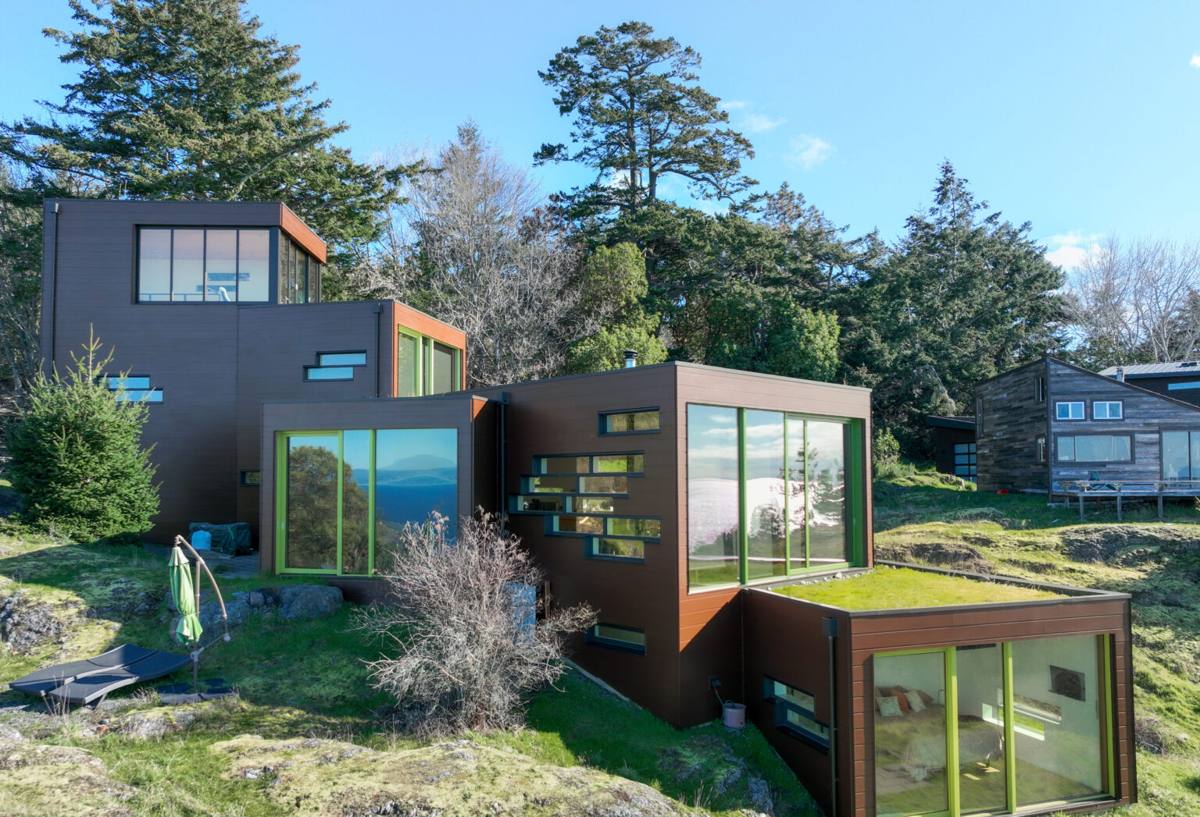
What Salt Air, Rain, and Moss Actually Do to Windows Over Time
It helps to understand what you're up against before you decide what to replace and how.
Salt Air
Airborne salt accelerates corrosion on hardware — hinges, locks, balance mechanisms, and screws — especially on older aluminum-framed windows or vinyl windows with lower-grade hardware. Once hardware starts to bind or corrode, homeowners often stop opening the window at all, which hides the problem until the frame itself starts to show wear.
Driving Rain
Wind off the water doesn't just fall on a window, it pushes against it. That means flashing details, sill pans, and sealant joints all have to work harder here than they would in a sheltered inland location. A window installed to a minimum-code standard, without proper flashing integration into the wall's water-resistive barrier, is the most common source of hidden rot we find behind older window openings.
Moss and Shade
Many Lummi Island lots carry heavy tree cover, and shaded, damp siding and trim around window openings stays wet longer after a storm. Moss and algae growth on wood trim holds moisture against the surface, which speeds up decay in wood-clad frames and painted wood sills specifically.
What "Energy-Efficient" Actually Means for a Window
The term gets used loosely in this industry. A genuinely efficient window is a combination of three things working together — the glass package, the frame material, and the installation. Weak performance in any one of the three undercuts the other two.
Glass Packages and U-Factor
For this region, we generally recommend double-pane windows with a low-E coating and argon gas fill as the practical baseline, with triple-pane considered on north-facing or particularly exposed elevations where the extra cost is worth the added performance. Look at two numbers on the label: U-factor (lower is better for heat retention — important in our cool, wet winters) and Solar Heat Gain Coefficient (moderate is usually right here, since Lummi Island doesn't need aggressive solar rejection the way a hot climate does).
Frame Materials Compared
Frame choice matters as much as glass in a salt-air, high-moisture environment. Here's how the common options stack up for this specific setting:
| Frame Type | Salt Air / Moisture Resistance | Maintenance | Typical Lifespan Here |
|---|---|---|---|
| Vinyl (quality-grade) | Very good — won't corrode or rot | Low — occasional cleaning | 20-30 years |
| Fiberglass | Excellent — very stable in wet, salty air | Low | 30+ years |
| Wood (clad exterior) | Good if maintained; exterior clad protects the wood | Moderate — watch caulk joints and cladding seams | 20-30 years with upkeep |
| Aluminum | Poor to fair — prone to corrosion and condensation near salt air | High | 15-20 years, shorter near the water |
We don't install bare aluminum-frame windows on Lummi Island projects as a standard offering. It's not that aluminum is a bad material everywhere — it's that in this specific salt-air, high-moisture setting, the corrosion and condensation issues show up faster than the warranty period, and we'd rather steer clients toward a frame that holds up for the climate they actually live in.
How Our Installation Process Works
Most window energy loss and water intrusion problems trace back to installation, not the product itself. Our process is built around getting the water management right first, efficiency second — because an airtight, well-insulated window that leaks water into the wall is a worse outcome than a slightly less efficient window that stays dry.
- On-site assessment. We inspect existing window openings for water damage, soft framing, or signs of past leaks before quoting anything — this tells us whether it's a straight window swap or if sill and framing repair needs to happen first.
- Measure and order. Openings on older homes are rarely perfectly square, so we measure each opening individually rather than assuming uniform sizing.
- Removal and opening prep. Old windows come out carefully to protect existing siding and trim, and we inspect the rough opening, sill pan, and water-resistive barrier once it's exposed.
- Sill pan and flashing. This is the step that matters most in our climate. A properly sloped sill pan and correctly lapped flashing (integrated with the house wrap, not just caulked over it) is what actually keeps driving rain out of the wall.
- Set and shim the window. The unit is leveled, plumbed, and shimmed so it operates smoothly and seals evenly — a racked frame stresses the seal and shortens its life.
- Insulate and seal. Gaps around the frame are insulated (not overpacked, which can bow the frame) and sealed with appropriate exterior-grade sealant rated for our wet climate.
- Exterior trim and finish. Trim is reinstalled or replaced and finished to shed water away from the window, not toward it.
- Final walkthrough. We test operation, check the seal, and walk the homeowner through basic care before we consider the job done.
Signs Your Current Windows Are Costing You More Than You Realize
Homeowners often live with a slowly worsening window for years because none of the individual symptoms seem urgent on their own. Worth checking for:
- Visible condensation or fogging between the panes (a failed seal — the argon gas is gone and the insulating value with it)
- Cold drafts near the frame even when the window is fully latched
- Wood trim or sill that feels soft, spongy, or discolored to the touch
- Windows that are hard to open, close, or lock — often a sign of frame movement or corroded hardware
- Visible moss, algae, or persistent black staining on exterior trim around the frame
- A noticeable difference in room temperature near the window compared to the rest of the room
- Rising heating bills without a clear explanation elsewhere in the home
Any one of these alone might not mean immediate replacement. Several of them together, especially on a window that faces the prevailing wind and rain, usually means the window and possibly the wall behind it need attention.
What Drives Cost on a Lummi Island Window Project
Every home and every opening is different, so we give exact numbers only after a site visit — but these are the factors that move the price up or down on most projects here:
| Cost Factor | Why It Matters Here |
|---|---|
| Existing water damage found at demo | Rot repair to sills or framing, common on wind-exposed elevations, adds scope beyond a straight swap |
| Frame material chosen | Fiberglass and quality vinyl cost more upfront but resist salt air and moisture longer than lower-grade options |
| Glass package (double vs. triple-pane) | Triple-pane costs more but pays off fastest on exposed, north- or water-facing elevations |
| Number and size of openings | Larger openings and specialty shapes take more time and custom flashing detail |
| Access and site conditions | Second-story or hard-to-reach openings on sloped or wooded lots take longer to work safely |
| Trim and siding tie-in | Matching existing trim profiles or repairing surrounding siding adds labor beyond the window itself |
Why Hiring a Crew That Already Works Lummi Island Matters
Window installation done to a generic standard is not the same job as window installation done for a house that takes wind-driven rain off the water and sits under damp tree cover for months of the year. A crew that regularly works this specific stretch of Whatcom County already knows which elevations take the worst weather, what kind of flashing detail actually holds up here, and which frame materials are worth the extra cost versus which ones just add maintenance down the road.
That local pattern recognition shows up in small decisions that matter a lot over time: how much slope to build into a sill pan, which sealant actually stays flexible through a wet Whatcom County winter, and where extra flashing lap is worth the few added minutes of labor. Those aren't things a manufacturer's install manual spells out — they're learned from doing this work on this island, in this climate, repeatedly.
Caring for New Windows in a Salt Air, High-Moisture Climate
Efficient, well-installed windows still need basic upkeep to hit their full lifespan here:
- Rinse frames and hardware periodically to clear salt residue, especially on water-facing elevations
- Keep exterior sealant joints inspected — hairline cracks are easiest to reseal before they let water behind the trim
- Clear moss and debris from nearby trim and siding so it doesn't hold moisture against the window opening
- Operate hardware regularly rather than leaving windows shut all winter, which helps you catch binding or corrosion early
- Have seals checked if you notice new condensation between panes — it's a sign of gas loss, not a cosmetic issue
If you're weighing whether your current windows are worth repairing or replacing, or you're ready to move forward with energy-efficient windows built for Lummi Island's weather, we're glad to take a look. Use the form below to request a free, no-pressure estimate — we'll walk the openings, tell you honestly what we see, and give you a straight answer on what it'll take.