 Birch Bay Siding
 Why Nooksack-Area Homes Wear Out Siding Faster Than Most
Homes in the Nooksack area near Birch Bay sit in a stretch of Whatcom County where the weather doesn't take a season off. Wind off the water carries salt spray inland, driving rain hits siding sideways for days at a time in the fall and winter, and the shoulder seasons stay damp and shaded long enough for moss and algae to get a foothold on anything that holds moisture. None of that is dramatic on its own, but stacked together year after year, it's exactly the kind of environment that separates siding products that were built for this climate from siding that was built for somewhere else.
Salt air is corrosive to exposed fasteners and hard on paint film. Driving rain finds every gap in flashing and caulk that a calmer climate would forgive. And moss doesn't just look bad — it holds moisture against the wall assembly, which is where real damage starts. Siding that can't shed water, resist moisture absorption, and hold its finish under UV and salt exposure will show it here faster than it would inland.
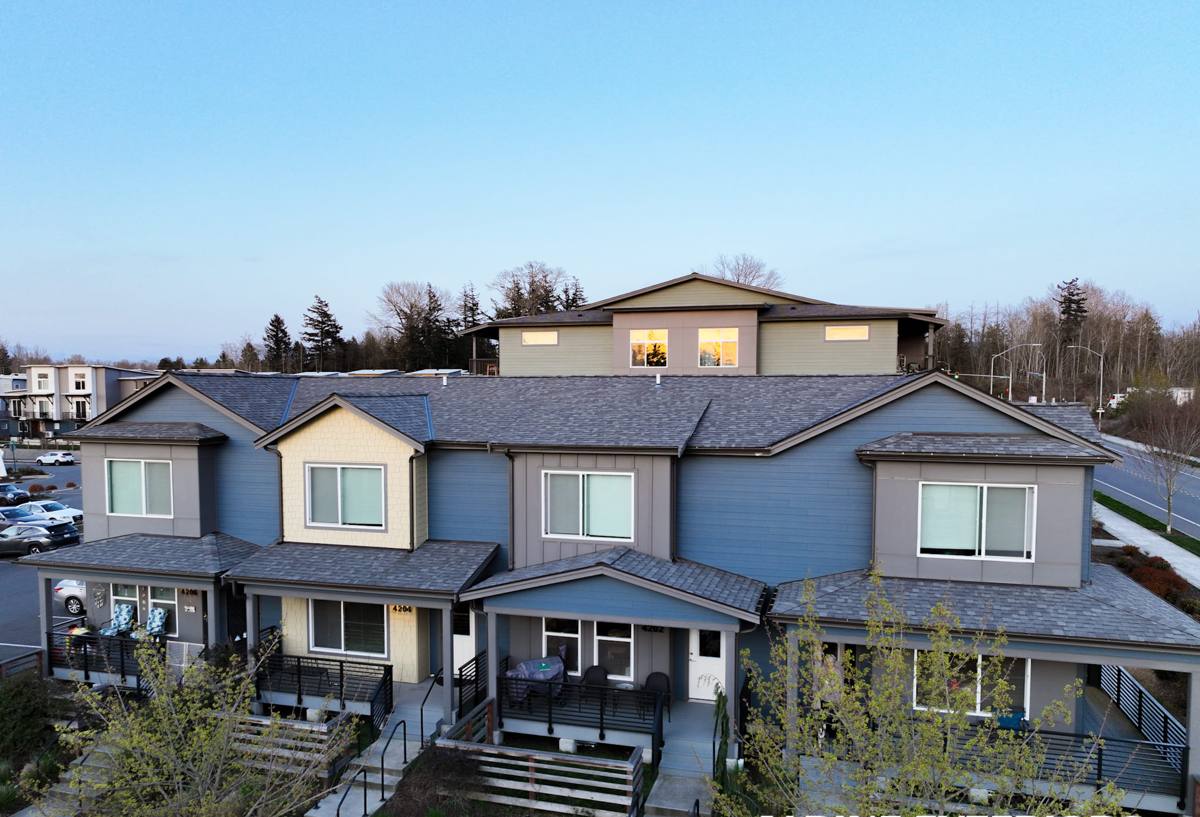
What James Hardie Brings to This Specific Job
We install James Hardie fiber cement siding exclusively, and on a coastal Whatcom County property that's not a marketing preference — it's a practical one. Hardie's fiber cement board is engineered from cement, sand, and cellulose fiber, which means it doesn't absorb water the way wood-based or wood-adjacent products can, and it isn't a food source for the moss and mildew that thrive in this kind of damp, low-sun climate.
Built for This Climate Zone Specifically
James Hardie manufactures regional product lines (HZ5 for the northern climate zones this area falls into), engineered for freeze-thaw cycling, sustained moisture exposure, and temperature swings rather than a one-size-fits-all board. That matters more here than most homeowners realize — a product engineered for a dry, hot climate behaves differently under six months of coastal drizzle.
ColorPlus Finish vs. Field-Applied Paint
Most Hardie siding we install carries the factory-applied ColorPlus finish, baked on under controlled conditions rather than rolled or sprayed on-site. That finish is formulated to hold color and resist fading under UV exposure and salt air, and it comes backed by its own finish warranty separate from the substrate warranty — two layers of protection instead of one.
How Hardie Compares for This Climate
| Factor | James Hardie Fiber Cement | Vinyl Siding | Wood / Primed Spruce |
|---|---|---|---|
| Moisture absorption | Very low — engineered cement composite | Non-absorbent but expands/contracts with heat | High — prone to swelling, rot without diligent upkeep |
| Moss/algae resistance | Good; doesn't feed organic growth | Surface growth common in shaded, damp areas | Poor without frequent treatment |
| Salt air / coastal durability | Strong when installed and finished correctly | Can become brittle over time; fasteners corrode | Weakest — repaint cycles shorten near salt spray |
| Fire resistance | Non-combustible | Melts/deforms under heat | Combustible |
| Finish longevity | Factory ColorPlus, warrantied separately | Color baked into panel, can fade/chalk | Repaint every few years |
What a Correct Installation Actually Involves
The siding product only performs as well as the assembly behind it. On a coastal property, the details most homeowners never see are the ones that decide whether siding lasts 30-plus years or starts failing at year eight.
- Weather-resistive barrier: a continuous, properly lapped water-resistive barrier behind the siding, with no gaps at seams or penetrations.
- Rainscreen or drainage plane: a gap between the siding and the wall assembly so any water that does get behind the boards can drain and dry instead of sitting against the sheathing — especially important where driving rain is routine.
- Flashing at every penetration: windows, doors, vents, and any wall-mounted fixture need proper head flashing and kick-out flashing, not just caulk.
- Correct fastener pattern and clearance: Hardie specifies fastener spacing, embedment depth, and clearance from grade, decks, and roof lines — clearance gaps matter even more in a climate where the ground stays damp much of the year.
- Caulking only where Hardie's install guide calls for it: over-caulking traps moisture in seams that are designed to drain; under-caulking leaves real gaps open to wind-driven rain.
- Butt joints and trim details: tight, properly flashed joints instead of relying on sealant alone to keep water out over time.
Every one of those items is spelled out in James Hardie's published installation instructions, and skipping any of them is one of the fastest ways to void a warranty that would otherwise protect the homeowner for decades.
Our Process for a Nooksack-Area Project
1. On-Site Assessment
We walk the exterior with the homeowner, check the current siding and trim for moisture damage, look at grading and drainage around the foundation, and note anything — decks, low roof lines, dense landscaping — that traps moisture against the wall.
2. Tear-Off and Sheathing Check
Old siding comes off and the sheathing underneath gets inspected before anything new goes up. In a climate this damp, hidden rot behind old siding isn't rare — better to find and address it now than bury it under a new wall system.
3. Water-Resistive Barrier and Drainage Plane
We install a continuous barrier and drainage gap sized to the wall assembly, matched to what this region's rain load actually demands.
4. Flashing and Trim
Windows, doors, and penetrations get flashed to shed water outward and downward, not toward the wall cavity.
5. Hardie Panel or Plank Installation
Boards go up to Hardie's fastening and clearance specs, with joints and trim detailed to keep water moving off the wall.
6. Final Walkthrough
We review the finished job with the homeowner, including basic care and what to watch for, before calling it done.
Signs Your Current Siding Is Already Losing the Fight
- Soft or spongy spots when you press on the siding, especially near the bottom courses or under windows
- Visible moss or persistent green streaking that comes back shortly after cleaning
- Paint that's peeling, bubbling, or chalking heavily rather than just fading evenly
- Warping, cupping, or separation at seams and butt joints
- Rusting or popped fasteners visible on the siding surface
- Rising energy bills with no other obvious cause — often a sign moisture has compromised insulation behind the siding
Any one of these on its own might be minor. Two or three together, especially on the sides of a house facing prevailing wind and rain, usually mean the wall assembly is taking on water and it's worth a real inspection rather than a patch job.
Living With Hardie Siding in This Climate
Fiber cement isn't maintenance-free, but the maintenance it needs is minor compared to wood or vinyl in this environment. A periodic gentle wash — garden hose and soft brush, not a pressure washer aimed directly at seams — keeps salt residue and early moss growth from building up. Caulked joints and trim should get a visual check once a year, particularly after the first heavy storm season, since caulk is the one component that ages faster than the siding itself. Because the color is baked into a factory finish rather than field-applied, there's no repaint cycle to plan for under normal conditions — which matters a lot on a property where a painting contractor would otherwise be back every few years just to keep ahead of salt and UV fading.
What This Kind of Project Typically Costs
| Cost Factor | What Drives It |
|---|---|
| House size and complexity | Square footage, number of stories, and roofline complexity affect labor hours |
| Extent of tear-off | Full removal and disposal of old siding vs. work on new construction |
| Sheathing/rot repair | Hidden moisture damage found during tear-off adds material and labor |
| Hardie product line and profile | Lap siding, shingle-style, and panel systems differ in material and install cost |
| Trim and detail work | Window and door trim, corner boards, and fascia detailing add scope |
| Site access | Tight lots, landscaping, or difficult staging areas add time |
We don't quote a number without seeing the house — anyone who does is guessing. What we can say honestly is that fiber cement typically costs more upfront than vinyl and often more than a basic primed-wood job, and that gap is offset over time by a finish and substrate that isn't cycling through repaints or premature replacement in this climate.
Why a Crew That Already Works This Area Matters
Installation quality on fiber cement siding is almost entirely about details that don't show up in a walk-by inspection — barrier laps, flashing sequencing, fastener placement, clearance from grade. A crew that already works Whatcom County's coastal side knows what this weather actually does to a wall assembly over time, not just in a manufacturer's install manual. That local track record shows up in decisions on-site: where to add extra drainage detail, how to handle trim near ground contact, and which shortcuts simply don't hold up here even if they'd pass in a drier climate.
If you're weighing a siding replacement or repair on a Nooksack-area home, we're glad to take a look and give you a straightforward, no-pressure assessment of what your house actually needs — no inflated urgency, no upsell into products we don't stand behind. Reach out for a free estimate using the form below.