 Birch Bay Siding
 Why Point Whitehorn's Exposure Changes the Siding Equation
Point Whitehorn sits right up against the Salish Sea shoreline north of Birch Bay, and that location comes with a specific set of weather demands that inland Whatcom County homes don't deal with in the same way. Salt-laden air moves off the water and settles on everything it touches, including exterior wall surfaces, fasteners, and trim. Combine that with the driving, wind-pushed rain that comes through in fall and winter storms, and you have a siding assembly that gets tested from two directions at once: moisture trying to get behind the cladding, and salt residue working on any exposed metal or unsealed surface over time.
Then there's the moss and algae season, which in this part of Whatcom County can run most of the year on shaded, north-facing walls near tree lines. Moisture that lingers on a siding surface without a chance to dry out is exactly what moss and mildew need to take hold, and once organic growth establishes itself on a wall, it holds even more moisture against the substrate underneath. None of this is unique to Point Whitehorn in isolation, but the combination of shoreline salt exposure, wind-driven rain, and a long damp season is a heavier load than most siding products are built to shrug off indefinitely.
Why We Only Install James Hardie Fiber Cement Here
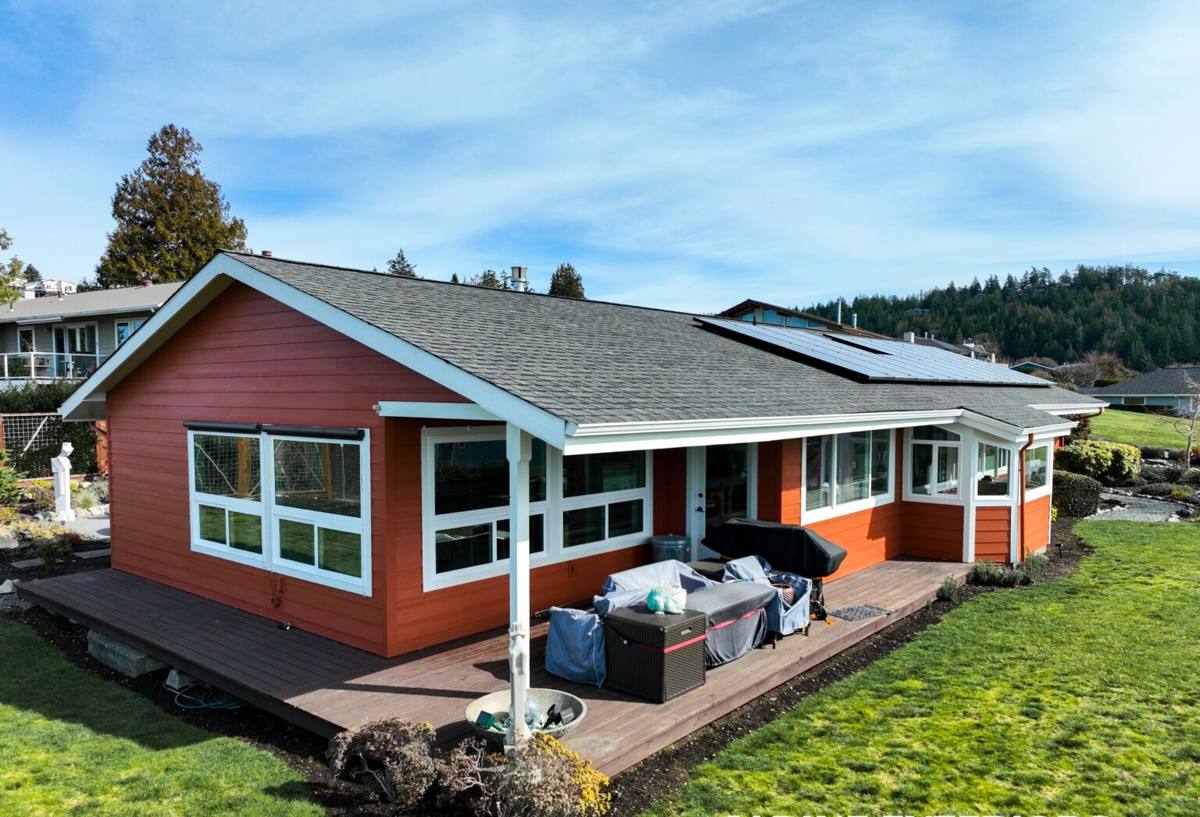
We install James Hardie fiber cement siding exclusively — we don't offer vinyl, LP SmartSide, Cemplank, Allura, or wood siding like primed spruce or cedar. That's not a marketing position, it's a standard we hold because of what we've seen exposed coastal homes need over the long run. Fiber cement is non-combustible, it doesn't expand and contract with moisture the way wood-based products do, and Hardie's ColorPlus factory finish is baked on and warrantied against fading and flaking in a way that field-applied paint on other substrates isn't. For a Point Whitehorn home taking on salt air and repeated wet-dry cycles, a siding material that doesn't rely on an intact paint film to keep water out of the substrate is a meaningful advantage.
Vinyl can crack in cold snaps and it doesn't hold paint if a homeowner ever wants a different color. Wood siding needs a maintenance commitment — recaulking, repainting, checking for rot at end grain — that most homeowners underestimate until it's overdue. Engineered wood products like LP SmartSide perform well when the installation and maintenance schedule is followed exactly, but any breach in that factory treatment at a cut edge or fastener point opens the door to moisture intrusion in a way fiber cement isn't vulnerable to. We'd rather put one product on a home and back it fully than offer several and hope the cheaper ones hold up.
What a Correct Fiber Cement Install Actually Requires
Fiber cement siding is only as good as the installation behind it. The product itself is durable, but a huge share of the siding failures we get called out to inspect trace back to installation shortcuts, not the material. On a shoreline-adjacent property like the ones around Point Whitehorn, these details matter more than usual:
Water Management Behind the Cladding
Fiber cement siding is not a waterproofing system by itself — it's a rain screen over a water-resistive barrier. That means the housewrap or building paper underneath, the flashing at every window and door, and the kick-out flashing at roof-wall intersections all have to be installed correctly and in the right order, lapped so gravity always drains water outward and down. Skipping or rushing this layer is invisible on install day and expensive five years later.
Clearances and Gaps
Hardie's install specifications call for minimum clearances from grade, roof lines, decks, and other horizontal surfaces, plus a small gap where boards meet trim so the material can handle seasonal movement without binding or cracking the finish. In a wet climate, clearance from grade and roofing is especially important — it's the difference between a wall that dries out between storms and one that stays damp against the bottom course.
Fasteners and Hardware
Salt air accelerates corrosion on any fastener or piece of hardware that isn't rated for it. We use fasteners appropriate for coastal exposure and follow Hardie's fastening pattern exactly — proper spacing, proper embedment depth, no over-driving that cracks the board or under-driving that leaves it loose.
Caulking and Joint Treatment
Every butt joint, corner, and penetration needs the right sealant, applied correctly, and this is one of the few maintenance items fiber cement does require over its life. We use quality sealants and install them per manufacturer spec rather than treating caulk as a cosmetic afterthought.
Our Process on a Point Whitehorn Project
Because we already work this stretch of Birch Bay and the surrounding shoreline neighborhoods, we've built a process around what these homes typically need rather than starting from scratch on every job.
- Site walk and moisture check. Before we quote anything, we look at the existing siding condition, check for soft spots or moisture staining, and look at how the home is oriented relative to prevailing wind and rain.
- Water-resistive barrier assessment. If we're removing old siding, we inspect the sheathing and existing barrier underneath. Any rot or compromised sheathing gets addressed before new siding goes up — covering a problem is not an option we offer.
- Flashing and trim detail plan. We map out flashing at every window, door, and roof intersection specific to that home's layout before installation starts, not as we go.
- HardieWrap or equivalent barrier installation. A continuous, correctly lapped water-resistive barrier goes down first.
- Siding installation to spec. Boards go up with correct clearances, fastening pattern, and joint treatment, following Hardie's published installation guidelines for our climate zone.
- Final inspection and cleanup. We walk the finished exterior with the homeowner, check every joint and corner, and make sure the site is left clean.
Choosing HZ5 for a Shoreline-Adjacent Home
James Hardie makes climate-engineered product lines, and homes exposed to the kind of moisture and freeze-thaw swings the Pacific Northwest coastline sees are typically best served by the HZ5 formulation, engineered for wetter, harsher climates rather than the HZ10 line built for hot, dry regions. The HZ5 line is what we spec by default for Birch Bay-area homes, including those around Point Whitehorn, because it's built to handle sustained moisture exposure rather than just occasional rain.
ColorPlus Finish for Salt Air Durability
We strongly recommend ColorPlus prefinished siding over field-painted product on any coastal-exposure home. The factory finish is baked on under controlled conditions and backed by its own finish warranty, which matters when salt air is working on painted surfaces year-round. A field-applied paint job, no matter how well done, is more vulnerable to early wear in this kind of exposure than a factory finish engineered for it.
Cost Factors on a Point Whitehorn Job
Every home is different, but the line items that move the price on a shoreline-area fiber cement project are fairly consistent. We give honest, itemized estimates rather than a single flat number, because the variables below genuinely change the scope of work.
| Factor | Why It Matters Here |
|---|---|
| Existing siding removal and disposal | Tear-off scope depends on what's currently on the wall and whether it's failing or contaminated |
| Sheathing condition | Moisture-related repairs behind old siding are more common on long-term shoreline exposure |
| Water-resistive barrier and flashing detail | More window/door/roof intersections mean more flashing labor, which is not optional to skip |
| Siding profile and plank width | Lap siding, board-and-batten, and panel systems all price differently |
| ColorPlus color selection | Standard colors versus premium ColorPlus finishes carry different material costs |
| Site access | Waterfront and bluff-adjacent lots can add scaffolding or staging complexity |
Maintenance in a Salt Air, Moss-Prone Environment
Fiber cement is low-maintenance compared to wood, but "low" doesn't mean "none," especially this close to the water. A short, honest list of what actually keeps a Hardie exterior performing well in this climate:
- Rinse the exterior periodically to remove salt residue and airborne debris buildup, especially on walls facing the water
- Keep gutters clear so overflow doesn't run down the siding face and feed moss growth
- Trim back vegetation and tree cover that keeps a wall section shaded and damp longer than the rest of the house
- Inspect caulking at joints and penetrations every couple of years and refresh it if it's cracking or pulling away
- Address any moss or algae on the surface early with a gentle wash rather than letting it establish and hold moisture
- Watch for any staining or soft spots near grade, which can signal a clearance or drainage issue worth checking
What to Ask Before Hiring Anyone for This Job
Because installation quality matters more than the product label, a homeowner's best protection is asking the right questions before signing anything:
- Do you work in Birch Bay and Point Whitehorn regularly, or is this a one-off trip for you?
- Will you inspect the sheathing and water-resistive barrier before installing new siding, not just cover what's there?
- What fastener type and spacing will you use, and is it appropriate for coastal exposure?
- Which James Hardie product line and finish are you specifying, and why that one for this home?
- Is your crew certified or trained specifically on Hardie installation requirements?
- What does your workmanship warranty cover, separate from the manufacturer's material warranty?
Why Local Experience on This Stretch of Coastline Matters
A crew that already works Point Whitehorn and the rest of the Birch Bay shoreline has seen how these specific conditions play out on real homes over multiple seasons — which walls take the worst of the wind-driven rain, where moss tends to establish first, and which flashing details get overlooked most often on shoreline builds. That's different from general siding experience picked up in a drier or more sheltered part of Whatcom County. We're not guessing at how salt air and a long wet season will treat a given detail; we've already seen it and adjusted our process around it.
If you're considering new siding for a home in Point Whitehorn or elsewhere around Birch Bay, we're happy to walk the exterior with you, look at what your home is actually dealing with, and put together a straightforward, no-pressure estimate using the form below.