 Birch Bay Siding
 Why Ferndale Siding Takes a Different Kind of Beating
Ferndale sits close enough to the water that homes here deal with a combination most inland Washington towns never see: salt-laden air rolling off Birch Bay and the Strait, driving rain that comes in sideways during winter storms, and a moss season that can run eight or nine months out of the year in shaded, north-facing exposures. Any one of those on its own is manageable. Together, they wear siding down faster than most homeowners expect, and they wear it down in specific, predictable ways.
Salt air is corrosive to fasteners and hardware long before it visibly damages the siding material itself. Driving rain finds every gap in flashing, caulking, and butt joints and pushes water where it doesn't belong. Moss and algae hold moisture against the siding surface for weeks at a time, which accelerates rot in wood-based products and breaks down paint films on anything that isn't factory-finished. When we get called out for siding repair in Ferndale, it's almost always one of these three things, or a combination of all three.
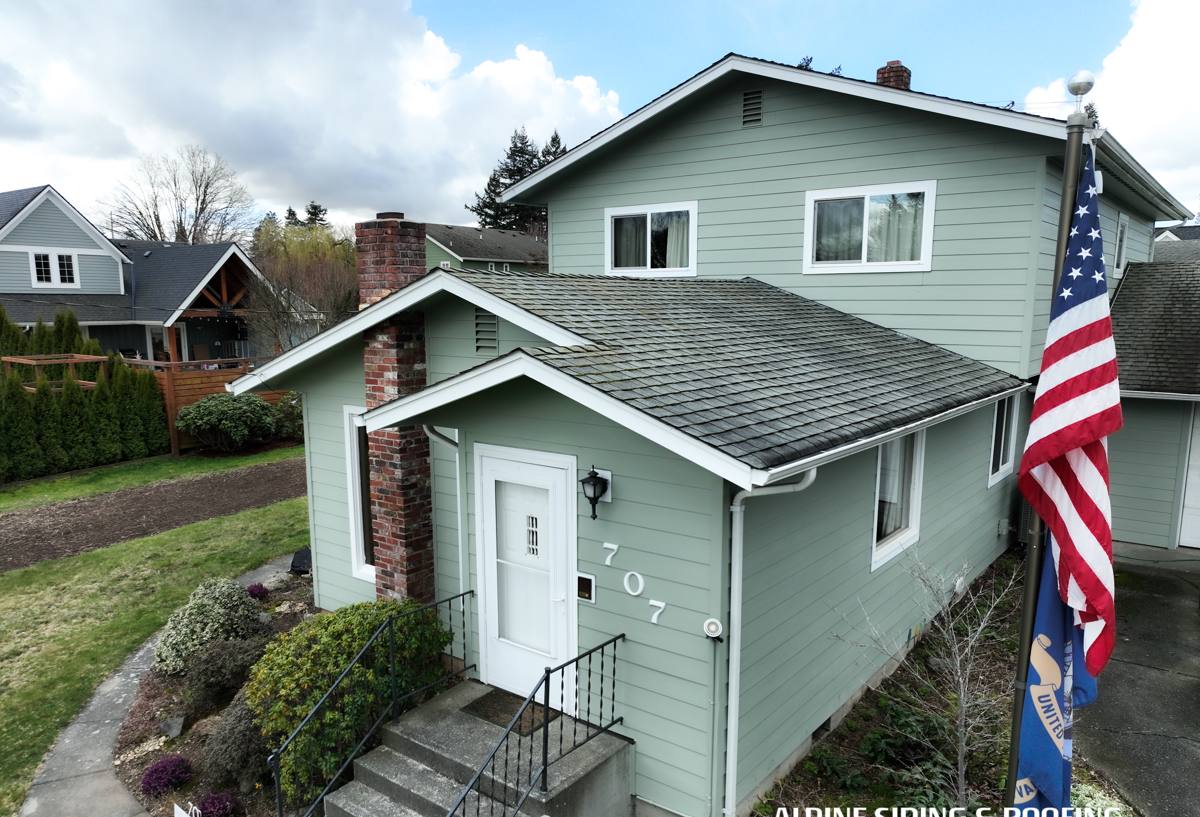
The Repair Calls We See Most Often in This Area
Moss and Algae Staining That Won't Wash Off
Green and black staining on north- and west-facing walls is the most common complaint we get in Ferndale. On older or lower-grade siding, this isn't just cosmetic — the moss is retaining moisture against the substrate, and by the time the staining is heavy, there's often soft or delaminating material underneath. We check for that before we ever talk about cleaning, because pressure-washing damaged siding just pushes water further into the wall assembly.
Fastener and Trim Corrosion
Homes closer to the water lose galvanized nails and staples faster than homeowners realize, since the corrosion starts inside the fastener before it shows as rust streaking on the face of the siding. Once you see rust bleeding down a board, the fastener holding that board has usually already lost a meaningful amount of its holding strength.
Water Intrusion at Joints, Corners, and Penetrations
Driving rain off the water exposes weaknesses that would go unnoticed in a drier climate. Butt joints without proper flashing, corner trim that's shrunk and pulled away, and penetrations around vents, hose bibs, and light fixtures are the usual entry points. These show up as soft siding, peeling paint in a localized spot, or staining on interior walls near exterior penetrations.
Cracked, Warped, or Delaminating Boards
Wood and wood-composite siding that's absorbed repeated wetting and drying cycles will crack along the grain, cup, or split at fastener points. This is a material-behavior problem, not a workmanship problem in most cases — it's what happens to moisture-sensitive substrates in a marine climate over time.
What a Correct Repair Actually Involves
A lot of siding repair work in this area gets done wrong not because the crew is careless, but because they treat it as a cosmetic patch instead of an investigation. Replacing a damaged board without figuring out why it failed just buys a few years before the same spot fails again.
- Identify the actual water path — don't assume the visible damage marks the only entry point
- Check house wrap and flashing behind the damaged area, not just the siding face
- Probe surrounding boards for soft spots before closing the wall back up
- Replace corroded fasteners with corrosion-resistant hardware rated for coastal exposure
- Re-flash joints, corners, and penetrations properly rather than caulking over the gap
- Match replacement material and finish so repairs don't create a visible patchwork
- Confirm drainage plane and weep paths are intact before final trim goes back on
Skipping any of these steps is how a $600 repair becomes a $6,000 wall rebuild two winters later.
Our Process for Ferndale Repair Calls
1. On-Site Assessment
We look at the damage in context — where it sits on the house relative to prevailing wind and rain exposure, what's happening behind the siding, and whether the damage is isolated or a symptom of a broader moisture problem across that elevation.
2. Honest Scope and Options
Sometimes a repair is genuinely just a repair — a section of trim, a few boards, a resealed joint. Other times, the damage tells us the rest of that elevation is on the same timeline and due for the same failure within a year or two. We tell you which situation you're in, plainly, so you can decide whether to repair now and replace later, or address the whole wall at once.
3. The Repair Itself
We remove only what needs to come off, inspect what's underneath, correct the underlying moisture path, and replace damaged material with product that matches or improves on what's there. We don't caulk over an unresolved leak and call it done.
4. Follow-Through
Repair work should hold up through the next several wet seasons, not just look fine on the day we finish. We stand behind the work we do and will come back if something we repaired isn't performing as it should.
Repair vs. Replacement: How to Think About the Decision
| Situation | Repair usually makes sense | Replacement usually makes sense |
|---|---|---|
| Damage extent | Isolated to one board, joint, or small section | Recurring across multiple elevations or the whole house |
| Siding age | Under 12-15 years, otherwise sound | Original siding is 20+ years old and near end of service life |
| Underlying cause | A single identifiable failure point (one bad flashing detail, one fastener run) | Systemic moisture behavior tied to the material itself |
| Material | Product still available or closely matchable | Discontinued product, poor match, or known problem material |
| Cost pattern | One-time fix, no repeat calls in recent years | Same areas keep failing despite prior repairs |
Why Some Siding Holds Up Better Than Others Out Here
Not every siding material handles Whatcom County's coastal conditions the same way, and repair frequency is one of the clearest signals of that. Wood and wood-composite products are moisture-sensitive by nature — they swell, crack, and eventually rot when exposed to repeated wetting, no matter how well they're maintained. Vinyl doesn't rot, but it becomes brittle in cold snaps and can warp or buckle where it's exposed to direct sun and reflected heat, and damaged sections are often hard to color-match years later since formulations change.
This is why, when we're doing full replacement work rather than a spot repair, we install James Hardie fiber cement almost exclusively. It's non-combustible, it doesn't absorb water the way wood does, and its factory-applied ColorPlus finish holds color and resists the fading and peeling that painted wood and composite siding are prone to in wet marine climates. Hardie's HZ5 product line in particular is engineered for the kind of freeze-thaw and moisture-cycling exposure that coastal Whatcom County sees. We're not the crew to call if you want vinyl or engineered wood installed — we simply don't install those products anymore, because we've seen too many premature repair calls tied back to how they hold up out here.
What to Check Before You Hire Someone for Siding Repair
Repair work is easy to do badly and hard to inspect once it's closed back up, so who you hire matters more than it does for a lot of exterior projects.
- Ask if they'll inspect behind the damaged siding, not just replace what's visible
- Ask what fastener and flashing materials they use for coastal exposure
- Ask how they'll match existing material, color, and profile
- Ask whether they'll tell you honestly if a "repair" is really a sign you need a larger replacement
- Confirm they're licensed and insured to work in Washington
- Ask how long they've worked specifically in Whatcom County's coastal conditions
A crew that already works Ferndale and the surrounding Birch Bay area regularly sees the same failure patterns often enough to recognize them quickly, instead of treating every repair as a first-time diagnosis.
Maintenance That Extends the Life of a Repair
Once repair work is done, a little seasonal upkeep goes a long way in this climate. Rinsing moss and algae growth off north-facing walls before it establishes, keeping gutters clear so overflow doesn't run down the siding face, and doing a visual walk-around each fall before the wet season sets in will catch small problems while they're still small. None of this requires a professional visit — it just requires doing it consistently, which is where most maintenance plans fall short.
If you're seeing staining, soft spots, or damage on your Ferndale home's siding, we're happy to take a look and give you a straight answer on what it actually needs — repair, partial replacement, or full replacement — with no pressure either way. Reach out for a free estimate using the form below.