 Birch Bay Siding
 Why Semiahmoo Homes Need a Different Approach to Windows
Semiahmoo sits right up against the water, which means homes here take on a combination of weather stresses that inland Whatcom County houses simply don't deal with. Salt-laden air off the Strait of Georgia and Semiahmoo Bay works into window frames, hardware, and seals year-round. Add in driving rain that comes sideways during winter storms, and a moss and mildew season that can stretch from October through April, and you've got a climate that's genuinely hard on windows. Standard windows sold at big-box stores are engineered for a national average climate, not for a marine environment where wind-driven moisture is the norm rather than the exception.
When we talk about "energy-efficient windows" for a Semiahmoo home, we're not just talking about a U-factor sticker. We're talking about a window and installation system that keeps water out under wind pressure, resists salt corrosion on hardware and finishes, and still performs thermally through a long, damp Pacific Northwest winter. That's a narrower, more specific set of requirements than a generic "replace your old windows" pitch, and it's why the install details matter as much as the window brand.
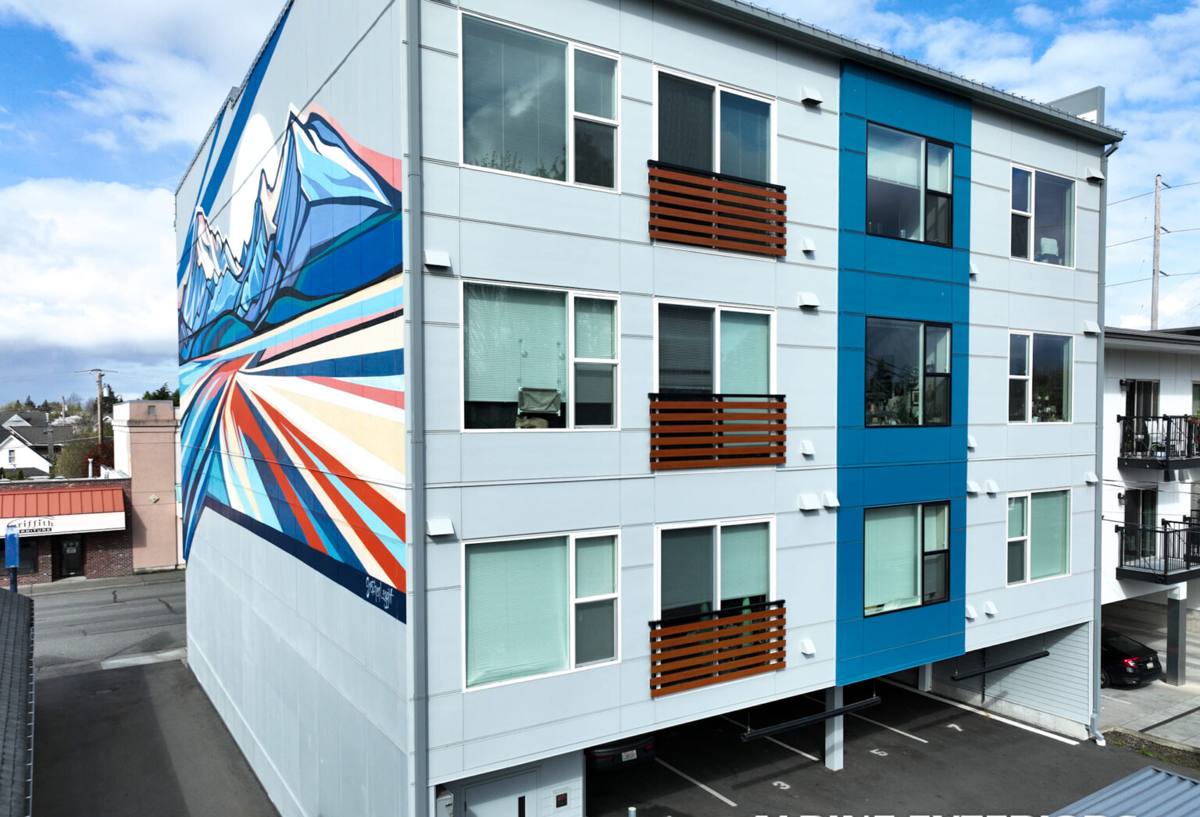
What Salt Air and Driving Rain Actually Do to Windows
Salt Air
Airborne salt is corrosive to exposed metal — hinges, cranks, balance systems, and lesser-quality cladding finishes all take a hit over time. On homes closer to the water, we regularly see hardware that's pitted or seized well before the glass unit itself has failed. Vinyl and fiberglass frames don't corrode the way metal does, but the metal components inside any window — even vinyl ones — are still exposed to that salt-air environment every time the window operates.
Driving Rain and Wind Pressure
Semiahmoo's exposure means rain often arrives horizontally, driven by wind straight off the water. That's a different load than a window sees in a sheltered inland lot. A window that's rated fine on paper can still leak if the flashing, sill pan, and sealant details around it weren't built to handle wind-driven water actively pushing against and around the frame, not just falling on it.
Moss and Sustained Moisture
Long stretches of damp, low-light weather feed moss and mildew growth on and around window trim, sills, and the wood substrate behind them if that substrate stays wet. Once moisture gets trapped behind trim or under a poorly sealed flange, it doesn't dry out quickly here — that's how rot starts, often invisibly, behind perfectly good-looking siding or trim.
What "Energy-Efficient" Actually Means for This Climate
Energy efficiency in a marine climate like Semiahmoo's is less about blocking extreme heat (we don't get much of that) and more about controlling heat loss during a long, mild-but-persistent heating season, plus condensation control given the humidity. The features that matter most here:
- Low-E glass coatings tuned for heating-climate performance, which help retain interior warmth without over-darkening rooms on the region's already limited sunny days
- Warm-edge spacers between glass panes, which reduce cold spots at the glass edge where condensation tends to form first
- Multi-point locking hardware that pulls the sash tight against weatherstripping, improving both air sealing and resistance to wind-driven rain intrusion
- Properly sized weep systems so any water that does get past the outer seal has a clear path back out, rather than pooling in the frame
- Frame materials that don't wick or trap moisture, since a frame that stays damp will underperform thermally and age faster
A window with a great energy rating on a spec sheet can still underperform in real life on a Semiahmoo lot if it's not installed with flashing and sealant details suited to wind-driven rain. The product and the installation are a package deal — neither one alone gets you a window that actually performs here.
How We Approach a Window Replacement in Semiahmoo
1. Assessment of Exposure
Not every wall of a home faces the same conditions. We look at which elevations take direct water and wind off the bay versus which are more sheltered, and we factor that into product selection and flashing detail — a west or waterfront-facing wall often warrants extra attention that an interior courtyard window doesn't need.
2. Removal Without Hidden Damage
Old windows in coastal homes often reveal water staining, soft wood, or early rot around the rough opening once removed — especially if the prior installation skipped a proper sill pan. We check the opening before anything new goes in, and we tell you plainly if we find substrate damage rather than covering it up.
3. Sill Pan and Flashing, Not Just Caulk
Caulk alone is not a water management system — it's a backup. A correct install uses a sloped sill pan, properly lapped flashing tape integrated with the home's weather-resistive barrier, and drainage that directs any incidental water back outside the wall assembly. This is the single biggest factor in whether a window leaks under driving rain five years from now.
4. Air Sealing and Insulation at the Rough Opening
The gap between the window frame and the rough opening gets sealed with an appropriate low-expansion foam or backer rod and sealant — not stuffed with fiberglass that does nothing to stop air movement. This is where a lot of a home's real energy loss happens, even with a top-tier window installed.
5. Exterior Trim and Finish Detail
Trim gets finished and sealed in a way that sheds water rather than holding it against the wall, which also reduces the moss and mildew staining that's so common on north- and shade-facing elevations near Birch Bay and Semiahmoo.
Choosing Window Products for This Environment
We don't push one brand as the answer for every home. What we do insist on is matching the frame material and hardware grade to the exposure level of your home. Broadly, here's how the common frame options stack up for a coastal Whatcom County property:
| Frame Material | Salt-Air Behavior | Maintenance | Notes for Semiahmoo |
|---|---|---|---|
| Vinyl | Does not corrode; hardware is the exposed metal risk | Low | Good value; verify hardware and reinforcement quality on larger units |
| Fiberglass | Very stable; minimal expansion/contraction | Low | Strong option for exposed elevations; typically a higher upfront cost |
| Aluminum-clad wood | Cladding protects wood, but seams need quality control | Moderate | We're selective here; any breach in the cladding exposes wood to sustained moisture |
| Bare wood | High maintenance burden in salt air and moss season | High | We generally steer clients away from this on direct water-exposed walls, not because wood windows can't be beautiful, but because the upkeep in this specific climate is demanding |
Whatever frame material fits your home and budget, we spec upgraded, corrosion-resistant hardware on Semiahmoo installs as a standard practice, not an upsell — it's cheaper to do right the first time than to replace seized cranks and hinges in five years.
Cost Factors for Semiahmoo Window Projects
Every home is different, but the main variables that move the price on a window replacement here are fairly consistent:
| Factor | Why It Matters Locally |
|---|---|
| Number and size of openings | Larger or picture-style windows on view-facing walls cost more and need larger structural and flashing considerations |
| Exposure level | Direct water/wind-facing elevations may warrant upgraded flashing details or hardware |
| Existing substrate condition | Rot or moisture damage found behind old trim adds repair scope before new windows go in |
| Frame material selected | Vinyl, fiberglass, and clad-wood carry different material costs |
| Full-frame vs. insert replacement | Insert replacement is faster and cheaper but only appropriate if the existing frame and flashing are still sound |
We give straightforward, itemized estimates rather than a single vague number, so you can see what's driving the cost and where there's room to adjust scope if needed.
Signs Your Semiahmoo Home's Windows Are Underperforming
- Condensation forming between the glass panes (a sign the seal has failed on a double- or triple-pane unit)
- Cranks, locks, or hinges that are stiff, corroded, or need force to operate
- Visible moss or dark staining building up on sills or trim faster than it did a few years ago
- Drafts you can feel near the frame on windy days, even with the window fully latched
- Soft or discolored wood trim or drywall around the window opening
- Noticeably higher heating bills without another clear explanation
Any one of these on its own isn't necessarily urgent, but two or three together on the same window usually means it's time for a real assessment rather than another round of caulk.
Why Local Experience in Semiahmoo Matters
A crew that mostly works inland or in drier parts of Washington can install a perfectly good window that still leaks here, simply because they're not used to detailing for sustained wind-driven rain and salt exposure. We work in Birch Bay and the Semiahmoo area regularly, which means we already know which elevations tend to take the worst weather, what kind of substrate damage shows up behind older windows in this specific area, and which hardware and sealant products actually hold up rather than failing early in a marine environment. That local pattern recognition is worth more than a lower bid from a crew that's guessing at conditions they haven't dealt with before.
Get a Free, No-Pressure Estimate
If your Semiahmoo home's windows are drafty, hard to operate, fogging between the panes, or just showing their age, we're happy to come take a look and give you an honest read on what's going on — no pressure, no obligation. Fill out the form below to schedule a free estimate.