 Birch Bay Siding
 Why Windows in the Nooksack Area Take a Different Kind of Beating
Homes around Nooksack and greater Birch Bay deal with a combination of weather that's harder on windows than most homeowners realize until they've lived with a bad set for a few years. Salt-laden air off the Strait moves inland on prevailing winds, driving rain comes sideways during fall and winter storms, and a long damp season keeps moss and mildew active on north-facing walls and trim for much of the year. None of these factors are dramatic on their own, but together they shorten the working life of window seals, frame finishes, and hardware faster than a window catalog spec sheet would suggest.
Whatcom County's marine climate also means indoor humidity is a constant background factor. A window that isn't sealing and insulating properly doesn't just waste heating dollars — it becomes the first surface where that humidity condenses, which is where you start seeing black mold at the sill or soft wood in the jamb. Energy efficiency and moisture control are really the same problem here, not two separate ones.
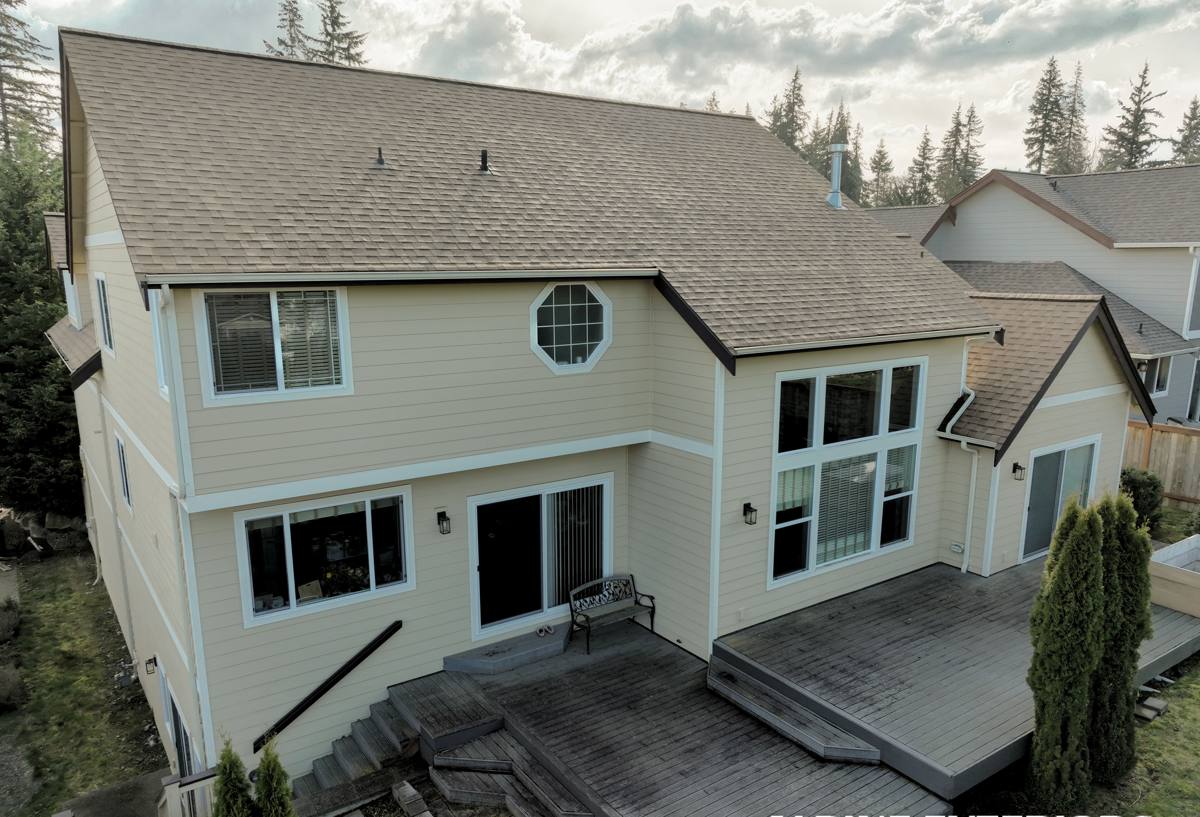
What "Energy-Efficient" Should Actually Mean for This Climate
Manufacturers throw around efficiency ratings, but only a few of them matter for a house near Birch Bay:
- U-factor — how well the window resists heat transfer. Lower is better for our cool, wet winters. This is the number that affects your heating bill most directly.
- SHGC (Solar Heat Gain Coefficient) — how much solar heat passes through. Western Whatcom County doesn't get intense sun exposure most of the year, so this matters less here than it would in a hot, dry climate, but it still affects comfort on south and west exposures in summer.
- Air infiltration rating — how much air leaks through the assembly under wind pressure. Given how often this area sees sustained wind off the water, this rating deserves more attention than it usually gets.
- Condensation resistance — not always advertised loudly, but relevant to a climate with persistent humidity and cool glass surfaces.
A window can carry a good headline efficiency rating and still perform poorly here if the frame material or installation doesn't hold up to wind-driven rain and salt exposure. Efficiency on paper and efficiency in a Nooksack-area wall assembly aren't always the same thing.
Signs Your Current Windows Are Already Costing You Money
Most homeowners don't replace windows on a schedule — they replace them when something becomes obvious. Here's what we look for during an assessment, and what you can check yourself in the meantime:
- Fogging or a hazy film between the panes of a double-pane window — the seal has failed and the gas fill (if there was one) is gone.
- Visible condensation or moisture on the interior glass or sill during cold mornings, especially on north- or west-facing rooms.
- A noticeable draft near the frame when wind is blowing directly at that side of the house.
- Paint or finish that's cracking, chalking, or peeling on the exterior frame, particularly on window-facing walls exposed to weather.
- Difficulty opening, closing, or locking — swollen wood or warped vinyl frames are common after years of moisture cycling.
- Soft or discolored wood at the sill or lower corners, which usually means water has been getting behind the frame, not just condensing on top of it.
Old vs. Aging Windows: Two Different Problems
A window that's simply old but was installed and flashed correctly may just need re-glazing, new weatherstripping, or hardware service. A window that's failing because of a poor original installation — bad flashing, no drainage path, caulk used in place of proper detailing — usually needs full replacement, because the problem is in the wall opening, not just the sash. Part of a proper assessment is figuring out which situation you actually have before recommending a fix.
What a Correct Installation Actually Involves
Given how much wind-driven rain this area sees, the installation detailing matters more than the window brand. A correct job includes:
- Removing and inspecting the opening — checking the sheathing and framing behind the old window for hidden rot or moisture damage before anything new goes in.
- Proper flashing sequence — sill pan, side flashing, and head flashing installed in the correct shingle-lap order so any water that gets past the exterior cladding drains back out, not into the wall.
- Correct shimming and squaring — a window that isn't level and square won't seal or operate correctly no matter how good the unit is.
- Air sealing at the interior — low-expansion foam or backer rod and sealant around the frame perimeter, which is where most of the energy-efficiency gain actually comes from, more than the glass itself in many retrofits.
- Exterior sealant and trim detail — sized and placed to shed water rather than trap it against the frame, which matters specifically in a driving-rain climate.
Skipping or rushing any one of these steps is how a brand-new, high-efficiency window ends up with a moisture problem inside of a few winters. The window unit itself is maybe half the job — the installation is the other half, and it's the half that's invisible once the trim goes back on.
Frame Material: What Holds Up Near Birch Bay
| Frame Material | Salt Air / Coastal Wind | Maintenance | Notes |
|---|---|---|---|
| Vinyl | Good — won't corrode | Low | Our most common recommendation for this area; good balance of cost and performance |
| Fiberglass | Very good — stable and corrosion-resistant | Low | Higher upfront cost, holds up well to temperature and moisture cycling |
| Wood / Wood-clad | Fair — cladding protects the exterior face, but exposed wood needs upkeep | Higher | Can look great, but the interior wood face and any exposed joints need regular attention in this climate |
| Aluminum | Poor to fair without a quality finish — prone to corrosion and heat loss | Moderate | We generally steer clients away from bare aluminum for coastal exposures; thermal performance is also weaker unless thermally broken |
We don't push one brand over another — our standard is that whatever frame material you choose has to be detailed and sealed correctly for a marine environment, or the material advantage doesn't matter.
Our Process for a Nooksack-Area Window Job
1. On-Site Assessment
We look at each window opening individually — not just the glass, but the condition of the framing, sill, and any existing water staining or soft spots. Two windows on the same house can be in very different condition depending on sun and rain exposure.
2. Measurement and Product Selection
We measure for the actual opening, discuss frame material and glazing options against your budget, and flag anything about the existing opening that will need repair before the new window goes in.
3. Installation
Old window removal, opening inspection and any needed framing repair, flashing, setting and shimming the new unit, air sealing, and exterior weatherproofing — done one opening at a time so the house isn't left exposed to weather overnight.
4. Walkthrough and Cleanup
We check operation on every window, clean up the work area, and go over basic care so you know what normal looks like versus what would be worth a call back.
Cost Factors — What Actually Moves the Price
| Factor | Why It Matters |
|---|---|
| Frame material | Vinyl is typically the most affordable; fiberglass and wood-clad cost more upfront |
| Number of openings | Per-window cost usually drops as the total job size increases |
| Condition of existing framing | Hidden rot or old flashing failures add repair time before the new window can go in |
| Glazing package | Double vs. triple pane, gas fill, and low-E coatings all affect price and performance |
| Access and story height | Second-story or hard-to-reach openings take more time and equipment |
| Trim and finish work | Matching existing interior/exterior trim adds labor beyond the window unit itself |
Why Hiring a Crew That Already Works This Area Matters
A window installer who mostly works drier inland climates can do fine work and still under-detail the exterior sealing, because it's never been the thing that failed on them before. Around Birch Bay and Nooksack, wind-driven rain and salt air punish exactly the shortcuts that don't show up as problems elsewhere — thin sealant beads, skipped sill pans, caulk used instead of flashing. A crew that works this area regularly builds installation habits around the actual weather the windows will face, not just the manual.
Local experience also means fewer surprises with Whatcom County permitting and code requirements, realistic scheduling around the wetter months, and a straight answer about what your specific house needs instead of a one-size-fits-all pitch.
Simple Maintenance That Extends Window Life Here
- Rinse salt residue off exterior frames and glass periodically, especially after storms — salt buildup accelerates wear on hardware and finishes.
- Keep weep holes (the small drainage openings at the bottom of the frame) clear of debris and moss so water can drain out instead of pooling.
- Check exterior caulk lines annually for cracking or gaps and have them refreshed before they fail completely.
- Wipe down interior sills during the wettest months if you notice condensation, and address it early rather than letting moisture sit against wood or trim.
- Test locks and operation each season — hardware that's stiff or hard to latch is often an early sign of frame movement worth checking out.
If your windows are drafty, fogged, or just original to a house you know needs an update, we're happy to take a look and give you an honest read on what's actually going on — no pressure, no obligation. Use the form below to request a free estimate for your Nooksack-area home.