 Birch Bay Siding
 Deck Replacement Built for Terrell Creek's Conditions
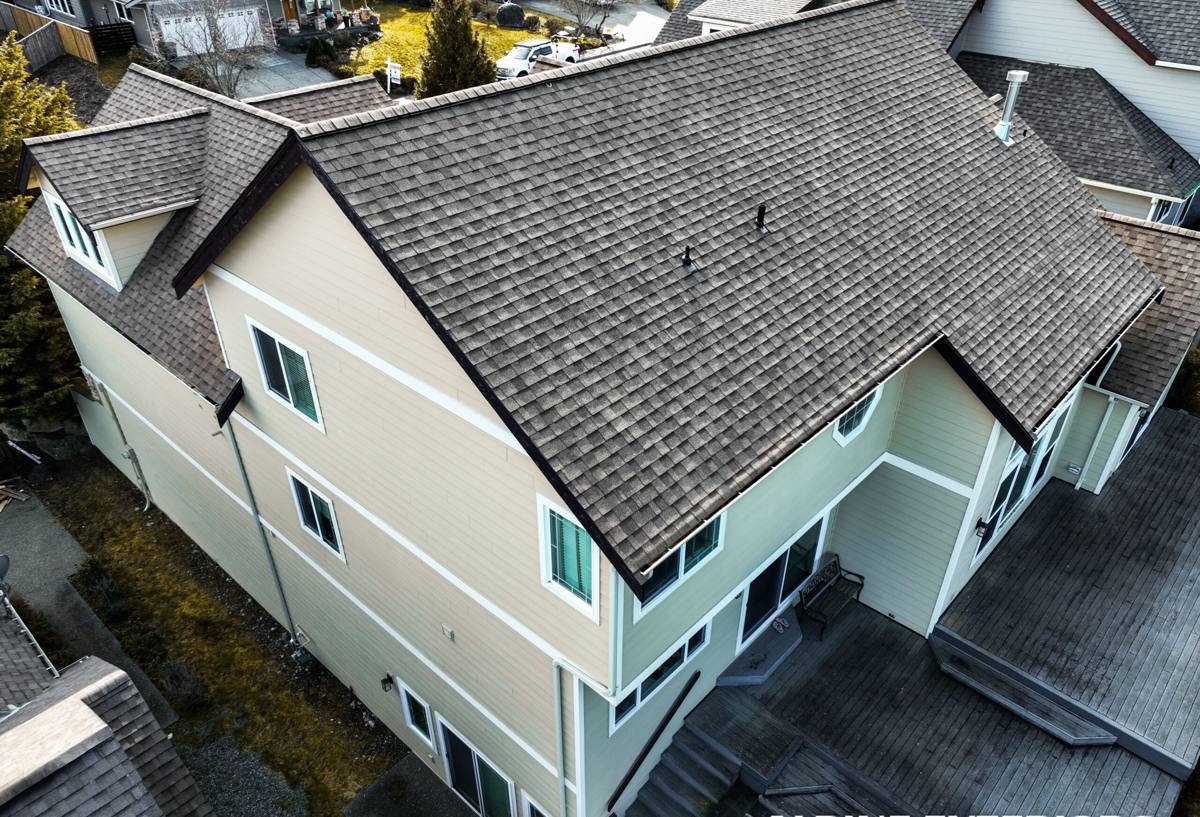
Terrell Creek sits close enough to the water that every deck in the area lives with the same three problems: salt-laden air, driving rain that comes in sideways off Birch Bay, and a moss season that can run from October well into spring. A deck that was built for a drier inland climate simply doesn't hold up here the same way. If your deck is cupping, the boards have gone soft at the joints, or you're power-washing green growth off it every few months just to keep it safe underfoot, that's not bad luck — it's what this stretch of Whatcom County does to decking that wasn't detailed for it.
We work on decks in Terrell Creek and the surrounding Birch Bay area regularly, which matters more than it sounds like. A crew that mostly builds decks an hour inland doesn't think the same way about ledger flashing, joist protection, or drainage under the boards. Around here, those details aren't optional extras — they're the difference between a deck that lasts fifteen-plus years and one that needs another rebuild in eight.
Why Decks Fail Faster Near Birch Bay
Understanding why a deck fails is the first step in making sure the replacement doesn't repeat the problem.
Salt air and metal fasteners
Airborne salt from the bay accelerates corrosion on fasteners, hardware, and any exposed metal connectors. Standard hot-dip galvanized screws and brackets that would be fine thirty miles inland can start rusting and weakening within a few years this close to salt water. Once fasteners corrode, the structural connections they're holding — ledger boards, joist hangers, post bases — are compromised even if the decking on top still looks okay.
Driving rain and water intrusion
Wind-driven rain off the bay doesn't just fall straight down — it gets pushed sideways and up under railings, around post wraps, and behind ledger boards where the deck meets the house. Without proper flashing and a drainage path, that water sits and soaks instead of running off, which is where you get rot at the ledger connection — one of the most serious and most common failure points we see.
Moss, shade, and organic buildup
Long, damp shoulder seasons feed moss and algae on any deck surface that doesn't dry out quickly, especially on the shaded side of a house or under tree cover. Beyond the slip hazard, moss holds moisture against the wood or composite surface for weeks at a time, which shortens the life of the material and can trap moisture against fasteners underneath.
What a Correct Deck Replacement Involves Here
Replacing a deck the right way in this climate isn't just swapping old boards for new ones. A proper job addresses the structure underneath and the water management around it, not just the visible surface.
Structural inspection and demo
We start by pulling the old decking to inspect the framing underneath — joists, beams, posts, and especially the ledger connection to the house. This is where hidden rot most often shows up, and it's not something you can evaluate from the top of an intact deck. Any compromised framing gets replaced before anything else happens.
Ledger flashing done properly
The ledger board — where the deck attaches to your house — is the single most important detail on a deck in a wet, salt-air climate. Proper flashing (and in many cases, a self-adhering waterproof membrane behind it) keeps water from tracking behind the siding and into the wall framing. This is a step that's easy to skip or shortcut, and it's the one that causes the most expensive damage down the road when it's done wrong.
Fasteners and hardware rated for coastal exposure
We use corrosion-resistant fasteners and connectors appropriate for the exposure — stainless steel or coated hardware rated for coastal or treated-lumber contact, rather than standard-grade galvanized hardware that corrodes faster near the bay.
Drainage and airflow underneath
Water needs a place to go. That means correct beam and joist spacing, proper slope where applicable, and keeping vegetation and debris from trapping moisture against the underside of the deck. A deck that can't dry out between rain events will always struggle here, regardless of what material sits on top.
Decking Material Options for Terrell Creek Homes
There's no single "best" decking material for every home — it depends on your budget, how much upkeep you want to do, and how much sun or shade your deck gets. Here's how the common options actually perform in this climate.
| Material | Moss/Moisture Behavior | Maintenance | Typical Lifespan Here |
|---|---|---|---|
| Pressure-treated wood | Prone to moss in shaded, damp spots; needs sealing to resist moisture | Annual cleaning and re-sealing recommended | 10-15 years with upkeep |
| Cedar | Naturally moisture-resistant but still grows moss without regular cleaning | Periodic cleaning, staining, or sealing | 15-20 years with care |
| Composite decking | Doesn't rot, but moss and algae can still grow on the surface film in shaded areas | Occasional washing; no sealing or staining | 25+ years, manufacturer-warrantied |
| PVC decking | Fully moisture-proof surface; least prone to organic growth issues | Occasional washing only | 25-30+ years, manufacturer-warrantied |
Whatever surface material you choose, it only performs as well as the framing and flashing underneath it. We've seen composite decking installed over rotting joists — the top looked great, but the structure was already failing. Material choice matters for maintenance and looks; the substructure is what actually determines how long the deck lasts and how safe it is.
Signs You Need a Replacement, Not a Repair
- Soft, spongy, or springy spots when you walk across the deck
- Visible gaps, rust streaks, or staining around the ledger board where it meets the house
- Fasteners that are rusted, loose, or have pulled through the wood
- Persistent moss or algae that returns within weeks of cleaning
- Boards that are cupping, splitting, or noticeably discolored gray/black
- Railings that wobble or posts that feel loose at the base
- A deck that's more than 15-20 years old and has never had the substructure inspected
If you're only seeing one or two of these, a repair might still make sense. If you're seeing several — especially soft spots combined with ledger staining — that's usually a sign the structure has been compromised long enough that patching it is a short-term fix at best.
Our Process for a Terrell Creek Deck Replacement
1. On-site assessment
We come out, walk the existing deck, and check the framing, ledger connection, and any visible rot or corrosion. We'll tell you honestly whether you need a full replacement or if targeted repairs could extend the deck's life a few more years.
2. Straightforward estimate
You get a clear written estimate covering materials, structural work, and flashing details — no vague allowances that turn into surprise change orders once demo starts.
3. Demo and structural rebuild
Old decking and any compromised framing come out. We rebuild the substructure to current code, with corrosion-resistant hardware and proper ledger flashing throughout.
4. Decking, railing, and finish work
We install your chosen decking material along with railings and any stairs, then do a final walk-through with you before we consider the job done.
5. Cleanup and site walk-through
All debris, old lumber, and hardware leave with us. We walk the finished deck with you and answer any maintenance questions specific to the material you chose.
Permits and Local Requirements
Most deck replacements in Whatcom County — especially anything involving structural changes, a new footprint, or railing height changes — require a building permit. Even a like-for-like replacement can trigger permit requirements depending on the scope of work. We handle the permit process as part of the job so you're not stuck navigating that on your own, and we build to current code rather than just matching whatever was there before, since older decks are sometimes not up to current structural or railing standards.
Why Hire a Crew That Already Works in Birch Bay
A deck replacement is a structural project attached to your house — get the ledger flashing or the fastener selection wrong, and the consequences show up as water damage to your siding and framing, not just a deck problem. Crews unfamiliar with coastal exposure sometimes use standard-grade materials that are fine elsewhere but undersized for what salt air and driving rain do here over time.
Working Terrell Creek and the rest of the Birch Bay area regularly means we're not guessing at how a given material or detail will hold up — we've seen it play out on decks nearby, in the same climate your deck sits in. That translates into fewer callbacks, fewer surprises, and a deck that's actually built for where it lives rather than a generic build applied to a coastal lot.
If your deck in Terrell Creek is showing its age or you're just ready to plan ahead, we're happy to take a look and give you a straight answer — no pressure, no upsell. Fill out the form below for a free estimate and we'll get back to you to schedule a time to come out.