 Birch Bay Siding
 Deck Replacement in Birch Bay Village: Why Decks Here Wear Out Faster
Birch Bay Village sits in one of the more exposed pockets of Whatcom County, close enough to the water that salt-laden air, wind-driven rain, and a moss season that runs most of the year all take a steady toll on anything built outside. A deck has no roofline or wall to shelter it from any of that — it's the one part of a house that sits fully exposed to the weather year-round, which is exactly why decks in this neighborhood tend to show their age faster than the siding or roof above them.
A lot of the housing stock in Birch Bay Village started out as smaller seasonal or vacation homes, many later converted for year-round living, and the decks attached to them often reflect that history — built to an earlier standard, sized for occasional summer use rather than daily wear, and now decades into a climate that's harder on outdoor structures than most homeowners realize until something starts to give. Deck replacement in this neighborhood isn't just swapping old boards for new ones. It's rebuilding a structure to actually hold up to the specific conditions this stretch of coastline delivers.
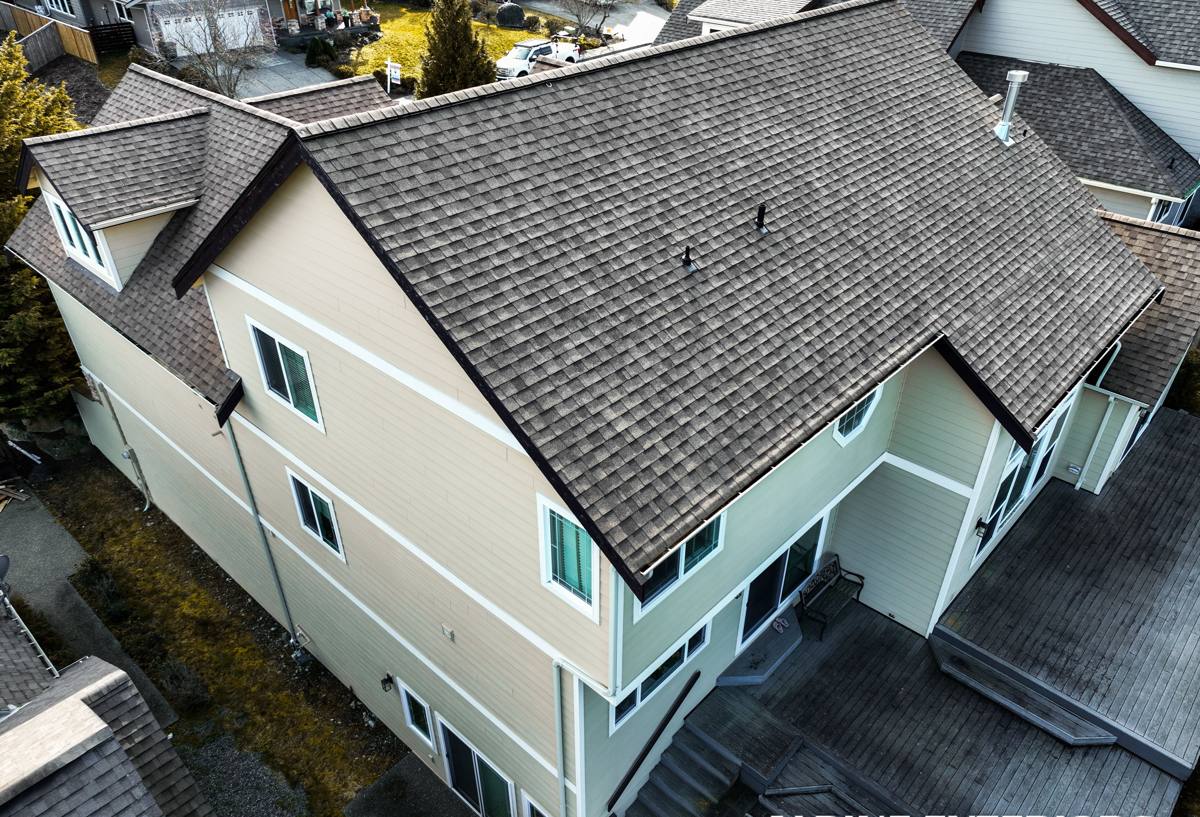
What Birch Bay Village's Climate Does to a Deck Over Time
Salt Air and Corroding Hardware
Being this close to the water means a steady dose of salt-laden air settles on everything outside, deck hardware included. Salt speeds up corrosion in exposed fasteners, joist hangers, post brackets, and railing connectors, and a corroding fastener loses holding strength well before it looks obviously bad from the surface. On a structure people walk, stand, and lean on, that's a real safety consideration, not just a cosmetic one — and it's usually the reason an older deck in this neighborhood needs full replacement rather than a simple board swap.
Driving Rain That Doesn't Fall Straight Down
Storms coming off the water push rain sideways, driving it up under railings, into ledger connections, and between deck boards that were never gapped correctly to begin with. A deck built decades ago, before drainage and flashing details were as well understood as they are now, often has a ledger board connection — where the deck ties into the house — that was never properly flashed. That single connection point is one of the most common places hidden moisture damage builds up on an aging Birch Bay Village deck.
A Moss Season That Runs Most of the Year
Mild temperatures and near-constant moisture give moss and mildew a long growing season here, and a horizontal deck surface is one of the first places it takes hold, since it holds water longer than a vertical wall and stays damp between rain events. Shaded decks, and the north-facing ones common on smaller, closely-built lots in this neighborhood, are usually the first to show it. Once moss gets a foothold in aging wood decking, it holds moisture against the surface and accelerates the rot underneath.
Signs Your Deck Needs Replacement, Not Just Repair
Not every aging deck needs to be torn out completely — sometimes a section of decking or a handful of fasteners is genuinely all that's wrong. But in this climate, certain signs point specifically to full replacement rather than a patch job, because they indicate the structure itself, not just the surface, has been compromised:
- Soft, spongy, or spring-feeling spots in the decking surface or framing when you walk across it
- Visible rot or discoloration at the ledger board where the deck attaches to the house
- Railing posts that wobble or have loosened from their connection points
- Rust staining running down from fasteners or hardware onto the decking below
- Gaps between boards that have closed up or warped unevenly, trapping water instead of shedding it
- Persistent moss or mildew that returns within weeks of cleaning, even on a well-washed surface
- A deck more than 20-25 years old that has never been fully rebuilt, only patched over time
- Any visible daylight or gap where framing members meet, suggesting movement or settling
Any one of these on its own might be repairable. Several of them together, especially involving the ledger board or main framing, usually means the deck has reached the point where replacement is the more honest recommendation than another round of patchwork.
What a Correct Deck Replacement Involves in This Neighborhood
A deck replacement in Birch Bay Village starts with tear-out, but what happens underneath the new decking surface is what actually determines how long the rebuild lasts. A correctly done replacement here includes:
- Full removal of the old decking, railing, and framing down to the ledger connection and posts, so nothing hidden gets built over
- Inspection of the house framing behind the old ledger board, since that's where hidden rot most often turns up once the old deck comes off
- Proper ledger board flashing tied into the house's existing weather barrier, correcting whatever the original build skipped
- Framing sized to current span and load requirements, not just matched to whatever was there before
- Stainless steel or coastal-grade corrosion-resistant fasteners and hardware throughout, given the sustained salt exposure this neighborhood sees
- Correct board gapping for drainage and material movement, so wind-driven rain can actually drain and dry rather than sit trapped
- Post and railing attachment sized for the actual wind exposure of the lot, which varies noticeably between more sheltered and more open sites in this neighborhood
- Grading and airflow underneath the deck so moisture doesn't sit against the new framing between storms
Skip any of that and the new deck can still look good on day one — the difference shows up a few winters later, in the same places the old deck failed.
Choosing Decking Material for a Replacement Here
Homeowners replacing a deck in Birch Bay Village are usually choosing between wood, capped composite, and cellular PVC, and the right call depends on budget, how much upkeep you're willing to take on, and how exposed the specific site is.
| Material | Handling Salt Air & Moisture | Moss Resistance | Ongoing Upkeep |
|---|---|---|---|
| Cellular PVC | Excellent — no wood fiber to absorb moisture | Strong, smooth non-porous surface | Occasional washing |
| Capped composite | Strong — cap layer resists moisture and staining | Good on most product lines | Occasional washing |
| Uncapped composite | Moderate — some moisture absorption at exposed fiber | Fair; more prone to buildup over time | Periodic cleaning |
| Cedar | Moderate — natural resistance, but needs sealing | Fair when sealed and maintained | Regular oiling or sealing |
| Pressure-treated wood | Weak against sustained salt exposure over time | Poor without regular treatment | Regular sealing or staining |
We'll walk through the honest trade-offs for your specific deck rather than pushing one material by default. A smaller, more sheltered deck further back from the water can sometimes justify wood if you're prepared to keep up with sealing. A more exposed deck, or one where you'd rather not think about annual maintenance, usually points toward capped composite or PVC.
What's Different About Replacing a Deck in Birch Bay Village Specifically
A few things come up more often on a replacement job in this neighborhood than they would on a newer build further inland. Many homes here were originally smaller seasonal cottages, later expanded or converted for year-round living, and their original decks were often built to match — modest in size, framed to whatever standard was common decades ago, and rarely designed with today's fastener and flashing practices in mind. Replacing a deck on one of these homes often turns up framing or ledger conditions behind the old deck that need correcting before the new one goes on, not just a straightforward swap of old boards for new.
Lot sizes and setbacks in this neighborhood also tend to be tighter than on newer construction elsewhere in Whatcom County, which affects how much room there is to work during tear-out and can influence deck footprint or stair placement on a replacement. And with the water close by, wind exposure varies meaningfully from one lot to the next depending on how sheltered the site is by neighboring homes or trees — a detail worth factoring into railing design and hardware selection rather than treating every replacement the same.
Removal, Permitting, and What to Expect
Tear-out on a full deck replacement generally takes a day or two depending on size and how the old structure was built, and it's the point where we get the clearest look at what's actually going on behind the old decking — ledger condition, post footing condition, and any framing that's been quietly deteriorating out of sight. We flag anything unexpected before moving forward rather than building over it.
Permitting in Birch Bay and the rest of Whatcom County generally follows standard setback, structural, and elevation requirements for deck construction, and we handle that as part of the job rather than leaving it for the homeowner to navigate. Depending on the scope, permitting can add some lead time before construction starts, which we build into the schedule upfront rather than treating as a surprise delay partway through.
Our Deck Replacement Process
- On-site assessment — we look at the existing deck's condition, ledger connection, framing, and how exposed the specific site is to wind and salt air
- Honest recommendation — full replacement, or in some cases a more limited repair, explained with the reasoning behind it
- Material and design conversation — decking material, railing style, and layout, matched to budget and how the space gets used
- Permitting — handled as part of the project, following Whatcom County requirements for the scope of work
- Tear-out — full removal of the old structure, with any hidden rot or framing issues flagged before rebuilding
- Framing and ledger correction — new framing sized to current standards, ledger board properly flashed into the house
- Decking, railing, and stairs — installed with corrosion-resistant fasteners and correct board spacing for drainage
- Final walkthrough — covering what the specific material you chose actually needs going forward
What Your New Deck Still Needs From You
Even a correctly built replacement in the right material needs some routine attention in this climate to reach its full lifespan. A short list worth keeping in mind:
- Rinse or wash the deck surface periodically to clear salt residue and organic buildup before it works into the surface or cap layer
- Keep gaps between boards clear of leaves and debris so water and airflow can move through the way the design intends
- Check railing posts and hardware once a year for early corrosion or loosening, especially heading into the wet season
- Trim back overhanging branches or plants that hold moisture against the deck or block sun and airflow across the surface
- Address any soft framing or standing water underneath right away — that's a structural issue, not a cosmetic one
Why It Matters That We Already Work Birch Bay Village
A crew unfamiliar with this specific neighborhood can still replace a deck competently, but they're often working out the site-specific variables for the first time on your project — corrosion-grade fastener needs from sustained salt exposure, wind loads tied to how sheltered or open a particular lot is, and the older framing conditions common behind decks on homes that started as seasonal cottages. Working this neighborhood regularly means we're not guessing at any of that. We've torn out enough aging decks here to know where the ledger connection is most likely to have failed, which framing shortcuts show up on older conversions, and which fastener grades are worth the extra cost rather than an upsell.
That familiarity also shows up in smaller judgment calls — how to orient a new railing for the wind a specific lot actually sees, or being straightforward with a homeowner about what a deck here realistically needs to last versus what's just an extra line item.
Get a Straight Answer About Your Deck
If your deck in Birch Bay Village is showing soft spots, loose railings, or hardware that's clearly seen better days, it's worth having someone take a real look before deciding between repair and replacement. We're happy to walk the deck with you and lay out the options plainly. Reach out below for a free, no-pressure estimate.