 Birch Bay Siding
 Deck Repair Built for Blaine's Salt Air and Wet Winters
A deck in Blaine or Birch Bay works harder than a deck almost anywhere else in Whatcom County. You're close enough to the water that salt-laden air settles into every joint and fastener, and the long stretch of grey, wet months from October through April keeps wood surfaces damp far longer than they'd stay in a drier inland town. Add in the moss and algae that thrive in that dampness, and a deck out here can look tired years before its structural life is actually up — or worse, it can look fine on the surface while the framing underneath is quietly failing.
We repair decks in Blaine and Birch Bay regularly, and the patterns are consistent: fastener corrosion, ledger board rot where the deck meets the house, slick moss buildup on walking surfaces, and soft spots where water has been sitting instead of draining. None of that is unusual for this stretch of coastline — it's just what happens to wood and metal exposed to salt air and driving rain year after year. The fix isn't complicated, but it does need to be done correctly, with the right materials and fasteners for a marine-influenced climate, not a generic inland repair.
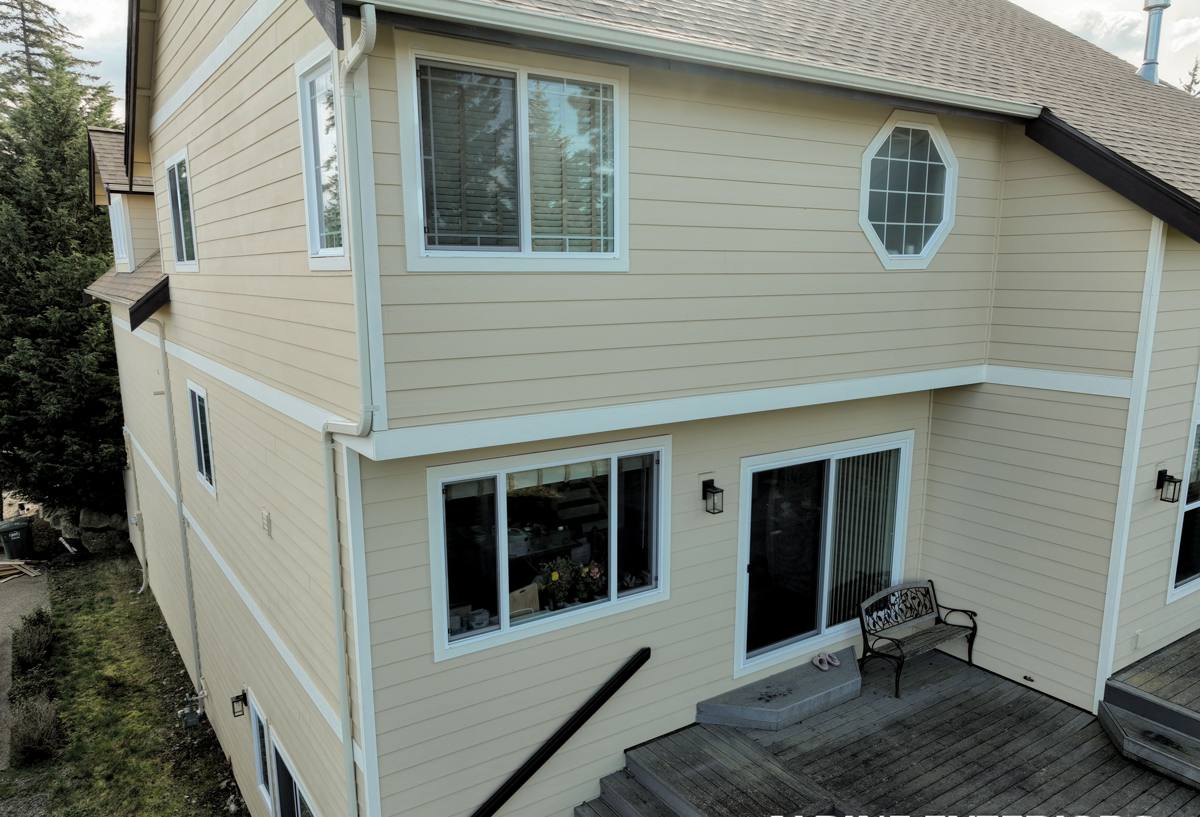
Why Coastal Conditions Age Decks Faster Here
Salt Air and Metal Fasteners
Salt in the air accelerates corrosion on anything metal — nails, screws, joist hangers, bolts. Once a fastener starts to rust, it loses grip strength and can stain the surrounding wood, which is often the first visible sign something underneath needs attention. Standard galvanized hardware that would last decades in a drier, inland part of Washington can start showing wear noticeably sooner in Blaine and Birch Bay.
Driving Rain and Rot
Wind-driven rain off the water doesn't just fall straight down — it gets pushed sideways into ledger boards, under railings, and into any gap where flashing has failed or was never installed correctly. Combined with our long wet season, that means moisture has months at a time to work into end grain and fastener holes before things dry out again.
Moss Season
Moss and algae aren't just cosmetic. A mossy deck surface holds moisture against the wood constantly and becomes genuinely slippery, which is a real fall hazard on stairs and near entry doors. Left long enough, that constant dampness under a moss layer softens the wood surface and can accelerate rot in boards that would otherwise still have years of life left.
Signs Your Deck Needs Repair, Not Just a Cleaning
Not every issue calls for a full rebuild, but it's worth knowing which signs mean "call someone" versus "just needs a wash."
- Boards that feel spongy or flex noticeably when you walk on them
- Rust streaks running down from screws, nails, or joist hangers
- Gaps or separation where the deck ledger meets the house siding
- Railings or posts that wiggle or feel loose when pushed
- Persistent moss or dark staining that comes right back after cleaning
- Visible daylight or soft wood where support posts meet footings
- Stair stringers that feel uneven or bounce underfoot
If you're only seeing surface graying or light moss with no softness underneath, that's usually a cleaning and refinishing job. Once you're into flex, rust, or gaps at structural connections, that's a repair issue, and it's worth having someone look before it gets worse.
What a Correct Deck Repair Job Actually Involves
Start With the Structure, Not the Surface
The decking boards you walk on are the easiest part to see and the easiest part to replace. The parts that actually hold the deck up — the ledger board, the joists, the posts, and the footings — are what determine whether a repair is a quick fix or something more involved. We check the ledger connection to the house first, since that's the single most common failure point on older decks in wet climates: if flashing was skipped or has failed, water gets behind the ledger and rots it from the inside, often before it's visible from underneath.
Fasteners and Hardware Matter More Here
In a coastal climate, we don't use whatever fastener happens to be cheapest at the yard. Hot-dip galvanized or stainless hardware rated for exterior and ground-contact use holds up dramatically better against salt air than standard electro-galvanized fasteners, which can start corroding within a few seasons this close to the water. The same goes for joist hangers and structural connectors — matching the hardware grade to the environment is one of the cheapest insurance policies in the whole job.
Drainage and Airflow
A lot of rot damage traces back to water that had nowhere to go. Part of a proper repair is making sure gaps between boards allow drainage, that the area under the deck has airflow instead of trapped moisture, and that any ledger flashing sheds water away from the house rather than behind it.
Repair or Replace? Honest Guidance
| Situation | Usually Repair | Usually Replace |
|---|---|---|
| A few soft or split boards | Yes — spot replace | No |
| Rusted fasteners, sound wood | Yes — re-fasten with coastal-grade hardware | No |
| Rot at ledger board / house connection | Sometimes, if caught early | Often, if rot has spread |
| Multiple posts or joists soft or failing | No | Yes |
| Deck is over 20-25 years old with widespread wear | Case by case | Often more cost-effective long term |
| Structure sound, surface just worn or mossy | Yes — resurface or refinish | No |
We'll tell you honestly which category your deck falls into. Most of the time it's a repair, not a replacement — but if the framing itself is compromised in multiple places, patching individual boards forever isn't a good use of your money, and we'll say so.
Materials: What Holds Up in a Salt-Air, High-Rain Climate
| Material | Coastal Durability | Maintenance | Notes |
|---|---|---|---|
| Pressure-treated lumber | Good, if properly sealed and maintained | Needs re-sealing every 1-3 years | Most economical; performance depends on upkeep |
| Cedar | Naturally rot-resistant, but softer | Regular sealing recommended | Good appearance; more sensitive to moss and moisture without care |
| Composite decking | Very good; won't rot or splinter | Low — occasional cleaning | Higher upfront cost; framing underneath still needs proper materials |
| Stainless / hot-dip galvanized hardware | Best available corrosion resistance | Minimal | Worth the upgrade cost in a coastal zone like this |
Composite decking has become a common choice for repairs and resurfacing in this area precisely because it takes the moss-and-moisture equation out of the walking surface. That said, composite boards are only as good as what's underneath them — the framing, ledger, and fasteners still need to be sound and coastal-rated, or you've just put a nice surface on top of a problem that's still developing.
Our Repair Process
- On-site inspection. We check the ledger connection, framing, posts, footings, and decking surface, not just what's visible from the top.
- Honest assessment. We tell you what's cosmetic, what's structural, and what can wait versus what shouldn't.
- Clear scope and pricing. You know what's being repaired and why before work starts — no surprise add-ons mid-job.
- Repair with coastal-appropriate materials. Matching hardware and lumber grade to what actually holds up in Blaine and Birch Bay conditions.
- Drainage and flashing check. Making sure water is directed away from the house and the structure, not just patched over.
- Final walkthrough. We show you what was done and what to watch for going forward.
Why It Matters That We Already Work This Area
A deck repair crew that mostly works drier, inland jobs can still do competent carpentry — but they may not default to coastal-grade fasteners, may not think to check ledger flashing as carefully, and may underestimate how fast moss returns without proper drainage. Working regularly in Blaine and Birch Bay means we're not guessing at what this climate does to a deck over time; we're seeing it on a weekly basis, from the fastener corrosion pattern to how quickly a north-facing deck stays damp after a string of rainy days. That local pattern recognition is a real part of the job, and it's what separates a repair that lasts one season from one that lasts a decade.
Keeping a Blaine-Area Deck in Good Shape Between Repairs
- Sweep or blow off leaves and debris regularly — trapped organic matter holds moisture and feeds moss
- Clean moss and algae off walking surfaces before it builds up, especially on stairs
- Check fasteners and railings for looseness or rust once or twice a year
- Reseal wood decking on the manufacturer's recommended schedule, not just when it looks dry
- Make sure gutters and downspouts near the deck aren't dumping extra water onto it
- Keep the area underneath the deck clear so air can circulate and moisture can escape
None of this replaces a proper repair once damage has started, but it does stretch the time between repairs and helps you catch small issues — a loose board, a rust spot — before they turn into structural ones.
Get an Honest Look at Your Deck
If your deck in Blaine or Birch Bay is showing rust stains, soft spots, persistent moss, or just feels less solid than it used to, it's worth having someone take a real look before another wet season adds to the damage. We'll give you a straight answer on what's actually needed — repair, resurface, or replace — and a free, no-pressure estimate to go with it. The form below is the easiest way to get started.