 Birch Bay Siding
 Deck Building in Semiahmoo: Built for This Coastline, Not a Catalog Photo
Semiahmoo sits right where the Salish Sea meets Whatcom County's marine climate, and that combination is hard on outdoor structures in ways that inland decks never have to deal with. Salt-laden air off the water, long stretches of driving rain, and a moss season that can run most of the year all work against a deck that wasn't built with this specific environment in mind. A deck that would hold up fine in a drier, inland part of the state can start showing corrosion, soft spots, and slick green growth within a couple of seasons here if it was framed and fastened like it was going anywhere else.
We build and replace decks for homes in Semiahmoo and throughout the Birch Bay area, and every material call, fastener choice, and framing detail on this page reflects what actually holds up on this stretch of coast — not generic decking advice pulled from a national catalog.
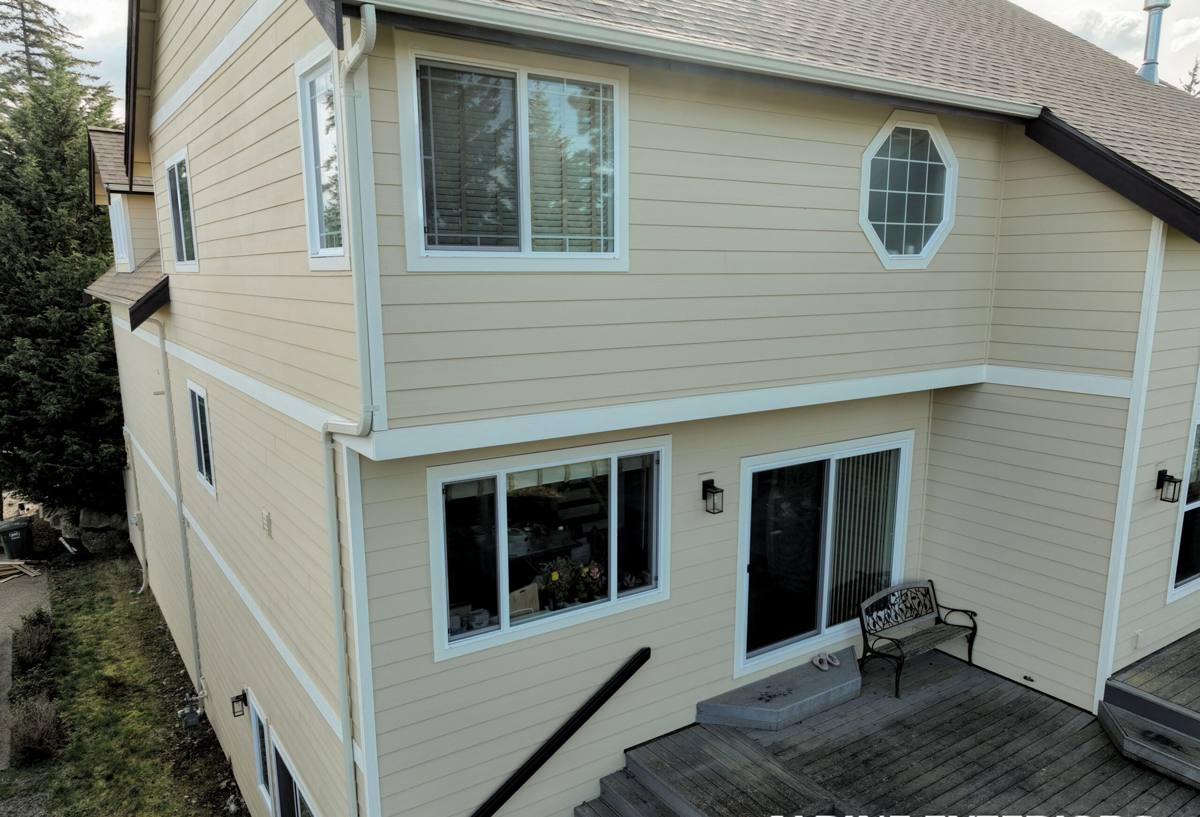
What Salt Air, Rain, and Moss Actually Do to a Deck
Salt Air and Metal Corrosion
Homes close to the water take on airborne salt that settles on every exposed metal surface — joist hangers, screws, bolts, and structural connectors included. Standard zinc-coated hardware that's fine forty miles inland can start rusting at the head within a few years near Semiahmoo's shoreline. Once a fastener starts corroding, it loses holding strength long before it looks obviously bad, which is why fastener grade matters more here than almost anywhere else in Whatcom County.
Constant Moisture and Rot
Driving rain off the water doesn't just fall straight down — it drives sideways into ledger connections, stair stringers, and any spot where two pieces of framing meet. Wood that stays damp for long stretches without a chance to dry out is where rot gets started, usually at the ledger board where the deck attaches to the house, at post bases, and at any horizontal surface where water can pool instead of shed.
Moss, Algae, and Slick Surfaces
The long wet season in this part of Washington keeps deck boards damp for days at a time, which is exactly what moss and algae need to take hold. Beyond looking bad, moss growth on a walking surface is a real slip hazard, and moss that's allowed to sit on wood decking holds moisture against the board and accelerates rot underneath it.
Choosing Decking Material for a Salt-Air, High-Moisture Climate
There's no single "best" decking material — every option is a trade-off between upfront cost, maintenance commitment, and how it actually behaves in this climate over time. Here's how the common choices compare for a deck near Semiahmoo:
| Material | Upfront Cost | Maintenance in This Climate | Typical Lifespan |
|---|---|---|---|
| Pressure-treated fir/hem-fir | Lowest | Needs re-sealing every 1-2 years to resist moss and moisture absorption | 10-15 years with upkeep |
| Western red cedar | Moderate | Naturally rot-resistant but still needs periodic cleaning and finish to fight moss and graying | 15-20 years with upkeep |
| Capped composite | Higher | Low — periodic washing to keep moss/algae from gripping the surface texture | 25-30 years |
| PVC/synthetic decking | Highest | Lowest — non-porous surface resists moisture and organic growth best of the group | 25-30+ years |
For homes closest to the water in Semiahmoo, we generally steer owners toward capped composite or PVC decking for the walking surface, simply because their non-porous surfaces don't give moss and algae the foothold that wood grain does, and they don't absorb the moisture that drives rot. That said, plenty of homeowners still want the look and feel of real wood, and a well-built cedar deck with a realistic maintenance plan is a legitimate choice — we'll give you the honest trade-offs either way rather than push one product line.
What a Correctly Built Deck Involves
The decking material gets all the attention, but the structure underneath it is what determines whether a deck lasts five years or thirty in this climate. A few details matter more here than in drier regions:
Ledger Board Flashing
The ledger board — where the deck bolts to the house — is the single most common failure point on decks in wet coastal climates. Proper flashing (and a gap or drainage plane behind the ledger) keeps driving rain from tracking behind the board and rotting the house's rim joist. This is not an optional detail; it's the difference between a deck that's still solid in twenty years and one with hidden structural rot behind a board that looks fine from the outside.
Fastener and Hardware Grade
Given the salt air here, we use corrosion-resistant fasteners and connectors rated for coastal exposure rather than the minimum-code hardware that's fine for inland builds. It costs a bit more upfront and saves you from hidden corrosion failures down the line.
Footings and Post Bases
Footings need to be sized and set to local frost depth and soil conditions, and post bases should sit up off the concrete rather than buried in it, so wood isn't sitting in standing water after every rain.
Joist Protection and Drainage
Wrapping joist tops with a protective tape before decking goes down keeps water from soaking into end grain and top faces — a small step that meaningfully extends framing life in a climate that stays wet for months at a stretch. Board spacing also matters: gaps that are too tight trap moisture and organic debris between boards, which is exactly what feeds moss.
Permits, Code, and Guardrail Safety
Most decks attached to a house, and many freestanding decks above a certain height, require a building permit in Whatcom County jurisdictions — the exact threshold and process depends on your specific property and whether you're in unincorporated county land or a local jurisdiction, so it's worth confirming before work starts rather than assuming. Guardrails, baluster spacing, and stair rail requirements are code-driven for a reason: a deck that's a few feet off grade needs a compliant guardrail, and stair rise/run consistency matters for everyday safety, not just inspection sign-off. We handle the permit process as part of the job so you're not chasing paperwork on your own.
Our Deck Building Process
- On-site assessment — we look at your home's exposure to wind and rain off the water, existing structure if it's a replacement, and how the deck will actually get used.
- Material and layout conversation — honest pros and cons for your specific site, not a one-size answer, covering budget, maintenance appetite, and how close you are to the shoreline.
- Design and permit prep — sizing footings, structural layout, and guardrail plan to code, and pulling the permit where required.
- Demolition and disposal (replacement projects) — removing the old structure and hauling away debris.
- Framing with climate-appropriate hardware — ledger flashing, corrosion-resistant fasteners, joist protection, and properly set footings before any decking goes down.
- Decking installation — correct board spacing for drainage, hidden or exposed fastening depending on the material, and clean stair and railing work.
- Final walkthrough — going over care and maintenance specific to your material choice before we consider the job done.
Maintaining a Deck in Semiahmoo's Climate
Every deck, regardless of material, needs some seasonal attention here — the climate simply doesn't allow a "build it and forget it" approach. A realistic maintenance routine:
- Sweep debris off the deck regularly through fall so wet leaves don't sit on the boards and feed moss
- Wash the surface at least once or twice a year with a deck-safe cleaner to break up algae and moss before it gets established
- Check and re-seal wood decking on the schedule the finish product calls for — skipping a year in this climate shows fast
- Inspect ledger flashing and post bases annually for any sign of water tracking or staining
- Check fastener heads for early rust or corrosion, especially on homes closest to the water
- Keep gutters and downspouts near the deck clear so runoff isn't dumping extra water onto or under the structure
- Trim back vegetation that's shading the deck and keeping it damp longer than it needs to be
Repair or Replace? Signs to Watch For
Not every aging deck needs a full rebuild, but some warning signs point to structural problems rather than cosmetic wear. Soft or spongy spots underfoot, visible staining or dark streaking at the ledger board, wobble in the railing posts, and fasteners that are visibly rusted through are all signs the structure — not just the surface — needs attention. A deck that's mostly sound but has a tired-looking surface may just need new decking boards over solid framing; a deck with compromised ledger flashing or rotted framing members is a safety issue and typically calls for a rebuild rather than a patch.
Why Hire a Crew That Already Works in Semiahmoo
A contractor who's already building and repairing decks around Birch Bay and Semiahmoo has already seen how salt air, driving rain, and moss season actually play out on real structures here — not in a showroom, and not in a climate zone that doesn't match yours. That means fewer surprises on material selection, fastener grade, and flashing details that matter specifically because of where your home sits. We're also familiar with the permitting expectations in this part of Whatcom County, which keeps the paperwork side of the project from slowing things down.
If you're planning a new deck or need to replace one that's showing its age, we're happy to take a look and give you a straightforward, no-pressure estimate — just fill out the form below.