 Birch Bay Siding
 Building Decks That Hold Up in Blaine's Coastal Climate
Blaine sits close enough to the water, and to the open exposure that runs up through Birch Bay and along Semiahmoo Bay, that a deck here takes a different kind of beating than one built twenty miles inland. Salt-laden air corrodes hardware faster than people expect, driving rain off Georgia Strait and Boundary Bay drives water sideways into ledger boards and railing posts, and the long gray stretch of fall through spring keeps every horizontal surface damp long enough for moss and algae to take hold. None of that means you can't build a deck that lasts decades in Blaine — it means the deck has to be designed and fastened with that specific environment in mind from the first footing.
We work Birch Bay, Blaine, and the rest of Whatcom County regularly, so this isn't theoretical. It's the difference between a deck that still looks and performs well in year twelve and one that's soft underfoot, rusted at the railing brackets, and green with moss by year five.
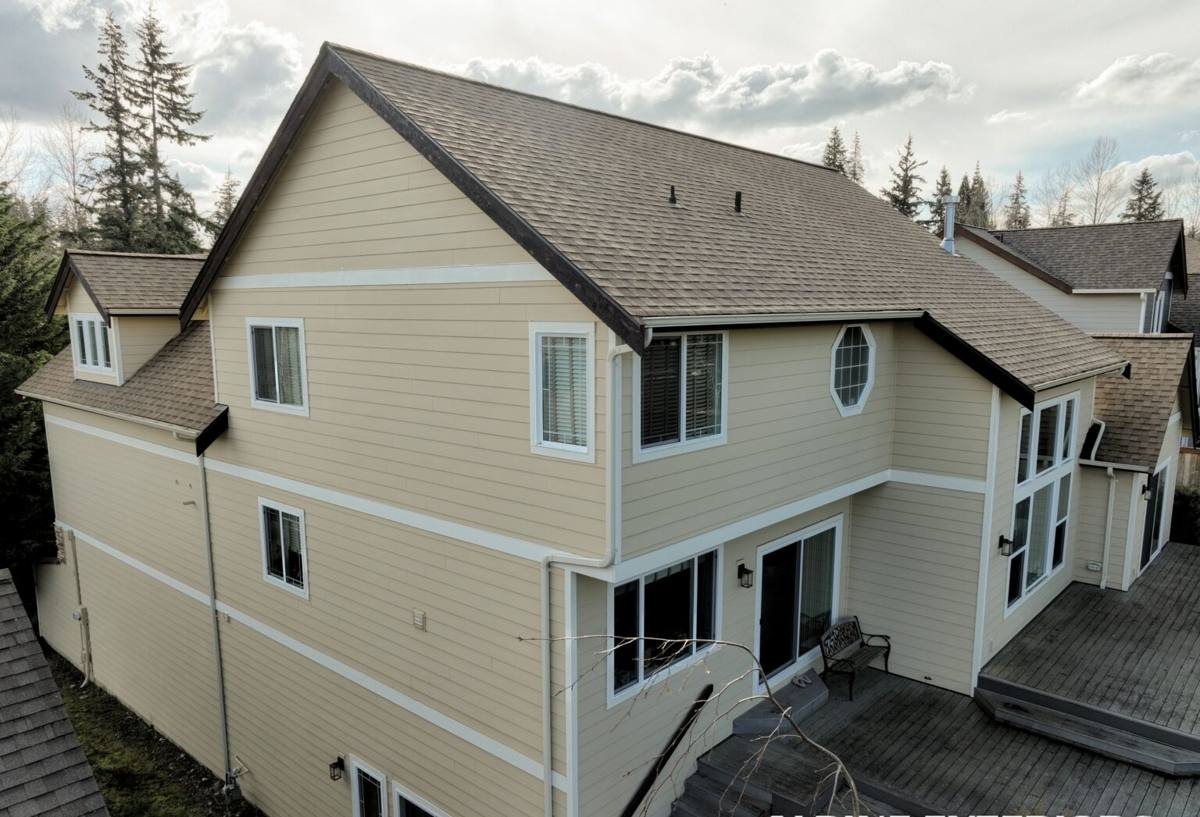
What Blaine Homes Actually Need From a Deck
Drainage First, Everything Else Second
The single biggest factor in deck longevity here isn't the decking material — it's what happens to water once it lands. Whatcom County gets long, low-intensity rain events rather than short violent downpours, and that's actually harder on a deck: water has more time to find every gap, fastener hole, and end-grain cut. A correctly built deck sheds water away from the house, keeps standing water off any horizontal ledger or beam surface, and gives moisture a way to dry out between storms instead of trapping it.
Salt Air Changes the Hardware Conversation
Properties closer to Birch Bay and the Blaine waterfront see measurably faster corrosion on standard galvanized fasteners and brackets than homes further inland. That doesn't mean every deck needs marine-grade stainless throughout, but it does mean the hardware spec should account for proximity to salt air rather than defaulting to whatever's cheapest at the yard.
Framing and Structural Decisions
The frame is the part of the deck nobody sees and everybody eventually pays for if it's done wrong. In this climate, we pay close attention to:
- Footing depth and bearing suited to Whatcom County's frost and soil conditions, not a generic minimum
- Joist hangers and structural connectors rated for the exposure — galvanized is the baseline, stainless is worth the upgrade near the water
- Pressure-treated framing lumber rated for ground contact where any member is close to grade or persistently damp
- Proper joist spacing and blocking for whatever decking material goes on top, since composite, cedar, and wood span differently
- Airflow underneath the deck so the frame can actually dry out between rain events instead of sitting wet all winter
Skipping any one of these doesn't show up on day one. It shows up as soft joists, rust streaks, or a deck that starts to feel spongy around year eight or nine — right when most homeowners assumed they had another decade left.
The Ledger Connection: Where Most Deck Failures Start
The ledger board — where the deck attaches to the house — is the single most common point of water damage on decks in this region, and driving rain makes it worse. Wind-driven rain off the bay doesn't just fall on a deck, it pushes sideways into the gap between the ledger and the siding if that connection isn't flashed correctly. We treat ledger flashing as non-negotiable: proper flashing tape or metal flashing integrated with the house's water-resistive barrier, a drainage gap where called for, and fasteners that won't create a path for water to track behind the siding. This is also the exact spot where a crew unfamiliar with local wind-driven rain patterns tends to under-build, because in a drier climate the same detail matters less.
Decking Material Comparison for This Climate
There's no single "best" decking material — there's a best fit for your budget, your maintenance tolerance, and how much moss and mildew exposure your site gets. Here's how the common options actually perform in Blaine and Birch Bay conditions:
| Material | Moisture Behavior | Moss/Algae Resistance | Maintenance | Typical Lifespan |
|---|---|---|---|---|
| Composite | Doesn't absorb water or rot, but surface can stay damp longer, encouraging moss | Needs periodic cleaning; some capped boards resist staining better than others | Low — occasional wash, no sealing or staining | 25–30+ years |
| Cedar | Naturally moisture-resistant wood, but end grain and fastener holes need sealing | Moderate — moss will grow if not cleaned and re-sealed periodically | Moderate to high — sealing/staining every 2–3 years | 15–20 years with upkeep |
| Pressure-treated wood | Treated against rot, but prone to cupping/checking with wet-dry cycling | Higher — rougher surface holds moisture and organic debris | High — regular cleaning, staining/sealing | 10–15 years with upkeep |
Our standard is to be honest about trade-offs rather than push one product. Composite costs more up front and saves on maintenance; cedar gives a natural look but demands more upkeep in a damp climate; pressure-treated is the budget option but needs the most attention to stay ahead of moss and moisture damage. Where a homeowner wants real wood, we'll say plainly that it means committing to a maintenance schedule — that's not a knock on the material, it's just what wood requires here.
Railings, Fasteners, and Long-Term Corrosion
Railing posts and their connection hardware take the most direct weather exposure on any deck, and they're the part most likely to show corrosion first in a salt-air environment. We spec fasteners and brackets to match the site's actual exposure rather than a one-size-fits-all approach, and we pay attention to how railing posts are attached at the base — that connection point collects water runoff and is where rust and rot typically show up first if it's not detailed correctly.
Moss and Surface Maintenance
Even a well-built deck needs some seasonal attention in Whatcom County. A quick maintenance checklist worth keeping:
- Sweep debris off the deck surface regularly through fall — trapped leaves hold moisture against boards
- Rinse or lightly scrub visible moss before it gets a foothold, especially on shaded or north-facing sections
- Check that gaps between boards haven't filled with debris, which blocks drainage
- Inspect railing post bases and ledger flashing once a year for rust streaks or soft wood
- Re-seal or re-stain wood decking on the schedule the product actually requires, not "whenever it looks bad"
Permitting and Local Considerations Around Blaine
Deck projects above a certain height or size typically require a permit through the applicable Whatcom County or City of Blaine building process, and there are setback rules that matter more on smaller in-town and waterfront-adjacent lots. Requirements can also differ depending on whether a property is closer to the shoreline, since shoreline-related regulations sometimes apply. We don't guess on this — we check what applies to your specific address and handle the permit process as part of the job rather than leaving it for the homeowner to sort out.
How We Build a Deck, Start to Finish
- Site visit and assessment — we look at drainage, sun/shade exposure, proximity to the water, and the condition of the house wall where the ledger will attach
- Design and material selection — sized to your budget and honest about maintenance trade-offs between composite, cedar, and treated wood
- Permitting — handled with the applicable local building department where required
- Framing and ledger installation — footings, structural connectors, and ledger flashing built to the exposure this site actually has
- Decking, railing, and hardware installation — fasteners and brackets matched to salt-air exposure
- Final walkthrough — we go over basic maintenance specific to your material choice before we consider the job done
Why a Crew That Already Works Blaine Matters
A deck built to a generic spec sheet can still fail early here — not because the crew was careless, but because they weren't accounting for what driving rain off the water and a long moss season actually do to a structure over time. Working Birch Bay and Blaine regularly means we're not guessing at flashing details, hardware grade, or drainage design — we're applying what we've already seen hold up (and what hasn't) on homes with the same wind exposure and the same damp winters as yours. That local familiarity is worth more than a brochure spec when the deck has to survive its first real Whatcom County winter.
If you're planning a new deck or replacing one that's showing its age, we're happy to take a look and give you a straightforward, no-pressure estimate — just fill out the form below.