 Birch Bay Siding
 Building Decks That Actually Hold Up in Bellingham's Marine Climate
A deck in Bellingham lives a harder life than the same deck built inland. The Whatcom County coastline brings a steady mix of salt-laden air, long stretches of driving rain, and a moss and algae season that can stretch from fall through spring. None of that is a reason to avoid building a deck — it just means the deck has to be built for these conditions from the framing up, not finished off with a coat of stain and hoped for the best.
This page covers what deck building actually requires for a Bellingham property: the materials that hold up, the details that keep water and rot out of the structure, and the process we follow on every project in this area. If you're weighing a new deck, a rebuild, or a replacement of an aging structure, this is the honest version of what goes into doing it right.
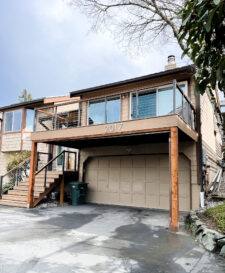
What Whatcom County Weather Actually Does to a Deck
Salt Air and Corrosion
Proximity to Puget Sound and the Strait of Georgia means airborne salt is a constant, low-grade factor on any exterior structure in this part of Whatcom County, Bellingham included. Salt accelerates corrosion in fasteners, joist hangers, and any exposed metal hardware. A deck built with the wrong grade of fastener can develop rust streaks and weakened connections years before the decking itself shows any wear.
Driving Rain and Water Intrusion
Rain here doesn't just fall straight down — wind-driven rain pushes moisture sideways, into ledger connections, under railing posts, and into any gap where flashing was skipped or done poorly. A deck ledger board attached to the house is the single most common failure point we see on older decks in this region, because water finds its way behind an unflashed or poorly flashed ledger and starts rotting the rim joist and sheathing behind it, often for years before it's visible.
Moss, Algae, and a Long Wet Season
Bellingham's damp, mild winters and shaded lots — common in this part of Birch Bay and Whatcom County — create ideal conditions for moss and algae growth on horizontal wood and composite surfaces. Beyond the cosmetic issue, a mossy deck surface is a genuine slip hazard, and moss holding moisture against decking accelerates wear on wood boards in particular.
Choosing the Right Decking Material for This Climate
There's no single "best" decking material for every homeowner — it comes down to budget, maintenance tolerance, and how the deck will be used. Here's how the common options actually perform in a coastal Whatcom County setting:
| Material | Moisture & Moss Resistance | Maintenance | Typical Lifespan |
|---|---|---|---|
| Pressure-treated wood | Good if sealed regularly; grain still absorbs moisture | Annual cleaning, periodic re-staining or sealing | 15-20 years with upkeep |
| Cedar | Naturally rot-resistant but still needs sealing in this climate | Regular cleaning and re-oiling to hold color and resist moss | 15-25 years with upkeep |
| Composite decking | Very good — resists rot and moisture absorption | Periodic washing to keep algae/moss from taking hold on the surface | 25-30+ years |
| PVC/capped decking | Excellent — fully moisture-resistant surface | Low — occasional rinse | 25-30+ years |
We don't push one material over another as a default. Wood costs less up front and has a natural look many homeowners want, but it demands real maintenance discipline in a climate like this — skip a year of sealing and you'll see it. Composite and PVC cost more initially but shift the long-term burden away from constant upkeep, which matters if the deck sees shade and damp exposure most of the year.
What a Correctly Built Deck Actually Involves
The decking surface is the part everyone sees, but it's the smallest factor in whether a deck lasts. The structure underneath and the connections at the house are what determine whether a deck is still solid in fifteen years or starting to fail in five. On every deck we build, that means:
- Ledger board flashing that directs water away from the house band joist, not into it — this is the detail most often missing on decks that fail early
- Joist tape or a moisture barrier on top of framing members to keep standing water out of the wood grain where fasteners penetrate
- Corrosion-resistant, code-rated hardware — hot-dip galvanized or stainless steel joist hangers and fasteners rated for ground contact and treated lumber, given the salt air this region sees
- Footings sized and set to local frost depth and soil conditions, not guessed at
- Proper spacing and fastening pattern for whatever decking material is chosen, since composite and wood have different expansion and fastening requirements
- Railing posts through-bolted to framing, not just lag-screwed to the rim joist
Skipping any one of these doesn't necessarily show up on day one. It shows up in year three or four as soft spots, rust bleed, or a railing that's gone loose — problems that are far more expensive to fix after the fact than to build correctly the first time.
Our Deck Building Process
1. On-Site Assessment
We look at the site itself — slope, drainage, sun and shade exposure, proximity to the house, and how the deck will actually be used — before talking materials. A deck that sits in permanent shade needs different material and cleaning recommendations than one that gets full afternoon sun.
2. Design and Material Selection
We walk through the material options honestly, including what each one will actually cost you in upkeep over ten years, not just the upfront number. Layout, railing style, and stair placement get worked out at this stage.
3. Permitting
Most new decks and many deck replacements in Whatcom County require a building permit, particularly once the deck reaches a certain height off grade or is attached to the house. We handle the permit process as part of the project so it's not something you have to navigate separately.
4. Framing and Structural Work
This is where the ledger flashing, joist hangers, footings, and framing all go in — the part of the job that determines the deck's real lifespan, done to code and to the moisture-management standard this climate requires.
5. Decking, Railing, and Finish Work
Decking is installed with the fastening method appropriate to the material, railings are set and secured, and stairs are built to code for rise, run, and guard height.
6. Final Walkthrough
We go over the finished deck with you, including what maintenance it will need and on what schedule, so there are no surprises a year in.
Railings, Stairs, and Code Considerations
Railings and stairs are where a lot of deck safety issues originate, and they're also where inspectors focus. Guard height, baluster spacing, and stair rise/run all have code minimums, and those requirements exist because they prevent real injuries — not because they're arbitrary. On a rebuild, we've seen older Bellingham-area decks with railing spacing or attachment methods that were acceptable when originally built but wouldn't pass inspection today. Bringing those up to current code during a rebuild is part of doing the job right, not an upsell.
Keeping a Deck in Good Shape Once It's Built
A well-built deck still needs some seasonal attention in this climate, particularly around moss and moisture. A simple annual routine goes a long way:
- Sweep or blow off leaves and debris regularly, especially in shaded corners where moisture collects
- Wash the deck surface at least once a year to remove algae and moss buildup before it takes hold
- Check railing posts and stair connections for looseness once a year
- For wood decking, plan on resealing or re-staining every 1-3 years depending on sun exposure
- Keep gutters and downspouts near the deck clear so runoff isn't dumping directly onto or under the structure
- Check under the deck periodically for standing water or signs of rot at the ledger connection
What Drives the Cost of a Deck Project
| Factor | Why It Matters |
|---|---|
| Decking material | Wood costs less upfront; composite and PVC cost more but reduce long-term maintenance |
| Deck size and height off grade | Larger decks and those requiring taller footings or stairs need more structural material and labor |
| Site access and slope | Difficult access or a sloped lot can add time for footings and material staging |
| Railing style | Cable, glass, and custom railing systems cost more than standard baluster railings |
| Attachment type | A ledger-attached deck versus a freestanding deck changes the flashing and structural work involved |
| Permit requirements | Permit fees and any required engineering vary by project scope and county requirements |
We'll walk through these factors specific to your property during the estimate, so you're getting a number based on your actual site rather than a generic average.
Why Hire a Crew That Already Works in Bellingham
A deck contractor who works this specific coastal stretch of Whatcom County already knows what a Bellingham lot tends to throw at a structure — the shade patterns, the drainage quirks, the salt exposure, the permit process with the county. That local familiarity means fewer surprises during the build and a deck that's specified correctly for this environment from the start, rather than built to a generic standard and left to prove itself against the weather over the following winters.
If you're ready to talk through a new deck, a rebuild, or repairs to an aging one, we're happy to come take a look and give you a straightforward, no-pressure estimate — just use the form below to get started.