 Birch Bay Siding
 Why Terrell Creek Homes Put Different Demands on Windows
Homes in the Terrell Creek area sit close enough to Birch Bay and the open water of the Strait of Georgia that the air itself is part of the building envelope's problem, not just the weather. Salt-laden air, wind-driven rain off the water, and a wet season that runs long by Whatcom County standards all work on windows in ways that inland homes never experience. A window that performs fine in Bellingham's east side can fail years early out here if it wasn't chosen and installed with this specific exposure in mind.
Custom windows aren't just about matching an odd-shaped opening or getting a particular grid pattern. In this location, "custom" also means selecting materials, flashing details, and sealing methods that match what this microclimate actually does to a house year after year. That's the lens we bring to every Terrell Creek project.
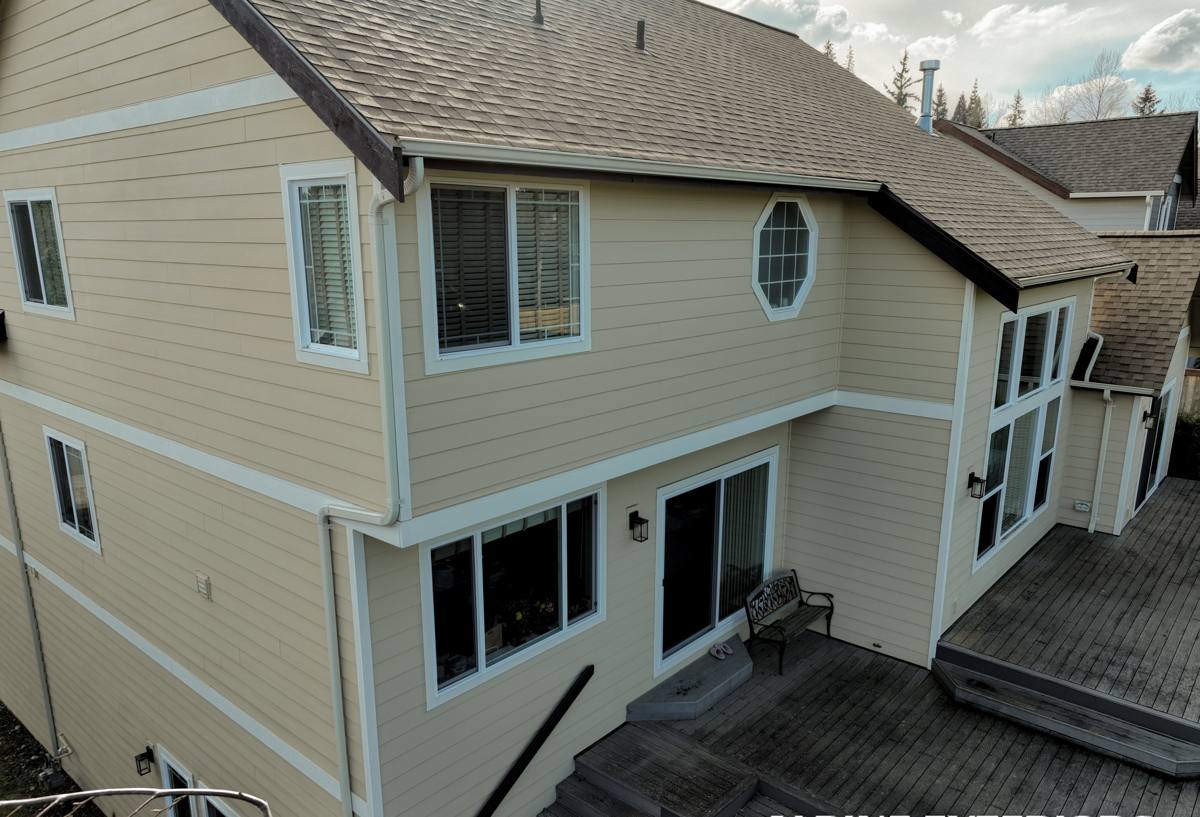
What Salt Air, Driving Rain, and Moss Actually Do to Windows
Salt Air and Corrosion
Airborne salt settles on glass, frames, and especially hardware. Over time it accelerates corrosion on screws, hinges, balance mechanisms, and any exposed metal fasteners. Cheaper hardware finishes pit and seize up years before they should. This is one of the most overlooked failure points in coastal window installs — the glass and frame can look fine while the hardware underneath is quietly failing.
Driving Rain and Water Intrusion
Rain near Birch Bay doesn't always fall straight down. Wind off the water pushes it sideways and up under sills, trim, and poorly lapped flashing. A window that's watertight in a calm rain can still leak during a wind-driven storm if the flashing sequence wasn't built to shed water uphill, not just downhill. Most window leaks we find in this area trace back to flashing and sealant details, not the window unit itself.
Moss and Prolonged Moisture Cycles
Whatcom County's long damp season keeps north- and shade-facing surfaces wet for extended stretches, which is exactly what moss and mildew need to take hold. Around windows, that means trim, sills, and any wood component stay wet longer than they would in a drier climate, accelerating rot if the original installation didn't account for it. Moss growth on nearby roofing and siding also sheds organic debris that collects in window tracks and weep holes, clogging drainage paths that are supposed to let water escape.
What a Correct Custom Window Installation Involves
Frame Material Selection
Not every frame material holds up the same way this close to the water. We steer Terrell Creek homeowners toward materials and finishes with proven salt-air resistance and low maintenance demands, and we're upfront when a popular option isn't a great fit for this specific exposure — not because the product is bad, but because the trade-offs (finish degradation, hardware corrosion, maintenance frequency) don't make sense for a marine-influenced site.
Flashing and Water Management
This is where most window failures actually start. A correct install builds a shingle-style water path — house wrap, flashing tape, sill pan, and trim — layered so that any water reaching the opening drains back out and away from the framing, never behind it. For homes exposed to wind-driven rain, we pay particular attention to sill pans and head flashing, since those are the two spots most likely to fail under sideways rain.
Glass, Glazing, and Seals
Insulated glass units near the coast benefit from durable spacer systems and glazing seals rated for sustained moisture exposure. We also consider glass coatings for glare off open water and for energy performance, since coastal homes often see more temperature swing between a cold wind off the bay and a sun-warmed afternoon than homeowners expect.
Comparing Window Frame Materials for This Climate
There's no single "best" material for every home — it depends on your home's exposure, your maintenance appetite, and your budget. Here's how the common options generally hold up in a salt-air, high-rain environment like Terrell Creek:
| Material | Salt Air / Moisture Resistance | Maintenance Needs | Typical Lifespan |
|---|---|---|---|
| Vinyl | Good — won't corrode or rot | Low | 20–30 years |
| Fiberglass | Very good — dimensionally stable, resists salt exposure | Low | 30–40 years |
| Wood-clad | Fair — cladding protects exterior, but cut edges and seals need monitoring | Moderate | 20–30 years with upkeep |
| Aluminum | Fair — durable but prone to corrosion without marine-grade coatings | Moderate | 20–30 years |
For most Terrell Creek homes, we lean toward vinyl or fiberglass frames precisely because they remove corrosion and rot from the list of things you have to worry about. Where a homeowner wants a wood interior look, we can often deliver that with a clad exterior, keeping the vulnerable material away from the weather side entirely.
Our Process for a Terrell Creek Window Project
Every custom window job follows the same core sequence, but the details get adjusted for this specific site and exposure:
- On-site assessment. We look at wall orientation, prevailing wind and rain exposure, existing rot or moss staining, and how the current windows are draining (or failing to).
- Measurement and product selection. Custom openings get measured precisely, and frame material, glass package, and hardware are chosen with this climate in mind — not a one-size-fits-all default.
- Removal and opening prep. Old units come out carefully so we can inspect the sheathing and framing underneath for hidden moisture damage before anything new goes in.
- Flashing and sill pan installation. This is the step that determines whether the window stays dry for the next 20 years, and it's where we spend the most careful attention.
- Window installation and sealing. The unit is set, shimmed, fastened, and sealed with materials rated for sustained coastal moisture exposure.
- Interior and exterior finish. Trim, caulking, and touch-up work are completed to match the home.
- Final walkthrough. We check operation, seals, and drainage before calling the job done.
Signs Your Current Windows Are Already Failing
Because coastal damage is often gradual, homeowners frequently don't notice a problem until it's significant. Watch for these signs, especially on walls facing the water or prevailing wind:
- Fogging or moisture between panes of double- or triple-glazed windows
- Soft, discolored, or bubbling trim or sill wood
- Difficulty opening, closing, or locking that wasn't there before
- Visible corrosion or white residue on hardware or frames
- Moss or dark staining building up on sills or nearby trim
- Drafts or a noticeable temperature difference near the window on windy days
- Peeling or bubbling paint on interior trim near the window frame
Any one of these on its own might be minor. Several together, especially on a wind-exposed wall, usually means moisture has been getting past the seals for a while.
Maintenance That Actually Matters in This Climate
A well-installed custom window in a coastal climate still needs some upkeep — just not as much as people assume, and not the same upkeep an inland home needs. Rinsing accumulated salt residue off frames and glass periodically helps protect finishes and hardware. Keeping weep holes and tracks clear of moss debris and organic buildup preserves the drainage path the window depends on. Checking exterior caulking annually, particularly after the wet season, catches small gaps before they become active leaks. None of this is difficult, but skipping it is exactly how a good window installation turns into a slow, expensive problem.
Why Local Installation Experience Matters Here
Window installation instructions are written for average conditions. Terrell Creek isn't average — it's a specific combination of salt exposure, wind-driven rain direction, and a moss season that runs longer than most manufacturer specs assume. A crew that's worked this area repeatedly knows which walls take the worst weather, which flashing details actually hold up here, and which shortcuts that pass fine in a drier climate will cause callbacks on a home exposed to Birch Bay's conditions. That local pattern recognition is hard to replace with a generic install checklist, no matter how good the window itself is.
Cost Factors Worth Understanding Before You Start
Custom window pricing varies a lot based on a handful of factors that are worth discussing upfront rather than guessing at from a brochure price:
| Factor | Why It Affects Cost |
|---|---|
| Frame material | Fiberglass generally costs more upfront than vinyl but needs less long-term upkeep |
| Opening condition | Hidden rot or framing damage found during removal adds repair scope |
| Glass package | Coastal glare control and higher-performance glazing add cost but improve comfort |
| Number and size of openings | Larger or unusually shaped custom openings take more fabrication time |
| Exposure of the wall | Wind- and rain-exposed walls justify more robust flashing detail |
We'd rather walk a homeowner through these factors honestly than quote a number that doesn't hold up once we're inside the wall. A broad range is easy to give up front; an accurate one comes after we've actually looked at your openings.
If your Terrell Creek home has windows that are drafty, fogging, hard to operate, or just due for an upgrade, we're happy to take a look and walk you through your options with no pressure and no obligation. Use the form below to request a free estimate, and we'll get back to you to schedule a time that works.