 Birch Bay Siding
 Building Decks for Marietta's Waterfront Conditions
Marietta sits low and close to the water on the Whatcom County side of Birch Bay, and that location shapes everything about how a deck should be built here. Homes in this area take on salt-laden air blowing off the water, long stretches of driving rain through the fall and winter, and a moss season that can run for months if a deck doesn't get enough sun or airflow. A deck built with inland assumptions — standard fasteners, minimal flashing, decking chosen for looks alone — tends to show its age fast in a spot like this. A deck built for Marietta's actual conditions holds up the way it should.
This page covers what we've learned building and repairing decks in this specific stretch of Whatcom County: what the climate does to a deck over time, what a correctly built deck needs from the ground up, and how we handle the process from first conversation to final walkthrough.
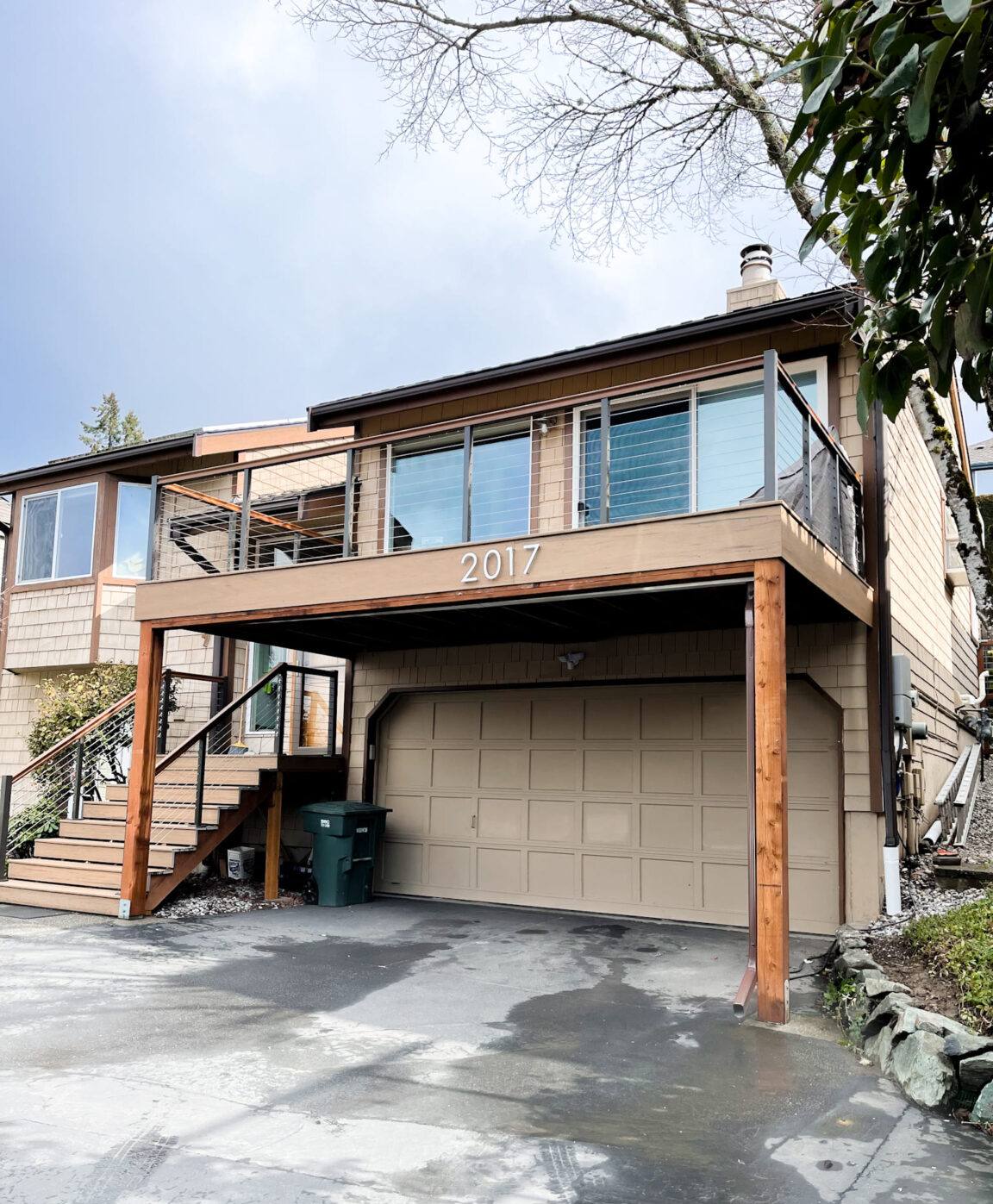
What Salt Air, Rain, and Moss Actually Do to a Deck
Each of Marietta's climate stresses attacks a deck differently, and a deck built to resist one doesn't automatically resist the others.
Salt Air and Corrosion
Airborne salt from the bay settles on every exposed metal surface — screws, joist hangers, post bases, railing hardware. Over years, standard galvanized fasteners can corrode from the inside of a connection outward, which is the kind of failure you don't see until a railing post wobbles or a board pulls loose. This is the single biggest difference between building a deck here and building one further inland.
Driving Rain and Water Intrusion
Rain here doesn't just fall straight down — wind off the water drives it sideways and up under boards, into ledger connections, and behind railing posts. Any gap in flashing or any spot where water can sit instead of drain becomes a rot point. Ledger boards (where a deck attaches to the house) are the most common failure point we find on older decks in this area, because that's exactly where wind-driven rain gets pushed against the house wall.
Moss and Constant Dampness
Shaded, low-airflow decks near the water can stay damp for days after a storm, and moss takes hold fast in that environment. Beyond looking bad, moss holds moisture against the decking surface, which accelerates rot in wood and can stain composite materials if it's left to build up season after season.
What a Correctly Built Deck Needs Here
None of this means a deck in Marietta has to look different from a deck anywhere else — it means certain details underneath and around it can't be skipped.
- Stainless or coated fasteners rated for coastal/marine exposure, not standard exterior-grade hardware
- Full ledger flashing with a proper water-resistive barrier tie-in, not just a bead of caulk
- Joist tape or cap protection on framing to keep water out of end grain and fastener holes
- Positive drainage slope away from the house on the decking surface
- Adequate gapping and airflow under and between boards so the deck can actually dry out between storms
- Post bases set above grade so posts aren't sitting in standing water after heavy rain
A deck missing any one of these can still look fine on installation day. The problems show up two, five, or ten years later — which is exactly why we build to this standard from the start rather than treating it as an upgrade.
Choosing a Decking Material for This Location
There's no single "right" material for every home, but in a salt-air, high-rain environment some trade-offs matter more than they would inland.
| Material | Upfront Cost | Behavior Near Salt Air & Rain | Maintenance | Typical Lifespan |
|---|---|---|---|---|
| Pressure-treated wood | Lowest | Prone to graying, splintering, and moss growth without upkeep; fasteners must be corrosion-rated | Annual cleaning and periodic sealing/staining | 10–15 years |
| Cedar | Moderate | Naturally rot-resistant but still needs sealing to resist moisture and salt exposure | Sealing every 1–2 years, regular cleaning | 15–20 years with upkeep |
| Capped composite | Higher | Resists moisture absorption and moss staining well; shell protects core from salt exposure | Occasional washing, no sealing/staining | 25–30+ years |
| PVC/capstock decking | Highest | Fully synthetic, no wood fiber to absorb moisture; best resistance to moss and salt staining | Occasional washing only | 25–30+ years |
We're honest with clients that composite and PVC cost more upfront but remove most of the recurring maintenance that wood demands in this climate. If budget points toward wood, that's a legitimate choice — it just means the framing details and a realistic sealing schedule matter even more.
Footings, Framing, and Permitting in Whatcom County
Whatcom County requires a permit for most new deck construction, and footing depth is tied to local frost and soil requirements. Because Marietta sits close to the water table in places, we pay close attention to drainage around footings during excavation — a footing that sits in wet soil for months at a time behaves differently over the years than one with proper drainage around it. We handle the permit process as part of the job so homeowners aren't stuck figuring out county requirements on their own.
Framing lumber, hardware, and connection details all get specified with this environment in mind rather than defaulting to whatever meets minimum code. Meeting code is the floor, not the target.
Our Process for a Custom Deck in Marietta
- On-site visit and design conversation — we look at sun exposure, wind direction relative to the water, drainage on the lot, and how the deck will connect to the house before talking materials.
- Material and layout selection — honest trade-offs on wood versus composite or PVC based on budget, maintenance appetite, and how exposed the deck will be.
- Permit handling — we prepare and submit what Whatcom County requires so the project starts on solid legal footing.
- Framing and flashing — ledger attachment, joist protection, and drainage details built in before a single deck board goes down.
- Decking, railing, and finish work — installed to the fastener and gapping standards this climate requires.
- Final walkthrough — we go over care and any maintenance schedule specific to the material chosen.
Keeping Moss and Salt From Winning Long-Term
A well-built deck still needs some seasonal attention in a place like Marietta. This isn't about anxiety over the weather — it's a short list that keeps a deck looking and performing the way it should for decades instead of years.
- Sweep debris off the deck surface regularly, especially in shaded corners where moss gets a foothold first
- Rinse or wash the deck a couple of times a year to clear salt film and organic buildup
- Check railing posts and fastener heads annually for early signs of corrosion or loosening
- Keep gutters and downspouts near the deck clear so runoff isn't dumping extra water onto or under it
- Reseal wood decking on schedule rather than waiting until it visibly grays or checks
- Trim back overhanging branches that keep sections of the deck shaded and damp
What Affects the Cost of a Custom Deck Here
| Cost Factor | Why It Matters in Marietta |
|---|---|
| Decking material | Wood costs less upfront; composite/PVC cost more but reduce long-term maintenance against salt and moisture |
| Footing and framing exposure | Sites closer to the water table or with poor drainage may need extra footing work |
| Fastener and hardware grade | Marine-rated stainless hardware costs more than standard exterior hardware but avoids early corrosion |
| Deck size and height | Larger or elevated decks require more framing, railing, and structural support |
| Site access | Waterfront and hillside lots can add labor time for material staging and equipment access |
Why It Matters to Hire a Crew That Already Works in Marietta
A deck contractor who mostly builds inland can still do competent framing, but they may not default to marine-rated fasteners, may under-flash a ledger board that's never had to resist wind-driven bay rain, or may not think about moss and drainage until a homeowner asks. A crew that already works this stretch of Whatcom County builds those decisions in automatically, because we've seen what skipping them costs a homeowner five years down the road. That familiarity with the local climate — not just deck-building in general — is what separates a deck that needs early repairs from one that doesn't.
If you're planning a custom deck in Marietta or elsewhere around Birch Bay, we're glad to walk the site with you, talk through material and design options honestly, and put together a clear, no-pressure estimate using the form below.