 Birch Bay Siding
 Building a Deck on Lummi Island Means Building for the Water
A deck on Lummi Island lives a different life than one built twenty miles inland. It sits closer to salt water, catches more wind off the Salish Sea, and stays wet longer through the fall and winter than most people expect. Our crew is based in Birch Bay, and between the two areas we see the same pattern year after year: decks that were built like they were going in a dry suburb start showing rust streaks, soft spots, and thick moss within a few seasons. Decks built with the local climate in mind still look and perform the way they should a decade later. The difference isn't luck — it's a handful of decisions made before the first board goes down.
This page is about those decisions, specifically for custom deck projects on Lummi Island. We're not going to give you a generic rundown of deck styles. We're going to walk through what actually changes when the job site is on an island in Whatcom County, surrounded by salt water, with a long wet season and a ferry schedule to work around.
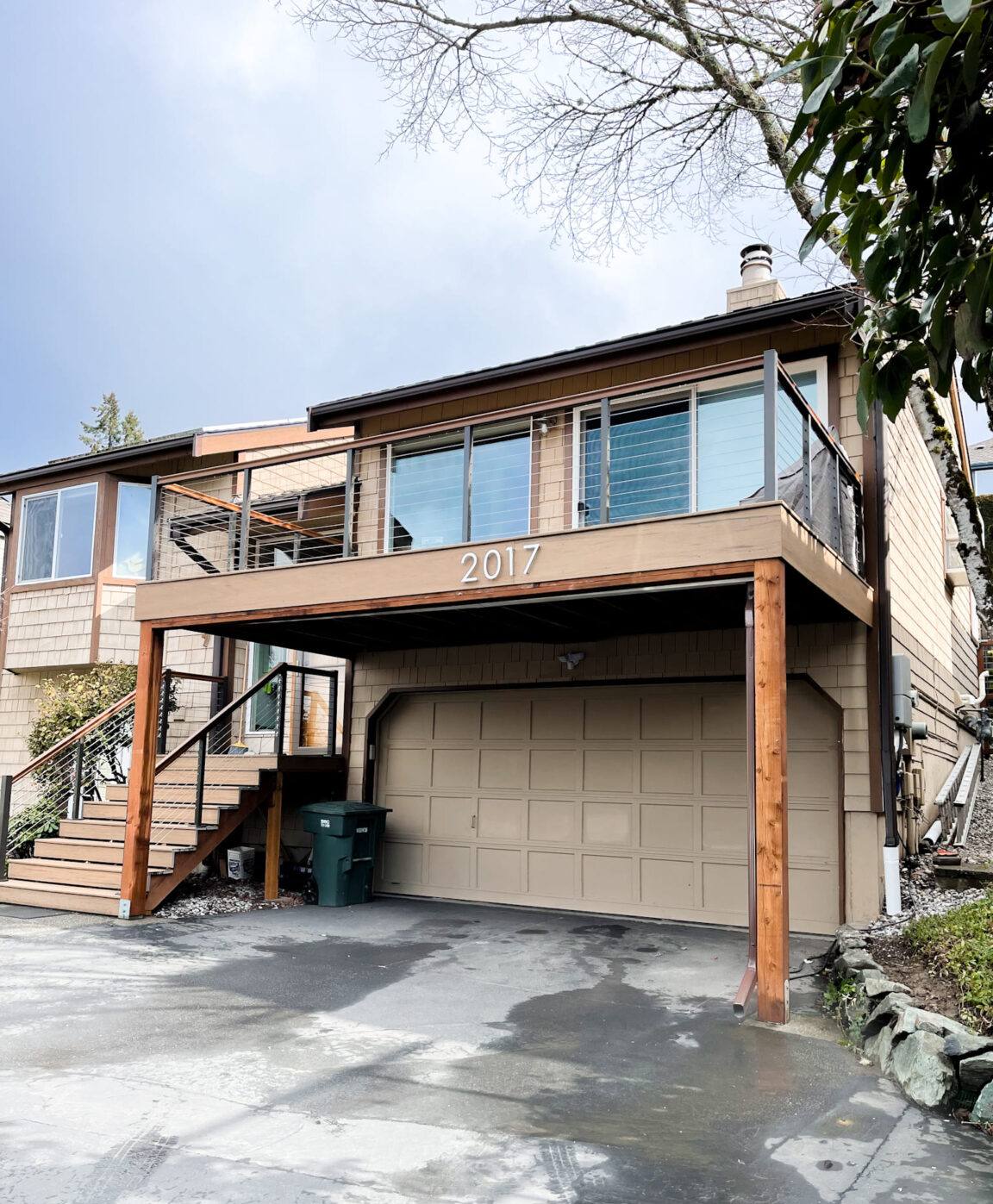
Salt Air, Driving Rain, and a Moss Season That Doesn't Really End
Three climate factors drive almost every material and construction decision we make on an island deck:
- Salt air: Airborne salt accelerates corrosion on any metal that isn't rated for it — fasteners, hardware, railing brackets, even hinges. It also speeds up the breakdown of cheaper coatings and finishes.
- Driving rain and wind-driven moisture: Storms coming off the water don't just fall straight down — they push moisture sideways into ledger connections, under railings, and into any gap that wasn't flashed correctly.
- Moss and algae growth: Shaded, north-facing, and low-airflow areas of a deck stay damp for months at a time. Moss isn't just cosmetic — it holds moisture against the surface and, on wood, encourages rot underneath it.
None of these are dealbreakers. They just mean the deck has to be designed and built with that reality in mind, rather than treated like an afterthought once the framing is done.
Getting Materials and a Crew to an Island Job Site
Why the Ferry Schedule Actually Matters
Lummi Island is only reachable by a short ferry crossing, and that changes how a deck project has to be planned. Material deliveries, dump runs, and crew arrival all have to work around ferry timing rather than a simple drive-over-anytime schedule. A crew that hasn't worked the island before tends to underestimate this — showing up late, missing a load, or burning a half-day waiting for the next crossing.
What a Local Crew Does Differently
Because we already work Lummi Island regularly out of our Birch Bay base, we build the ferry schedule into the project timeline from the start — staging materials in fewer, larger loads, coordinating crew trips so nobody's stuck waiting on a crossing, and building in a buffer for the occasional weather-related sailing delay. It's a small logistical detail, but it's the kind of thing that either keeps a project on schedule or quietly adds days and cost.
Choosing Decking That Won't Fight the Climate
There's no single "best" decking material for every home — it depends on your budget, how much upkeep you want to take on, and how exposed the deck is to weather. Here's how the common options actually hold up in this climate:
| Material | Salt Air / Moisture Resistance | Moss Resistance | Typical Maintenance | Relative Cost |
|---|---|---|---|---|
| Pressure-treated pine | Fair — needs sealing to perform | Low — porous surface holds moss well | Annual cleaning, periodic re-sealing/staining | Lowest |
| Cedar | Good natural resistance to rot | Moderate — still needs cleaning in shaded areas | Regular cleaning, occasional oil/stain | Moderate |
| Capped composite | Very good — won't absorb moisture | Moderate to good, depending on surface texture | Periodic washing, no sealing/staining | Higher |
| PVC decking | Excellent — fully moisture-sealed | Good, especially with textured/embossed finishes | Occasional washing | Highest |
We install all of these depending on what a homeowner wants, but for shaded or heavily wind-exposed lots on the island, we generally steer clients away from bare pressure-treated boards left unsealed. It's not that the material is bad — it's that in this specific climate, an unsealed surface gives moss and moisture more of a foothold than most owners want to keep up with. That's a maintenance conversation we have honestly, up front, rather than after the fact.
What's Underneath Matters More Than What's On Top
Fasteners and Hardware
This is where a lot of decks quietly fail near salt water. Standard coated fasteners can start corroding within a couple of seasons this close to the water. We use stainless or marine-rated fasteners and hardware on our island builds — joist hangers, structural screws, and railing brackets included — because replacing a handful of rusted screws is easy, but replacing a joist hanger that's failed is not.
Ledger Attachment and Flashing
Where a deck attaches to the house, correct flashing is what keeps wind-driven rain from working its way behind the siding and into the wall framing. On a lot of older or improperly built decks, this is the single most common point of hidden water damage. We flash every ledger connection properly, and on some waterfront or bluff-edge homes, we'll recommend a freestanding deck — one that doesn't attach to the house at all — specifically to avoid creating a moisture path into the structure.
Framing
Pressure-treated framing lumber is standard, but spacing, blocking, and airflow underneath the deck all affect how quickly that framing dries out after a storm. A tightly built deck with poor underside ventilation traps moisture against the joists longer than one built with drainage and airflow in mind.
Site Conditions on Bluffs, Slopes, and Waterfront Lots
Island lots often come with terrain that a standard suburban deck design doesn't account for — sloped yards, bluff-edge setbacks, and more direct wind exposure than a sheltered inland lot. A few things we look at on every site visit:
- Footing depth relative to local frost and soil conditions, not just a standard minimum
- Wind exposure and whether railing and guard construction needs to be reinforced beyond code minimums for an especially exposed site
- Drainage around footings so water isn't channeled toward the foundation or down a slope in a way that causes erosion over time
- Whether a ledger-attached or freestanding design is the better fit for the specific structure and lot
None of this is exotic engineering — it's paying attention to the actual site instead of building the same deck we'd build on a flat, sheltered inland lot.
Permitting on a Shoreline or Island Lot
Deck projects in Whatcom County require permitting through the county, and waterfront and island lots can carry additional shoreline-related review depending on proximity to the water and the specifics of the property. We handle the permit application and work directly with the county so homeowners aren't the ones trying to figure out which rules apply to their lot. If a project needs shoreline review, we flag that early in the design phase rather than after plans are drawn up, so it doesn't become a surprise delay.
Our Process for a Lummi Island Deck Project
- Site visit: We look at the lot, existing structure, sun/shade exposure, wind exposure, and drainage before talking materials.
- Design and material selection: We walk through decking, framing, and hardware options honestly, including maintenance trade-offs for this climate.
- Permitting: We handle the county permit application, including any shoreline-related review the lot requires.
- Scheduling around the ferry: Material deliveries and crew days are planned around ferry crossings to avoid delays.
- Construction: Framing, flashing, and fastening are done to the standard we use on every island job — corrosion-resistant hardware, proper ledger flashing or freestanding design, and attention to drainage.
- Final walkthrough: We go over the finished deck with the homeowner, including basic maintenance guidance specific to their site's sun and shade exposure.
Keeping Moss and Salt From Winning
A well-built deck still needs some seasonal attention in this climate. Here's the basic maintenance checklist we give island homeowners:
- Sweep debris off the deck regularly, especially in fall — trapped leaves hold moisture against the surface
- Clean shaded and north-facing sections more often than sun-exposed areas, since that's where moss establishes first
- Check railing hardware and fasteners periodically for early signs of corrosion, especially near the water
- Re-seal or re-stain wood decking on the schedule recommended for that specific product, not just "when it looks faded"
- Keep gutters and downspouts clear so runoff isn't being dumped directly onto or near the deck structure
- Clear vegetation that's shading the deck and keeping it damp longer than it needs to be
Why Hiring a Crew That Already Works Lummi Island Matters
Anyone can build a deck. Building one that's still solid in ten years, on a lot exposed to salt air and driving rain, with materials staged around a ferry schedule and hardware chosen for a coastal environment — that comes from having already done it. Our crew works both Birch Bay and Lummi Island regularly, so the logistics, the material decisions, and the county permitting process aren't things we're learning on your job. That familiarity is what keeps a project on schedule and keeps the finished deck from becoming a maintenance headache a few years down the road.
If you're planning a custom deck on Lummi Island, we're happy to come take a look at your site and talk through what makes sense for your specific lot, exposure, and budget. There's no pressure and no obligation — just use the form below to request a free estimate.