 Birch Bay Siding
 Building Decks for the California Creek Climate
California Creek sits close enough to the water that salt air, wind-driven rain, and a long stretch of wet months are just part of owning a home here. A deck built the same way you'd build one inland won't hold up the same way. Fasteners corrode faster near saltwater exposure, framing that doesn't drain properly stays damp longer, and any north-facing or shaded area of decking will grow moss well before it would in a drier part of the county. None of this means you can't have a deck that lasts decades — it means the material choices, the framing details, and the maintenance plan all need to account for where you actually live.
We build and repair decks throughout the Birch Bay area, and California Creek's mix of waterfront and near-waterfront lots comes with its own pattern of problems: ledger boards that were never flashed correctly, joists that trap moisture against the siding, and decking surfaces that turn slick with algae by the time the rain settles in for the season. A correctly built deck out here starts with understanding that pattern, not just following a generic framing plan.
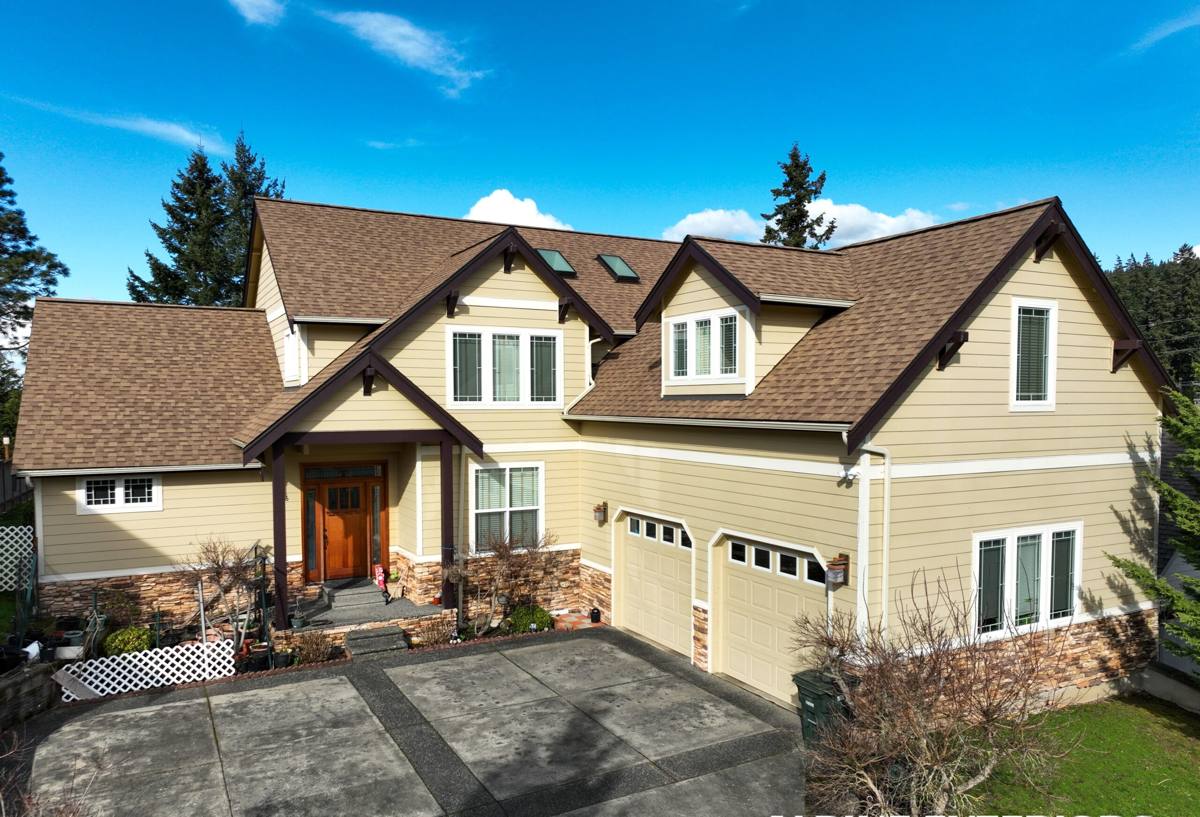
What Local Homes Actually Need From a Deck
Most of the decks we see fail — or start looking bad — for the same handful of reasons, and almost all of them trace back to moisture management rather than the decking material itself.
Drainage comes before appearance
A deck that sheds water fast is a deck that resists moss and rot. That means proper board spacing, a slight pitch away from the house where the structure allows for it, and joist framing that doesn't create flat spots where water and debris can sit. Decorative choices matter far less here than getting water off the surface and out of the frame quickly.
Fastener and hardware corrosion
Salt-laden air accelerates corrosion on standard fasteners, brackets, and joist hangers. Hardware rated for coastal or wet-use environments costs more up front but avoids the rust streaking and structural weakening that shows up within a few years when standard fasteners are used near the water.
Shade and moss pressure
Decks tucked under trees or on the north side of a house stay damp longer and grow moss faster. That doesn't rule out those locations, but it does change which decking material makes sense and how often the surface needs attention.
Decking Material Choices for a Salt-Air, High-Moisture Site
There's no single "best" decking material for every California Creek property — it depends on sun exposure, budget, and how much upkeep you want to do. Here's how the common options actually perform in this climate.
| Material | Moisture & Moss Behavior | Maintenance | Typical Lifespan Here |
|---|---|---|---|
| Pressure-treated wood | Absorbs moisture, prone to moss/algae in shaded areas without regular cleaning | Annual cleaning and periodic sealing | 10–15 years with upkeep |
| Cedar | Naturally rot-resistant but still needs sealing to resist graying and moss in wet shade | Sealing every 1–2 years | 15–20 years with upkeep |
| Composite decking | Doesn't absorb water like wood, but can still grow surface algae if debris isn't cleared | Occasional washing, no sealing | 25–30 years |
| PVC/capped decking | Best moisture resistance of the group; least prone to moss taking hold | Simple washing | 25–30+ years |
We're honest about the trade-offs of each: composite and PVC cost more up front but ask little of you over the years, while wood costs less initially but needs consistent sealing and cleaning to avoid the moss and graying that Whatcom County's damp winters bring on fast. Which one is right depends on how the deck sits on your lot and how much annual maintenance you actually want to take on — we'll walk that through with you on-site rather than push one product across the board.
Framing and Structural Details That Matter Out Here
Ledger board flashing
Where a deck attaches to the house is the single most common failure point we find on older decks in this area. Improperly flashed ledger boards let water track behind the siding and into the rim joist, causing rot that's hidden until it's serious. Correct flashing — with proper overlap and a drainage gap — is not optional on any deck we build.
Footings sized for the soil
Soil conditions vary across California Creek lots, especially closer to the water table. Footings need to be sized and set to local frost depth and soil bearing requirements, not just "deep enough to look right."
Joist hardware and spacing
Coastal-rated joist hangers and fasteners, proper joist spacing for your decking material's span rating, and blocking where the code requires it — these are the unglamorous details that determine whether a deck is solid in year one and still solid in year twenty.
Rail and stair code compliance
Guard rail height, baluster spacing, and stair stringer requirements are set by code for safety reasons, not preference. We build to current code regardless of what a previous deck on the property looked like.
Our Process, Start to Finish
- On-site assessment — we look at sun exposure, drainage, existing structure (for replacements), and how the deck will actually be used.
- Material and layout discussion — honest trade-offs between wood, composite, and PVC based on your budget and how much maintenance you want.
- Permitting — we handle the permit application and inspections required for the project.
- Demolition or site prep — including proper disposal of old decking and any hidden rot repair the tear-off reveals.
- Framing — ledger flashing, footings, joists, and hardware sized for coastal exposure.
- Decking, rail, and stair installation — built to code, finished cleanly.
- Final walkthrough — we go over care instructions specific to the material you chose.
Keeping a Deck Looking Good Through Moss Season
Whatever material you choose, a few habits go a long way toward keeping a California Creek deck from turning green and slick before summer:
- Sweep leaves and debris off the surface regularly, especially in shaded corners where moisture sits
- Rinse or wash the deck surface at least once before moss season sets in and once after
- Trim back overhanging branches to let sun and air reach shaded sections
- Check and clear gaps between boards so water doesn't pool
- Inspect fasteners and hardware yearly for early rust or loosening
- Reseal wood decking on the schedule appropriate to the product — don't wait until it's already graying
Permits and Local Requirements
Deck construction and major repairs in the Birch Bay area typically require a permit through Whatcom County, with inspections at the footing and framing stages. Requirements can shift based on deck height, proximity to property lines, and whether the structure is attached to the house. We manage the permit process as part of the job so you're not tracking down inspection scheduling on your own.
Why Hire a Crew That Already Works California Creek
A deck built by a crew unfamiliar with this stretch of coastline tends to look fine the first year and then start showing problems the second or third — moss taking hold in shaded spots, hardware rusting faster than expected, or a ledger board that wasn't flashed for this level of moisture exposure. We work on homes throughout Birch Bay and the surrounding Whatcom County waterfront, so the framing and material decisions we make account for salt air and driving rain from the start, not as an afterthought once something's already failing.
That local familiarity also means a more accurate estimate the first time — we're not guessing at how a lot near the water drains or how much shade a build site gets through the winter months, because we've already seen it on the property down the road.
Cost Factors to Expect
| Factor | Why It Matters Here |
|---|---|
| Decking material | Wood costs less upfront, composite/PVC cost more but reduce moss and maintenance work over time |
| Ledger flashing and framing hardware | Coastal-rated hardware and proper flashing add cost but prevent hidden rot |
| Footing depth and soil conditions | Lots closer to the water table may need adjusted footing work |
| Deck size and layout complexity | Multiple levels, built-in seating, or custom rail work add labor time |
| Tear-off and disposal (replacements) | Removing and hauling an old deck adds to project cost and timeline |
Exact pricing depends on size, material, and what the site conditions call for — we give a firm, itemized quote after seeing the property, not a rough number over the phone.
If you're planning a new deck or need to replace one that's showing its age, we're happy to come take a look and walk you through what your California Creek property actually needs. Use the form below to request a free, no-pressure estimate.