 Birch Bay Siding
 Siding Installation in Custer: Built for Whatcom County's Coastal Climate
Custer sits close enough to the water that homes here take a different kind of weather beating than houses even a few miles inland. Salt-laden air off the Strait of Georgia and Birch Bay, wind-driven rain that finds every gap in a wall system, and a moss season that can run most of the year all put real stress on exterior siding. A siding installation done for a Custer home needs to account for all three, not just look good on install day.
This page is about one job, done right, in one area: installing James Hardie fiber cement siding on Custer homes. We don't sell it as one option among many — it's the only siding system we install, and we'll explain why below, along with what a correct installation actually requires in this climate.
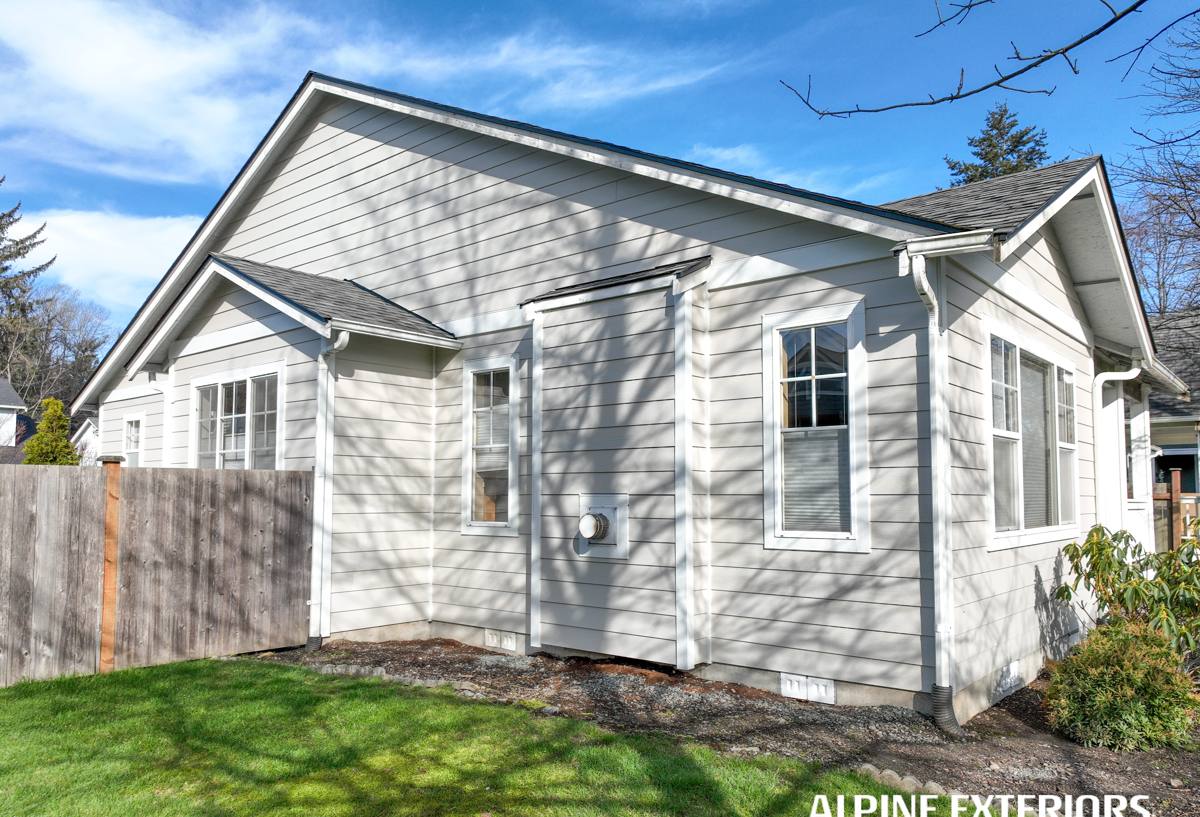
What Custer Homes Face Along the Salish Sea
Salt Air
Airborne salt from Birch Bay and the surrounding waterways accelerates corrosion on fasteners, trim metal, and any siding material that relies on paint film integrity to stay protected. Over years, salt exposure finds weak points — exposed end grain, chipped caulk lines, thin factory coatings — faster than it would on a home set back from the water.
Driving Rain
Storms coming off the water don't just fall straight down; wind pushes rain sideways into wall assemblies. Siding and flashing details that work fine in a dry climate can fail here because water gets pushed up and under laps instead of running down and off. The water-resistive barrier and flashing behind the siding matter as much as the siding itself.
Moss Season
Whatcom County's long wet stretch, shaded lots, and tree cover mean moss and algae growth is a near-constant issue on north-facing and shaded wall sections. Siding materials that hold moisture — or that need frequent recoating to resist organic growth — become a maintenance chore that never really ends.
Why James Hardie Fiber Cement Is the Right Fit for This Climate
Fiber cement doesn't rot, doesn't provide the same food source for moss and algae that wood-based products do, and doesn't swell or delaminate when it takes on moisture the way some engineered wood sidings can. James Hardie's ColorPlus factory finish is baked on under controlled conditions, which holds up better against salt air and UV than field-applied paint. The HZ5 product line, specifically, is engineered for climates with more moisture exposure — which describes Custer well.
We standardized on James Hardie because it's the one system where the manufacturer's engineering, the factory finish, and the warranty terms all line up with what homes in this exact climate need. That's also why we don't install vinyl, LP SmartSide, Cemplank, Allura, primed spruce, or cedar — each of those has real strengths, but each also carries a trade-off (moisture sensitivity, maintenance burden, coating longevity, or warranty structure) that we're not willing to put on a Custer home and stand behind.
What a Correct Siding Installation Actually Involves
Water Management First
Before a single piece of siding goes up, the water-resistive barrier, window and door flashing, and any penetrations (vents, hose bibs, light fixtures) need to be sequenced correctly — each layer lapping over the one below so water sheds outward, never inward. This is the part of the job that's invisible once siding is installed, and it's also the part most likely to cause problems years later if it's rushed.
Fastening to Spec
James Hardie publishes specific fastening patterns, nail types, and clearances for each product line and climate zone. Corrosion-resistant fasteners matter more here than in a dry inland climate — salt air will find any fastener that isn't rated for it. Installing to the manufacturer's published spec isn't optional if you want the warranty to actually apply.
Clearances and Gaps
Siding needs proper clearance from grade, roof lines, decks, and other transitions so water and debris don't sit against the bottom edge. In a high-moisture area like Custer, a siding installer who ignores clearance specs to save time is setting up a callback in a few years — usually after the damage is already done behind the wall.
Joint and Seam Treatment
Butt joints, corners, and trim transitions need to be treated with the right sealants and flashing details — not just caulked and painted over. Done correctly, these details are what keep driving rain from working its way behind the cladding during a wind-driven storm.
Our Installation Process
1. On-Site Assessment
We walk the home, check the current siding and sheathing condition, note problem areas (shaded walls prone to moss, exposure to prevailing wind and rain, any existing water damage), and talk through what the job actually needs — not a generic package.
2. Tear-Off and Substrate Check
Old siding comes off and we inspect the sheathing underneath. Any rot or moisture damage gets addressed before new water-resistive barrier and siding go on — covering up a compromised substrate just hides a problem instead of fixing it.
3. Water-Resistive Barrier and Flashing
New barrier, flashing at windows, doors, and penetrations, all sequenced to shed water outward. This is the step that determines how the wall performs during the next big coastal storm.
4. Hardie Installation to Manufacturer Spec
Panels or lap siding installed with correct fastener type, spacing, and clearances, following James Hardie's published instructions for the specific product and region.
5. Trim, Caulking, and Final Detail
Corners, trim boards, and joints finished and sealed correctly, with attention to the areas most exposed to wind-driven rain.
6. Walkthrough
We go over the finished job with the homeowner, including basic care notes for a coastal Whatcom County property — what to check seasonally and what maintenance (if any) the ColorPlus finish actually requires.
Comparing Siding Options for a Custer Home
| Material | Moisture/Salt Air Behavior | Moss/Algae Resistance | Maintenance Over Time |
|---|---|---|---|
| James Hardie Fiber Cement (HZ5) | Non-combustible, engineered for high-moisture climates | Doesn't feed organic growth like wood-based products | Factory ColorPlus finish, low upkeep |
| Vinyl | Can warp/distort with temperature swings; seams can trap moisture | Moderate; surface staining common in shaded, damp areas | Low cost, but limited lifespan and color fade over time |
| Cedar | Natural material, but absorbs moisture and can rot without diligent upkeep | Prone to moss/algae without regular treatment | Ongoing staining/sealing required, especially near salt air |
| Engineered Wood (e.g. LP SmartSide) | Treated to resist moisture, but edge/end-grain exposure is a known sensitivity | Better than untreated wood, still organic material | Requires diligent caulking and inspection at seams |
We're not installing three of these four options, for the reasons in the table above — but it's useful for a homeowner comparing bids to understand what each material is actually up against on a Custer property.
Cost Factors on a Real Job
| Factor | Why It Matters Here |
|---|---|
| Home size and wall complexity | More corners, trim, and transitions mean more labor and detail work |
| Substrate condition | Rot or water damage found during tear-off adds repair scope before siding goes on |
| Product line (HZ5 vs. standard) and profile | Coastal exposure often calls for the higher-moisture-rated line |
| Trim and accessory scope | Corner boards, fascia, and soffit work are often bundled with a siding job |
| Access and site conditions | Slopes, landscaping, and setbacks common in the Birch Bay/Custer area can affect labor time |
Signs Your Custer Home Needs New Siding
- Persistent moss or algae staining that returns soon after cleaning, especially on shaded walls
- Soft spots, bubbling, or visible warping in the current siding
- Paint or finish that's chalking, peeling, or fading faster than expected
- Visible gaps at seams, corners, or trim where wind-driven rain could get behind the wall
- Rising energy bills that may point to a compromised weather barrier
- Siding that's original to an older home and has never been fully inspected behind the surface
Why Hiring a Crew That Already Works in Custer Matters
A crew that regularly works Birch Bay and the surrounding Whatcom County coastline already knows which wall orientations take the worst of the driving rain, which lots hold moisture longest for moss growth, and how salt air behaves differently here than it does even twenty miles inland. That local pattern recognition shows up in the small decisions — where to add extra flashing attention, which fastener spec to follow without guessing — that separate a siding job that lasts from one that doesn't.
It also means a crew that's accountable locally: reachable if a question comes up after the job, familiar with the county's permitting expectations, and not treating a Custer home as a one-off out-of-town project.
Get a Free, No-Pressure Estimate
If your Custer home's siding is showing its age, or you're planning ahead for a replacement, we're happy to take a look and give you a straight answer on what it needs. Use the form below to request a free estimate — no pressure, no obligation.