 Birch Bay Siding
 Roofing in Custer: A Different Kind of Wear
Custer sits just inland from Birch Bay and the Strait of Georgia, close enough to the water that salt-laden air is part of daily life here, not an occasional coastal breeze. Add in wind-driven rain that comes in sideways off the water during winter storms, and long stretches of shade under fir and cedar cover on many Whatcom County properties, and you get a roofing environment that ages materials faster than what you'd see fifty miles inland. Moss and algae growth is close to constant background pressure on any roof that doesn't get much direct sun, and it's the single biggest factor we see driving early roof failure in this area.
None of this means every Custer roof is in trouble. It means the materials, ventilation, and installation details that work fine in a drier climate need to be chosen and installed with this specific combination of salt air, rain volume, and moss exposure in mind. That's the whole point of this page — what actually matters for a roof replacement done right here, not a generic list that could apply anywhere.
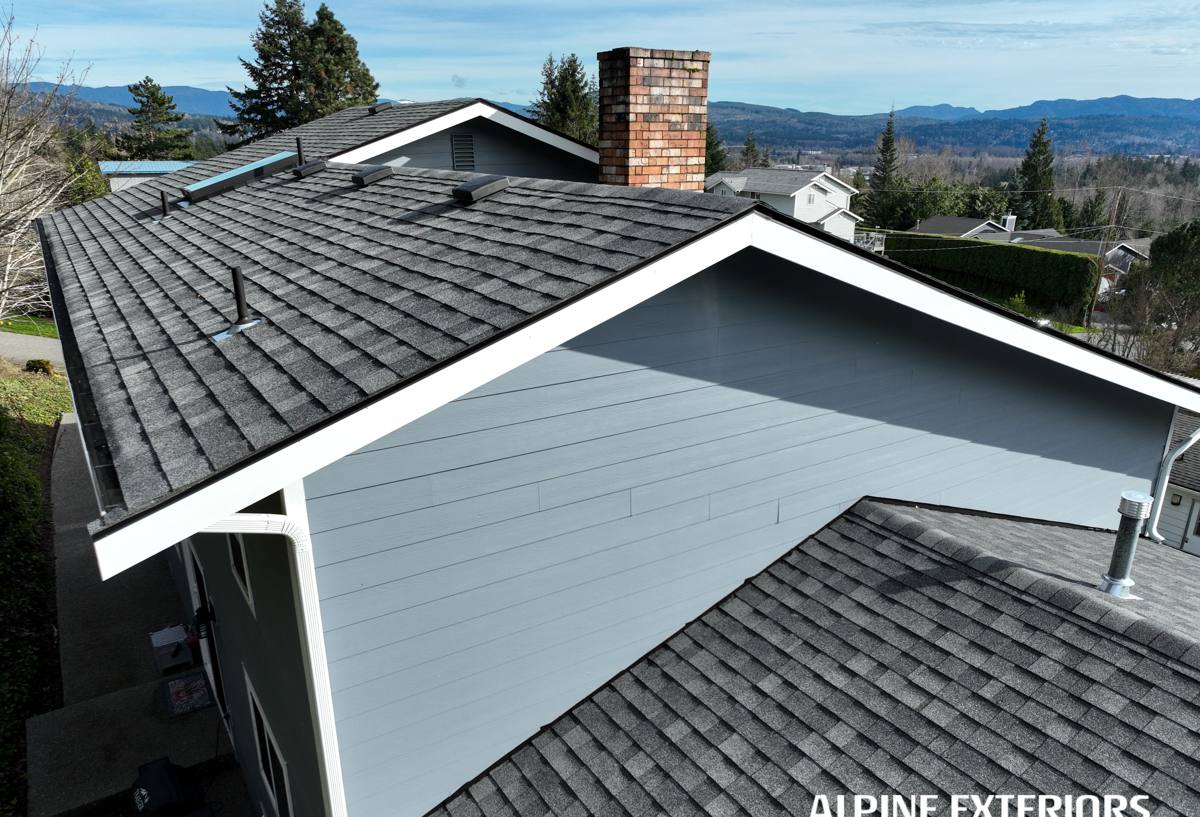
Signs a Custer Roof Is Ready for Replacement
Most roofs don't fail all at once. They give warning signs for months or years before a leak actually shows up inside the house. Homeowners in this area should watch for:
- Shingles that are curling, cracking, or losing their granules in patches, especially on north-facing slopes that stay shaded
- Moss mats thick enough that you can see raised ridges of green from the ground, not just faint streaking
- Dark streaking or algae staining that keeps coming back within a season or two of cleaning
- Soft or spongy spots when walking the roof, which usually means the decking underneath has taken on moisture
- Daylight visible through the roof boards from inside the attic, or damp insulation near the eaves
- Granules collecting in gutters and downspouts by the handful rather than a light dusting
- Rising heating bills tied to poor attic insulation or ventilation, not just an older furnace
Any one of these on its own might just mean a repair. Several at once, or a roof that's already had a couple of repairs in the last few years, usually means replacement is the more honest recommendation — repeated patching on a roof near the end of its service life tends to cost more over time than doing the job once, correctly.
What a Correct Roof Replacement Actually Involves
Tear-Off and Deck Inspection
A proper replacement starts with a full tear-off down to the decking, not a layover on top of existing shingles. That's the only way to actually see the condition of the plywood or OSB underneath. In this climate, we routinely find sections of decking that have softened from long-term moisture intrusion around old flashing or under moss mats — those sections get replaced before anything new goes down, not covered over.
Underlayment and Water Protection
Given how much rain this area sees, underlayment isn't a place to cut corners. Self-adhered ice-and-water barrier at eaves, valleys, and around penetrations gives a second line of defense if wind-driven rain ever gets past the shingles themselves, which happens more often in coastal-influenced storms than most homeowners realize.
Flashing
Flashing around chimneys, skylights, vents, and roof-to-wall transitions is where most leaks actually originate — not in the field of the shingles. New step flashing, counter-flashing, and pipe boots go in as part of the job, not reused from the old roof.
Ventilation
Balanced intake and exhaust ventilation keeps the attic space at a similar temperature and humidity to the outside air, which matters more here than in drier climates because trapped moisture has nowhere good to go once it's inside a Pacific Northwest attic. More on this below.
Roofing Material Options for Custer Homes
There's no single "best" roofing material — the right choice depends on your budget, how much shade and moss exposure your roof deals with, and how long you plan to own the home. Here's an honest comparison of the main options we install in this area:
| Material | Typical Lifespan | Moss/Algae Resistance | Best For |
|---|---|---|---|
| Architectural asphalt shingle | 25–30 years | Good with algae-resistant granules; needs periodic cleaning in shaded areas | Most homes — best balance of cost, appearance, and durability |
| Standard 3-tab shingle | 15–20 years | Lower — thinner profile sheds moisture and debris less effectively | Budget-driven projects on lower-slope, well-drained roofs |
| Standing seam metal | 40–50+ years | Excellent — smooth surface sheds moss and debris well | Homeowners planning long-term ownership, higher upfront budget |
| Cedar shake | 20–30 years with upkeep | Requires diligent maintenance — natural wood holds moisture in a wet climate | Homeowners committed to the traditional look and ongoing care it requires |
On cedar shake specifically: it's a good-looking, traditional material, but in a climate with this much sustained moisture and moss pressure, it demands more frequent inspection and treatment than asphalt or metal. We'll install it if that's what a homeowner wants, but we're upfront that the maintenance commitment is real, not optional.
Our Roof Replacement Process
- On-site inspection and written estimate — we walk the roof, check the attic, and give you a clear scope and price before any work starts
- Material selection — we walk through the trade-offs above based on your budget and how your specific roof is exposed to shade and weather
- Tear-off — full removal of old roofing down to the deck, with disposal handled as part of the job
- Deck inspection and repair — any soft or damaged decking is replaced before underlayment goes down
- Underlayment and flashing installation — ice-and-water barrier at vulnerable points, new flashing throughout
- Roofing material installation — installed to manufacturer specifications so warranty coverage stays intact
- Ventilation check and correction — intake and exhaust vents verified or upgraded as needed
- Site cleanup — magnetic nail sweep and full debris removal
- Final walkthrough — we review the finished roof with you before calling the job done
Ventilation and Moisture: The Part Homeowners Don't See
Attic ventilation doesn't get much attention because it's invisible from the ground, but in a marine climate like Whatcom County's, it's one of the most important factors in how long a roof actually lasts. Warm, moist air rises into the attic from the living space below. Without a clear path for that air to exit — typically ridge vents paired with soffit intake vents — it condenses on the underside of the decking, which encourages rot, mold, and premature failure of the roofing material from underneath, not just from weather exposure on top.
We check existing ventilation as a standard part of every replacement estimate, not as an upsell added later. If intake or exhaust is undersized or blocked, we'll flag it and explain what correcting it involves — sometimes it's a straightforward vent upgrade, sometimes it's more involved. Either way, you'll know before the job starts, not after.
What Affects the Cost of a Roof Replacement
Every roof is different, so we don't quote prices sight unseen — but these are the factors that actually move the number on a Custer-area roof replacement:
| Factor | Why It Matters |
|---|---|
| Roof size and pitch | More square footage and steeper pitches mean more material and more labor time |
| Material choice | Asphalt, metal, and cedar carry different material and installation costs |
| Layers of old roofing | Tear-off of multiple existing layers takes longer and costs more to dispose of |
| Deck repair needed | Moisture damage found during tear-off adds material and labor not visible from the ground |
| Roof complexity | Valleys, dormers, chimneys, and skylights all add flashing work and time |
| Access | Steep lots, tree cover, or limited driveway access can affect equipment and staging costs |
Choosing a Roofing Crew in Custer — A Checklist
Roof replacement is a significant investment, and it's also hard for most homeowners to inspect the finished work themselves — a lot of what determines whether a roof lasts is underneath the surface. Before hiring anyone, it's worth checking:
- Are they licensed, bonded, and insured to do roofing work in Washington State?
- Will they put the full scope of work — materials, underlayment, flashing, ventilation — in writing before starting?
- Do they pull the required permit themselves, rather than asking you to handle it?
- Can they explain, in plain language, why they're recommending a specific material for your roof's shade and exposure?
- Do they have experience working in this specific area, with its salt air and moss conditions, rather than a generic regional service area?
- Is the workmanship warranty clearly explained and separate from the manufacturer's material warranty?
- Will they leave your property clean, including a nail sweep, when the job is finished?
Why a Local Birch Bay Area Crew Matters
A roof replacement isn't a one-day transaction — it's a system that has to perform through years of Whatcom County winters. Crews who work this specific area regularly understand how wind-driven rain off the water tends to find weak points, which slopes hold moss the longest through the year, and what Whatcom County's permitting and inspection process actually requires, because they deal with it routinely rather than occasionally. That familiarity shows up in fewer surprises during the job and a roof that's built for the conditions it will actually face, not conditions assumed from a general climate zone.
It also matters after the job is done. If a question comes up during a future storm season, you're calling a crew that's still working in Custer and Birch Bay, not one that passed through once and moved on.
If your roof is showing any of the signs above, or you just want an honest read on how much life it has left, we're happy to take a look. We offer free, no-pressure estimates — you'll get a clear inspection, a straight answer, and a written scope, with no obligation to move forward. Use the form below to get started.