 Birch Bay Siding
 Siding Built for Custer's Particular Mix of Weather
Custer sits inland from the Birch Bay waterfront, but it doesn't escape the marine climate that defines this part of Whatcom County. Moist air off the Salish Sea still moves through the area, driving rain still comes in sideways during fall and winter storms, and the tree cover and cooler, damp air common to this part of the county keep moss and algae active for a large part of the year. Add in the salt content that rides inland on coastal wind, and you have a combination that is genuinely hard on a home's exterior — harder than most siding products, and a lot of installation crews, are built to handle.
This isn't a page about siding in general. It's about one product — James Hardie fiber cement — installed the right way, on homes in and around Custer, by a crew that treats this climate as the starting point for every decision, not an afterthought.
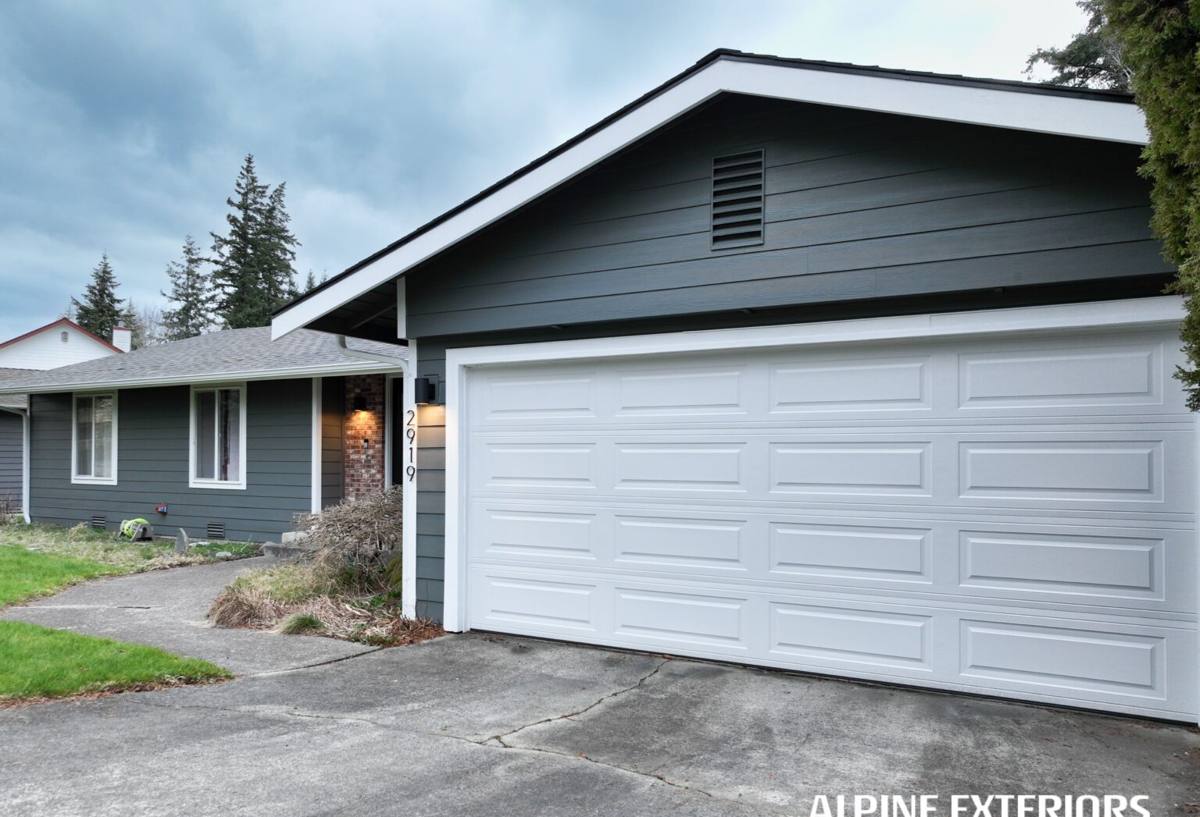
What Local Homes Actually Need From Their Siding
Moisture Management, Not Just Water Resistance
The biggest failure point on homes in this region isn't the siding material itself — it's what happens behind it. Wind-driven rain finds its way into small gaps, seams, and poorly flashed penetrations, and once moisture gets behind cladding in a climate that rarely dries out fully, it stays there. That leads to rot in sheathing, mold, and siding that looks fine from the curb while the wall assembly behind it is failing.
Resistance to Moss, Algae, and Organic Growth
Custer's tree cover and shaded lots keep siding damp longer after a storm than it would stay in a more exposed, sunnier location. That extended dampness is exactly what moss and algae need to take hold. Siding that absorbs moisture, or that has a painted finish prone to breaking down, gives organic growth something to grab onto. Siding that sheds water and holds its factory finish gives it much less to work with.
Salt-Air Tolerance
Salt-laden air corrodes fasteners, breaks down lesser paint systems faster than inland weather would, and accelerates wear on anything not designed for coastal exposure. It's a slower, quieter kind of damage than a wind event, but over years it adds up on homes that weren't built or finished with it in mind.
Why We Only Install James Hardie Fiber Cement
We don't install vinyl, LP SmartSide, Cemplank, Allura, or primed wood siding, and we're upfront about why. Every one of those products can perform reasonably well in the right setting. But for the specific combination of salt air, sustained moisture, and heavy moss pressure that Custer and the surrounding Birch Bay area deal with, we've standardized on one product system because it holds up to the trade-offs that matter most here:
- Non-combustible core — fiber cement doesn't feed a fire the way wood-based or vinyl products can, which matters for insurance conversations and long-term peace of mind.
- ColorPlus factory finish — baked-on at the factory under controlled conditions, it resists fading and holds up to UV and moisture exposure far longer than field-applied paint, which is the finish that fails first on lesser siding in this climate.
- Climate-engineered HZ product lines — Hardie builds region-specific formulations (HZ5 for cold, wet climates like ours) rather than a single one-size-fits-all board.
- A genuinely transferable warranty — backed by a large, established manufacturer, not a smaller regional producer.
- A long track record — decades of installed product in Pacific Northwest climates, giving us a real basis for how it performs over time, not just marketing claims.
We're not going to tell you every other product is worthless — that's not honest, and it's not our call to make about someone else's home. What we will say is that we looked at the maintenance burden, the moisture behavior, and the installation sensitivity of the alternatives, and decided we'd rather install one product correctly than offer five and hope they hold up.
HZ5 vs. Standard Fiber Cement Formulations
Not all James Hardie board is the same. Hardie engineers its siding differently depending on the climate zone it's shipped to, and Whatcom County — including Custer — falls into the HZ5 zone, which is formulated specifically for cold, wet, moisture-heavy climates.
| Feature | HZ5 (Cold/Wet Climate) | Standard/HZ10 (Warm/Dry Climate) |
|---|---|---|
| Moisture resistance formulation | Engineered for prolonged damp conditions | Engineered for hot, dry, high-UV exposure |
| Freeze-thaw performance | Built to handle repeated freeze-thaw cycling | Not the primary design focus |
| Recommended for Whatcom County | Yes | No |
Ordering the wrong regional formulation, or not knowing the distinction exists, is a common mistake among crews that don't work this climate day in and day out. It's a small detail on a spec sheet that has real consequences twenty years down the road.
What Correct Installation Actually Involves
The siding board itself is only part of the equation. Most fiber cement failures we get called out to inspect aren't material failures — they're installation failures. A correct install on a Custer home includes:
- A proper weather-resistive barrier installed and lapped correctly, with no shortcuts around windows, doors, or penetrations
- Correct flashing at every window, door, and roofline transition — the single most common point where wind-driven rain gets behind siding
- Manufacturer-specified fastener spacing, type, and placement, using corrosion-resistant fasteners appropriate for a salt-air environment
- Proper clearance between siding and grade, decks, patios, and roof lines to prevent wicking moisture
- Correctly sized gaps and sealant at butt joints and trim, following Hardie's installation guide rather than generic carpentry habit
- Painting or caulking cut edges on-site per manufacturer instructions, since factory finish doesn't extend to a field cut
Skip any one of these and you can end up with a home that looks like it has premium siding while performing like it doesn't. James Hardie's own warranty terms depend on installation following their published specifications — a detail that matters more than most homeowners realize until there's a problem.
Our Process for Custer Projects
1. On-Site Assessment
We start by looking at what's actually happening on your home — existing siding condition, signs of moisture intrusion, trim and flashing condition, and how much shade and moisture exposure the specific lot gets. A home tucked under mature trees needs different attention than one in a more open, wind-exposed spot.
2. Tear-Off and Sheathing Check
Old siding comes off and we inspect the sheathing underneath before anything new goes up. This is where hidden rot or past moisture damage gets found and addressed, rather than covered over.
3. Weather Barrier and Flashing
House wrap and flashing get installed to current best practice, with particular attention to windows, doors, and any roof-to-wall transitions — the areas most exposed to driving rain in this region.
4. HZ5 Hardie Installation
Boards go up per Hardie's fastening and clearance specifications, with cut edges sealed and joints treated correctly the first time.
5. Final Walkthrough
We walk the finished job with you, point out what was done and why, and make sure everything meets both our standard and Hardie's warranty requirements.
Cost Factors for a Custer Fiber Cement Project
Every home is different, but the factors that move the number are consistent. We give straightforward, honest estimates rather than vague ranges, but here's what typically drives cost up or down:
| Factor | Effect on Project Scope |
|---|---|
| Existing siding removal and disposal | Adds labor and disposal cost; also reveals sheathing condition |
| Sheathing or framing repair needed | Increases cost but is essential if moisture damage is found |
| Home size and number of stories | Larger and taller homes require more material, staging, and labor time |
| Trim, siding profile, and color complexity | Lap vs. shingle profiles, custom trim, and factory color options affect material cost |
| Access and site conditions | Tight lots, landscaping, or difficult access can add time |
Signs Your Current Siding May Already Be Failing
Because so much fiber cement and wood siding damage in this climate happens behind the surface, it's worth knowing what to look for from the outside:
- Soft or spongy spots when you press on siding, especially near the bottom edges
- Visible moss or algae growth that returns quickly after cleaning
- Peeling, bubbling, or chalky paint that wasn't there a few years ago
- Warping, buckling, or boards that no longer sit flat against the wall
- Staining or discoloration around window and door trim
- Rusted or visibly corroded fasteners
Any one of these on its own might be minor. Several together, especially on a home that's had the same siding for fifteen-plus years, are worth having a professional look at before a small problem becomes a structural one.
Why It Matters That We Already Work This Area
A crew that installs siding across a wide range of climates has to generalize. A crew that works Birch Bay, Custer, and the surrounding Whatcom County communities regularly gets to specialize — in the flashing details that matter for this specific rain pattern, the fastener choices that hold up to this specific salt exposure, and the moss and algae behavior that shows up on shaded lots in this specific area. That familiarity shows up in fewer callbacks and siding that's still doing its job correctly a decade or two after installation, not just on move-in day.
If you're considering fiber cement siding for a home in Custer, we're happy to take a look at what you have now and talk through what correct, climate-appropriate installation would involve for your property. There's no pressure and no obligation — just a straightforward assessment and an honest estimate using the form below.