 Birch Bay Siding
 Decks in Custer Take a Different Kind of Beating
Custer sits close enough to the water and open farmland that a deck here deals with things a deck in a drier inland town never has to. Salt-laden air off Birch Bay and the Strait works into fasteners and metal connectors over time. Long stretches of driving rain push moisture sideways under railings and around post bases. And the mild, wet Whatcom County winters mean moss and algae get months to establish themselves on any horizontal surface that doesn't drain or dry quickly. None of this is dramatic on its own, but it adds up year after year, and it's why a deck built with generic, catalog-standard methods tends to show problems here faster than it would somewhere drier.
A deck built correctly for this area isn't a different-looking deck — it's the same deck built with different priorities: drainage first, corrosion-resistant hardware throughout, and a decking surface chosen with moss and moisture in mind rather than just looks.
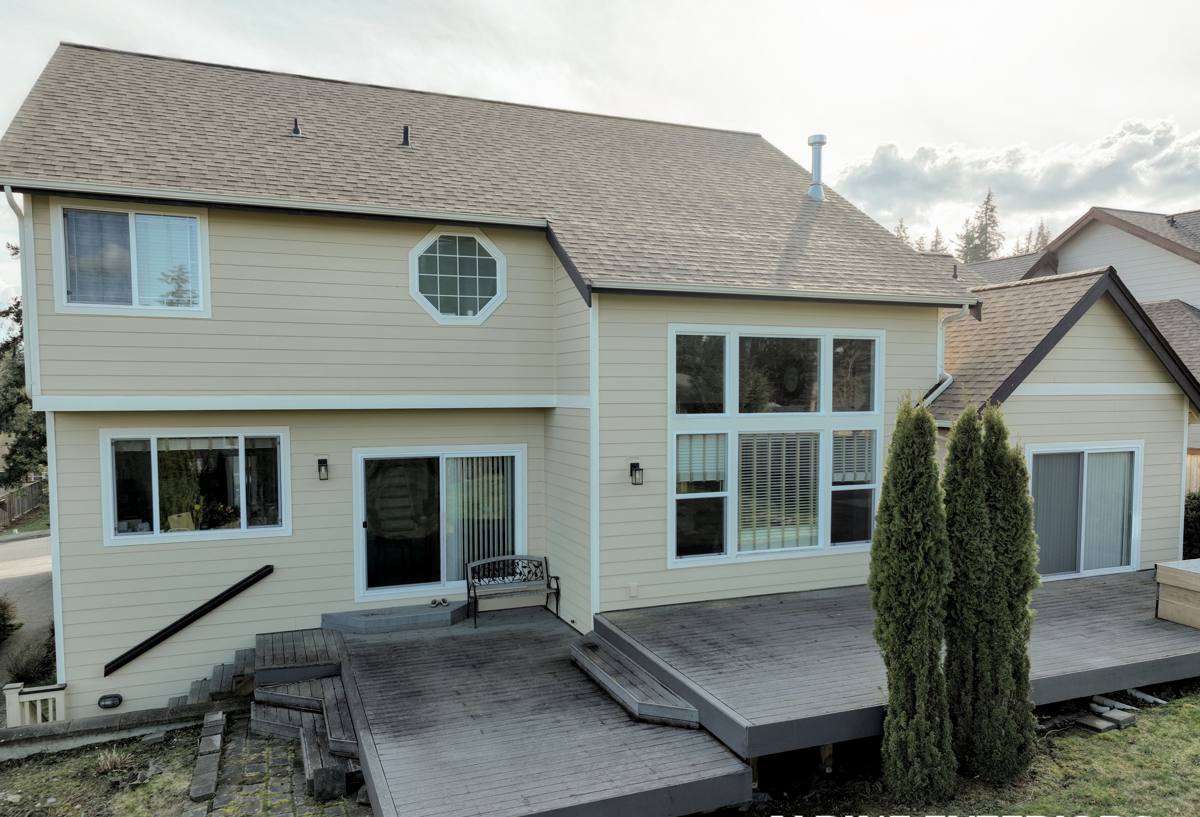
What Local Conditions Actually Demand From a Deck
Moisture that doesn't just fall — it lingers
Rain in this part of Washington doesn't come and go quickly. Overcast, damp stretches can last for days, which means any part of a deck that traps water — a poorly sloped ledger connection, a post base sitting in standing water, decking boards laid tight with no drainage gap — stays wet far longer than it should. Wood that stays wet is wood that rots, and metal that stays wet is metal that corrodes, regardless of what the manufacturer's spec sheet says about a dry-climate installation.
Salt air and hardware
Birch Bay and Custer aren't right on saltwater the way a beachfront lot is, but prevailing air off the bay still carries salt inland, and it accelerates corrosion in fasteners, joist hangers, and structural screws that aren't rated for it. A deck can look fine from the top for years while its hidden hardware is quietly failing underneath.
Moss, algae, and a long growing season
Whatcom County's mild wet season gives moss and algae a long window to take hold on decking, stair treads, and anything shaded by trees or the house itself. Beyond looking bad, moss holds moisture against the decking surface and turns wet boards slick — a real fall hazard on stairs and ramps.
Decking Material Comparison
There's no single "best" decking material for every Custer property — it depends on budget, how much upkeep you want to do, and how shaded the site is. Here's how the common options actually perform in this climate, honestly:
| Material | Moisture/Moss Behavior Here | Maintenance | Typical Cost Range |
|---|---|---|---|
| Pressure-treated wood | Absorbs moisture, needs a real drainage gap and airflow underneath or it stays damp | Annual cleaning, periodic sealing/staining | Lowest upfront cost |
| Cedar | Naturally rot-resistant but still needs sealing to resist moss staining and graying | Sealing every 1-2 years for appearance and protection | Mid-range |
| Capped composite | Doesn't absorb water like wood, but still needs airflow underneath and periodic washing to prevent surface moss/algae film | Occasional washing, no sealing or staining | Higher upfront, lower ongoing labor |
| PVC decking | Fully moisture-resistant surface; best resistance to staining and rot of the options here | Occasional washing | Highest upfront cost |
Whatever material you choose, the framing underneath and the way water is managed matter more to long-term performance than the decking surface itself. A good composite deck built on a poorly ventilated, poorly flashed frame will still develop problems; a well-built frame under pressure-treated boards will outlast a rushed job in any material.
Where budget actually matters most
If cost is a constraint, we'd rather see the money go into proper framing, flashing, and corrosion-resistant hardware first, with a more basic decking material on top, than into premium decking laid over a frame built to minimum spec. The frame is what you can't easily fix later without tearing into the deck.
Framing and Structural Details We Don't Skip
- Post bases set on footings sized for our soil and frost conditions, with drainage so water doesn't pool against the post
- Joist spacing appropriate to the decking material span rating — composite and PVC often need tighter spacing than solid wood
- Stainless steel or hot-dip galvanized fasteners and joist hangers throughout, not mixed-metal hardware that sets up galvanic corrosion between dissimilar metals
- A real air gap between decking boards and consistent gapping at board ends for drainage and expansion
- Under-deck ventilation where the structure allows it, so the framing can dry out between wet spells instead of staying damp for months
These aren't upgrades — they're what a deck needs to hold up through a normal run of Whatcom County winters. Cutting corners on any one of them shows up later as soft framing, rust-streaked hardware, or a deck that feels spongy underfoot years before it should.
Ledger Attachment: Where Most Deck Failures Start
If a deck is attached to the house rather than freestanding, the ledger board connection is the single most important detail on the whole project — and the most common place decks fail in wet climates. Water that gets behind an improperly flashed ledger doesn't just damage the deck; it can work into the house's rim joist and wall framing, which turns a deck repair into a much bigger and more expensive repair.
A correct ledger installation includes proper flashing that directs water out and away from the house sheathing, structural lag bolts or through-bolts rated for the load (not just deck screws), and a small gap or flashing detail that keeps the ledger from sitting flush against a wall surface that can trap moisture. Where the site and layout allow it, a freestanding deck design — one that doesn't attach to the house at all — removes this failure point entirely, and it's worth discussing as an option during the estimate.
Railings, Stairs, and Everyday Safety Details
Railing posts and stair stringers see constant weather exposure and constant use, so hardware corrosion resistance matters here as much as anywhere else on the deck. Stair treads in particular need attention to moss and algae buildup since they're a fall hazard when wet and slick — we pay attention to tread spacing, drainage, and material choice on stairs specifically, not just the deck surface.
Our Process for a Custer Deck Project
- On-site assessment — we look at drainage, sun/shade exposure, existing structure if it's a rebuild, and how the deck will tie into the house
- Design and material discussion — honest trade-offs on decking material, railing style, and layout based on your budget and how much upkeep you want long-term
- Permitting — most new decks and many substantial rebuilds in Whatcom County require a building permit; we handle what's needed for the scope of your project
- Framing and structural work — footings, posts, joists, ledger flashing (or freestanding footings), all with corrosion-resistant hardware
- Decking, railing, and stair installation — with drainage gaps and ventilation built in from the start, not added as an afterthought
- Final walkthrough — we go over basic maintenance specific to your material choice so you know what upkeep actually looks like
Living With a Deck in This Climate: Realistic Maintenance
No deck material here is truly maintenance-free, and we'd rather tell you that upfront than have it be a surprise. A simple checklist for keeping any deck in good shape through Whatcom County's wet seasons:
- Sweep debris and standing leaves off the deck surface regularly, especially in fall — trapped organic material feeds moss and holds moisture
- Wash the surface at least once a year to remove early moss and algae film before it establishes
- Check that drainage gaps between boards haven't filled in with debris or been closed off by furniture placement
- Inspect railing posts and stair connections annually for looseness or rust staining around hardware
- Reseal or restain wood decking on the schedule appropriate to that product — don't wait until it's visibly gray and worn
- Confirm under-deck ventilation hasn't been blocked by storage, skirting, or landscaping changes
Why a Crew That Already Works Custer Matters Here
Deck-building fundamentals don't change from town to town, but the details that make a deck last do. A crew that already works in Custer and around Birch Bay knows how fast moss establishes on north-facing stairs, which hardware actually holds up against the salt air off the bay, and what Whatcom County's permitting process expects for setbacks and footing depth on a typical residential lot. That's not something you can fully get from a contractor who mostly builds decks somewhere drier and treats this as a one-off job. It shows up in small decisions — where the drainage gap goes, how the ledger is flashed, what fasteners get specified — that don't cost much more to get right the first time but cost a lot to fix later.
Questions Worth Asking Before You Hire
- What hardware and fasteners will be used, and are they rated for coastal/salt-air exposure?
- How will the ledger connection (if any) be flashed and sealed against the house?
- Is under-deck ventilation part of the design, or is it an afterthought?
- What's the realistic maintenance schedule for the decking material being proposed?
- Will a permit be pulled, and who's responsible for that with Whatcom County?
If you're planning a new deck or need to replace one that's showing its age, we're happy to come take a look and give you an honest read on what it needs. Estimates are free, there's no pressure, and you can use the form below to get started.