 Birch Bay Siding
 Why Cottonwood Beach Roofs Wear Differently
Cottonwood Beach sits right up against the water, and that location shapes everything about how a roof ages here. Salt-laden air off the Salish Sea works on exposed metal year-round, corroding fasteners, flashing, and cheap valley material long before a roof's shingles are actually worn out. Add Whatcom County's driving winter rain, which comes in sideways more often than straight down, and you've got a climate that punishes any weak point in a roofing system rather than just wearing it down evenly.
Then there's moss. The combination of shade from mature evergreens, persistent damp, and mild temperatures gives moss and algae a long growing season in this part of Washington — often eight or nine months out of the year. A roof that would hold up fine in a drier climate can develop moss colonies within two or three years here if it wasn't built with that reality in mind. None of this means Cottonwood Beach is a bad place for a roof — it means the roof has to be specified and installed correctly for this specific exposure, not treated like a generic replacement job.
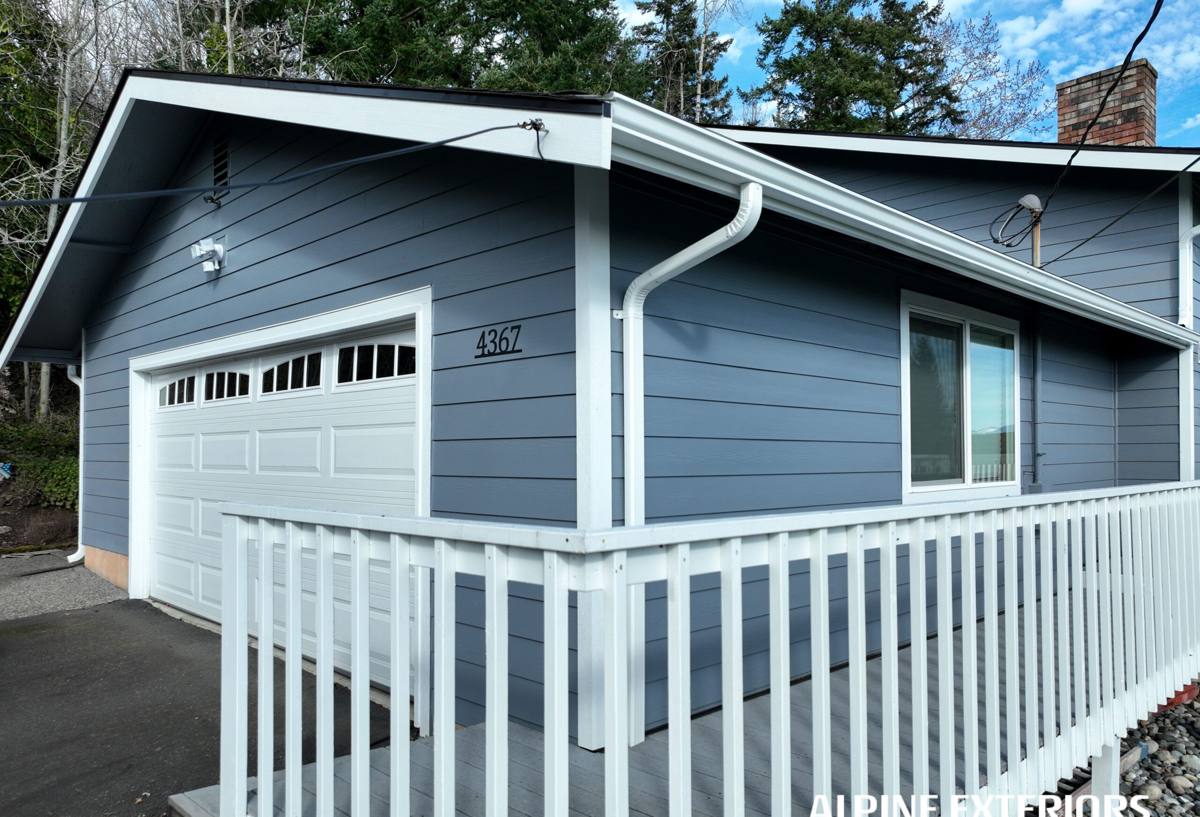
Signs Your Cottonwood Beach Roof Needs Replacing
Homeowners often wait too long because a roof "looks fine" from the ground. Moss and algae staining can actually mask deterioration underneath. Here's what we look for during an inspection, and what you can check yourself from the ground or a ladder:
- Moss growing in mats rather than thin streaks, especially on north-facing slopes or under tree cover
- Granules collecting in gutters or at downspout outlets — a sign the shingle surface is breaking down
- Shingles that are curling, cupping, or lifting at the edges instead of lying flat
- Soft or spongy spots when walked on, which usually means the decking underneath has taken on moisture
- Rust streaking or visibly corroded fasteners, flashing, or valley metal
- Daylight visible through the roof deck from inside the attic, or water stains on attic sheathing
- A roof that's 20-25+ years old, regardless of how it looks from the driveway
Any one of these on its own might just call for a repair. Several at once, or moss and moisture together, usually means the roofing system has passed the point where patching makes sense.
Choosing a Roofing System Built for Salt Air and Moss
There's no single "best" roofing material for every Cottonwood Beach home — it depends on the roof's pitch, tree cover, budget, and how the house is used. But some materials handle this coastal, moss-prone climate better than others.
Architectural asphalt shingles
Modern architectural shingles with algae-resistant (copper-infused) granules are the most common replacement we install here, and for good reason — they perform well against moss growth, come in a wide range of styles, and have a straightforward warranty structure. The key is pairing them with proper ventilation and metal flashing rated for coastal exposure; a good shingle installed with undersized or bare-steel flashing will still fail early near the water.
Standing seam metal
Metal roofing sheds moss and debris better than almost anything else and holds up well against wind-driven rain, which makes it a strong option for exposed, tree-free lots. The tradeoff is upfront cost and the need for correct fastener and finish selection — aluminum or properly coated steel, not bare or mismatched metal, which will corrode faster in salt air than the roof itself would otherwise wear out.
Cedar shake
Cedar has real appeal in the Pacific Northwest and can look great on the right style of home, but it's the most maintenance-intensive option in a climate this damp and moss-friendly. We'll install it if that's what a homeowner wants and the budget supports the upkeep, but we're upfront that it demands more frequent cleaning and treatment here than in a drier inland location.
| Material | Salt air resistance | Moss resistance | Typical lifespan | Maintenance |
|---|---|---|---|---|
| Architectural asphalt shingle | Good, with proper flashing | Good (algae-resistant granules) | 25-30 years | Low-moderate |
| Standing seam metal | Very good, with correct fastener/coating choice | Very good | 40-50+ years | Low |
| Cedar shake | Fair, needs treatment | Fair, needs regular cleaning | 20-30 years with upkeep | High |
What a Correct Roof Replacement Involves
A roof replacement is more than swapping old shingles for new ones. In a climate like this, the details underneath the visible surface are what actually determine whether the roof performs for its full expected lifespan.
Full tear-off and deck inspection
We remove the old roofing down to the deck rather than layering over it. That's the only way to actually see the plywood or plank sheathing underneath, catch any soft or delaminated sections from past moisture intrusion, and replace them before new material goes down over a hidden problem.
Underlayment and ice-and-water protection
Given how much wind-driven rain this area sees, we pay close attention to underlayment coverage — synthetic underlayment across the field, with self-adhering ice-and-water membrane at eaves, valleys, and around penetrations where wind-blown rain is most likely to find a way in.
Flashing and valleys
Flashing is usually where a marginal roof fails first near the water. We use corrosion-resistant metal at chimneys, walls, skylights, and valleys, with laps and fastening detailed to shed water rather than wick it under the shingle course.
Moss-conscious detailing
Where a roof has tree cover or a shaded north slope, we'll discuss zinc or copper strips near the ridge, which release trace metal ions in rainwater that inhibit moss regrowth over time. It's not a substitute for occasional cleaning, but it meaningfully slows how fast moss comes back.
Ventilation and Moisture Control
Good ventilation matters everywhere, but it's especially important in a damp coastal climate where the attic side of the deck can hold moisture almost as long as the roof side. Balanced intake at the soffits and exhaust at the ridge keeps air moving through the attic space, which controls condensation, helps the deck dry out between rain events, and extends the life of the shingles by keeping them from overheating in summer. A replacement is the right time to correct ventilation that was never adequate to begin with — it's far cheaper to fix while the roof is open than to retrofit later.
Our Roof Replacement Process
- On-site inspection — we get on the roof (not just a look from the ground), check the deck, flashing, ventilation, and moss condition, and take photos to review with you.
- Written estimate — material options, scope of work, and a clear price, with no pressure to decide on the spot.
- Scheduling around weather — we plan tear-off days to avoid open decking during an incoming rain system, which matters more here than in drier climates.
- Tear-off and deck repair — old material removed, deck inspected and repaired as needed.
- Underlayment, flashing, and moss-prevention detailing — installed to the standard described above.
- New roofing material installed — per manufacturer specification, not shortcuts.
- Ventilation check and cleanup — intake and exhaust confirmed, magnetic sweep for debris, gutters cleared of tear-off debris.
- Final walkthrough — we go over the finished roof and warranty paperwork with you before calling the job done.
Cost Factors for Roof Replacement in Cottonwood Beach
We don't quote prices sight unseen because roof cost depends on real variables specific to your house. What we can tell you is what actually moves the number:
| Factor | Why it matters here |
|---|---|
| Roof size and number of planes | More cuts, hips, and valleys mean more labor and flashing |
| Pitch and access | Steeper roofs and limited driveway/crane access add time and safety equipment |
| Deck condition | Water-damaged sheathing found during tear-off adds material and labor to replace |
| Material choice | Asphalt, metal, and cedar carry different material and labor costs |
| Layers to remove | Tear-off of multiple existing layers takes longer than a single-layer roof |
| Ventilation upgrades | Adding proper intake/exhaust where none existed is worth the added cost |
As a broad range, most full asphalt shingle replacements on a typical single-family home in this area land somewhere in the mid-five-figure range for a straightforward roof, with metal running higher for material alone. Your actual number depends entirely on the factors above — which is why we inspect before we quote.
Why a Crew That Already Works Cottonwood Beach Matters
A roof replacement crew that's worked this specific stretch of Whatcom County shoreline knows things a crew from further inland has to learn on your dime. We know which fastener and flashing grades actually hold up against this salt air instead of rusting out in a few years. We know how to read the moss pattern on a roof and tell you honestly whether it's cosmetic or a sign of trapped moisture underneath. We know how tight the weather windows can get in fall and winter, and we plan tear-off schedules accordingly instead of leaving your deck exposed and hoping. That local experience shows up in fewer callbacks and a roof that's actually built for where it sits, not just installed to a generic spec sheet.
Living With Your New Roof Through Moss Season
A correct replacement dramatically reduces moss problems, but it doesn't make a roof maintenance-free in a climate this wet. Keeping tree branches trimmed back so more sunlight and airflow reach the roof, clearing gutters and valleys of needles and debris before the fall rains set in, and doing a simple visual check each spring will catch small issues while they're still cheap to fix. If you already have zinc or copper moss-prevention strips installed, an occasional light rinse helps them keep working as intended.
If your roof is showing its age, holding moss it shouldn't, or you just want an honest read on how much life is left in it, we're happy to take a look. The estimate is free, there's no pressure attached to it, and you'll get a straight answer about whether you need a full replacement, a repair, or nothing at all right now — just fill out the form below.